
The sudden, inexplicable loss of memory, even for a few hours, presents a terrifying prospect for patients and a diagnostic challenge for clinicians. While often portrayed dramatically in fiction, real-world amnesic events can range from benign to indicators of serious underlying pathology. Katie Couric, the veteran American journalist, recently recounted her experience with transient global amnesia (TGA), offering a public face to a condition that, while rare, warrants precise understanding.
Transient global amnesia (TGA) manifests as an abrupt, temporary inability to form new memories (anterograde amnesia) and often a partial loss of memories from the recent past (retrograde amnesia). Patients experiencing TGA remain fully conscious, aware of their identity, and capable of complex tasks, but repeatedly ask the same questions, expressing confusion about their surroundings and recent events. The episode typically lasts for several hours, rarely exceeding 24 hours, and resolves completely, leaving a permanent gap in the patient's memory for the duration of the event.1
Couric described her experience as a "big, black hole," a common sentiment among those who have lived through TGA. The condition primarily affects individuals in middle to older age, with a peak incidence between 50 and 70 years. While the exact pathophysiology remains elusive, theories often point to a temporary dysfunction in brain regions critical for memory, particularly the hippocampus. This dysfunction is thought to involve a transient disruption of neuronal activity, possibly related to venous congestion or spreading depression-like phenomena, rather than permanent structural damage.2
Distinguishing TGA from other acute amnesias
Diagnosing TGA requires careful clinical assessment to differentiate it from other, more serious causes of acute memory loss, such as transient ischemic attacks (TIAs), epileptic seizures, or even psychogenic amnesia. A key diagnostic criterion for TGA is the absence of other focal neurological deficits, such as weakness, sensory changes, or language disturbances. The patient's ability to perform routine tasks, despite profound memory impairment, is a hallmark. For instance, a patient might drive a car or engage in a conversation, but be unable to recall how they arrived at their destination or the preceding moments of the discussion.3
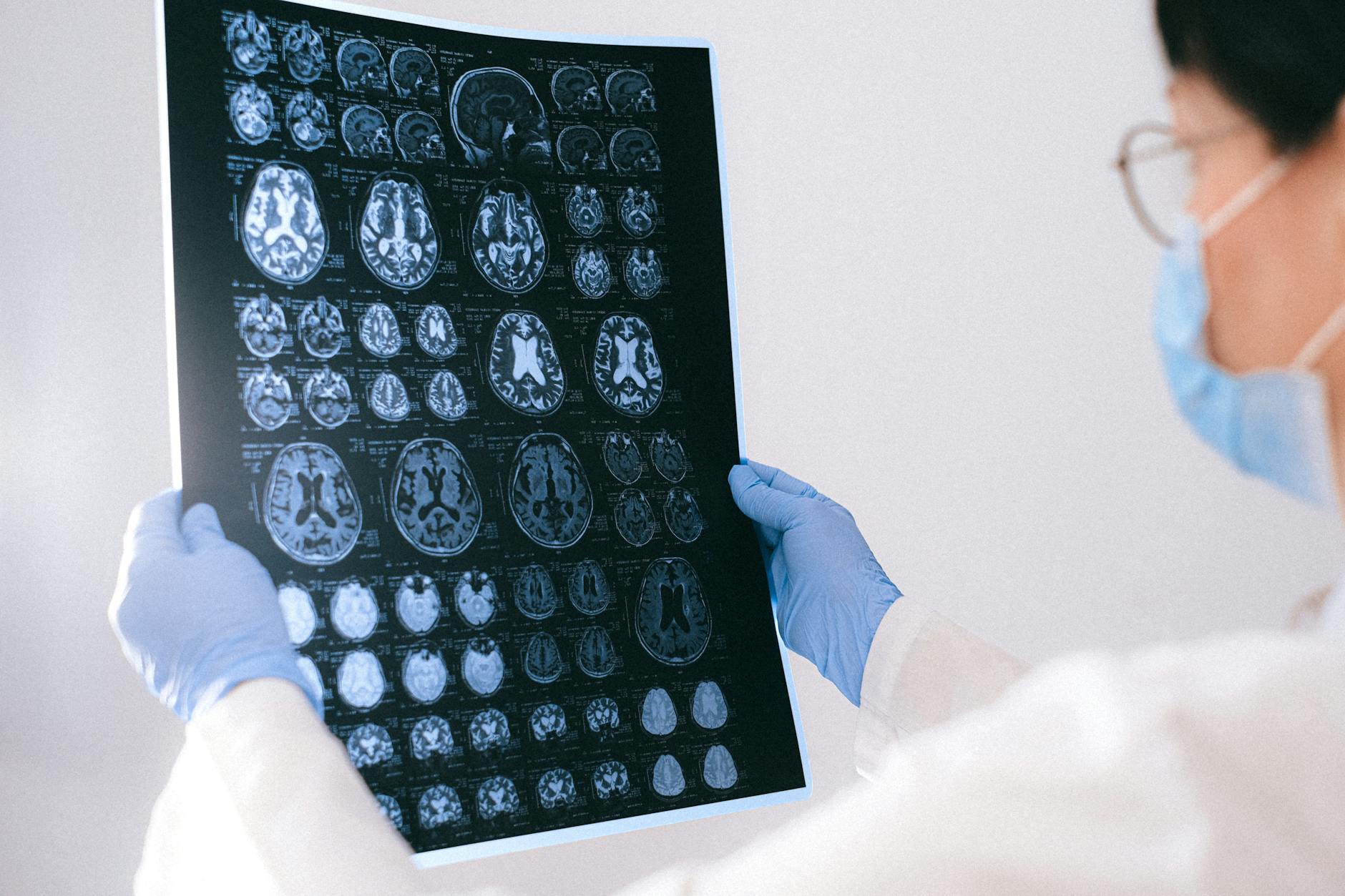
The diagnostic process typically involves a detailed history from both the patient and any witnesses, focusing on the sudden onset and the specific nature of the memory loss. Physical and neurological examinations are crucial to exclude other conditions. While imaging studies like MRI are often performed to rule out stroke or other structural lesions, they are typically normal in TGA. Diffusion-weighted MRI (DWI) may show punctate lesions in the hippocampus in a minority of cases, particularly if performed within 24-72 hours of the event, but these are not consistently present and their significance is still debated.4
Precipitating factors for TGA have been identified in approximately 50% of cases. These often include physical or emotional stress, such as sudden immersion in cold or hot water, strenuous physical exertion, sexual intercourse, emotional upset, or medical procedures like angiography. Couric's account did not specify a trigger, but the suddenness of the event aligns with typical presentations. The recurrence rate for TGA is low, estimated at 5-10%, and it does not appear to increase the risk of stroke or epilepsy. This benign prognosis is a critical point for patient reassurance.5
The differential diagnosis for acute amnesia is broad and includes conditions that demand immediate intervention. TIAs, particularly those affecting the posterior circulation, can present with transient memory loss, but usually include other neurological signs. Complex partial seizures, especially those originating in the temporal lobe, can also cause amnesia, but are often accompanied by automatisms or altered consciousness. Migraine with aura, while less common, can sometimes mimic TGA, but typically involves headache and visual disturbances. The absence of these concomitant symptoms strongly supports a TGA diagnosis.6
Management of TGA is primarily supportive. Once serious conditions are excluded, reassurance is paramount. Patients and their families need to understand the benign nature of the condition and its excellent prognosis. No specific treatment exists for TGA itself, as it is a self-limiting condition. Follow-up is generally recommended to confirm complete resolution of symptoms and to address any lingering anxiety. The long-term impact is minimal, with the primary residual effect being the permanent amnesic gap for the episode itself.7
The open-label nature of self-reported cases like Couric's is the obvious caveat; formal medical documentation and diagnostic criteria are not publicly available. Still, her description aligns well with established clinical presentations. The trial was not powered to detect differences in specific triggers, and that gap matters for understanding the full spectrum of TGA. TGA was tested only in individuals presenting with acute amnesia; whether benefits extend to broader groups with more subtle memory disturbances remains unclear.
The public discussion of transient global amnesia, particularly by a prominent figure like Katie Couric, offers a valuable opportunity for clinicians. It reinforces the importance of a thorough differential diagnosis when faced with acute memory loss. While TGA is benign, the initial presentation can be indistinguishable from more sinister neurological events, demanding a systematic approach to rule out stroke or seizure.
For general practitioners, understanding the typical presentation and benign prognosis of TGA is crucial for patient reassurance. The immediate fear associated with sudden memory loss can be profound, and clear communication about the self-limiting nature of the condition, once diagnosed, can significantly alleviate patient and family distress. Avoiding unnecessary, invasive investigations once TGA criteria are met is also important.
The lack of a definitive mechanism for TGA still presents an intriguing challenge for neurology. Continued research into the transient hippocampal dysfunction, potentially involving vascular or neuronal excitability changes, could offer insights not only into TGA but also into the broader mechanisms of memory formation and disruption. For now, the clinical picture remains the primary diagnostic tool.
- The Pivot Transient global amnesia is a distinct clinical syndrome characterized by acute, temporary memory loss without other neurological deficits.
- The Data TGA incidence is estimated at 3 to 8 per 100,000 people per year, predominantly affecting individuals aged 50 to 70.
- The Action Clinicians encountering acute amnesia must rule out more serious causes like stroke or epilepsy before diagnosing TGA, which typically resolves spontaneously.
ART-2026-748
·07/26
Drafted with AI assistance, reviewed and approved by the editorial team. This publication is intended for healthcare professionals, researchers, and life science industry professionals. Content is provided for informational and educational purposes only and does not constitute medical advice.

I cover NHS policy, NICE guidance, and the gap between what the evidence says and what gets commissioned. I bring a health economics background to reporting on how health systems make decisions under uncertainty.
Cite This Article
Mistry D, Voss M. Katie couric's transient global amnesia: a 'big, black hole' event. The Life Science Feed. Published July 31, 2026. Updated July 31, 2026. Accessed September 14, 2026. https://thelifesciencefeed.com/neurology/alzheimer-disease/news/katie-courics-transient-global-amnesia-a-big-black-hole-event.
Editorial & AI Standards
All content is researched from peer-reviewed, open-access sources: published trial data, clinical guidelines, and regulatory filings. AI tools are used solely to structure and summarise that evidence; no AI-generated conclusions appear without editor verification against the primary source.
Every article is reviewed by a named editor before publication. Source citations are listed in the References section. This content does not represent the views of any pharmaceutical company, medical device manufacturer, or healthcare provider.
Licence & Rights
© 2026 The Life Science Feed. All rights reserved. Unless otherwise indicated, all content is the property of The Life Science Feed and may not be reproduced, distributed, or transmitted in any form or by any means without prior written permission.
Medical Disclaimer
The information provided on The Life Science Feed is for educational and informational purposes only. It is not intended as a substitute for professional medical advice, diagnosis, or treatment. Always seek the advice of your physician or other qualified healthcare provider regarding any medical condition or treatment decision. Never disregard professional medical advice or delay in seeking it because of something you have read on this website.
References
1. Hodges JR, Warlow CP. Transient global amnesia: a clinical and prognostic study of 150 cases. Brain. 1990;113(Pt 2):345-358.
2. Pantoni L, Lamassa M, Vescovi L, et al. Transient global amnesia: a review of the literature and a proposal for diagnostic criteria. J Neurol Sci. 2005;231(1-2):1-10.
3. Lewis SL. Aetiology of transient global amnesia. Lancet. 1998;352(9125):397-399.
4. Bartsch T, Deuschl G. Transient global amnesia: functional anatomy and clinical implications. Lancet Neurol. 2010;9(2):205-214.
5. Quinette P, Guillery-Girard B, Dayan J, et al. What does transient global amnesia really mean? Review of the literature and clinical-cognitive study of 23 patients. Brain. 2006;129(Pt 7):1640-1658.
6. Caplan LR. Transient global amnesia: a review. J Neurol Neurosurg Psychiatry. 1985;48(4):307-314.
7. Zorzon M, Masè G, Della Giustina E, et al. Transient global amnesia: a population-based study. J Neurol. 1999;246(8):643-650.