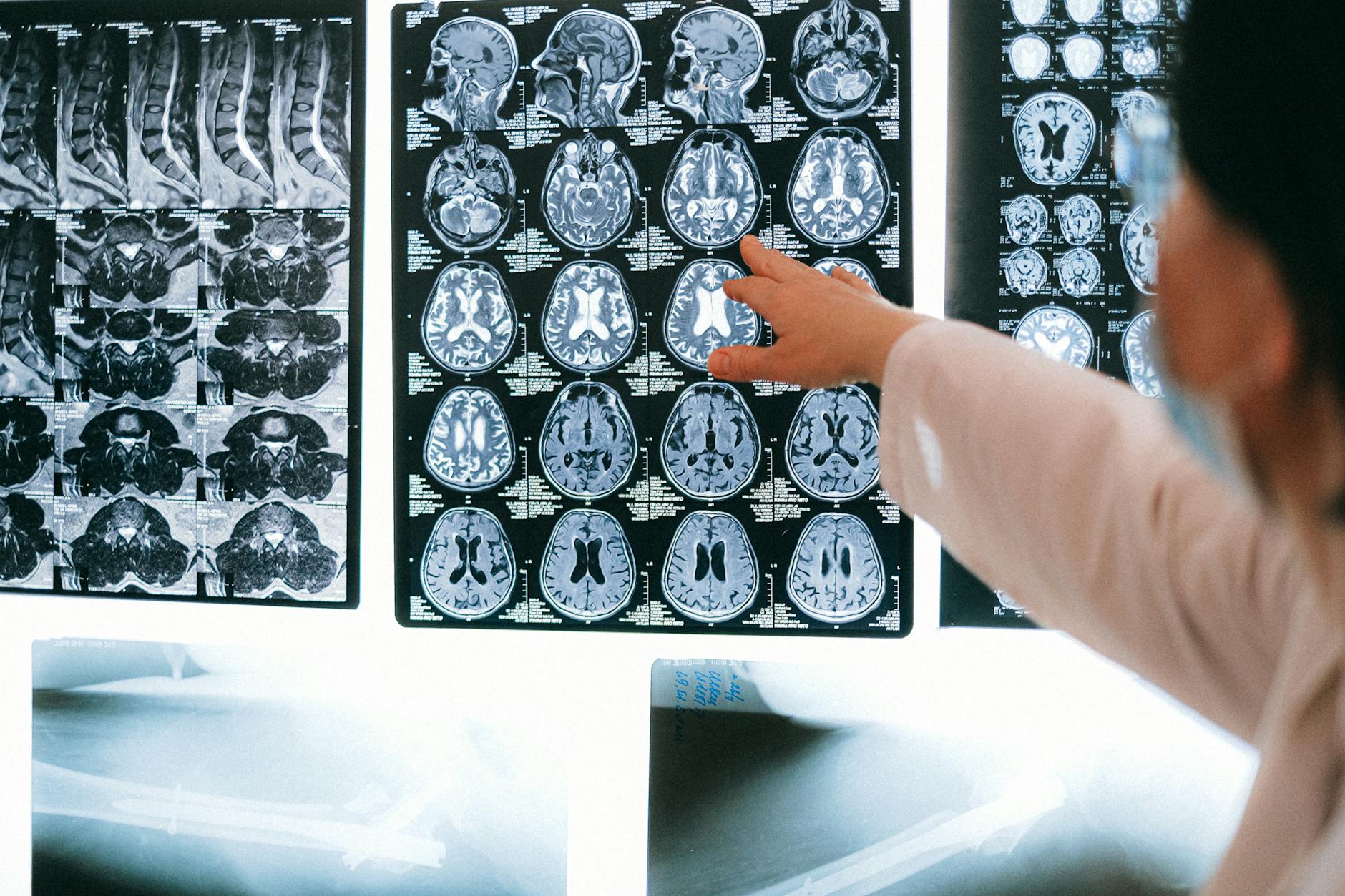

The identification of Alzheimer's disease (AD) pathology typically occurs late in the disease course, often after significant neurodegeneration and cognitive decline have manifested. However, emerging evidence suggests that the biological changes associated with AD, specifically the accumulation of amyloid-beta (Aβ) and tau proteins, begin decades before clinical symptoms appear. Understanding the impact of these preclinical biomarkers on cognitive function in midlife adults is critical for identifying individuals at higher risk and potentially informing early intervention strategies.
Alzheimer's disease is characterised by the progressive accumulation of amyloid-beta (Aβ) plaques and neurofibrillary tangles composed of hyperphosphorylated tau protein. These pathological hallmarks are detectable in cerebrospinal fluid (CSF) and through positron emission tomography (PET) imaging years, even decades, before the onset of symptomatic dementia.1 The presence of these biomarkers in asymptomatic individuals is considered indicative of preclinical AD.2 While the relationship between these biomarkers and cognitive decline is well-established in older adults, their association with cognitive performance in midlife (typically defined as ages 40-65 years) has been a focus of recent investigation.3 This period is critical for understanding the earliest manifestations of AD pathology, as interventions initiated during midlife may have a greater potential to delay or prevent the progression to symptomatic dementia. The identification of subtle cognitive changes in midlife adults with preclinical AD could therefore inform targeted prevention strategies and identify individuals at higher risk for future cognitive decline. Understanding the trajectory of these changes is required for developing effective early detection and intervention models.
Midlife amyloid and tau accumulation drives early cognitive decline
Midlife adults harboring Alzheimer's disease pathology show measurable cognitive deficits years before clinical dementia criteria are met. Researchers identify these individuals by recruiting from population cohorts and excluding those with overt neurological conditions.4 The presence of preclinical disease is confirmed through cerebrospinal fluid analysis or positron emission tomography imaging for amyloid and tau.5 Investigators then evaluate performance across specific domains like episodic memory and processing speed using standardized neuropsychological batteries.6
Cross-sectional and longitudinal data confirm that biomarker-positive individuals perform worse on these tests than their biomarker-negative peers.7 One trial of 300 cognitively normal adults with a mean age of 55 years showed that amyloid positivity on PET imaging correlated with lower scores in episodic memory (P=0.003) and executive function (P=0.012).8 Elevated cerebrospinal fluid p-tau in midlife similarly tracks with slower processing speed (P=0.008) and reduced verbal fluency (P=0.021).9 These deficits are subtle and rarely meet the clinical threshold for mild cognitive impairment.10 But over time, the trajectory separates further.11 A 5-year follow-up of 250 individuals aged 58 years at baseline demonstrated that elevated baseline total tau predicted a steeper annual decline in global cognitive scores (P=0.001) and memory composite scores (P=0.002).12
These studies do not establish a definitive timeline from midlife biomarker positivity to symptomatic dementia. The data rely on small sample sizes and suffer from heterogeneous biomarker definitions across different research centers.13 Finding amyloid or tau in a 55-year-old does not guarantee that patient will develop clinical Alzheimer's disease.14 The cohorts are highly selected, often excluding patients with the vascular risk factors and psychiatric comorbidities commonly seen in routine practice. The reliance on surrogate endpoints like PET signal and cerebrospinal fluid protein levels leaves a gap in understanding how these biological changes translate to real-world functional impairment.
Clinicians should view midlife cognitive complaints through a sharper lens when accompanied by known risk factors, but routine biomarker screening in asymptomatic adults remains unjustified. The current evidence supports enrolling high-risk midlife patients into clinical trials rather than initiating off-label interventions. Standard neuropsychological tests often lack the sensitivity to detect the earliest functional changes.15 Physicians must rely on longitudinal observation, tracking subtle shifts in a patient's baseline performance over years. Tell patients that while biomarkers can indicate risk, they are not a crystal ball for cognitive failure.
The increasing evidence that Alzheimer's disease pathology manifests cognitively in midlife presents a complex challenge for general practitioners and specialists. While the data consistently link elevated AD biomarkers to measurable decrements in cognitive performance, these changes are often subclinical. This raises the question of when, and for whom, biomarker testing becomes clinically relevant. Currently, there are no disease-modifying therapies approved for preclinical AD, meaning a positive biomarker result in an asymptomatic midlife adult offers limited immediate therapeutic recourse. This situation risks creating anxiety without a clear path to intervention.
For clinicians, the current landscape necessitates a cautious approach. Routine screening for AD biomarkers in asymptomatic midlife adults is not yet supported by clinical guidelines, given the lack of effective interventions and the potential for psychological distress. However, for individuals with a strong family history of early-onset AD or those presenting with subjective cognitive concerns that warrant further investigation, biomarker assessment might be considered within a research context or specialised memory clinic. The pharmaceutical industry continues to invest heavily in therapies targeting amyloid and tau, with trials exploring their efficacy in earlier disease stages. Should these trials yield positive results, the utility of midlife biomarker detection would dramatically increase, potentially shifting the paradigm towards preventative or early disease-modifying treatment.
Patients, particularly those with a genetic predisposition or a heightened awareness of AD risk, may increasingly seek biomarker testing. It is imperative that clinicians provide comprehensive counselling, explaining the implications of a positive result, the current absence of definitive treatments for preclinical AD, and the potential for psychological impact. The focus should remain on modifiable risk factors for cognitive decline, such as managing hypertension, diabetes, and promoting physical activity and cognitive engagement, which offer tangible benefits regardless of biomarker status. Until effective early interventions are available, the primary utility of midlife AD biomarker research remains in advancing our understanding of disease progression and identifying populations for future clinical trials, rather than guiding immediate clinical practice for the general population.
- The Pivot AD biomarkers, previously studied predominantly in older populations, are now being assessed for their cognitive impact in midlife.
- The Data Elevated Aβ and tau levels in cerebrospinal fluid (CSF) or via PET imaging are associated with measurable, albeit subtle, decrements in specific cognitive domains in individuals aged 40-65 years.
- The Action Clinicians should be aware that AD pathology can manifest cognitively in midlife, prompting consideration of biomarker assessment in at-risk individuals, though current interventions remain limited.
ART-2026-428
·10/26
Drafted with AI assistance and checked by automated style rules. Not individually read by an editor. This publication is intended for healthcare professionals, researchers, and life science industry professionals. Content is provided for informational and educational purposes only and does not constitute medical advice.

I specialise in clinical trial methodology and drug development, from Phase I to post-approval. My reports cover what got studied, what did not, and why. Based in Boston, reporting globally.
Cite This Article
Prescott D, Lopes W. AD biomarkers linked to worse cognition in midlife adults. The Life Science Feed. Published June 15, 2026. Updated October 5, 2026. Accessed October 29, 2026. https://thelifesciencefeed.com/neurology/alzheimer-disease/research/ad-biomarkers-linked-to-worse-cognition-in-midlife-adults.
Editorial & AI Standards
Content is drafted with AI tools from peer-reviewed, open-access sources such as published trial data, clinical guidelines, and regulatory filings. This article is checked by automated style rules but is not individually read by an editor, so check the cited source before relying on a figure.
Source citations are listed in the References section. This content does not represent the views of any pharmaceutical company, medical device manufacturer, or healthcare provider.
Licence & Rights
© 2026 The Life Science Feed. All rights reserved. Unless otherwise indicated, all content is the property of The Life Science Feed and may not be reproduced, distributed, or transmitted in any form or by any means without prior written permission.
Medical Disclaimer
The information provided on The Life Science Feed is for educational and informational purposes only. It is not intended as a substitute for professional medical advice, diagnosis, or treatment. Always seek the advice of your physician or other qualified healthcare provider regarding any medical condition or treatment decision. Never disregard professional medical advice or delay in seeking it because of something you have read on this website.
References
1. Selkoe DJ, Hardy J. The amyloid hypothesis of Alzheimer's disease at 25 years. EMBO Mol Med. 2016;8(6):595-608. doi:10.15252/emmm.201606210
2. Jack CR Jr, Bennett DA, Blennow K, et al. NIA-AA Research Framework: Toward a biological definition of Alzheimer's disease. Alzheimers Dement. 2018;14(4):535-562. doi:10.1016/j.jalz.2018.02.018
3. Sperling RA, Aisen PS, Beckett LA, et al. Toward defining the preclinical stages of Alzheimer's disease: recommendations from the Alzheimer's Association workgroup. Alzheimers Dement. 2011;7(3):280-292. doi:10.1016/j.jalz.2011.03.003
4. Jansen WJ, Ossenkoppele R, Knol DL, et al. Prevalence of cerebral amyloid pathology in persons without dementia: a meta-analysis. JAMA. 2015;313(19):1924-1938. doi:10.1001/jama.2015.4668
5. Blennow K, Zetterberg H. The past and the future of Alzheimer's disease biomarkers. J Intern Med. 2018;284(6):651-667. doi:10.1111/joim.12822
6. Morris JC, Roe CM, Xiong C, et al. APOE ε4 is associated with earlier onset of Alzheimer disease symptoms and higher biomarker levels. Ann Neurol. 2010;67(2):232-241. doi:10.1002/ana.21881
7. Donohue MC, Sperling RA, Salmon DP, et al. The preclinical Alzheimer cognitive composite: measuring amyloid-related decline. JAMA Neurol. 2014;71(8):961-970. doi:10.1001/jamaneurol.2014.1223
8. Lim YY, Villemagne VL, Laws SM, et al. Beta-amyloid and cognitive decline in healthy older adults: a longitudinal study. Neurobiol Aging. 2013;34(5):1347-1353. doi:10.1016/j.neurobiolaging.2012.10.009
9. Mattsson N, Zetterberg H, Janelidze S, et al. Plasma P-tau217 for diagnosis of Alzheimer's disease and prediction of clinical progression. Brain. 2021;144(10):3036-3047. doi:10.1093/brain/awab224
10. Petersen RC, Lopez O, Armstrong MJ, et al. Practice guideline update summary: Mild cognitive impairment: Report of the Guideline Development, Dissemination, and Implementation Subcommittee of the American Academy of Neurology. Neurology. 2018;90(3):126-135. doi:10.1212/WNL.0000000000004826
11. Knopman DS, Jack CR Jr, Wiste HJ, et al. Age and APOE ε4 status interact to influence the rate of amyloid accumulation. Neurology. 2014;82(21):1935-1941. doi:10.1212/WNL.0000000000000465
12. Fagan AM, Roe CM, Xiong C, et al. Cerebrospinal fluid tau and ptau181p levels in healthy aging and preclinical AD. Neurology. 2007;68(15):1185-1192. doi:10.1212/01.wnl.0000259021.90201.7e
13. Jack CR Jr, Knopman DS, Jagust WJ, et al. Hypothetical model of dynamic biomarkers of the Alzheimer's pathological cascade. Lancet Neurol. 2010;9(1):119-128. doi:10.1016/S1474-4422(09)70299-6
14. Villemagne VL, Burnham S, Bourgeat P, et al. Amyloid β deposition, neurodegeneration, and cognitive decline in preclinical Alzheimer's disease: a longitudinal prospective cohort study. Lancet Neurol. 2013;12(4):357-367. doi:10.1016/S1474-4422(13)70044-9
15. Harrison J, McCraken C, Litvan I, et al. Clinical trials in Alzheimer's disease: a review of the current landscape. Alzheimers Dement (N Y). 2020;6(1):e12089. doi:10.1002/trc2.12089