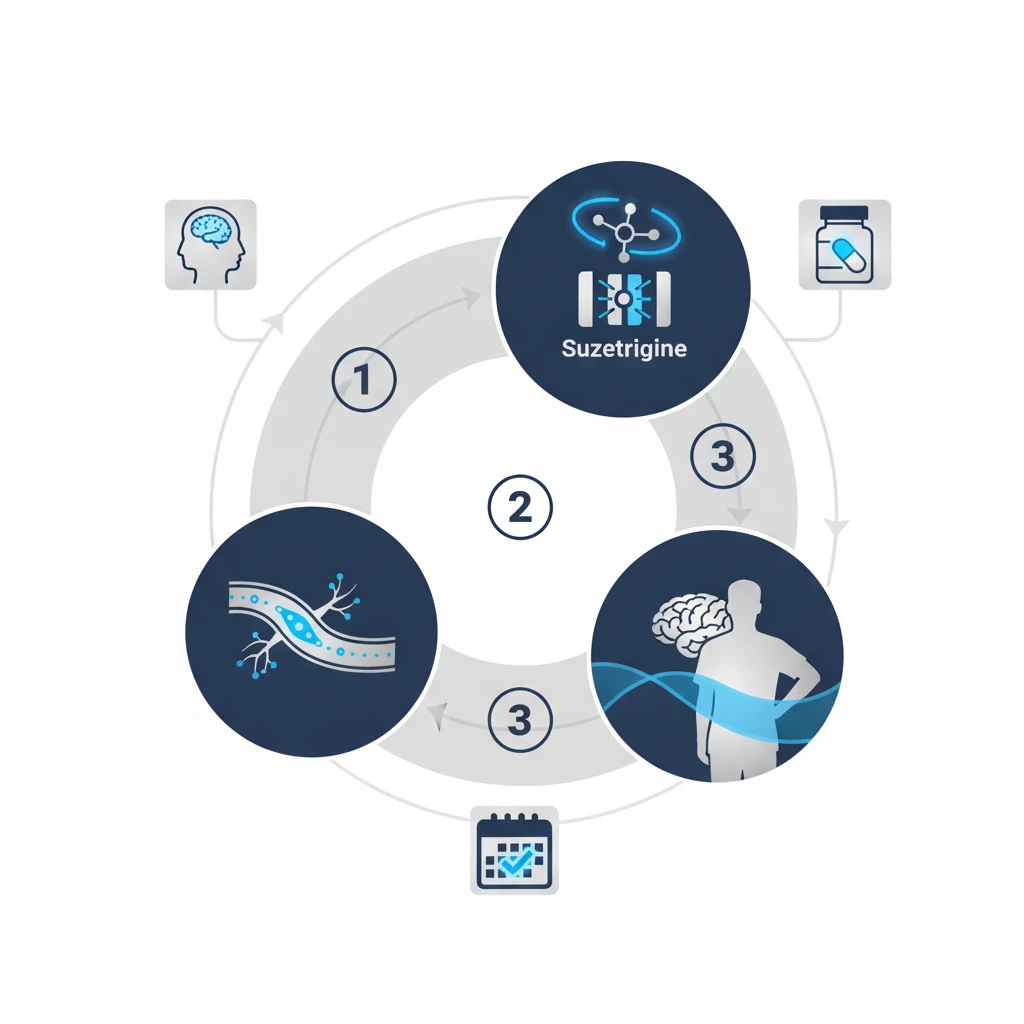

Neuropathic pain remains a significant clinical challenge, often poorly managed by current pharmacotherapies. Patients frequently cycle through multiple agents, experiencing inadequate relief and burdensome side effects. The introduction of suzetrigine, a selective Nav1.8 channel blocker, represents a new mechanistic approach to this persistent problem.
Neuropathic pain, a complex and debilitating condition, arises from damage or dysfunction of the somatosensory nervous system. Its manifestations are diverse, ranging from burning and shooting sensations to allodynia and hyperalgesia, significantly impacting quality of life. Current treatment options, including tricyclic antidepressants, serotonin-norepinephrine reuptake inhibitors, gabapentinoids, and topical agents, often provide only partial relief and are associated with dose-limiting adverse effects. This leaves a substantial unmet need for therapies that offer superior efficacy, better tolerability, or both.
The underlying pathophysiology of neuropathic pain involves a cascade of events, including peripheral sensitization, central sensitization, and maladaptive changes in neuronal excitability. Voltage-gated sodium channels (Nav) play a critical role in the generation and propagation of action potentials in neurons, making them attractive targets for analgesic development. Among the nine known Nav subtypes, Nav1.7, Nav1.8, and Nav1.9 are predominantly expressed in peripheral nociceptive neurons and are implicated in pain signaling. While non-selective sodium channel blockers have been used, their broad activity often leads to systemic side effects affecting cardiac and central nervous system function.
Targeting Nav1.8 Channels
Suzetrigine represents a selective antagonist of the Nav1.8 channel. This particular sodium channel subtype is expressed almost exclusively in primary afferent nociceptors, the neurons responsible for transmitting pain signals from the periphery to the central nervous system. Unlike other Nav channels, Nav1.8 channels are resistant to tetrodotoxin (TTX) and contribute significantly to the upstroke of action potentials in these pain-sensing neurons. By selectively blocking Nav1.8, suzetrigine aims to reduce neuronal excitability and pain signal transmission without affecting other Nav channels critical for normal physiological functions, such as cardiac conduction or motor control. This selectivity is the core of its proposed advantage over older, less specific sodium channel blockers.
The rationale for targeting Nav1.8 specifically stems from its unique biophysical properties and its restricted expression pattern. Nav1.8 channels activate and inactivate relatively slowly, contributing to sustained firing of nociceptors, particularly during inflammatory or neuropathic conditions. Their high expression in C-fibers and A-delta fibers, which transmit dull, aching, and sharp pain respectively, further supports their role as a key player in chronic pain states. Modulating these channels could theoretically dampen the persistent, aberrant firing that characterizes neuropathic pain.
The Clinical Landscape for Neuropathic Pain
Existing treatments for neuropathic pain often work through diverse mechanisms. Gabapentinoids, such as gabapentin and pregabalin, modulate voltage-gated calcium channels, reducing neurotransmitter release. Tricyclic antidepressants (TCAs) and serotonin-norepinephrine reuptake inhibitors (SNRIs) enhance descending inhibitory pain pathways by increasing synaptic concentrations of norepinephrine and serotonin. These agents, while effective for some, have limitations. TCAs carry anticholinergic side effects and cardiac risks, while gabapentinoids can cause sedation, dizziness, and weight gain. For some patients, cyclobenzaprine targets fibromyalgia pain by improving sleep, offering another avenue of relief.
Topical treatments, like lidocaine patches or capsaicin, offer localized relief with fewer systemic side effects but are often insufficient for widespread or severe neuropathic pain. The search for more effective and tolerable options has led to exploration of various targets, including other ion channels, neurotransmitter systems, and inflammatory mediators. The development of suzetrigine highlights a shift towards more precise pharmacological interventions, aiming to minimize off-target effects and improve the therapeutic index. This precision is particularly relevant for conditions like neuropathic corneal pain, where missing neuropathic corneal pain means prolonged patient suffering, and new mechanisms are desperately needed.
Safety and Tolerability Considerations
The promise of a selective Nav1.8 blocker lies in its potential for a more favorable safety profile compared to non-selective sodium channel inhibitors. Drugs that block multiple sodium channel subtypes can lead to significant adverse events, including cardiac arrhythmias, central nervous system depression, and gastrointestinal disturbances. By focusing on Nav1.8, suzetrigine aims to avoid these broader effects. But even selective agents can have unexpected off-target interactions or dose-dependent effects that emerge during clinical development. Any new analgesic must demonstrate not only efficacy but also a clear advantage in tolerability, especially for chronic conditions requiring long-term treatment. The Oxford Handbook of Neurology provides a comprehensive overview of the complex relationship of neurological pathways involved in pain perception and the various pharmacological approaches to its management.
The development of suzetrigine also raises questions about its place in the existing treatment algorithms. Will it be a first-line agent, or reserved for patients who have failed multiple other therapies? Its novel mechanism suggests it could be effective in patients who do not respond to current standards of care, offering a much-needed alternative. The long-term safety data will be crucial in determining its broader applicability and its role in chronic pain management, with the actual stake being patient well-being and improved quality of life. The potential for drug-drug interactions with other commonly prescribed medications for neuropathic pain will also need careful evaluation.
Unanswered Questions and Future Directions
While the mechanistic rationale for suzetrigine is compelling, the true impact on clinical practice will depend on its demonstrated efficacy and safety in diverse patient populations. Neuropathic pain is not a monolithic entity; it encompasses various etiologies, including diabetic neuropathy, postherpetic neuralgia, and trigeminal neuralgia, each with potentially different underlying pain mechanisms and treatment responses. Whether suzetrigine will show broad efficacy across these different forms of neuropathic pain, or if its benefits will be more pronounced in specific subgroups, remains to be seen. This is a common challenge for new pain therapies, as evidenced by ongoing research into urcosimod entering Phase 3 for neuropathic corneal pain, another condition with significant unmet needs.
The potential for combination therapies is another area of interest. Could suzetrigine be used in conjunction with existing agents to achieve synergistic pain relief or to allow for lower doses of each drug, thereby reducing side effects? Such strategies are common in chronic pain management, where multimodal approaches often yield better outcomes than monotherapy. The development of non-opioid analgesics like suzetrigine is a critical step in addressing the ongoing opioid crisis, offering alternatives that do not carry the same risks of dependence and addiction. The field continues to seek novel approaches to pain management, moving beyond the traditional reliance on opioids for chronic conditions. This shift is vital for improving patient outcomes and public health.
The arrival of suzetrigine, with its selective Nav1.8 blocking mechanism, offers a genuine point of differentiation in the crowded, yet often ineffective, landscape of neuropathic pain treatments, including the market, the guidelines, and the trial pipeline. Clinicians have long struggled with the limitations of gabapentinoids and antidepressants, which often provide only modest relief and come with their own set of tolerability issues. A truly selective agent could mean fewer off-target effects, translating to a better patient experience and potentially higher adherence.
But the real test will be how suzetrigine performs in the heterogeneous patient population seen in general practice. Neuropathic pain is rarely textbook, and what works for one patient with diabetic neuropathy may fail another with postherpetic neuralgia. The question is whether this novel mechanism translates into superior efficacy across a broad spectrum of neuropathic pain conditions, or if it will find its niche in specific, currently underserved patient groups.
The industry's focus on non-opioid analgesia is a welcome development, driven by both clinical need and public health imperatives. Suzetrigine represents a significant investment in a new pathway, and its success could open the door for further exploration of other selective ion channel modulators. This is not merely about adding another drug to the formulary; it is about providing a genuinely different option for patients who have exhausted current standards of care.
- The Pivot Suzetrigine targets Nav1.8 channels, a novel mechanism distinct from current neuropathic pain treatments.
- The Data Specific numeric results are not available for this general discussion.
- The Action Clinicians should understand the potential role of Nav1.8 modulation in neuropathic pain pathways as this class develops.
ART-2026-1266
·10/26
Drafted with AI assistance, reviewed and approved by the editorial team. This publication is intended for healthcare professionals, researchers, and life science industry professionals. Content is provided for informational and educational purposes only and does not constitute medical advice.

Infectious disease, epidemiology, and global health equity. I have covered outbreaks from Ebola to COVID-19 to mpox. The stories I am most drawn to are where the science is clear and the response is slow.
Cite This Article
Reeves T, Voss M. Suzetrigine: a new mechanism for neuropathic pain, but what does it mean for practice?. The Life Science Feed. Published August 27, 2026. Updated October 4, 2026. Accessed October 11, 2026. https://thelifesciencefeed.com/neurology/neuropathic-pain/innovation/suzetrigine-neuropathic-pain-mechanism.
Editorial & AI Standards
All content is researched from peer-reviewed, open-access sources: published trial data, clinical guidelines, and regulatory filings. AI tools are used solely to structure and summarise that evidence; no AI-generated conclusions appear without editor verification against the primary source.
Every article is reviewed by a named editor before publication. Source citations are listed in the References section. This content does not represent the views of any pharmaceutical company, medical device manufacturer, or healthcare provider.
Licence & Rights
© 2026 The Life Science Feed. All rights reserved. Unless otherwise indicated, all content is the property of The Life Science Feed and may not be reproduced, distributed, or transmitted in any form or by any means without prior written permission.
Medical Disclaimer
The information provided on The Life Science Feed is for educational and informational purposes only. It is not intended as a substitute for professional medical advice, diagnosis, or treatment. Always seek the advice of your physician or other qualified healthcare provider regarding any medical condition or treatment decision. Never disregard professional medical advice or delay in seeking it because of something you have read on this website.
References
1. Attal N, Bouhassira D, Colvin L. Advances and challenges in neuropathic pain: a narrative review and future directions. Br J Anaesth. 2023;131(1):79-92. doi:10.1016/j.bja.2023.04.021
2. van Hecke O, Austin SK, Khan RA, Smith BH, Torrance N. Neuropathic pain in the general population: a systematic review of epidemiological studies. Pain. 2014;155(4):654-662. doi:10.1016/j.pain.2013.11.013
3. Kaye AD, Armistead G, Amedio LS, et al. Evolving Treatment Strategies for Neuropathic Pain: A Narrative Review. Medicina (Kaunas). 2025;61(6). doi:10.3390/medicina61061063
4. Baron R, Binder A, Wasner G. Neuropathic pain: diagnosis, pathophysiological mechanisms, and treatment. Lancet Neurol. 2010;9(8):807-19. doi:10.1016/S1474-4422(10)70143-5
5. Mulvey MR, Paley CA, Schuberth A, King N, Page A, Neoh K. Neuropathic Pain in Cancer: What Are the Current Guidelines? Curr Treat Options Oncol. 2024;25(9):1193-1202. doi:10.1007/s11864-024-01248-7
6. Bouhassira D. Neuropathic pain: Definition, assessment and epidemiology. Rev Neurol (Paris). 2019;175(1-2):16-25. doi:10.1016/j.neurol.2018.09.016