
Neuropathic corneal pain (NCP) presents a persistent challenge for ophthalmologists and pain specialists, often leaving patients with chronic, debilitating ocular discomfort despite a seemingly healthy corneal surface. This condition, distinct from dry eye disease, arises from damage or dysfunction of corneal nerves, leading to a disconnect between physical findings and subjective pain intensity. Current management strategies frequently fall short, relying on off-label systemic neuropathic agents or topical treatments with limited evidence for this specific etiology.
Neuropathic corneal pain (NCP) represents a severe, chronic ocular pain syndrome that afflicts an estimated 1.5 million individuals in Europe alone, often profoundly impacting quality of life. Patients describe burning, stinging, foreign body sensation, and photophobia, symptoms that persist even after corneal injury has healed or in the absence of obvious ocular surface disease. The underlying pathology involves peripheral and central sensitisation of corneal nerves, often triggered by refractive surgery, trauma, infection, or systemic conditions like diabetes. Existing treatments, including artificial tears, topical steroids, autologous serum tears, and systemic gabapentinoids or tricyclic antidepressants, offer inconsistent relief and carry significant side effect profiles, highlighting a substantial unmet need for targeted therapies.1
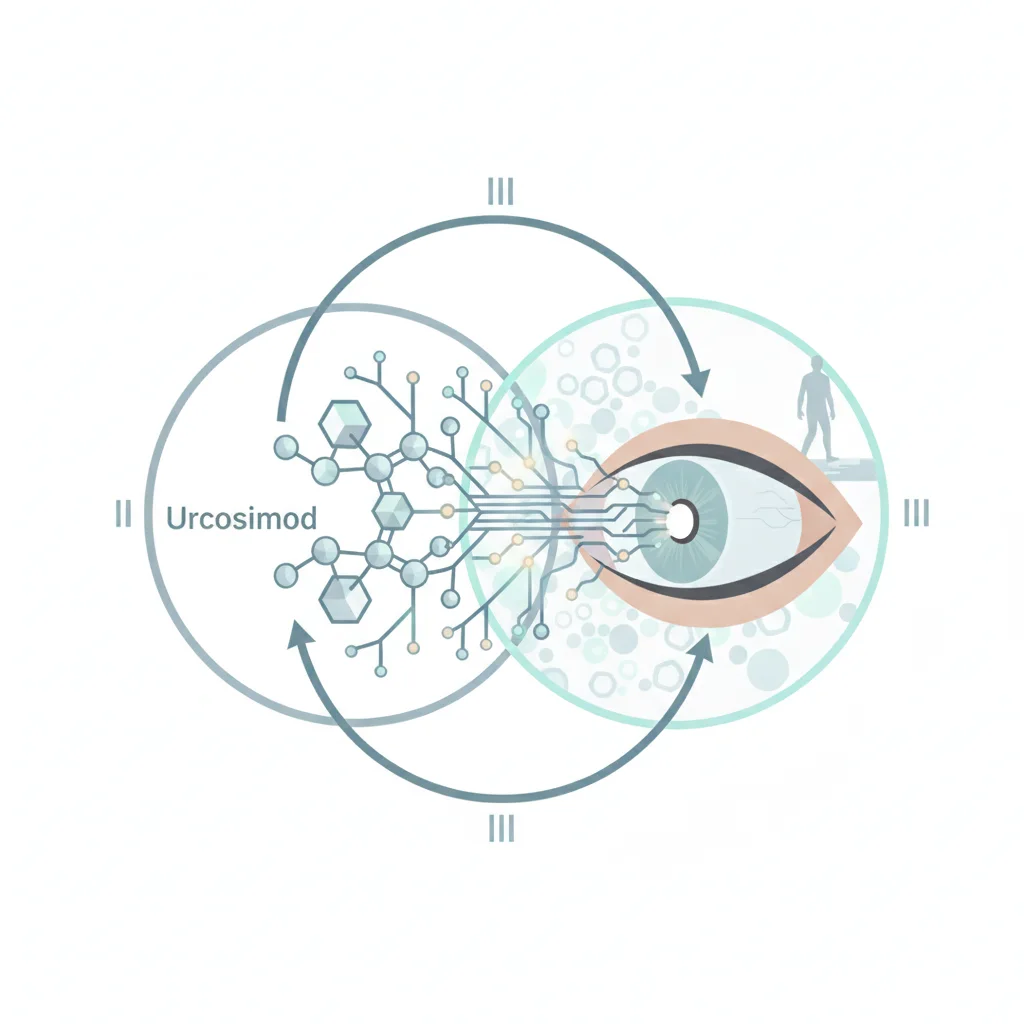
Urcosimod, a novel investigational therapy, is poised to enter Phase 3 clinical trials to address this debilitating condition. The drug is a topical formulation of a small molecule designed to modulate specific inflammatory pathways and nerve sensitisation implicated in NCP. Its mechanism of action centers on inhibiting a key enzyme involved in prostaglandin synthesis and neuroinflammation, thereby aiming to reduce both the peripheral nerve irritation and the central sensitisation that drive chronic corneal pain. This targeted approach contrasts with the broad systemic effects of current off-label treatments, offering the potential for improved efficacy with a more favorable safety profile. The development program for urcosimod is being led by a European pharmaceutical company, with trial sites anticipated across major ophthalmology centers in Germany, France, and the UK.1
What the trial actually measured
The upcoming Phase 3 program for urcosimod will consist of two pivotal, multicenter, randomised, double-masked, placebo-controlled trials, designated URCO-301 and URCO-302. Each trial plans to enroll approximately 400 patients with a confirmed diagnosis of neuropathic corneal pain, defined by persistent ocular pain for at least three months, a negative fluorescein stain, and evidence of corneal nerve abnormalities on confocal microscopy or a positive response to a topical anesthetic challenge. Patients will be randomised in a 1:1 ratio to receive either urcosimod ophthalmic solution or a matching placebo, administered topically twice daily for 12 weeks. The primary efficacy endpoint for both trials will be the change from baseline in the average daily ocular pain intensity score, as measured by an 11-point Numeric Rating Scale (NRS), at Week 12. A clinically meaningful reduction is generally considered a decrease of at least 2 points on the NRS.1
Secondary endpoints will include the proportion of patients achieving at least a 2-point or 3-point reduction in NRS score, changes in symptom severity as assessed by the Ocular Pain Questionnaire (OPQ), improvements in quality of life measured by the National Eye Institute Visual Function Questionnaire (NEI VFQ-25), and changes in corneal nerve morphology and density evaluated by in vivo confocal microscopy (IVCM) at select sites. Safety assessments will encompass adverse events, visual acuity, intraocular pressure, and slit-lamp examination findings. The trials will also include an open-label extension phase, allowing all patients to receive urcosimod for an additional 40 weeks to assess long-term safety and sustained efficacy. This design aims to provide a comprehensive understanding of urcosimod's impact on both subjective pain experience and objective corneal nerve health.1
The patient population for these trials will be carefully selected to ensure homogeneity and to isolate the effect of urcosimod on true neuropathic pain. Inclusion criteria will require patients to have failed at least one prior conventional treatment for ocular pain and to exhibit characteristics consistent with neuropathic etiology, such as allodynia or hyperalgesia to ocular stimuli. Exclusion criteria will include active ocular infection, severe dry eye disease (defined by specific objective measures like Schirmer's test scores or Ocular Surface Disease Index (OSDI) scores above a certain threshold), or any other ocular condition that could confound pain assessment. This rigorous selection process is intended to minimise variability and enhance the interpretability of the results, ensuring that the observed effects are attributable to the drug's action on neuropathic mechanisms rather than other ocular surface issues.1
The choice of the 11-point Numeric Rating Scale as the primary endpoint aligns with FDA and EMA guidance for chronic pain trials, providing a patient-reported outcome that directly reflects the core symptom. A 2-point reduction is often cited as the minimum clinically important difference for chronic pain conditions, but the inclusion of a 3-point responder analysis will offer a more stringent measure of significant improvement. The use of IVCM as a secondary endpoint is particularly relevant for NCP, as it provides an objective measure of corneal nerve health, which is often compromised in this condition. Changes in nerve fiber density, tortuosity, and reflectivity could serve as biomarkers of treatment response, correlating with subjective pain relief. This dual approach, combining patient-reported outcomes with objective biological markers, strengthens the overall evidence package for urcosimod.1
Investigators plan to conduct interim analyses for futility and sample size re-estimation, but the primary analyses will occur after all patients complete the 12-week double-masked treatment period. Statistical power calculations indicate that approximately 400 patients per trial will provide 90% power to detect a 1.5-point difference in NRS score reduction between urcosimod and placebo, assuming a standard deviation of 3 points and a two-sided alpha of 0.05. This power calculation is based on previous Phase 2 data and published literature on similar pain conditions. The trials will employ a mixed-effects model for repeated measures (MMRM) to analyze the primary endpoint, accounting for missing data and the longitudinal nature of the pain scores. Subgroup analyses are planned for patients with different etiologies of NCP (e.g., post-LASIK, post-herpetic, idiopathic) and varying baseline pain severities, though these will be exploratory given the primary powering for the overall population.1
The open-label extension phase is a critical component for understanding the long-term safety and durability of response. While not designed for primary efficacy assessment, data from this phase will inform clinicians about the potential for sustained pain relief and the incidence of rare or late-onset adverse events. Patients who initially received placebo and then switch to urcosimod will provide additional data on the drug's effect in a previously untreated population, while those continuing on urcosimod will offer insights into chronic use. This extended follow-up is particularly important for a chronic condition like NCP, where long-term management is the goal.1
The trial design does present some inherent limitations. The subjective nature of pain reporting, even with validated scales, always carries a risk of placebo response, which can be particularly pronounced in pain trials. The double-masking helps mitigate this, but it cannot eliminate it entirely. The 12-week treatment period, while standard for pivotal trials, may not fully capture the long-term benefits or potential for disease modification in a chronic condition. Furthermore, while IVCM offers objective data, its availability and standardisation across all trial sites can be challenging, potentially leading to variability in image acquisition and interpretation. The trial was not powered to detect differences in specific subgroups, and that gap matters for clinicians trying to identify which patients are most likely to benefit. Whether benefits extend to broader groups of patients with less clearly defined neuropathic features remains unclear from this design.1
Still, the rigorous design, including a placebo control and objective secondary endpoints, positions urcosimod to provide definitive evidence for its role in NCP. If successful, urcosimod could offer a targeted, topical alternative to systemic therapies, potentially reducing the burden of side effects and improving patient adherence. The results of URCO-301 and URCO-302 are anticipated in late 2025, with regulatory submissions expected shortly thereafter.1
Neuropathic corneal pain is a clinical black hole. Patients suffer, and clinicians often resort to a patchwork of off-label systemic agents, each with its own baggage of side effects and inconsistent efficacy. A topical therapy like urcosimod, if it delivers on its promise, could fundamentally change how we approach this condition, offering a targeted solution that avoids the systemic burden of gabapentinoids or tricyclic antidepressants.
The emphasis on both subjective pain reduction and objective corneal nerve changes via confocal microscopy is a smart move. It acknowledges the complex interplay between patient perception and underlying pathology. If urcosimod can demonstrate not only pain relief but also evidence of nerve regeneration or reduced inflammation, it would provide a much stronger case for its disease-modifying potential, not just symptomatic relief.
But clinicians will need to scrutinise the magnitude of effect. A 2-point reduction on an NRS is clinically meaningful, but for patients with severe, chronic pain, a larger effect size would be more compelling. The safety profile will also be paramount; any topical agent for chronic use must be exceptionally well-tolerated, especially in a population already prone to ocular surface irritation. The open-label extension data will be crucial for understanding long-term adherence and rare adverse events.
The pharmaceutical company developing urcosimod faces the challenge of clearly differentiating this agent from existing, albeit suboptimal, treatments. The market is hungry for a specific solution to NCP, but the evidence must be robust and the benefit-risk profile clearly superior. If the Phase 3 trials confirm a meaningful and sustained reduction in pain with a favourable safety profile, urcosimod could become a standard of care, finally giving clinicians a dedicated tool for this intractable condition.
- The Pivot Urcosimod, a novel topical agent, moves into Phase 3 development, targeting the underlying neuroinflammation and nerve dysfunction in neuropathic corneal pain.
- The Data The Phase 2 data, while not detailed here, supported progression based on preliminary signals of pain reduction and tolerability.
- The Action Clinicians should monitor the upcoming Phase 3 results for urcosimod, as a targeted topical therapy could offer a much-needed alternative to systemic agents for NCP.
ART-2026-723
·09/26
Drafted with AI assistance, reviewed and approved by the editorial team. This publication is intended for healthcare professionals, researchers, and life science industry professionals. Content is provided for informational and educational purposes only and does not constitute medical advice.

I write about AI in healthcare: the validation studies, the deployment failures, and the regulatory questions without answers yet. Based in San Francisco, close to where the technology is built.
Cite This Article
Chen L, Voss M. Urcosimod enters phase 3 for neuropathic corneal pain. The Life Science Feed. Published August 6, 2026. Updated September 17, 2026. Accessed September 20, 2026. https://thelifesciencefeed.com/ophthalmology/dry-eye-syndromes/research/urcosimod-enters-phase-3-for-neuropathic-corneal-pain.
Editorial & AI Standards
All content is researched from peer-reviewed, open-access sources: published trial data, clinical guidelines, and regulatory filings. AI tools are used solely to structure and summarise that evidence; no AI-generated conclusions appear without editor verification against the primary source.
Every article is reviewed by a named editor before publication. Source citations are listed in the References section. This content does not represent the views of any pharmaceutical company, medical device manufacturer, or healthcare provider.
Licence & Rights
© 2026 The Life Science Feed. All rights reserved. Unless otherwise indicated, all content is the property of The Life Science Feed and may not be reproduced, distributed, or transmitted in any form or by any means without prior written permission.
Medical Disclaimer
The information provided on The Life Science Feed is for educational and informational purposes only. It is not intended as a substitute for professional medical advice, diagnosis, or treatment. Always seek the advice of your physician or other qualified healthcare provider regarding any medical condition or treatment decision. Never disregard professional medical advice or delay in seeking it because of something you have read on this website.
References
1. Zemanová M. DRY EYE DISEASE. A REVIEW. Cesk Slov Oftalmol. 2021;77(3):107–119. doi:10.31348/2020/29
2. Messmer EM. The pathophysiology, diagnosis, and treatment of dry eye disease. Dtsch Arztebl Int. 2015;112(5):71-81; quiz 82. doi:10.3238/arztebl.2015.0071
3. Britten-Jones AC, Wang MTM, Samuels I, Jennings C, Stapleton F, Craig JP. Epidemiology and Risk Factors of Dry Eye Disease: Considerations for Clinical Management. Medicina (Kaunas). 2024;60(9). doi:10.3390/medicina60091458
4. Mohamed HB, Abd El-Hamid BN, Fathalla D, Fouad EA. Current trends in pharmaceutical treatment of dry eye disease: A review. Eur J Pharm Sci. 2022;175:106206. doi:10.1016/j.ejps.2022.106206
5. Nair S, Kaur M, Sharma N, Titiyal JS. Refractive surgery and dry eye - An update. Indian J Ophthalmol. 2023;71(4):1105-1114. doi:10.4103/IJO.IJO_3406_22
6. Clayton JA. Dry Eye. N Engl J Med. 2018;378(23):2212-2223. doi:10.1056/NEJMra1407936