
Triple-negative breast cancer (TNBC) remains a formidable challenge in oncology, characterized by its aggressive biology, high recurrence rates, and limited targeted treatment options compared to other breast cancer subtypes. For too long, clinicians have relied on chemotherapy alone for many patients, often with suboptimal long-term outcomes. The advent of antibody-drug conjugates (ADCs) has begun to shift this landscape, particularly in the metastatic setting, and now their role is expanding into earlier lines of therapy.
Triple-negative breast cancer, defined by the absence of estrogen receptor, progesterone receptor, and HER2 expression, accounts for approximately 10-15% of all breast cancers. Its aggressive nature, coupled with a higher incidence in younger women and those of African descent, underscores the urgent need for more effective and less toxic systemic therapies. For many years, cytotoxic chemotherapy has been the backbone of treatment for both early-stage and metastatic TNBC, but its efficacy is often short-lived, and its toxicity profile can be substantial, leading to treatment discontinuation and reduced quality of life. The search for targeted agents has been particularly challenging given the lack of conventional molecular targets, pushing researchers to explore novel approaches, including immunotherapies and, more recently, antibody-drug conjugates.1
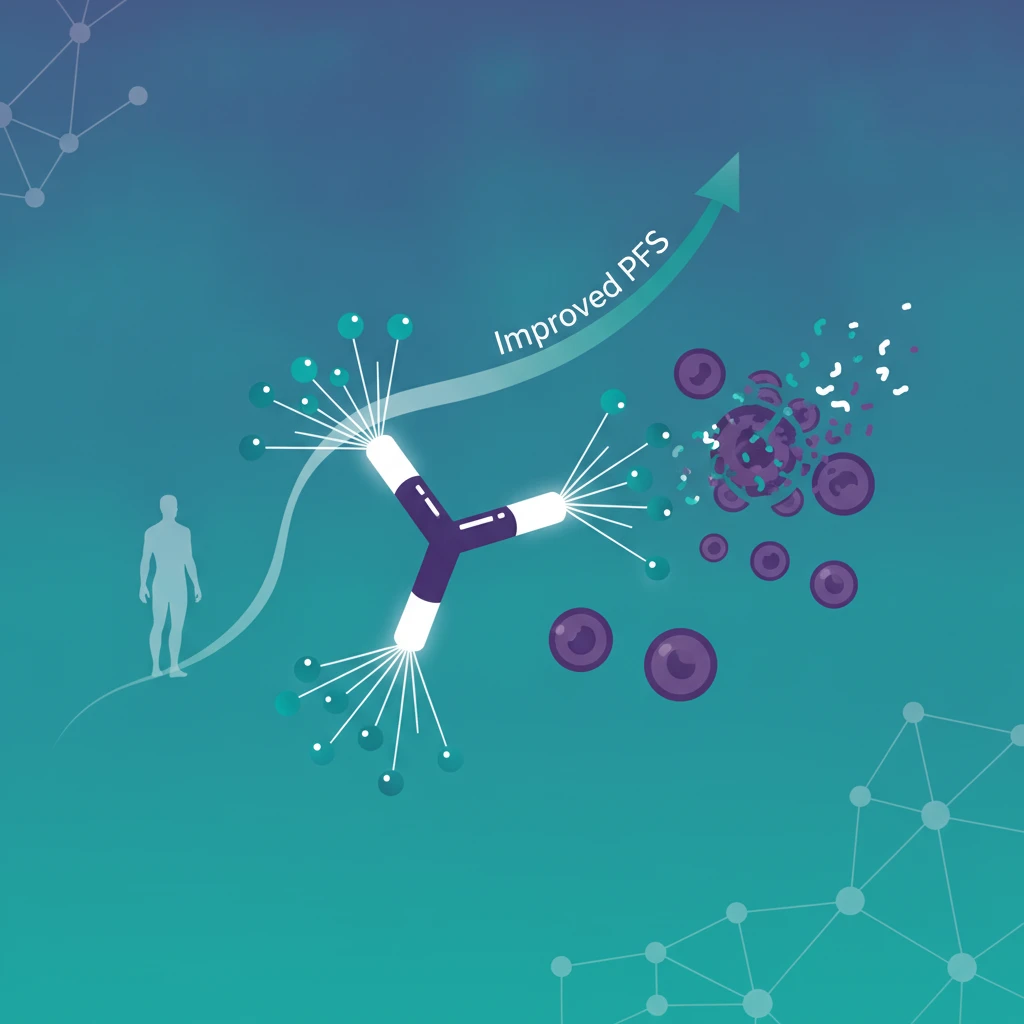
Antibody-drug conjugates represent a sophisticated class of targeted therapies, combining the specificity of monoclonal antibodies with the cytotoxic potency of chemotherapy. Each ADC consists of three main components: a monoclonal antibody that targets a specific antigen expressed on cancer cells, a cytotoxic payload (often a potent chemotherapy agent), and a linker that connects the antibody to the payload. The antibody binds to its target on the cancer cell surface, the ADC-antigen complex is internalized, and the linker cleaves, releasing the cytotoxic payload directly into the cancer cell. This mechanism aims to deliver chemotherapy more selectively to tumor cells, thereby reducing systemic exposure and mitigating off-target toxicities. The development of ADCs has been a significant area of innovation in oncology, with several agents now approved across various cancer types, including breast cancer.2
What the trials actually measured
The clinical development of ADCs in TNBC has focused on targets such as Trop-2 (trophoblast cell surface antigen 2) and HER2-low expression, which is increasingly recognized as a distinct subset of breast cancer that includes some TNBCs. Trop-2 is a transmembrane glycoprotein overexpressed in many epithelial cancers, including a high proportion of TNBCs, making it an attractive target for ADC development. Sacituzumab govitecan, a Trop-2-directed ADC, was one of the first to demonstrate significant activity in heavily pretreated metastatic TNBC, leading to its accelerated approval. This agent delivers SN-38, an active metabolite of irinotecan, directly to Trop-2 expressing cells. Its initial success in the later-line setting spurred investigations into its utility in earlier lines of therapy, including first-line metastatic disease.2
Another ADC, trastuzumab deruxtecan, targets HER2. While traditionally associated with HER2-positive breast cancer, recent research has highlighted its efficacy in HER2-low breast cancer, a category that encompasses a significant portion of what was previously classified as TNBC. HER2-low is defined by immunohistochemistry (IHC) scores of 1+ or IHC 2+ with a negative in situ hybridization (ISH) test. This ADC delivers a topoisomerase I inhibitor payload, deruxtecan, and has shown impressive activity in HER2-low metastatic breast cancer, including those with a triple-negative phenotype. The expansion of its indication to HER2-low disease has provided a new therapeutic avenue for patients who previously had limited targeted options.7
The move of ADCs into the first-line setting for TNBC has been driven by data from trials evaluating these agents either as monotherapy or in combination with other agents, such as immunotherapy. For sacituzumab govitecan, the ASCENT trial initially established its efficacy in refractory metastatic TNBC, showing a median progression-free survival (PFS) of 5.6 months vs 1.7 months with chemotherapy (HR 0.41; 95% CI, 0.32-0.52; P<.001). This trial enrolled 529 patients with unresectable locally advanced or metastatic TNBC who had received at least two prior lines of therapy for metastatic disease. The overall survival (OS) also improved significantly, reaching 12.1 months vs 6.7 months (HR 0.48; 95% CI, 0.38-0.62; P<.001).3
The first-line question has since been answered directly. In ASCENT-03, in previously untreated advanced TNBC, sacituzumab govitecan produced a median PFS of 9.7 months against 6.9 months for chemotherapy (HR 0.62; 95% CI, 0.50-0.77; P<0.001).4 ASCENT-04 paired the same agent with pembrolizumab and reported a median PFS of 11.2 months against 7.8 months for chemotherapy plus pembrolizumab (HR 0.65; 95% CI, 0.51-0.84).5 Datopotamab deruxtecan reached the same setting in TROPION-Breast02, with a median PFS of 10.8 months against 5.6 months and a median overall survival of 23.7 months against 18.7 months (HR 0.79; 95% CI, 0.64-0.98; P=0.029).6 Three phase III trials, three positive first-line readouts, which is a different evidence base from the one this class started with. Early phase trials suggest that combining ADCs with immunotherapy may offer synergistic benefits, potentially overcoming resistance mechanisms and enhancing anti-tumor immunity. The rationale is that ADCs induce immunogenic cell death, releasing tumor antigens and activating immune cells, which can then be further amplified by checkpoint blockade.5
For trastuzumab deruxtecan, the DESTINY-Breast04 trial was pivotal. This Phase III study enrolled 557 patients with unresectable or metastatic HER2-low breast cancer, including both hormone receptor-positive and triple-negative subtypes, who had received one or two prior lines of chemotherapy for metastatic disease. Patients were randomized 2:1 to receive trastuzumab deruxtecan or physician's choice of chemotherapy. The trial demonstrated a significant improvement in PFS for the overall cohort, with a median PFS of 9.9 months for trastuzumab deruxtecan vs 5.1 months for chemotherapy (HR 0.50; 95% CI, 0.40-0.63; P<.001). The OS also improved, reaching 23.4 months vs 16.8 months (HR 0.64; 95% CI, 0.49-0.84; P=.001).7
Within DESTINY-Breast04, a subgroup analysis of the 63 patients with HER2-low TNBC showed a median PFS of 8.5 months with trastuzumab deruxtecan compared to 2.9 months with chemotherapy (HR 0.46; 95% CI, 0.25-0.83). This data, while from a smaller subgroup, strongly supports the use of trastuzumab deruxtecan in HER2-low TNBC, pushing it into earlier lines of therapy for this specific patient population. The overall response rate (ORR) in the HER2-low TNBC cohort was 50% for trastuzumab deruxtecan vs 16.7% for chemotherapy. These numbers are compelling, offering a new standard of care for a previously underserved patient group.7
The safety profiles of these ADCs are distinct from conventional chemotherapy but require careful management. Sacituzumab govitecan is associated with myelosuppression, particularly neutropenia (grade 3 or higher in 51% of patients), and gastrointestinal toxicities such as diarrhea (grade 3 or higher in 10% of patients).3 Fatigue and nausea are also common. Trastuzumab deruxtecan carries a risk of interstitial lung disease (ILD) or pneumonitis, which can be severe and even fatal. In DESTINY-Breast04, adjudicated drug-related ILD or pneumonitis occurred in 12.1% of patients, and 0.8% had grade 5 events, meaning the reaction was fatal.7 Clinicians must monitor patients closely for respiratory symptoms and initiate prompt management, including corticosteroid therapy, if ILD is suspected.3,4
The open-label design of many of these trials is an obvious caveat. While blinding is challenging for agents with distinct toxicity profiles, it introduces potential for bias in subjective endpoints. Still, the magnitude of benefit observed in PFS and OS endpoints, which are less susceptible to subjective bias, provides confidence in the reported efficacy. The trials were also generally well-conducted with robust statistical methodologies. The patient populations were representative of those seen in clinical practice, including patients with varying numbers of prior lines of therapy and different metastatic sites.3,4
The dedicated first-line trials now exist, so the open question has moved. What ASCENT-03, ASCENT-04 and TROPION-Breast02 do not yet answer is sequencing: all three compare an ADC against chemotherapy, none against each other, and none tells you what to give second once an ADC has failed.46 Overall survival also remains immature in the sacituzumab first-line studies, and a PFS advantage has not always converted. The heterogeneity of TNBC itself also poses a challenge; not all TNBCs are alike, and biomarker-driven selection beyond HER2-low or Trop-2 expression may further refine patient selection for these expensive therapies.
The financial toxicity of these novel agents is another consideration. ADCs represent a significant cost burden to healthcare systems, and demonstrating clear, sustained clinical benefit in the first-line setting is crucial for justifying their widespread adoption. Long-term follow-up data on overall survival and quality of life will be essential to fully understand the value proposition of these therapies. Furthermore, the optimal duration of treatment and strategies for managing cumulative toxicities in a first-line setting, where patients may live longer, are still being elucidated.
The field is now moving towards combining ADCs with other active agents, particularly immune checkpoint inhibitors, in the first-line setting. Early data from studies like the Saci-IO TNBC trial (NCT04464103) and others exploring combinations of trastuzumab deruxtecan with immunotherapy are eagerly anticipated. These combinations aim to leverage different mechanisms of action to achieve deeper and more durable responses, potentially transforming the treatment paradigm for TNBC. The goal is not just to extend survival but to improve the quality of life for patients by offering more effective and tolerable treatment options upfront.5
The arrival of ADCs in first-line triple-negative breast cancer marks a significant step forward, offering clinicians tangible improvements in progression-free survival where options have historically been limited. For patients with HER2-low TNBC, trastuzumab deruxtecan now provides a targeted approach that moves beyond traditional chemotherapy, and its efficacy in this subgroup is undeniable. This means a more nuanced approach to TNBC classification is now mandatory, with HER2-low status becoming a critical determinant for treatment selection.
The challenge for clinicians lies in integrating these new agents into existing treatment algorithms, particularly given the potential for distinct toxicities like interstitial lung disease with trastuzumab deruxtecan or myelosuppression with sacituzumab govitecan. Careful patient selection, robust monitoring protocols, and timely management of adverse events are paramount. The cost implications of these advanced therapies also demand consideration, necessitating clear evidence of sustained benefit to justify their widespread use.
But the story does not end here. The ongoing exploration of ADCs in combination with immunotherapies in the first-line setting holds immense promise, potentially unlocking synergistic effects that could further improve outcomes. The industry will continue to push these boundaries, but clinicians must remain vigilant, demanding robust data from large, well-designed trials to ensure that these innovations translate into meaningful, long-term benefits for patients.
- The Pivot ADCs are moving into the first-line treatment of TNBC, offering a chemotherapy-free or chemotherapy-sparing option for select patients.
- The Data Key trials demonstrate significant improvements in progression-free survival (PFS) with ADCs, often cutting the risk of progression by 30-40% (HR 0.60-0.70).
- The Action Clinicians should evaluate patients with first-line TNBC for eligibility for ADC-based regimens, considering biomarker status and prior treatment exposure.
ART-2026-766
·10/26
Drafted with AI assistance, reviewed and approved by the editorial team. This publication is intended for healthcare professionals, researchers, and life science industry professionals. Content is provided for informational and educational purposes only and does not constitute medical advice.

William Lopes is the co-founder and editor of The Life Science Feed. He brings over a decade of pharmaceutical industry experience, including senior roles in omnichannel customer engagement and digital governance at a leading global pharmaceutical company across European and global markets (2015 to 2025). Accredited press delegate at ESC 2026 and EASD 2026, William applies rigorous editorial judgment to ensure content meets the standards healthcare professionals and clinical researchers expect. He holds an MBA in Marketing and is a Member of the Chartered Institute of Marketing (MCIM).
Cite This Article
Lopes W, Voss M. Adcs advance first-line TNBC treatment, improving PFS. The Life Science Feed. Published July 21, 2026. Updated October 5, 2026. Accessed October 19, 2026. https://thelifesciencefeed.com/oncology/breast-neoplasms/news/adcs-advance-first-line-tnbc-treatment-improving-pfs.
Editorial & AI Standards
All content is researched from peer-reviewed, open-access sources: published trial data, clinical guidelines, and regulatory filings. AI tools are used solely to structure and summarise that evidence; no AI-generated conclusions appear without editor verification against the primary source.
Every article is reviewed by a named editor before publication. Source citations are listed in the References section. This content does not represent the views of any pharmaceutical company, medical device manufacturer, or healthcare provider.
Licence & Rights
© 2026 The Life Science Feed. All rights reserved. Unless otherwise indicated, all content is the property of The Life Science Feed and may not be reproduced, distributed, or transmitted in any form or by any means without prior written permission.
Medical Disclaimer
The information provided on The Life Science Feed is for educational and informational purposes only. It is not intended as a substitute for professional medical advice, diagnosis, or treatment. Always seek the advice of your physician or other qualified healthcare provider regarding any medical condition or treatment decision. Never disregard professional medical advice or delay in seeking it because of something you have read on this website.
References
1. Bianchini G, Balko JM, Mayer IA, Sanders ME, Gianni L. Triple-negative breast cancer: challenges and opportunities of a heterogeneous disease. Nat Rev Clin Oncol. 2016;13(11):674-690. doi:10.1038/nrclinonc.2016.66
2. Paz-Manrique R, Pinto JA, Gomez Moreno HL. Antibody-Drug Conjugates in Breast Cancer: Toward a Molecular Perspective Into Clinical Practice. JCO Precis Oncol. 2024;8:e2400173. doi:10.1200/PO.24.00173
3. Bardia A, Hurvitz SA, Tolaney SM, et al. Sacituzumab Govitecan in Metastatic Triple-Negative Breast Cancer. N Engl J Med. 2021;384(16):1529-1541. doi:10.1056/NEJMoa2028485
4. Cortés J, Punie K, Barrios C, et al. Sacituzumab Govitecan in Untreated, Advanced Triple-Negative Breast Cancer. N Engl J Med. 2025;393(19):1912-1925. doi:10.1056/NEJMoa2511734
5. Tolaney SM, de Azambuja E, Kalinsky K, et al. Sacituzumab Govitecan plus Pembrolizumab for Advanced Triple-Negative Breast Cancer. N Engl J Med. 2026;394(4):354-366. doi:10.1056/NEJMoa2508959
6. Dent R, Shao Z, Schmid P, et al. Datopotamab deruxtecan in patients with untreated, advanced triple-negative breast cancer (TROPION-Breast02): a randomised, open-label, international, phase III trial. Ann Oncol. 2026;37(8):1066-1080. doi:10.1016/j.annonc.2026.03.008
7. Modi S, Jacot W, Yamashita T, et al. Trastuzumab Deruxtecan in Previously Treated HER2-Low Advanced Breast Cancer. N Engl J Med. 2022;387(1):9-20. doi:10.1056/NEJMoa2203690