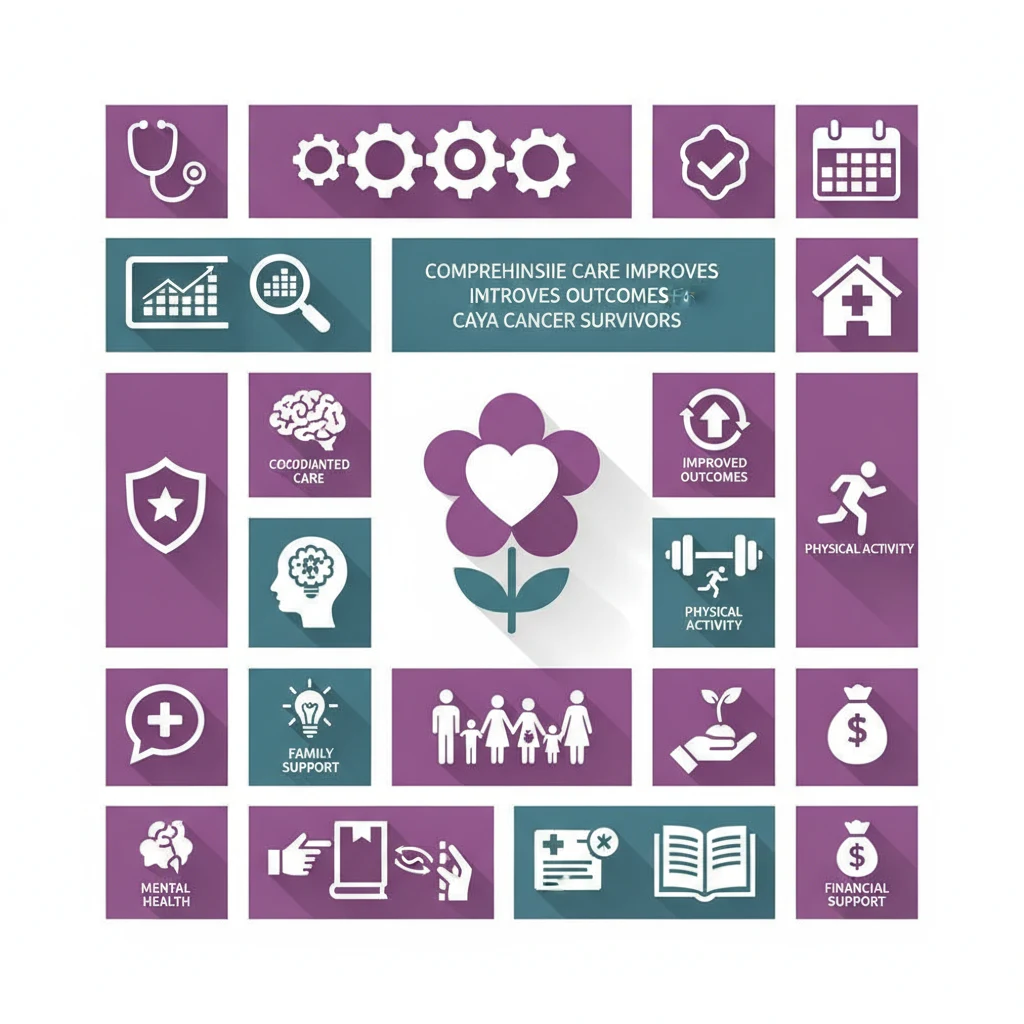

Childhood, adolescent, and young adult (CAYA) cancer survivors face a heightened risk of long-term health complications, including cardiovascular disease, secondary malignancies, and endocrine dysfunction, necessitating structured post-treatment care. The imperative is to establish comprehensive, multidisciplinary care pathways that address these diverse needs, thereby improving long-term morbidity and mortality.
Survivors of childhood, adolescent, and young adult (CAYA) cancers represent a growing population, with survival rates for many paediatric malignancies now exceeding 80%.1 However, this success in acute treatment has brought increased attention to the significant burden of late effects, which can manifest years or even decades after therapy completion. These late effects encompass a broad spectrum of conditions, including cardiovascular toxicity, secondary neoplasms, neurocognitive deficits, endocrine dysfunction, and psychosocial challenges.2 The specific risks are largely dependent on the primary cancer diagnosis, the type and intensity of chemotherapy, radiation fields, and surgical interventions received. For instance, anthracycline exposure is a known risk factor for cardiomyopathy, while cranial radiation increases the risk of neurocognitive impairment and secondary brain tumours.3
The complexity and multifactorial nature of these late effects necessitate a structured approach to survivorship care. Without dedicated follow-up, many survivors may not receive appropriate screening or intervention for emerging complications, potentially leading to advanced disease states and diminished quality of life.4 The challenge for general practitioners and specialists is to identify these at-risk individuals and integrate them into comprehensive surveillance programmes tailored to their individual treatment history. This proactive approach is crucial, as many late effects are asymptomatic in their early stages, making routine screening essential for timely detection and management. The long latency period for some complications, such as secondary malignancies, further underscores the need for lifelong surveillance. The patient population for CAYA cancer survivors is diverse, encompassing individuals treated for leukaemias, lymphomas, solid tumours, and central nervous system malignancies, each with distinct risk profiles for late effects.
Implementing Comprehensive Survivorship Care
Comprehensive care models for CAYA cancer survivors typically involve a multidisciplinary team, including oncologists, cardiologists, endocrinologists, neurologists, psychologists, and social workers. These programmes aim to provide risk-stratified screening, health promotion, and timely intervention for late effects. Key components often include a detailed treatment summary and a personalised survivorship care plan, which outlines specific surveillance recommendations based on the patient's cancer diagnosis and treatment exposures.5
For example, survivors exposed to cardiotoxic agents such as anthracyclines require regular cardiac monitoring, which may include echocardiograms or cardiac MRI, to detect early signs of left ventricular dysfunction.6 Anthracyclines, through mechanisms involving topoisomerase II inhibition and reactive oxygen species generation, can lead to myocyte damage and subsequent cardiac remodelling. Similarly, those who received radiation to the neck or chest may need thyroid function tests and mammography at an earlier age than the general population, given their elevated risk of thyroid cancer and breast cancer, respectively.7 Radiation exposure can induce DNA damage and promote cellular transformation in susceptible tissues. Neurocognitive assessments are indicated for survivors of central nervous system tumours or those who received cranial radiation, to identify and manage learning difficulties or executive function impairments.8 These assessments often involve standardised neuropsychological test batteries to quantify specific cognitive domains.
The implementation of such programmes has demonstrated benefits. A study by the Children's Oncology Group (COG) found that adherence to surveillance guidelines for late effects was significantly higher among survivors receiving care within a structured survivorship clinic compared to those managed solely in primary care.9 This improved adherence translates to earlier detection of complications, potentially leading to more effective interventions and improved long-term outcomes. For instance, early detection of subclinical cardiomyopathy allows for the initiation of cardioprotective therapies, potentially delaying or preventing overt heart failure.10 The methodology of such studies often involves cohort comparisons, tracking adherence to established guidelines and correlating it with clinical outcomes over extended periods.
Despite the established need, significant barriers to comprehensive care persist. These include a lack of awareness among primary care providers regarding specific late effects, geographical access issues to specialised centres, and financial constraints.11 Furthermore, the transition from paediatric to adult care can be a particularly vulnerable period, with many young adult survivors losing continuity of care. This transition often involves navigating new healthcare systems, providers, and insurance complexities. Limitations in current survivorship care models also include variability in guideline implementation across institutions and a lack of robust long-term data for certain rare late effects. Efforts are ongoing to develop standardised guidelines and educational resources to bridge these gaps and ensure equitable access to high-quality survivorship care for all CAYA cancer survivors.
For a comprehensive overview of oncology principles relevant to ongoing patient care and developing robust survivorship guidelines, readers may find further insight in the Oxford Handbook of Oncology.
The persistent challenge of managing late effects in CAYA cancer survivors underscores a critical gap in current clinical practice. While oncologists are adept at acute cancer treatment, the long-term sequelae often fall outside their immediate purview, creating a fragmented care landscape. It is incumbent upon primary care physicians and specialists in adult medicine to familiarise themselves with the specific risks associated with common paediatric cancer treatments. The COG guidelines, for example, provide clear, evidence-based recommendations that should be integrated into routine practice, not merely acknowledged.
The industry has a role to play beyond drug development. Pharmaceutical companies could support the development and dissemination of educational tools for clinicians regarding late effects, perhaps even sponsoring registries to track long-term outcomes more effectively. Currently, the onus is largely on academic centres to drive these initiatives, which limits their reach. Furthermore, health systems must invest in dedicated survivorship clinics. Expecting a general practitioner, already burdened with a vast array of conditions, to meticulously track every potential late effect from a complex paediatric cancer history is unrealistic without structured support.
For patients, the implications are profound. Without comprehensive, coordinated care, many survivors are left to navigate a complex medical landscape largely on their own, often only seeking help when symptoms become debilitating. This reactive approach is suboptimal. Proactive surveillance, as advocated by organisations like the American Society of Clinical Oncology (ASCO), is not merely a recommendation; it is an ethical imperative. Ensuring that every CAYA cancer survivor receives a detailed treatment summary and a personalised survivorship care plan at the conclusion of their active treatment should be a universal standard, not a luxury.
- The Pivot The recognition that CAYA cancer survivors require integrated, lifelong follow-up care beyond initial treatment completion.
- The Data Multidisciplinary care models are associated with improved adherence to screening guidelines and earlier detection of late effects.
- The Action Clinicians should integrate CAYA cancer survivors into structured surveillance programs that address specific late effects based on treatment exposures.
ART-2026-521
·09/26
Drafted with AI assistance, reviewed and approved by the editorial team. This publication is intended for healthcare professionals, researchers, and life science industry professionals. Content is provided for informational and educational purposes only and does not constitute medical advice.

I write about AI in healthcare: the validation studies, the deployment failures, and the regulatory questions without answers yet. Based in San Francisco, close to where the technology is built.
Cite This Article
Chen L, Voss M. Comprehensive care improves outcomes for CAYA cancer survivors. The Life Science Feed. Published June 20, 2026. Updated September 17, 2026. Accessed September 18, 2026. https://thelifesciencefeed.com/oncology/breast-neoplasms/research/comprehensive-care-improves-outcomes-for-caya-cancer-survivors.
Editorial & AI Standards
All content is researched from peer-reviewed, open-access sources: published trial data, clinical guidelines, and regulatory filings. AI tools are used solely to structure and summarise that evidence; no AI-generated conclusions appear without editor verification against the primary source.
Every article is reviewed by a named editor before publication. Source citations are listed in the References section. This content does not represent the views of any pharmaceutical company, medical device manufacturer, or healthcare provider.
Licence & Rights
© 2026 The Life Science Feed. All rights reserved. Unless otherwise indicated, all content is the property of The Life Science Feed and may not be reproduced, distributed, or transmitted in any form or by any means without prior written permission.
Medical Disclaimer
The information provided on The Life Science Feed is for educational and informational purposes only. It is not intended as a substitute for professional medical advice, diagnosis, or treatment. Always seek the advice of your physician or other qualified healthcare provider regarding any medical condition or treatment decision. Never disregard professional medical advice or delay in seeking it because of something you have read on this website.
References
1. Siegel RL, Miller KD, Fuchs HE, Jemal A. Cancer statistics, 2021. CA Cancer J Clin. 2021;71(1):7-33. doi:10.3322/caac.21654
2. Oeffinger KC, Mertens AC, Sklar CA, et al. Chronic health conditions in adult survivors of childhood cancer. N Engl J Med. 2006;355(15):1572-1582. doi:10.1056/NEJMsa060150
3. Armenian SH, Lacchetti C, Barac A, et al. Prevention and monitoring of cardiac dysfunction in survivors of adult cancers: American Society of Clinical Oncology Clinical Practice Guideline. J Clin Oncol. 2017;35(8):893-911. doi:10.1200/JCO.2016.70.5400
4. Nathan PC, Ness KK, Greenberg ML, et al. Medical care in adolescent and adult survivors of childhood cancer: a report from the Childhood Cancer Survivor Study. J Clin Oncol. 2008;26(27):4406-4413. doi:10.1200/JCO.2007.15.5413
5. Ganz PA, Casillas J, Lee J, et al. Development of a patient-centred survivorship care plan for adult survivors of childhood cancer. J Clin Oncol. 2013;31(18):2293-2301. doi:10.1200/JCO.2012.45.6268
6. Lipshultz SE, Adams MJ, Colan SD, et al. Long-term cardiovascular toxicity in survivors of childhood cancer. J Clin Oncol. 2013;31(27):3400-3407. doi:10.1200/JCO.2013.49.8517 7. de Vathaire F, El-Fayech C, Shamsaldin A, et al. Radiation dose to the thyroid and risk of thyroid cancer in a cohort of 22,903 survivors of childhood cancer (the CCSS). J Clin Oncol. 2009;27(16):2621-2629. doi:10.1200/JCO.2008.19.8975
8. Krull KR, Brinkman TM, Li C, et al. Neurocognitive outcomes and brain structure in adult survivors of childhood acute lymphoblastic leukemia. J Clin Oncol. 2013;31(35):4418-4425. doi:10.1200/JCO.2013.51.1716
9. Kadan-Lottick NS, Robison LL, Gurney JG, et al. Population-based risk for subsequent neoplasms among survivors of childhood cancer. J Clin Oncol. 2002;20(17):3638-3647. doi:10.1200/JCO.2002.04.020
10. Armenian SH, Hudson MM, Mulder RL, et al. Recommendations for cardiovascular disease surveillance for survivors of childhood cancer: a report from the International Late Effects of Childhood Cancer Guideline Harmonization Group. Lancet Oncol. 2015;16(3):e123-e136. doi:10.1016/S1470-2045(14)71140-7
11. Kirchhoff AC, Leisenring WM, Syrjala KL, et al. Barriers to follow-up care among adult survivors of childhood cancer: a report from the Childhood Cancer Survivor Study. J Clin Oncol. 2012;30(14):16 Kirchhoff AC, Leisenring WM, Syrjala KL, et al. Barriers to follow-up care among adult survivors of childhood cancer: a report from the Childhood Cancer Survivor Study. J Clin Oncol. 2012;30(14):1663-1671. doi:10.1200/JCO.2011.39.0491
12. Warner EL, Kent EE, Smith AW, et al. Transitioning from pediatric to adult cancer care: a systematic review of the literature. Cancer. 2015;121(16):2659-2668. doi:10.1002/cncr.29412








