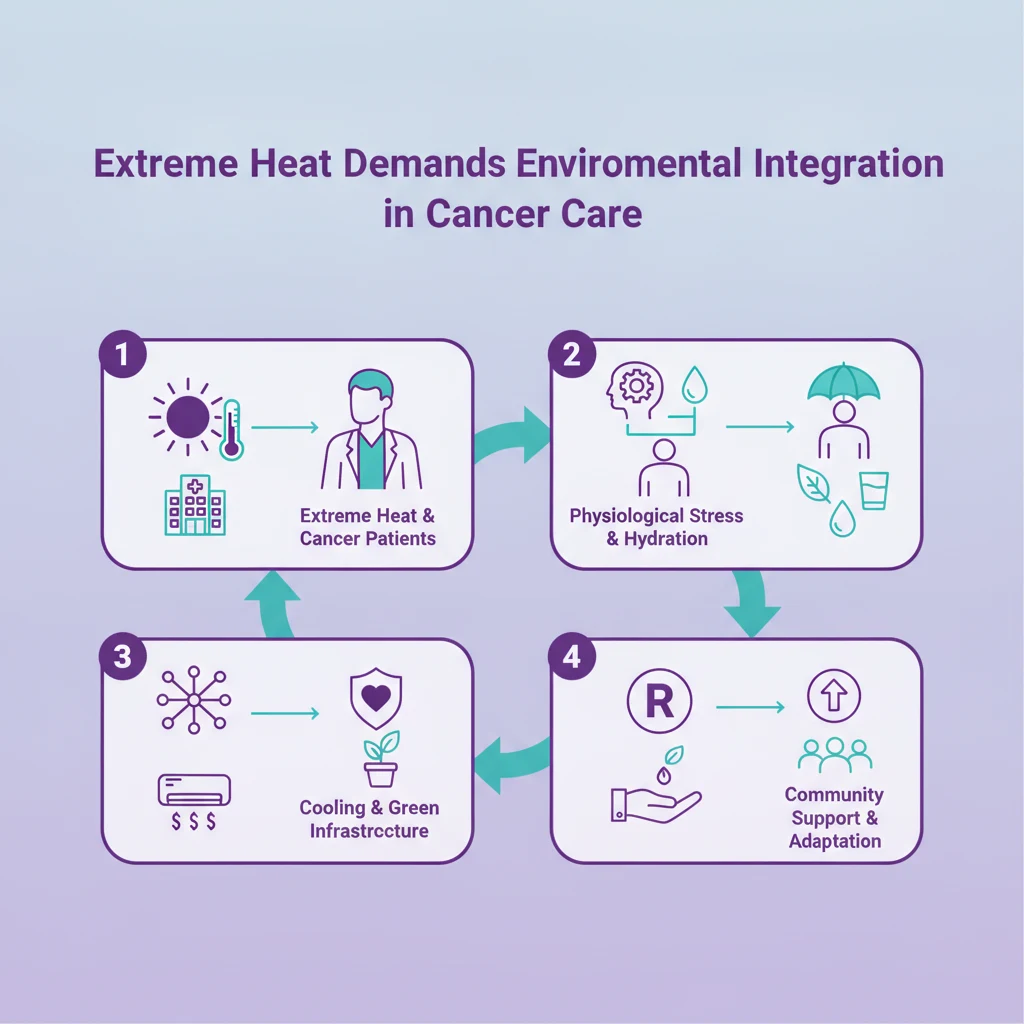

The escalating frequency and intensity of extreme heat events across Europe present a growing, often overlooked, challenge in oncology. Clinicians must now contend with how environmental stressors directly impact cancer patients, from treatment tolerability to disease progression.
Oncology has historically focused on the internal milieu of the patient, targeting cellular pathways and systemic responses to disease. But the external environment, particularly the increasingly common and severe episodes of extreme heat, now demands equal consideration. Cancer patients, often immunocompromised, frail, or undergoing treatments that impair thermoregulation, face heightened risks during heatwaves. These risks range from acute dehydration and heatstroke to exacerbation of treatment-related toxicities and disruptions in care delivery.
Many cancer therapies, including certain chemotherapies, immunotherapies, and radiation, can directly interfere with the body's ability to regulate temperature. For instance, drugs like vincristine and paclitaxel can cause peripheral neuropathy, which may affect sweat gland function. Immunotherapies, by activating the immune system, can induce fevers that, when combined with high ambient temperatures, push patients into dangerous hyperthermic states. Radiation therapy, especially to large surface areas or the head and neck, can damage sweat glands, further compromising thermoregulation. These physiological vulnerabilities mean that what might be an uncomfortable day for a healthy individual becomes a life-threatening event for a patient undergoing active cancer treatment.
Adapting Care to a Warming World
The physiological mechanisms underlying heat stress are well-understood. When core body temperature rises, the cardiovascular system works harder to dissipate heat through increased heart rate and vasodilation. For cancer patients, many of whom have pre-existing cardiovascular comorbidities or are receiving cardiotoxic therapies, this added strain can be detrimental. Dehydration, a common consequence of heat exposure, further complicates matters by reducing blood volume and increasing the risk of acute kidney injury, a particular concern for patients on nephrotoxic agents like cisplatin or methotrexate.
Beyond direct physiological impacts, extreme heat disrupts the logistics of cancer care. Patients may miss appointments due to unsafe travel conditions, public transport disruptions, or simply the inability to tolerate leaving air-conditioned environments. This leads to treatment delays, which can compromise efficacy, particularly for time-sensitive regimens. Clinics and hospitals themselves may face operational challenges, including power outages affecting critical equipment or staff shortages due to heat-related illness. These systemic vulnerabilities underscore the need for a comprehensive, environmentally aware approach to oncology.
Consider the patient receiving palliative care at home. These individuals often have limited mobility, reduced access to air conditioning, and may rely on caregivers who are themselves vulnerable to heat. Their symptoms, such as pain, nausea, or fatigue, can be exacerbated by heat, making symptom management more challenging. Furthermore, certain medications commonly used in palliative care, such as opioids, can cause sedation and reduce a patient's awareness of their own heat stress, increasing the risk of heat-related illness. The lack of robust support systems for these patients during heatwaves represents a significant gap in current care models.
The impact of extreme heat extends to drug stability and storage. Many chemotherapy agents, biologics, and supportive care medications require strict temperature control. Fluctuations in ambient temperature, particularly during transport or in patient homes without adequate refrigeration, can compromise drug integrity and efficacy. While pharmaceutical companies provide storage guidelines, the reality of heatwaves often pushes these limits, raising questions about the true potency of medications administered under suboptimal conditions. This is a subtle but critical point, as a compromised drug is an ineffective drug, regardless of its initial promise.
Oncologists must integrate environmental risk assessments into routine patient evaluations. This includes asking about home cooling access, transportation challenges during heatwaves, and the patient's ability to recognize and respond to heat stress symptoms. For patients undergoing treatments known to impair thermoregulation or those with significant comorbidities, proactive strategies are essential. These might include adjusting treatment schedules to avoid peak heat hours, prescribing antiemetics or antidiarrheals more aggressively to prevent dehydration, or providing explicit guidance on hydration and cooling techniques.
But the responsibility does not solely rest on individual clinicians. Healthcare systems must develop robust heat action plans specific to oncology. This involves ensuring adequate air conditioning and backup power in treatment centers, establishing protocols for rescheduling appointments during severe heat events, and creating outreach programs for vulnerable homebound patients. Collaboration with public health agencies and social services is critical to identify and support patients most at risk, particularly those in low-income areas or without reliable access to cooling. The current fragmented approach leaves too many patients exposed.
The long-term implications of climate change on cancer incidence and outcomes also warrant attention. Exposure to environmental pollutants, often exacerbated by heat, can contribute to cancer development. But more immediately, the increasing frequency of extreme weather events, including heatwaves, means that the challenges discussed are not transient. They are becoming a permanent fixture of the clinical landscape, demanding systemic and sustained adaptations in how cancer care is delivered. Ignoring this reality is no longer an option; it is a dereliction of duty to patients already facing a life-threatening illness.
The absence of specific, large-scale clinical trials directly linking heat exposure to adverse cancer outcomes is an obvious caveat. But this gap in the literature does not negate the clear physiological principles at play or the anecdotal evidence from clinicians managing patients during heatwaves. Designing such trials presents ethical and logistical challenges, but observational studies and real-world data collection during heat events are feasible and necessary. These data would provide the quantitative evidence needed to solidify policy changes and resource allocation.
Ultimately, the conversation around cancer care must expand beyond molecular targets and treatment algorithms to encompass the broader ecological context in which patients live and receive care. The environment is not a passive backdrop; it is an active determinant of health and disease outcomes. For oncology, this means acknowledging that a warming planet directly impacts patient safety, treatment efficacy, and the equitable delivery of care. The next trial needs to show not just drug efficacy, but also how care models adapt to these external pressures.
The notion that cancer care can remain insulated from environmental realities is a dangerous fantasy. Clinicians, particularly those in primary care, must now consider a patient's home environment and local climate as critically as their tumour biology. Prescribing a new chemotherapy without inquiring about the patient's access to air conditioning during a summer heatwave is an oversight that can have fatal consequences.
For the pharmaceutical industry, this presents a challenge in drug development and storage. If a drug's stability is compromised by temperature excursions, its real-world efficacy will suffer. This demands more robust data on drug performance under varied environmental conditions, not just ideal laboratory settings. The current guidelines are insufficient for a world where heatwaves are the norm, not the exception.
Patients, already burdened by their diagnosis, now face an additional layer of vulnerability. They need clear, actionable advice on how to protect themselves during extreme heat, tailored to their specific treatment regimen and comorbidities. This goes beyond generic public health warnings; it requires personalised risk assessments and mitigation strategies from their care teams. The onus is on us to provide it.
- The Pivot Cancer care protocols must evolve to explicitly incorporate environmental considerations, especially the risks posed by extreme heat.
- The Data While specific quantitative data on heat-related cancer outcomes are emerging, the physiological stress of heat exacerbates treatment toxicities and compromises patient well-being.
- The Action GPs and specialists should proactively assess environmental risks for vulnerable cancer patients, adjusting treatment schedules and providing heat mitigation strategies.
ART-2026-731
·09/26
Drafted with AI assistance, reviewed and approved by the editorial team. This publication is intended for healthcare professionals, researchers, and life science industry professionals. Content is provided for informational and educational purposes only and does not constitute medical advice.

Science writer covering the frontier between basic research and clinical practice. I am interested in the moment a mechanism becomes a therapy, and everything that can go wrong in between.
Cite This Article
Aldrich M, Voss M. Extreme heat demands environmental integration in cancer care. The Life Science Feed. Published August 3, 2026. Updated September 17, 2026. Accessed September 17, 2026. https://thelifesciencefeed.com/oncology/solid-tumors/insights/extreme-heat-demands-environmental-integration-in-cancer-care.
Editorial & AI Standards
All content is researched from peer-reviewed, open-access sources: published trial data, clinical guidelines, and regulatory filings. AI tools are used solely to structure and summarise that evidence; no AI-generated conclusions appear without editor verification against the primary source.
Every article is reviewed by a named editor before publication. Source citations are listed in the References section. This content does not represent the views of any pharmaceutical company, medical device manufacturer, or healthcare provider.
Licence & Rights
© 2026 The Life Science Feed. All rights reserved. Unless otherwise indicated, all content is the property of The Life Science Feed and may not be reproduced, distributed, or transmitted in any form or by any means without prior written permission.
Medical Disclaimer
The information provided on The Life Science Feed is for educational and informational purposes only. It is not intended as a substitute for professional medical advice, diagnosis, or treatment. Always seek the advice of your physician or other qualified healthcare provider regarding any medical condition or treatment decision. Never disregard professional medical advice or delay in seeking it because of something you have read on this website.
References
1. Tan AC, Ashley DM, López GY, Malinzak M, Friedman HS, Khasraw M. Management of glioblastoma: State of the art and future directions. CA Cancer J Clin. 2020;70(4):299-312. doi:10.3322/caac.21613
2. Wang J, Yang J, Narang A, et al. Consensus, debate, and prospective on pancreatic cancer treatments. J Hematol Oncol. 2024;17(1):92. doi:10.1186/s13045-024-01613-x
3. Nicolau C, Antunes N, Paño B, Sebastia C. Imaging Characterization of Renal Masses. Medicina (Kaunas). 2021;57(1). doi:10.3390/medicina57010051
4. Atwi D, Kamal M, Quinton M, Hassell LA. Malignant transformation of mature cystic teratoma of the ovary. J Obstet Gynaecol Res. 2022;48(12):3068-3076. doi:10.1111/jog.15409
5. Lim HS, Lee HJ, Lee JS, et al. Cystic Breast Lesions: Diagnostic Approach and US Assessment. Radiographics. 2025;45(5):e240179. doi:10.1148/rg.240179
6. Restrepo R, Zahrah D, Pelaez L, Temple HT, Murakami JW. Update on aneurysmal bone cyst: pathophysiology, histology, imaging and treatment. Pediatr Radiol. 2022;52(9):1601-1614. doi:10.1007/s00247-022-05396-6