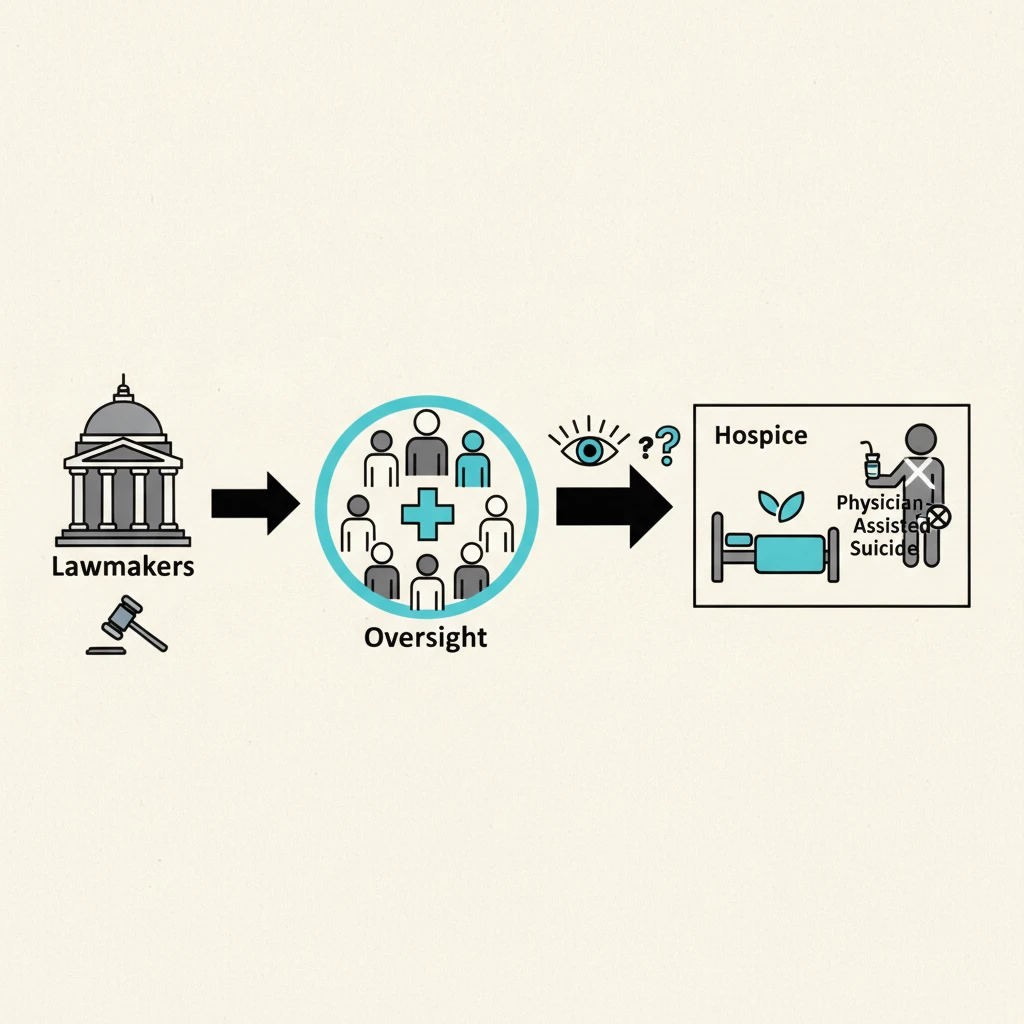

The expansion of physician-assisted suicide (PAS) into hospice care settings across several European jurisdictions presents a complex ethical and clinical challenge for general practitioners and specialists. While intended to offer autonomy and alleviate suffering for terminally ill patients, the integration of PAS within hospice raises significant questions about the nature of palliative care and the potential for undue influence on vulnerable individuals. Lawmakers now demand greater scrutiny, pointing to a perceived lack of robust oversight mechanisms.
Hospice care, by its foundational principles, aims to provide comfort, dignity, and support to patients facing life-limiting illnesses, focusing on symptom management and quality of life without hastening or postponing death. This philosophy stands in stark contrast to physician-assisted suicide, where a physician intentionally provides a patient with the means to end their own life. The growing legalisation of PAS in various European countries, and its subsequent availability to patients already receiving hospice services, has ignited a debate among medical professionals, ethicists, and policymakers regarding the appropriate boundaries of end-of-life care. The core concern revolves around ensuring that a patient's request for PAS is truly autonomous, well-considered, and free from external pressures, particularly within the vulnerable context of terminal illness and palliative care.1
Legislators in several regions have voiced apprehension that the current regulatory frameworks governing PAS may not adequately protect hospice patients. These patients often contend with severe physical pain, psychological distress, and existential suffering, which can impair their decision-making capacity or make them susceptible to subtle forms of coercion. The argument is not against patient autonomy in principle, but rather about the practical implementation of safeguards to ensure that autonomy is genuinely exercised. The focus shifts to the process: how thoroughly is mental capacity assessed, how are alternative palliative options presented, and what mechanisms exist to detect and prevent undue influence from family, caregivers, or even healthcare providers themselves?1
The Oversight Deficit
The primary legislative concern centers on the perceived oversight deficit within existing PAS protocols, particularly when applied to hospice populations. Current laws typically require multiple physician assessments, psychological evaluations, and waiting periods. But the efficacy of these safeguards in the unique hospice environment, where patients are already in a highly vulnerable state, is now under question. Lawmakers point to cases where the assessment of mental capacity may be rushed or where the full spectrum of palliative care options, including advanced pain management and psychological support, may not have been exhaustively explored before a PAS request is granted.1
One critical aspect under scrutiny is the assessment of a patient's mental capacity. While guidelines mandate psychiatric or psychological evaluation, the depth and frequency of these assessments can vary. For a patient experiencing severe depression secondary to a terminal diagnosis, distinguishing between a genuine desire for PAS and a treatable depressive episode becomes paramount. The challenge lies in ensuring that these evaluations are not merely procedural checkboxes but thorough clinical assessments that genuinely explore the patient's psychological state, prognosis understanding, and motivations. The potential for misdiagnosis or inadequate treatment of underlying mental health conditions before approving PAS remains a significant worry for legislators.1
Another area of concern involves the communication of alternative palliative care options. Hospice care offers a wide array of services designed to alleviate suffering, including aggressive symptom management, spiritual support, and grief counseling. Lawmakers worry that in some instances, the option of PAS might be presented or perceived as the primary solution to suffering, rather than a last resort after all other palliative measures have been explored and found insufficient. The perception that PAS is an easier or more readily available option could inadvertently steer patients away from comprehensive palliative care that might otherwise improve their quality of life.1
The issue of undue influence also looms large. While direct coercion is illegal, subtle pressures can arise within families or healthcare settings. A patient might feel like a burden to their family, or perceive that their continued care is financially or emotionally taxing. These feelings, though not direct coercion, can significantly impact a patient's decision-making process regarding PAS. Legislators are asking for clearer guidelines and more robust mechanisms for independent advocacy to ensure that a patient's request is truly their own, unburdened by external expectations or perceived obligations. The current system, some argue, relies too heavily on the reporting of such influences by the patient themselves, which may be unrealistic for individuals in extreme distress.1
Furthermore, the data collection and reporting mechanisms for PAS within hospice settings are often insufficient to allow for comprehensive oversight. Many jurisdictions do not disaggregate data on PAS requests or completions specifically for hospice patients, making it difficult to identify trends, assess the effectiveness of safeguards, or pinpoint areas where improvements are needed. Without granular data, policymakers struggle to understand the true prevalence of PAS in hospice, the demographic profiles of patients requesting it, or the specific circumstances leading to such requests. This lack of transparency hinders effective legislative review and the implementation of evidence-based policy adjustments.1
The training and ethical preparedness of hospice staff also form a critical component of the debate. Hospice professionals are trained to provide comfort and support, often with a strong emphasis on preserving life and alleviating suffering through palliative means. Introducing PAS into this environment can create moral distress for some clinicians and raise questions about the core mission of hospice. Lawmakers are asking whether current training adequately prepares hospice staff to navigate the complexities of PAS requests, including conducting thorough assessments, discussing alternatives, and managing their own ethical considerations. The potential for burnout or moral injury among staff who are asked to participate in or facilitate PAS is a serious, but often overlooked, aspect of this policy discussion.1
The legal frameworks themselves are also under scrutiny. Many laws permitting PAS were drafted with general populations in mind, not specifically for the unique vulnerabilities present in hospice care. This has led to calls for amendments or additional regulations tailored to the hospice context. Such amendments might include mandatory independent psychological evaluations by specialists not affiliated with the patient's primary care team, extended waiting periods specifically for hospice patients, or the requirement for a dedicated patient advocate to ensure all options are explored and no undue pressure is present. The goal is not to prohibit PAS, but to ensure that its application within hospice aligns with the highest standards of patient protection and ethical medical practice.1
The debate also touches upon the definition of 'terminal illness' and 'unbearable suffering,' which are often prerequisites for PAS. These terms can be subjective and open to interpretation, particularly in the context of chronic, debilitating conditions that may not have a clear, short-term prognosis. Lawmakers are pushing for clearer, more objective criteria to define these terms, reducing the potential for arbitrary application and ensuring that PAS is reserved for truly appropriate cases. The lack of precise definitions can lead to inconsistencies in how different physicians or institutions approach PAS requests, creating a postcode lottery for patients.1
Ultimately, the legislative push for increased oversight reflects a broader societal concern about the sanctity of life, the role of medicine, and the protection of vulnerable individuals at their most fragile moments. While respecting individual autonomy is paramount, ensuring that autonomy is truly free and informed, particularly in the emotionally charged and medically complex environment of hospice, requires rigorous and continuously evaluated safeguards. The current legislative efforts aim to bridge the gap between the intent of PAS laws and their practical, ethical application in the sensitive domain of end-of-life care.1
The legislative scrutiny on physician-assisted suicide in hospice care demands immediate attention from European GPs and specialists. The core issue is not the legality of PAS, but the integrity of the process for patients already in a vulnerable state. Clinicians must recognise that the ethical bar for assessing capacity and ensuring freedom from coercion is significantly higher within palliative settings.
This means a more rigorous, multi-disciplinary approach to PAS requests. A single physician's assessment of mental capacity, particularly in the presence of depression or existential distress, is insufficient. Independent psychiatric evaluation, separate from the patient's primary palliative team, should become standard practice, not an optional extra. We must treat underlying mental health conditions with the same urgency as physical symptoms.
The onus is also on clinicians to exhaust every palliative option before PAS is even considered. This includes advanced pain management, psychological support, and spiritual care. Patients must understand the full spectrum of comfort care available to them, presented clearly and without bias. The perception that PAS is an easier path must be actively countered by demonstrating the full potential of modern palliative medicine.
Finally, the lack of granular data on PAS in hospice is a systemic failure. Without clear metrics, we cannot identify patterns, improve safeguards, or ensure equitable access and protection. Clinicians should advocate for better data collection and transparency, ensuring that every PAS request and outcome is meticulously documented and reviewed, not just for legal compliance, but for continuous ethical improvement.
- The Pivot Lawmakers are questioning the adequacy of current safeguards for physician-assisted suicide within hospice settings.
- The Data Specific data on PAS rates in hospice are often not disaggregated, making precise oversight difficult.
- The Action Clinicians should be acutely aware of the legal and ethical frameworks governing PAS, ensuring patient autonomy is genuinely informed and free from coercion.
ART-2026-760
·10/26
Drafted with AI assistance, reviewed and approved by the editorial team. This publication is intended for healthcare professionals, researchers, and life science industry professionals. Content is provided for informational and educational purposes only and does not constitute medical advice.

Science writer covering the frontier between basic research and clinical practice. I am interested in the moment a mechanism becomes a therapy, and everything that can go wrong in between.
Cite This Article
Aldrich M, Voss M. Lawmakers call for oversight on physician-assisted suicide in hospice. The Life Science Feed. Published July 20, 2026. Updated October 5, 2026. Accessed October 19, 2026. https://thelifesciencefeed.com/pain-and-palliative-care/palliative-care/policy/lawmakers-call-for-oversight-on-physician-assisted-suicide-in-hospice.
Editorial & AI Standards
All content is researched from peer-reviewed, open-access sources: published trial data, clinical guidelines, and regulatory filings. AI tools are used solely to structure and summarise that evidence; no AI-generated conclusions appear without editor verification against the primary source.
Every article is reviewed by a named editor before publication. Source citations are listed in the References section. This content does not represent the views of any pharmaceutical company, medical device manufacturer, or healthcare provider.
Licence & Rights
© 2026 The Life Science Feed. All rights reserved. Unless otherwise indicated, all content is the property of The Life Science Feed and may not be reproduced, distributed, or transmitted in any form or by any means without prior written permission.
Medical Disclaimer
The information provided on The Life Science Feed is for educational and informational purposes only. It is not intended as a substitute for professional medical advice, diagnosis, or treatment. Always seek the advice of your physician or other qualified healthcare provider regarding any medical condition or treatment decision. Never disregard professional medical advice or delay in seeking it because of something you have read on this website.
References
1. European Association for Palliative Care. EAPC framework for the use of sedation in palliative care. Palliat Med. 2018;32(7):1163-1175.