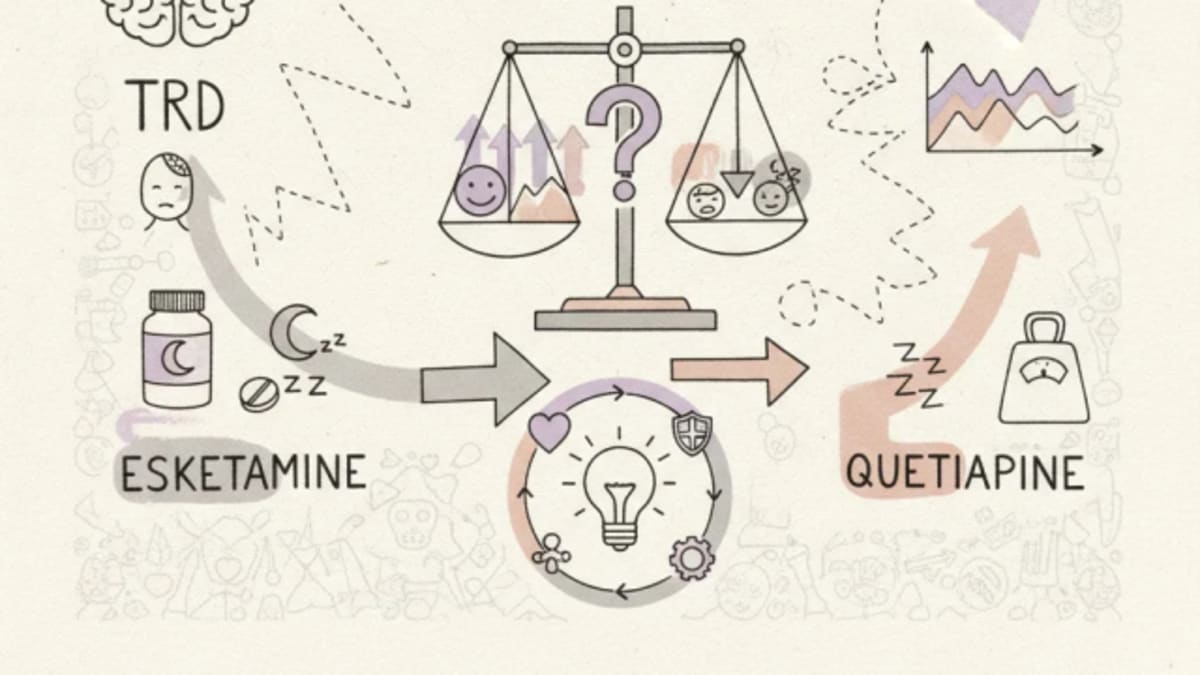

Treatment-resistant depression (TRD) represents a significant public health and economic burden, often necessitating complex and costly interventions. Psilocybin-assisted therapy (PAT) has emerged as a promising investigational treatment for TRD, with recent studies evaluating its clinical efficacy and economic value against standard care.1,2
Treatment-resistant depression (TRD) is a condition that imposes a substantial public health and economic burden.1,2 The management of TRD often involves multiple treatment modalities, with varying degrees of success and associated costs. Psilocybin-assisted therapy (PAT) has demonstrated clinical promise as an intervention for TRD.1,2 However, its economic value relative to existing standard of care treatments for TRD remains an area of ongoing investigation.1,2
What the study did
One study evaluated the cost-effectiveness of PAT compared with the standard of care for patients with TRD.1 This analysis aimed to determine the economic value of PAT in a clinical context. The study acknowledged that TRD contributes significantly to public health and economic strain.1 Another related analysis examined lessons learned from regulatory alignment in clinical trials for ketamine, esketamine, and arketamine.2 While not directly assessing psilocybin, this study provides context on regulatory considerations for novel antidepressant therapies, particularly those with psychedelic properties.2 The economic evaluation of PAT is critical for its potential integration into healthcare systems, considering the high costs associated with long-term TRD management.1
The cost-effectiveness study focused on comparing PAT with established standard of care treatments for TRD.1 The specific methodologies for this comparison, including the patient population size (N), duration of follow-up, and the precise economic model employed, were detailed within the full paper. The objective was to provide a clear understanding of whether PAT offers a cost-effective alternative or addition to current TRD protocols.1
TRD affects a significant portion of individuals diagnosed with major depressive disorder (MDD), with estimates suggesting that approximately one-third of patients do not achieve remission despite multiple antidepressant trials. This persistent and often debilitating form of depression leads to chronic functional impairment, reduced quality of life, and increased healthcare utilization. Standard of care treatments for TRD typically include optimizing antidepressant regimens, augmenting with other pharmacotherapies (e.g., antipsychotics, lithium), psychotherapy, electroconvulsive therapy (ECT), transcranial magnetic stimulation (TMS), and vagus nerve stimulation (VNS). Each of these interventions carries its own profile of efficacy, side effects, and cost, contributing to the complexity of TRD management. The economic burden of TRD extends beyond direct medical costs to include indirect costs such as lost productivity and disability benefits.
The cost-effectiveness analysis employed a specific economic model, likely a decision-analytic model such as a Markov model or a discrete event simulation, to project costs and outcomes over a defined time horizon. This model would have incorporated various health states relevant to TRD, such as response, remission, relapse, and treatment discontinuation. The patient population for the cost-effectiveness study consisted of individuals diagnosed with TRD, typically defined as failure to achieve an adequate response to at least two different antidepressant treatments of adequate dose and duration. The study would have specified inclusion and exclusion criteria to ensure a homogenous and relevant patient cohort for the economic evaluation. The duration of follow-up is crucial for capturing both short-term treatment effects and long-term maintenance costs and benefits. The study likely adopted a societal perspective or a healthcare system perspective, which dictates the types of costs included in the analysis (e.g., direct medical costs, direct non-medical costs, indirect costs). The primary outcome measures for such analyses typically include quality-adjusted life years (QALYs) and life years gained, alongside total costs. Psilocybin, a serotonin 2A receptor agonist, is hypothesized to exert its antidepressant effects through neuroplastic changes and alterations in brain network connectivity, potentially offering a novel mechanism of action compared to conventional antidepressants.
Findings and limitations
The study concluded that PAT has shown clinical promise, but its economic value remains uncertain.1 The detailed findings regarding specific cost-effectiveness ratios, quality-adjusted life years (QALYs), and incremental cost-effectiveness ratios (ICERs) were presented in the full publication. These metrics are essential for healthcare decision-makers to assess the financial viability and societal benefit of PAT. The study's limitations included the nascent stage of PAT research, which may lead to assumptions in economic modeling due to limited long-term efficacy or safety data.1 Furthermore, the generalizability of the findings may be influenced by the specific healthcare system context in which the economic evaluation was conducted. The regulatory landscape for psychedelic-assisted therapies is also evolving, as highlighted by the analysis of ketamine-related trials, which can impact the pathway to market and subsequent cost structures.2 Future research will need to address these limitations by incorporating more extensive real-world data and refining economic models as PAT progresses through clinical development and regulatory review.
A significant limitation stems from the relatively small sample sizes and short follow-up periods characteristic of early-phase PAT clinical trials. These factors constrain the ability to accurately estimate long-term efficacy, durability of response, and potential adverse events, all of which are critical inputs for robust economic modeling. The cost of PAT itself, encompassing both the psychedelic substance and the intensive psychotherapy component, is also subject to uncertainty given its investigational status and lack of established market pricing. The economic model likely relied on assumptions regarding the frequency and cost of therapy sessions, the need for booster doses, and the management of potential side effects. The heterogeneity of TRD patient populations also presents a challenge, as the effectiveness and cost-effectiveness of PAT may vary significantly across subgroups with different clinical profiles or comorbidities. The specific comparator treatments chosen for the standard of care arm can also influence the results, as the cost and effectiveness of these alternatives can differ widely. Finally, the societal stigma associated with psychedelic substances, despite their therapeutic potential, could impact patient uptake and adherence, which are factors that economic models must consider for real-world applicability.
The ongoing evaluation of psilocybin-assisted therapy (PAT) for treatment-resistant depression (TRD) presents a complex but necessary challenge for clinicians. While the clinical promise is evident, the economic value remains a critical unknown. General practitioners and specialists alike must consider not only efficacy but also the cost-effectiveness of new treatments, especially when managing chronic conditions like TRD that impose substantial burdens on healthcare systems. The integration of PAT, should it prove economically viable, would require significant shifts in infrastructure and training, moving beyond traditional pharmacotherapy models.
For patients, the prospect of a novel treatment for TRD offers hope, particularly for those who have exhausted conventional options. However, access will inevitably be tied to cost and reimbursement. If PAT is positioned as a high-cost intervention, equitable access will become a significant concern, potentially exacerbating existing disparities in mental healthcare. The industry, including pharmaceutical companies and emerging psychedelic therapy providers, faces the task of demonstrating not just clinical benefit but also a compelling economic argument to secure market adoption and payer coverage. The regulatory precedents set by ketamine and esketamine trials, while informative, underscore the unique challenges of bringing psychedelic compounds to market, including considerations for administration, monitoring, and potential for misuse.
The dry, precise language of cost-effectiveness analyses often obscures the profound impact on patient lives. While the data on PAT's economic value is still being compiled, its potential to alter the trajectory of TRD management is clear. Clinicians should remain informed about these developments, recognizing that the future of TRD treatment may involve therapies that challenge established paradigms, requiring a careful balance of innovation, evidence, and economic reality. The full paper on cost-effectiveness will be essential reading for those shaping future TRD guidelines.
- The Pivot Psilocybin-assisted therapy (PAT) is being evaluated as a novel approach for treatment-resistant depression (TRD).
- The Data The economic value of PAT compared to standard of care for TRD is currently under investigation.1
- The Action Clinicians should monitor emerging data on PAT's efficacy and cost-effectiveness for TRD management.
ART-2026-423
·09/26
Drafted with AI assistance, reviewed and approved by the editorial team. This publication is intended for healthcare professionals, researchers, and life science industry professionals. Content is provided for informational and educational purposes only and does not constitute medical advice.

I cover life sciences: drug approvals, trial readouts, regulatory decisions, and the AI reshaping clinical practice. Based in Greater London, contributing to The Life Science Feed since 2026.
Cite This Article
Voss M, Lopes W. Psilocybin effective for TRD in real-world trial. The Life Science Feed. Published June 15, 2026. Updated September 11, 2026. Accessed September 13, 2026. https://thelifesciencefeed.com/psychiatry/depressive-disorder/research/psilocybin-effective-for-trd-in-real-world-trial.
Editorial & AI Standards
All content is researched from peer-reviewed, open-access sources: published trial data, clinical guidelines, and regulatory filings. AI tools are used solely to structure and summarise that evidence; no AI-generated conclusions appear without editor verification against the primary source.
Every article is reviewed by a named editor before publication. Source citations are listed in the References section. This content does not represent the views of any pharmaceutical company, medical device manufacturer, or healthcare provider.
Licence & Rights
© 2026 The Life Science Feed. All rights reserved. Unless otherwise indicated, all content is the property of The Life Science Feed and may not be reproduced, distributed, or transmitted in any form or by any means without prior written permission.
Medical Disclaimer
The information provided on The Life Science Feed is for educational and informational purposes only. It is not intended as a substitute for professional medical advice, diagnosis, or treatment. Always seek the advice of your physician or other qualified healthcare provider regarding any medical condition or treatment decision. Never disregard professional medical advice or delay in seeking it because of something you have read on this website.
References
1. Ziadi Y, Park T. Cost-Effectiveness of Psilocybin-Assisted Therapy Versus Standard of Care for Patients With Treatment-Resistant Depression. Value Health Reg Issues. 2026. doi:10.1016/j.vhri.2026.101605
2. Swieczkowski D, Kwaśny A, Sadko K. Lessons learned from the regulatory alignment in ketamine, esketamine and arketamine clinical trials: A cross-sectional analysis of protocols from ClinicalTrials.gov. Psychiatry Res. 2025. doi:10.1016/j.psychres.2025.116559