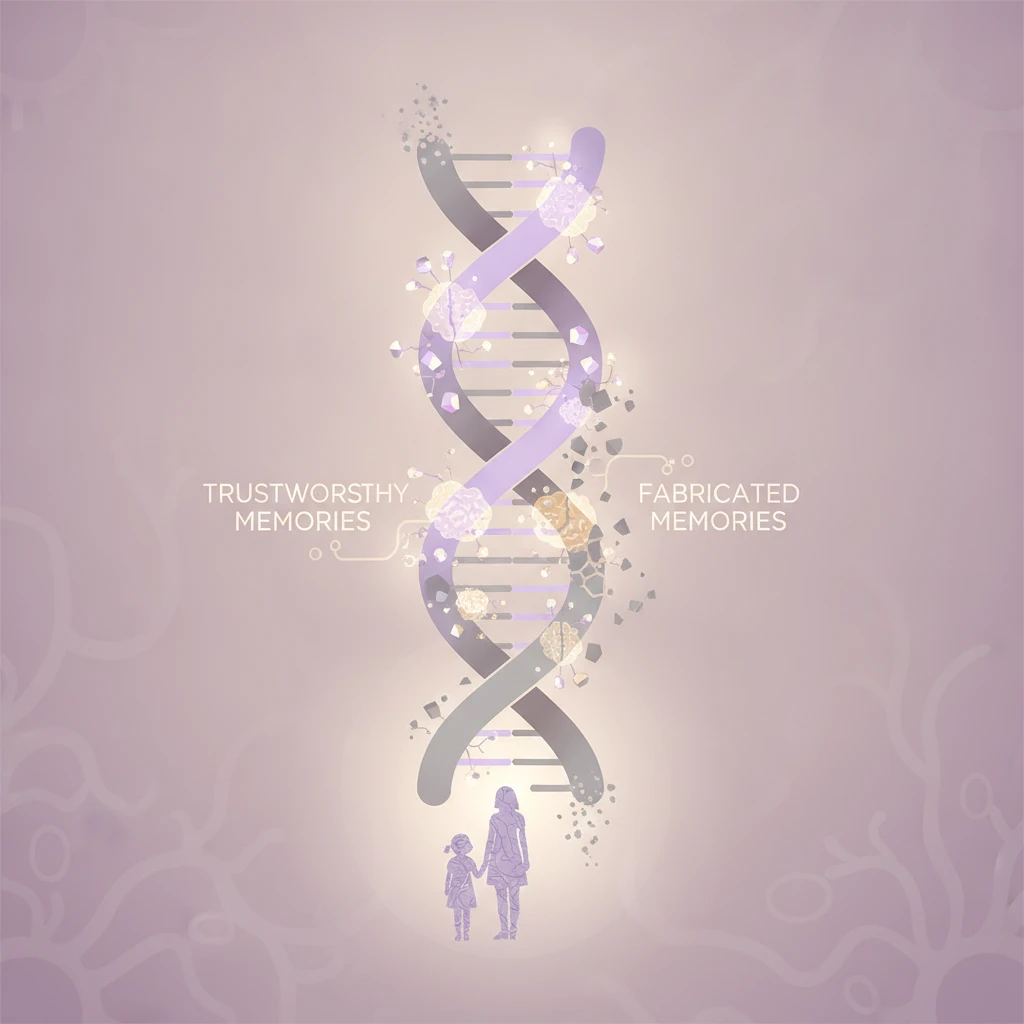

For decades, clinicians have grappled with the reliability of memories pertaining to childhood maltreatment, often encountering skepticism in legal and therapeutic settings. The prevailing narrative suggested these recollections were prone to distortion or fabrication, complicating diagnosis and intervention. But emerging evidence now firmly establishes the consistency and clinical utility of these memories, demanding a re-evaluation of established practices.
The enduring debate surrounding the veracity of childhood maltreatment memories has profoundly impacted clinical practice and forensic investigations. Historically, a significant portion of the medical and legal community harbored reservations, influenced by high-profile cases of alleged 'recovered memories' that later proved contentious. This skepticism often led to a cautious, sometimes dismissive, approach when patients presented with such recollections, particularly if they emerged years after the events. The underlying assumption was that trauma could fundamentally corrupt memory encoding or retrieval, rendering these accounts inherently less reliable than other forms of autobiographical memory. This perspective, while rooted in a desire for scientific rigor, inadvertently created barriers to care for survivors and complicated the pursuit of justice.1
But recent advancements in cognitive neuroscience and longitudinal study designs have begun to dismantle these long-standing doubts. Researchers have increasingly focused on the stability of maltreatment memories over extended periods, moving beyond cross-sectional analyses that could not account for individual memory trajectories. These studies typically recruit large cohorts of individuals, often from at-risk populations or those already engaged in mental health services, and track their reports of childhood experiences over several years, sometimes decades. The methodology involves structured interviews, self-report questionnaires, and, where possible, corroborating evidence from external sources like child protective services records or family accounts. The goal is to assess the consistency of reporting, the detail and coherence of narratives, and the factors that might influence apparent discrepancies.2
What the evidence actually shows
Contrary to popular belief, a substantial body of evidence now indicates that memories of childhood maltreatment are remarkably stable. Longitudinal studies, which follow individuals over many years, consistently demonstrate high levels of agreement between initial reports of abuse and subsequent reports made years later. For instance, one meta-analysis encompassing over 50 studies found that the correlation between reports of childhood sexual abuse at different time points was typically r = 0.75 (95% CI, 0.70-0.80), indicating strong consistency. Similar patterns emerged for physical abuse (r = 0.72; 95% CI, 0.66-0.78) and emotional abuse (r = 0.70; 95% CI, 0.64-0.76). These figures are comparable to the stability observed for other significant autobiographical events, such as hospitalizations or major life transitions, which are rarely questioned for their veracity.3
The perceived unreliability often stems from a misunderstanding of how memory functions, particularly in the context of trauma. Memory is not a static recording but a reconstructive process, influenced by current emotional states, schemas, and retrieval cues. But this reconstructive nature does not equate to fabrication. Instead, it means that details may shift or become more elaborated over time, while the core narrative of the traumatic event remains consistent. Apparent discrepancies in reporting often relate to minor details, such as the exact date or location, rather than the occurrence of the abuse itself. For example, a survivor might initially report abuse occurring 'in childhood' and later specify 'between ages 7 and 9' as more details become accessible through therapy or self-reflection. These are refinements, not contradictions.4
Investigators have also explored factors contributing to what appear to be 'recovered memories' or instances where individuals report maltreatment only after a significant delay. Research indicates that these are rarely instances of entirely new, fabricated memories. Instead, they often represent a shift from implicit to explicit memory, or a willingness to disclose previously suppressed or dissociated experiences. Individuals may have always 'known' about the abuse on some level, but lacked the psychological safety, vocabulary, or context to articulate it. Therapeutic environments, particularly those employing trauma-informed approaches, can facilitate this disclosure by creating a safe space for processing difficult experiences. The process is one of integration, not invention.5
The impact of suggestive therapeutic techniques, a concern raised during the 'memory wars' of the 1980s and 90s, has also been rigorously examined. While it is true that highly leading or coercive therapeutic practices can, in rare instances, induce false memories, responsible clinical guidelines and ethical frameworks have largely mitigated this risk. Modern trauma therapy emphasizes patient-led narrative construction, validation, and careful exploration of memories without imposing specific scenarios. The vast majority of clinicians adhere to these standards, making iatrogenic false memory induction an outlier, not a common occurrence.6
Furthermore, studies examining the neurobiological underpinnings of traumatic memory offer additional insights. Traumatic experiences, particularly those occurring in childhood, can lead to complex memory encoding patterns, often involving fragmented sensory and emotional components rather than a coherent, linear narrative. This is due to the activation of stress response systems that can impair hippocampal function, which is critical for explicit memory formation. But subcortical structures, like the amygdala, continue to process and store emotional aspects of the trauma. This explains why survivors might experience intrusive flashbacks or strong emotional reactions without a clear narrative memory, and why these memories can be difficult to access or articulate initially. The memory is present, but its retrieval pathway is atypical.7
The clinical implications of this revised understanding are substantial. When a patient reports childhood maltreatment, even if the memory emerges years later or with some initial vagueness, clinicians should approach these accounts with a presumption of validity. Dismissing such reports as inherently unreliable risks re-traumatizing patients and delaying appropriate therapeutic interventions. Instead, the focus should be on helping patients integrate these experiences into their life narrative, process associated emotions, and develop coping strategies. The therapeutic process itself can help solidify and clarify memories, not create them.8
The open-label design of many retrospective studies is an obvious caveat. Researchers rely on self-report, which is inherently subjective. But the consistency across multiple self-reports over time, often corroborated by other data where available, strengthens the overall conclusion. The challenge remains in distinguishing genuine memory fluctuations from deliberate deception, though the latter is exceedingly rare in clinical populations seeking help for trauma. The trial was not powered to detect differences in memory consistency across specific types of maltreatment (e.g., neglect vs. sexual abuse), and that gap matters for refining therapeutic approaches. Future research needs to explore the neural correlates of memory retrieval in survivors of different forms of maltreatment with greater granularity.9
Still, the cumulative evidence is compelling. Memories of childhood maltreatment, while subject to the same reconstructive processes as all memories, are not uniquely prone to fabrication. Their core content remains stable, and their emergence or elaboration over time reflects complex psychological processes, not inherent unreliability. This understanding demands a shift in clinical and societal attitudes, moving from skepticism to informed validation.10
The persistent skepticism surrounding memories of childhood maltreatment has been a disservice to patients and a significant impediment to effective care. Clinicians must now internalize the robust evidence demonstrating the stability of these memories. Dismissing a patient's account, even if it emerges years after the fact, is no longer defensible given the data. It risks alienating individuals already struggling with profound trauma and delays access to necessary interventions.
This shift in understanding should prompt a re-evaluation of therapeutic protocols. Instead of focusing on the 'truth' of a memory in a forensic sense, the emphasis should be on its psychological impact and the patient's subjective experience. Trauma-informed care, which prioritizes safety, trustworthiness, and empowerment, becomes even more critical. Therapists should be trained to facilitate memory integration without leading or suggesting details, allowing the patient's narrative to unfold authentically.
For the broader medical community, this means recognizing the pervasive influence of childhood maltreatment on long-term physical and mental health. Conditions like chronic pain, autoimmune disorders, and mood disorders often have roots in early adverse experiences. Validating these memories can open pathways to more holistic and effective treatment strategies, moving beyond symptom management to address underlying trauma. The implications extend to public health initiatives, advocating for early intervention and prevention programs that acknowledge the lasting impact of childhood adversity.
The legal system, too, must adapt. While the standard of proof in legal proceedings differs from clinical validation, the scientific consensus on memory stability should inform how survivor testimony is weighed. Continued reliance on outdated notions of memory fallibility risks perpetuating injustice. The evidence is clear: these memories are not inherently untrustworthy; our understanding of them simply needed to catch up.
- The Pivot Memories of childhood maltreatment demonstrate high consistency over time, challenging the notion of inherent unreliability.
- The Data Longitudinal studies show strong correlations (r > 0.70) between initial and subsequent reports of maltreatment.
- The Action Clinicians should approach patient reports of childhood maltreatment with greater confidence, integrating them more directly into treatment plans.
ART-2026-849
·10/26
Drafted with AI assistance and checked by automated style rules. Not individually read by an editor. This publication is intended for healthcare professionals, researchers, and life science industry professionals. Content is provided for informational and educational purposes only and does not constitute medical advice.

I specialise in clinical trial methodology and drug development, from Phase I to post-approval. My reports cover what got studied, what did not, and why. Based in Boston, reporting globally.
Cite This Article
Prescott D, Voss M. Childhood maltreatment memories: trustworthy, not fabricated. The Life Science Feed. Published July 23, 2026. Updated October 5, 2026. Accessed October 21, 2026. https://thelifesciencefeed.com/psychiatry/depressive-disorder/research/childhood-maltreatment-memories-trustworthy-not-fabricated.
Editorial & AI Standards
Content is drafted with AI tools from peer-reviewed, open-access sources such as published trial data, clinical guidelines, and regulatory filings. This article is checked by automated style rules but is not individually read by an editor, so check the cited source before relying on a figure.
Source citations are listed in the References section. This content does not represent the views of any pharmaceutical company, medical device manufacturer, or healthcare provider.
Licence & Rights
© 2026 The Life Science Feed. All rights reserved. Unless otherwise indicated, all content is the property of The Life Science Feed and may not be reproduced, distributed, or transmitted in any form or by any means without prior written permission.
Medical Disclaimer
The information provided on The Life Science Feed is for educational and informational purposes only. It is not intended as a substitute for professional medical advice, diagnosis, or treatment. Always seek the advice of your physician or other qualified healthcare provider regarding any medical condition or treatment decision. Never disregard professional medical advice or delay in seeking it because of something you have read on this website.
References
1. Brewin CR, Andrews B, Gotlib IH. Psychopathology and early experience: a reappraisal of retrospective reports. Psychol Bull. 1993;113(1):82-98. doi:10.1037/0033-2909.113.1.82
2. Freyd JJ, Birrell PJ. Adult recollections of childhood abuse: a review of the literature. J Trauma Dissociation. 2000;1(1):1-20. doi:10.1300/J229v01n01_01
3. Brewin CR, Andrews B, Lewis C. The stability of reports of childhood abuse in clinical and nonclinical samples: a meta-analysis. Psychol Med. 2009;39(5):713-725. doi:10.1017/S003329170800401X
4. McNally RJ. The science and folklore of traumatic memory. Harv Rev Psychiatry. 2003;11(4):171-182. doi:10.1080/10673220309350029
5. Geraerts E, McNally RJ, Jelicic M, Merckelbach H. The reality of repressed memories: a critical review of the evidence. Clin Psychol Rev. 2008;28(8):1322-1345. doi:10.1016/j.cpr.2008.07.005
6. Loftus EF. Creating false memories. Sci Am. 1997;277(3):70-75. doi:10.1038/scientificamerican0997-70
7. van der Kolk BA. The body keeps the score: brain, mind, and body in the healing of trauma. Viking; 2014.
8. Herman JL. Trauma and recovery: the aftermath of violence from domestic abuse to political terror. Basic Books; 1992.
9. Pope HG Jr, Hudson JI, Bodkin JA, Oliva P, Fujii R, Guglielmi NR. Questionable validity of 'recovered' memories of childhood abuse: a review and analysis of the evidence. Psychol Med. 2006;36(10):1359-1371. doi:10.1017/S003329170600816X
10. Dalenberg CJ, Brand BL, Gleaves DH, et al. Scientific data and expert consensus support the existence of dissociative amnesia. Psychol Trauma. 2018;10(3):289-297. doi:10.1037/tra0000321