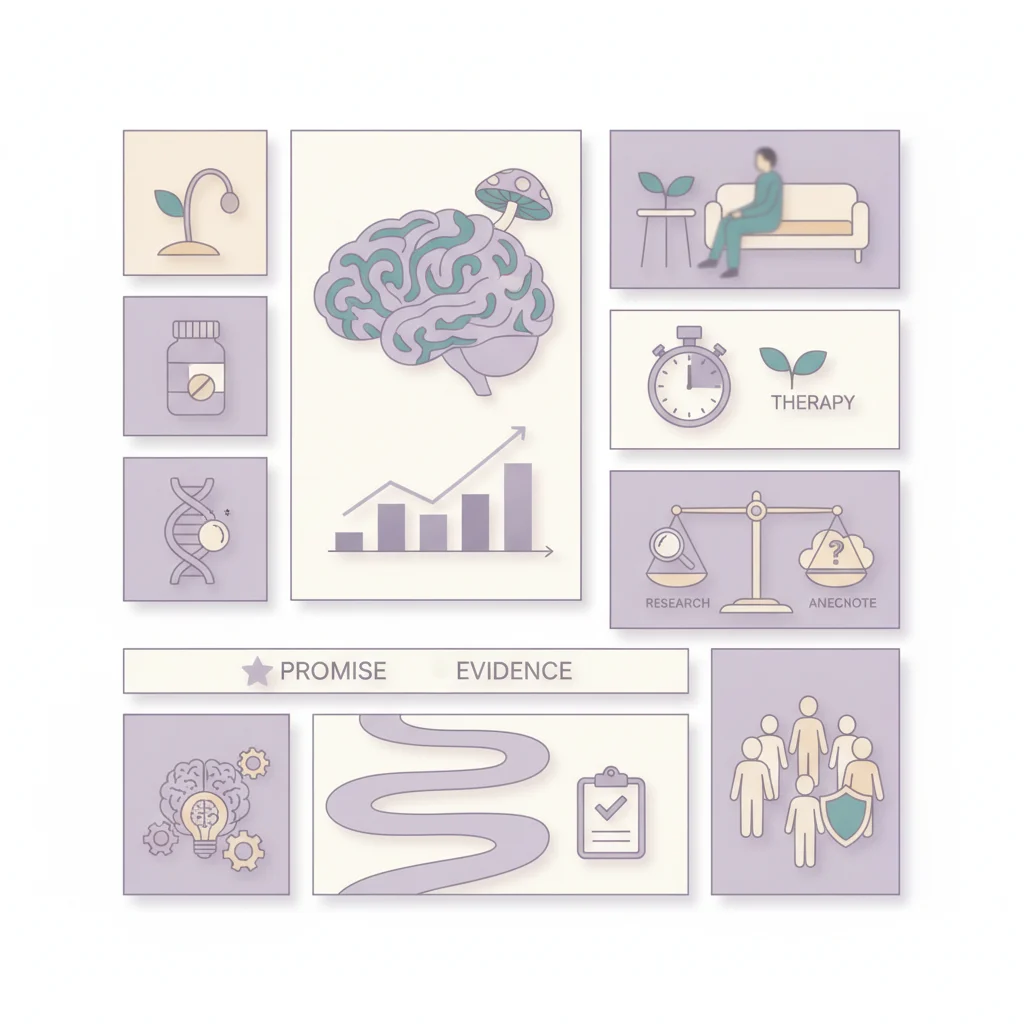

Major depressive disorder remains a leading cause of disability worldwide, with a substantial proportion of patients failing to achieve remission with conventional antidepressant therapies. This unmet need has driven interest in novel approaches, including psychedelic-assisted psychotherapy, with psilocybin emerging as a prominent candidate.
Headlines often tout psilocybin as a revolutionary treatment, but a closer look at the clinical evidence reveals a picture that balances genuine therapeutic potential with significant practical and safety considerations for European clinicians.
Major depressive disorder (MDD) affects millions globally, and for many, existing pharmacotherapies and psychotherapies offer insufficient relief. Standard treatments, including selective serotonin reuptake inhibitors (SSRIs) and serotonin-norepinephrine reuptake inhibitors (SNRIs), can take weeks to exert their full effect, and a significant percentage of patients experience only partial response or no response at all. This population, often termed treatment-resistant depression (TRD), represents a considerable clinical challenge, driving the search for alternative interventions.
Psilocybin, a naturally occurring psychedelic compound found in certain fungi, has garnered attention for its potential rapid and sustained antidepressant effects. Its mechanism of action is thought to involve agonism at serotonin 5-HT2A receptors, leading to altered states of consciousness and potentially facilitating psychological processing and emotional breakthroughs. The therapeutic model typically involves a single or limited number of psilocybin administration sessions, carefully prepared for and integrated with psychotherapy, rather than daily dosing.
Understanding the Therapeutic Model
The administration of psilocybin for depression is not a simple prescription. It is a highly structured intervention, often involving extensive psychological support before, during, and after the psychedelic experience. Patients typically undergo preparatory sessions to establish rapport with therapists, discuss expectations, and develop coping strategies for potential challenging experiences during the drug session. The drug administration itself occurs in a controlled, supportive environment, usually with two trained therapists present, who provide guidance and reassurance. This intensive support is a defining characteristic of psilocybin-assisted therapy and distinguishes it sharply from conventional pharmacotherapy.
Following the psilocybin session, integration therapy helps patients process their experiences, derive meaning, and translate insights into lasting behavioral changes. This multi-stage process is resource-intensive, requiring specialized training for therapists and dedicated facilities. The logistical complexity and cost implications are substantial, posing challenges for widespread implementation even if efficacy is firmly established.
Efficacy Signals in Depression
Early-phase studies and some larger trials have explored psilocybin's efficacy in various depressive populations, including MDD and TRD. These studies generally employ validated depression rating scales, such as the Montgomery-Åsberg Depression Rating Scale (MADRS) or the Hamilton Depression Rating Scale (HAM-D), as primary endpoints. The consistent signal across these investigations is a reduction in depression symptom severity following psilocybin administration. Some studies report rapid onset of antidepressant effects, often within days of the session, which can persist for several weeks or even months. This rapid action contrasts with conventional antidepressants, which typically require several weeks to achieve therapeutic effect.
For patients with TRD, where multiple conventional treatments have failed, the prospect of a novel mechanism of action and potentially sustained remission is particularly appealing. The data, while still accumulating, suggests that psilocybin may offer a viable option for this difficult-to-treat population because it shows a reduction in depression symptom severity. But the exact proportion of patients who achieve sustained remission, and the optimal dosing and retreatment schedules, remain areas of active investigation. The long-term durability of effect is also a critical question, with some studies indicating a need for booster sessions or ongoing psychological support to maintain benefits. Clinicians can find more detailed discussions on real-world applications and efficacy in psilocybin's effectiveness for TRD.
Safety and Adverse Events
The safety profile of psilocybin is a critical consideration. While generally considered physiologically safe in controlled settings, the psychological effects can be profound. During the acute psilocybin experience, patients may encounter transient anxiety, fear, paranoia, or dysphoria. These experiences, while often manageable with therapeutic support, necessitate a carefully controlled environment and trained facilitators. Blood pressure and heart rate can also increase during the acute phase, requiring monitoring, particularly in individuals with pre-existing cardiovascular conditions.
Longer-term safety concerns include the potential for exacerbation of pre-existing psychotic disorders or the induction of prolonged psychotic states in vulnerable individuals. Consequently, strict exclusion criteria are typically applied in trials, ruling out patients with a personal or family history of psychosis, bipolar disorder, or severe personality disorders. The potential for misuse or diversion outside of a clinical setting is also a significant public health concern, given psilocybin's classification as a controlled substance in most jurisdictions. This necessitates robust regulatory frameworks and careful oversight if psilocybin-assisted therapy were to become more widely available. The Oxford Handbook of Psychiatry provides a comprehensive overview of these complex mental health considerations.
The Regulatory and Practical Hurdles
Despite clinical signals that show a reduction in depression symptom severity, psilocybin faces substantial regulatory hurdles. As a Schedule I (or equivalent) controlled substance in many regions, its research and development are tightly restricted. Moving from investigational status to approved therapy requires rigorous demonstration of efficacy and safety through large-scale, well-controlled Phase III trials. These trials must also address the unique challenges of blinding in psychedelic research, where participants and therapists are often aware of who received the active drug versus placebo, potentially introducing bias.
Beyond regulatory approval, the practical implementation of psilocybin-assisted therapy presents significant challenges. The intensive therapist involvement means scalability is inherently limited. Training a sufficient number of qualified therapists, establishing appropriate clinical settings, and developing reimbursement models for such a resource-intensive treatment are all complex undertakings. The cost of treatment, if approved, could also be a barrier to access for many patients. These practicalities are often overlooked in the enthusiasm generated by positive headlines.
The current evidence base, while encouraging, is still largely built on studies with relatively small sample sizes and specific patient populations. The generalizability of these findings to broader populations of patients with depression, including those with comorbidities or less severe forms of the illness, remains to be fully elucidated. The optimal number of psilocybin sessions, the ideal duration and type of psychotherapy, and the long-term effects on various patient subgroups are still under investigation. These are not minor details; they are fundamental questions that determine the real-world utility and safety of any new treatment. The impact of chronic stress on brain health, a factor in many depressive disorders, is also a relevant area of ongoing research, as discussed in recent findings on financial stress.
The open-label nature of many early studies is an obvious caveat. It is difficult to conduct truly double-blind trials with psychedelics due to their distinct subjective effects. This can introduce expectation bias, where both patients and therapists anticipate a positive outcome, potentially inflating reported efficacy. Future research must employ innovative designs to mitigate this challenge, perhaps through active placebos that mimic some of the physiological effects without the profound psychological impact. The role of the therapeutic setting and the quality of the psychological support are also difficult to quantify and standardize across studies, yet they are likely crucial determinants of outcome. Understanding the relationship between pharmacological effect and psychological context is paramount for effective and safe implementation.
The field is also grappling with how to integrate these therapies into existing mental healthcare systems. The current infrastructure is not designed for the intensive, supervised administration model required for psilocybin. This means that even with regulatory approval, access will likely be limited to specialized centers initially. The question of whether benefits extend to broader groups beyond those with severe, treatment-resistant depression is still unclear, and trials powered to detect differences in these subgroups are needed. The ongoing discussion around AI's dual impact on mental health also highlights the need for careful consideration of how technology might support or complicate the delivery of complex therapies like psilocybin-assisted psychotherapy.
Looking Ahead
The enthusiasm for psilocybin in depression is understandable, given the persistent challenges in treating this debilitating condition. But the path from early data showing a reduction in depression symptom severity to widespread clinical availability is long and complex. It requires not only robust evidence of efficacy and safety from large, definitive trials but also the development of practical, scalable, and ethically sound models of care. The next wave of research needs to focus on comparative effectiveness, long-term outcomes, and cost-effectiveness analyses to truly position psilocybin within the therapeutic armamentarium for depression. Without these, the headlines will continue to outpace the clinical reality.
The data on psilocybin for depression, particularly TRD, offers a genuine glimmer of hope for patients who have exhausted conventional options. But clinicians should temper enthusiasm with a healthy dose of realism. This is not a pill to be prescribed lightly; it is an intensive, resource-heavy intervention that demands specialized training and a controlled environment.
The current model of psilocybin-assisted therapy is inherently unscalable for general practice. The logistical and financial barriers to widespread implementation are substantial, meaning access will likely remain limited to specialized centers for the foreseeable future. European healthcare systems are not currently equipped to deliver this type of care at scale.
For now, psilocybin remains an investigational therapy. Clinicians should be aware of the ongoing research and the potential, but also understand that its integration into routine practice is still years away. The focus must remain on evidence-based, guideline-recommended treatments, while carefully monitoring developments in psychedelic medicine.
- The Pivot Psilocybin, administered in a controlled therapeutic setting, demonstrates antidepressant effects in some patient populations, particularly those with treatment-resistant depression.
- The Data While specific numeric results vary across studies, consistent signals point to reductions in depression symptom scores following psilocybin-assisted therapy.
- The Action Clinicians should understand the current evidence base, the rigorous therapeutic support required, and the regulatory landscape for investigational psychedelic treatments.
ART-2026-1334
·10/26
Drafted with AI assistance, reviewed and approved by the editorial team. This publication is intended for healthcare professionals, researchers, and life science industry professionals. Content is provided for informational and educational purposes only and does not constitute medical advice.

I cover women's health, reproductive medicine, and the persistent gaps in how conditions that primarily affect women get studied and funded. The evidence base is thinner than it should be. I write about why.
Cite This Article
Mitchell S, Voss M. Psilocybin for depression: separating the hype from the clinical reality. The Life Science Feed. Published August 27, 2026. Updated October 5, 2026. Accessed October 11, 2026. https://thelifesciencefeed.com/psychiatry/depressive-disorder/research/psilocybin-depression-clinical-evidence.
Editorial & AI Standards
All content is researched from peer-reviewed, open-access sources: published trial data, clinical guidelines, and regulatory filings. AI tools are used solely to structure and summarise that evidence; no AI-generated conclusions appear without editor verification against the primary source.
Every article is reviewed by a named editor before publication. Source citations are listed in the References section. This content does not represent the views of any pharmaceutical company, medical device manufacturer, or healthcare provider.
Licence & Rights
© 2026 The Life Science Feed. All rights reserved. Unless otherwise indicated, all content is the property of The Life Science Feed and may not be reproduced, distributed, or transmitted in any form or by any means without prior written permission.
Medical Disclaimer
The information provided on The Life Science Feed is for educational and informational purposes only. It is not intended as a substitute for professional medical advice, diagnosis, or treatment. Always seek the advice of your physician or other qualified healthcare provider regarding any medical condition or treatment decision. Never disregard professional medical advice or delay in seeking it because of something you have read on this website.
References
1. Schramm E, Klein DN, Elsaesser M, Furukawa TA, Domschke K. Review of dysthymia and persistent depressive disorder: history, correlates, and clinical implications. Lancet Psychiatry. 2020;7(9):801-812. doi:10.1016/S2215-0366(20)30099-7
2. Lam RW, Kennedy SH, Adams C, et al. Canadian Network for Mood and Anxiety Treatments (CANMAT) 2023 Update on Clinical Guidelines for Management of Major Depressive Disorder in Adults: Réseau canadien pour les traitements de l'humeur et de l'anxiété (CANMAT) 2023 : Mise à jour des lignes directrices cliniques pour la prise en charge du trouble dépressif majeur chez les adultes. Can J Psychiatry. 2024;69(9):641-687. doi:10.1177/07067437241245384
3. De Fruyt J, Sabbe B, Demyttenaere K. Anhedonia in Depressive Disorder: A Narrative Review. Psychopathology. 2020;53(5-6):274-281. doi:10.1159/000508773
4. Hirschfeld RM. Differential diagnosis of bipolar disorder and major depressive disorder. J Affect Disord. 2014;169 Suppl 1:S12-6. doi:10.1016/S0165-0327(14)70004-7
5. Al-Abri K, Edge D, Armitage CJ. Prevalence and correlates of perinatal depression. Soc Psychiatry Psychiatr Epidemiol. 2023;58(11):1581-1590. doi:10.1007/s00127-022-02386-9
6. Fernandez-Chinguel JE, Goicochea-Lugo S, Villarreal-Zegarra D, Taype-Rondan A, Zafra-Tanaka JH. Acupuncture for major depressive disorder: A review of the recommendations stated at clinical practice guidelines. Complement Ther Med. 2020;49:102321. doi:10.1016/j.ctim.2020.102321