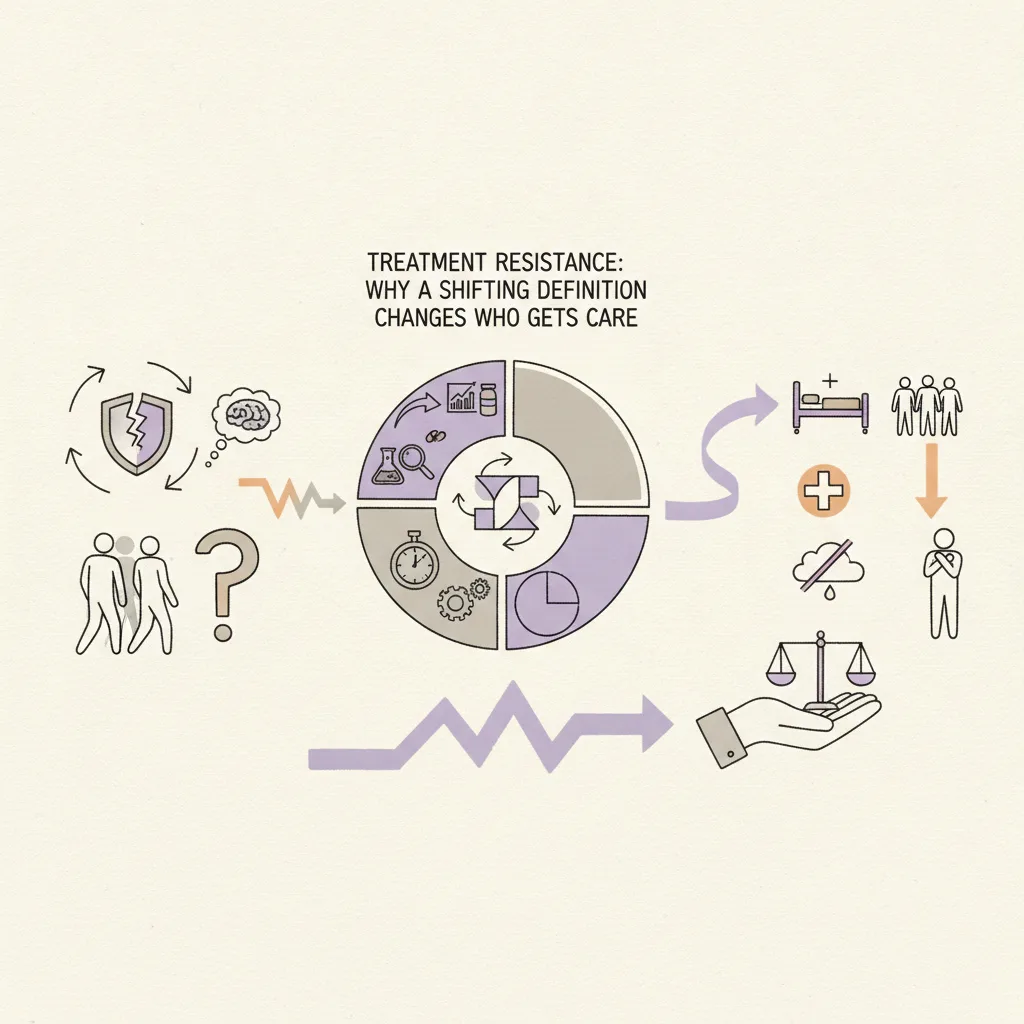

Defining treatment resistance is rarely a straightforward clinical exercise. It is a moving target, often influenced by the availability of new therapies and evolving understanding of disease pathophysiology. This fluidity in definition directly affects which patients qualify for advanced treatments, creating a complex relationship between clinical need, therapeutic innovation, and access to care.
Treatment resistance, in its simplest form, describes a patient's failure to respond adequately to standard therapeutic interventions. But what constitutes 'adequate response' or 'standard intervention' is a matter of ongoing debate and, importantly, often depends on the disease in question and the available therapeutic arsenal. For many chronic conditions, initial therapies aim to achieve remission or significant symptom control. When these fail, the patient enters a new clinical category, often with a poorer prognosis and a need for more aggressive or experimental approaches. The precise criteria for this transition are critical, as they determine eligibility for subsequent lines of therapy, including those with higher toxicity profiles or greater cost.
Consider a patient with a chronic inflammatory condition. Initial management might involve a first-line conventional synthetic disease-modifying antirheumatic drug (csDMARD). If, after a specified period and dose escalation, the patient continues to exhibit active disease, they are deemed resistant to that particular agent. The next step might be a biological DMARD (bDMARD) or a targeted synthetic DMARD (tsDMARD). But the definition of 'failure' at the csDMARD stage is not universally fixed. Some guidelines might require failure of two csDMARDs, while others might accept failure of just one, particularly if there are contraindications or intolerable side effects. This seemingly minor difference can significantly alter the patient's treatment trajectory and access to more advanced, often more effective, therapies. The development of new agents for autoimmune conditions often hinges on these definitions.
The Shifting Sands of Resistance
The definition of treatment resistance is not merely an academic exercise; it has profound practical implications for patient care and healthcare resource allocation. When a new drug emerges that targets a specific resistance mechanism, the definition of resistance itself may broaden or narrow to encompass the patient population most likely to benefit from that new agent. This is particularly evident in oncology, where molecular profiling has allowed for increasingly precise definitions of resistance based on specific genetic mutations or protein overexpression. A patient might be resistant to a conventional chemotherapy regimen, but highly responsive to a targeted therapy if they possess a particular biomarker. The absence of such a biomarker, however, might mean they are still considered 'resistant' to the targeted therapy, even if they have failed prior lines of treatment.
This dynamic creates a moving target for clinicians. What was considered treatment-resistant five years ago might now be a distinct subgroup with a specific, effective therapy. Conversely, patients who previously had no further options might now qualify for investigational treatments based on a refined understanding of their disease. This constant evolution demands continuous education and adaptation from prescribers. For example, in haematological malignancies, the concept of minimal residual disease (MRD) has redefined remission and resistance. Patients achieving morphological complete remission but remaining MRD-positive are now often considered to have 'molecular resistance' and may benefit from consolidation or maintenance therapies that would not have been offered previously. This approach helps to explain why novel approaches are needed for multiple myeloma resistance.
Impact on Clinical Trial Design
The definition of treatment resistance is also a cornerstone of clinical trial design. Trials for novel therapies often enroll patients who have failed a specified number of prior treatments, thereby defining the 'resistant' population for whom the new drug is intended. If the definition of resistance is too broad, the trial population may be heterogeneous, diluting the observed effect of the investigational agent. If it is too narrow, the trial may struggle to enroll sufficient patients, or the drug's applicability in real-world settings may be limited. Regulators, too, play a critical role in shaping these definitions, often requiring evidence of efficacy in specific resistant populations before granting approval.
Consider a drug designed for patients with a specific type of cancer that has progressed after two lines of chemotherapy. The trial's success hinges on accurately identifying these patients. If the criteria for 'progression' or 'failure of chemotherapy' are ambiguous, patient selection becomes inconsistent, potentially compromising the trial's validity. This is why protocols often specify precise objective response criteria, duration of response, and progression-free survival thresholds to define resistance. The implications extend to how we understand and manage conditions like polycythemia vera, where haematocrit targets influence treatment decisions, effectively defining a form of therapeutic resistance to phlebotomy if targets are not met.
The Patient Perspective and Access
For patients, the definition of treatment resistance is not an abstract concept; it is the gateway to hope or the barrier to further options. A patient deemed 'resistant' may face a bleak prognosis, but a new definition or a new therapy could offer a lifeline. The emotional and psychological impact of being labeled 'treatment-resistant' is significant, often leading to feelings of despair. But when new therapies become available, the redefinition of resistance can transform that despair into renewed optimism. This is particularly true for rare diseases or conditions with limited treatment options, where any expansion of eligibility criteria can be life-changing.
But the evolving definitions also create disparities. Patients in regions with less access to advanced diagnostics or therapies may be stuck with older, more restrictive definitions of resistance, effectively denying them access to treatments available elsewhere. This highlights the ethical imperative to ensure equitable access to diagnostics and therapies that inform and address treatment resistance. The financial burden on healthcare systems is also considerable. Advanced therapies for resistant conditions are often expensive, and the expansion of eligible patient populations can strain budgets. This necessitates careful consideration of cost-effectiveness and value-based care models, a topic often discussed in broader health policy circles, as seen in discussions around science policy changes.
Mechanisms of Resistance
Understanding the underlying mechanisms of resistance is paramount to developing effective strategies to overcome it. Resistance can arise through various pathways: genetic mutations that alter drug targets, upregulation of efflux pumps that expel drugs from cells, activation of alternative signaling pathways that bypass drug inhibition, or changes in the tumor microenvironment that protect cancer cells from therapy. In infectious diseases, resistance often involves enzymatic degradation of antibiotics, modification of drug targets, or reduced drug penetration, leading to the antibiotic paradox.
For example, in chronic myeloid leukemia (CML), resistance to tyrosine kinase inhibitors (TKIs) often involves mutations in the BCR-ABL gene, such as the T315I mutation. This specific mutation renders many first- and second-generation TKIs ineffective, necessitating the use of newer agents designed to overcome this particular resistance mechanism. Similarly, in non-small cell lung cancer (NSCLC), resistance to EGFR TKIs can arise from secondary mutations like T790M, or from activation of bypass pathways such as MET amplification. Identifying these mechanisms allows for the development of sequential or combination therapies tailored to the specific resistance profile of the patient. This detailed understanding is often found in comprehensive references like Harrison's Principles of Internal Medicine, which provides extensive coverage of disease mechanisms and treatment strategies.
The Role of Biomarkers
Biomarkers are increasingly central to defining and managing treatment resistance. Predictive biomarkers can identify patients most likely to respond to a particular therapy, while prognostic biomarkers can indicate the likely course of disease. Resistance biomarkers, on the other hand, identify patients who are unlikely to respond or who have developed resistance to a previously effective treatment. The integration of biomarker testing into routine clinical practice allows for a more personalized approach to treatment, moving away from a one-size-fits-all model.
For instance, in inflammatory bowel disease (IBD), therapeutic drug monitoring (TDM) of anti-TNF agents can help distinguish between primary non-response, secondary loss of response, and immunogenicity. Low drug levels might indicate a need for dose escalation or switching to another anti-TNF agent, while high drug levels with ongoing inflammation might suggest a different mechanism of resistance, prompting a switch to a different class of drug entirely. This precision medicine approach, while complex, offers the best chance of optimizing outcomes for patients with resistant disease. Clinicians often rely on concise, practical guides for these complex decisions, such as the Oxford Handbook of Clinical Medicine.
Where it Falls Short
The primary limitation in defining treatment resistance is the inherent heterogeneity of human disease. Two patients with the same diagnosis might present with vastly different underlying biology, leading to varied responses to the same therapy. Current definitions, while improving, often rely on broad clinical criteria that may not fully capture this individual variability. There is also the challenge of distinguishing true biological resistance from non-adherence, inadequate dosing, or misdiagnosis. These factors can confound the assessment of treatment efficacy and lead to premature labeling of a patient as 'resistant.' The lack of universally agreed-upon, standardized definitions across all diseases and regions further complicates matters, creating inconsistencies in patient management and research outcomes.
Another caveat is the economic pressure. The development of new therapies for resistant conditions is costly, and healthcare systems face difficult decisions about which treatments to fund. This can lead to situations where a scientifically sound definition of resistance is constrained by economic realities, limiting access to potentially life-saving treatments for some patients. The ethical implications of such decisions are profound, highlighting the need for transparent, evidence-based policy-making that balances innovation with affordability and equity.
The field continues to grapple with these complexities. The goal remains to refine the definition of treatment resistance to ensure that patients receive the most appropriate and effective therapies at the right time, while also fostering the development of new agents that can overcome these formidable clinical challenges. This requires ongoing collaboration between researchers, clinicians, regulators, and patient advocates to ensure that definitions are both scientifically robust and clinically meaningful.
The shifting definition of treatment resistance presents a perpetual challenge for European GPs and specialists. What constitutes 'failure' today may be redefined tomorrow by a new biomarker or an approved therapy. This means clinicians must actively engage with emerging data and updated guidelines, rather than relying on static thresholds. Missing these subtle shifts can mean denying a patient access to a therapy that could genuinely alter their disease course.
For industry, the incentive is clear: develop therapies that target specific resistance mechanisms. But the regulatory pathway often demands trials in increasingly defined, and therefore smaller, patient populations. This creates a tension between broad applicability and targeted efficacy, influencing market access and pricing strategies. The economic burden of these highly specialized treatments will continue to be a significant factor in their uptake across diverse healthcare systems.
Patients, meanwhile, are caught in the balance. A more precise definition of resistance can offer hope by identifying a specific treatment pathway, but it can also exclude those who do not fit the narrow criteria. Advocacy for equitable access to advanced diagnostics and therapies is paramount, ensuring that geographical or socioeconomic factors do not dictate whether a patient is deemed 'treatable' or 'resistant'. The evolving market demands a proactive, rather than reactive, approach from all stakeholders.
- The Pivot The definition of treatment resistance is not static, but rather a dynamic threshold that shifts with the introduction of novel therapies and deeper mechanistic understanding.
- The Data No specific numeric data is provided, but the core takeaway is that a change in resistance criteria can alter the eligible patient population by a substantial margin.
- The Action Clinicians must remain vigilant to evolving definitions of resistance within their specialty, as these changes dictate access to advanced treatment options and influence patient management pathways.
ART-2026-1332
·10/26
Drafted with AI assistance, reviewed and approved by the editorial team. This publication is intended for healthcare professionals, researchers, and life science industry professionals. Content is provided for informational and educational purposes only and does not constitute medical advice.

Infectious disease, epidemiology, and global health equity. I have covered outbreaks from Ebola to COVID-19 to mpox. The stories I am most drawn to are where the science is clear and the response is slow.
Cite This Article
Reeves T, Voss M. Treatment resistance: why a shifting definition changes who gets care. The Life Science Feed. Published August 27, 2026. Updated October 6, 2026. Accessed October 11, 2026. https://thelifesciencefeed.com/psychiatry/treatment-resistant-depression/insights/treatment-resistance-threshold-patient-access.
Editorial & AI Standards
All content is researched from peer-reviewed, open-access sources: published trial data, clinical guidelines, and regulatory filings. AI tools are used solely to structure and summarise that evidence; no AI-generated conclusions appear without editor verification against the primary source.
Every article is reviewed by a named editor before publication. Source citations are listed in the References section. This content does not represent the views of any pharmaceutical company, medical device manufacturer, or healthcare provider.
Licence & Rights
© 2026 The Life Science Feed. All rights reserved. Unless otherwise indicated, all content is the property of The Life Science Feed and may not be reproduced, distributed, or transmitted in any form or by any means without prior written permission.
Medical Disclaimer
The information provided on The Life Science Feed is for educational and informational purposes only. It is not intended as a substitute for professional medical advice, diagnosis, or treatment. Always seek the advice of your physician or other qualified healthcare provider regarding any medical condition or treatment decision. Never disregard professional medical advice or delay in seeking it because of something you have read on this website.
References
1. Wang JZ, Landry AP, Raleigh DR, et al. Meningioma: International Consortium on Meningiomas consensus review on scientific advances and treatment paradigms for clinicians, researchers, and patients. Neuro Oncol. 2024;26(10):1742-1780. doi:10.1093/neuonc/noae082
2. Ramos-Campo DJ, Andreu-Caravaca L, Clemente-Suárez VJ, Rubio-Arias JÁ. The Effect of Strength Training on Endurance Performance Determinants in Middle- and Long-Distance Endurance Athletes: An Umbrella Review of Systematic Reviews and Meta-Analysis. J Strength Cond Res. 2025;39(4):492-506. doi:10.1519/JSC.0000000000005056
3. Felker GM, Ellison DH, Mullens W, Cox ZL, Testani JM. Diuretic Therapy for Patients With Heart Failure: JACC State-of-the-Art Review. J Am Coll Cardiol. 2020;75(10):1178-1195. doi:10.1016/j.jacc.2019.12.059
4. Trautmann A, Vivarelli M, Samuel S, et al. IPNA clinical practice recommendations for the diagnosis and management of children with steroid-resistant nephrotic syndrome. Pediatr Nephrol. 2020;35(8):1529-1561. doi:10.1007/s00467-020-04519-1
5. Kwan P, Arzimanoglou A, Berg AT, et al. Definition of drug resistant epilepsy: consensus proposal by the ad hoc Task Force of the ILAE Commission on Therapeutic Strategies. Epilepsia. 2010;51(6):1069-77. doi:10.1111/j.1528-1167.2009.02397.x
6. Coletta G, Phillips SM. An elusive consensus definition of sarcopenia impedes research and clinical treatment: A narrative review. Ageing Res Rev. 2023;86:101883. doi:10.1016/j.arr.2023.101883