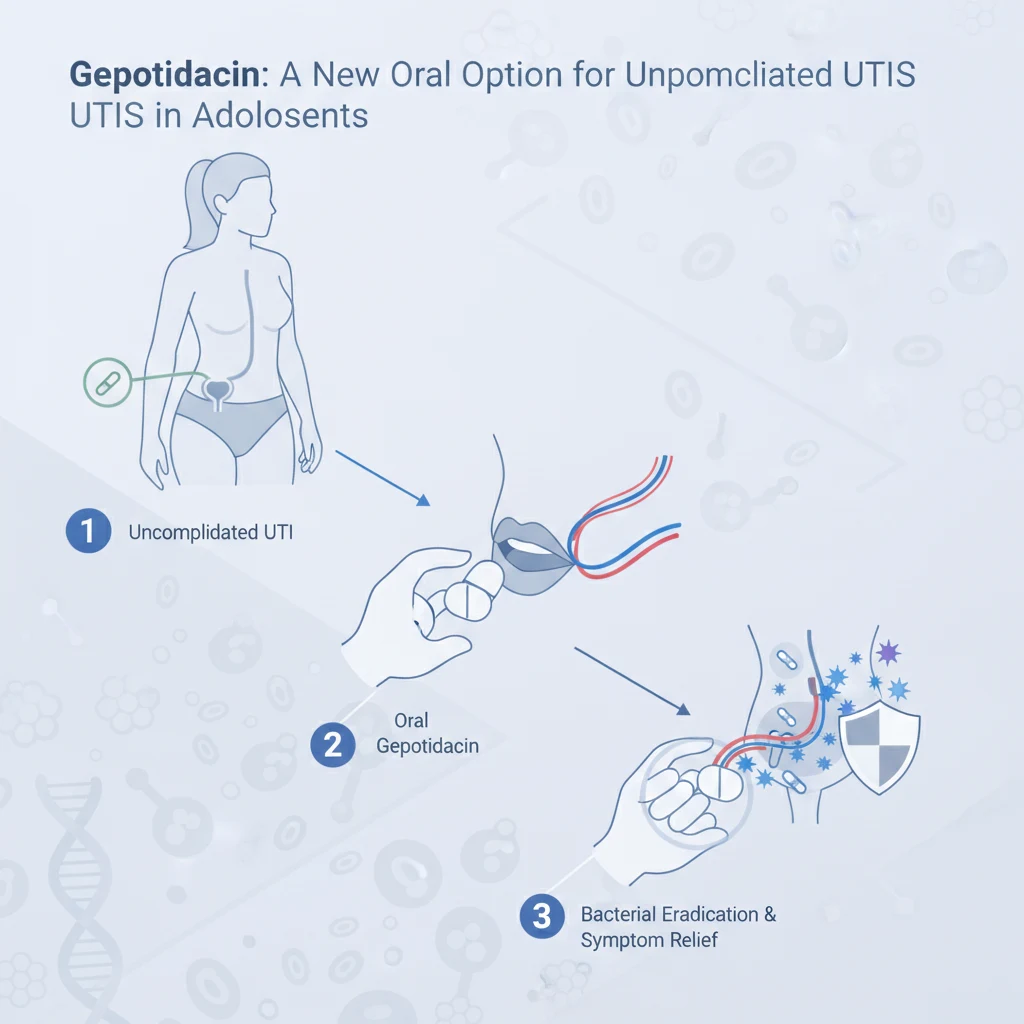

Uncomplicated urinary tract infections (UTIs) remain a common bacterial infection, particularly in female patients, driving significant antibiotic prescribing. The persistent challenge of antimicrobial resistance, including the rise of extended-spectrum β-lactamase-producing organisms, necessitates new therapeutic strategies. Gepotidacin, a novel oral antibiotic, has emerged as a potential option for this patient population.1
Urinary tract infections are a leading cause of antibiotic prescriptions across various healthcare settings, including inpatient, emergency department, and outpatient clinics. These infections are particularly prevalent in children, where prescribing practices often deviate from evidence-based guidelines regarding antibiotic selection, administration route, and treatment duration. Such deviations contribute directly to the escalating problem of resistant uropathogens.1
The market for antibiotic stewardship in pediatric UTIs is complex, with substantial variation observed across 13 international treatment guidelines published between 2011 and 2025. Many of these guidelines predate significant randomized controlled trials such as SCOUT, STOP, and INDI-UTI, highlighting a gap between evolving evidence and clinical recommendations. This variability underscores the need for a more unified and stewardship-focused approach to managing pediatric UTIs.1
A New Class of Antibiotic
Gepotidacin is a first-in-class oral antibiotic, representing a novel mechanism of action. Unlike existing agents, gepotidacin inhibits bacterial DNA gyrase and topoisomerase IV through a distinct binding site, which may offer advantages against strains resistant to fluoroquinolones. This unique mechanism is particularly relevant in an era where resistance to commonly used antibiotics for UTIs, such as trimethoprim-sulfamethoxazole and fluoroquinolones, is increasing. The drug received approval in 2025 for the treatment of uncomplicated urinary tract infections in female patients aged 12 years and older and weighing at least 40 kg.1
The approval of gepotidacin provides a new tool for clinicians, particularly for adolescent female patients who present with uncomplicated UTIs and may have resistant infections. The drug's oral formulation is a practical advantage, facilitating outpatient management and potentially reducing the need for intravenous therapy. This aligns with broader antibiotic stewardship goals that prioritize oral agents when clinically appropriate.1
Optimizing Diagnostic and Treatment Strategies
Antibiotic stewardship for pediatric UTIs encompasses the entire clinical pathway, from initial diagnosis to prophylaxis rationalization. Diagnostic stewardship interventions, such as optimizing urine collection methods and using urinalysis to guide treatment decisions, are high-impact strategies. Avoiding antibiotic treatment for asymptomatic bacteriuria, a common pitfall, significantly reduces unnecessary antibiotic exposure without compromising patient outcomes.1
For children with pyelonephritis, oral antibiotic therapy demonstrates comparable effectiveness to intravenous therapy in most cases. Early intravenous-to-oral transition is consistently supported by randomized controlled trial evidence, offering benefits in terms of patient comfort, reduced healthcare costs, and decreased risk of intravenous line-related complications. This approach is a cornerstone of modern antibiotic stewardship.1
Regarding treatment duration, a 5-day oral course may be sufficient for uncomplicated febrile UTIs in children who show clinical improvement, a strategy supported by the STOP trial. But the SCOUT trial, while showing a low absolute failure rate, did not meet its noninferiority margin for this shorter duration. For uncomplicated cystitis, a 3 to 5-day course is generally considered appropriate. These recommendations highlight the importance of individualizing treatment based on clinical response and specific infection characteristics.1
The Role of Prophylaxis and Stewardship Programs
Antibiotic prophylaxis is generally not indicated for children with a normal urinary tract following a first febrile UTI. It should be reserved for specific high-risk subgroups, with nitrofurantoin being the preferred agent when prophylaxis is deemed necessary. Overuse of prophylaxis contributes to resistance and can lead to adverse effects, making judicious application critical.1
Formal antibiotic stewardship programs, which integrate prospective audit and feedback, electronic health record integration, and prescriber education, have demonstrated measurable improvements in prescribing appropriateness for pediatric UTIs. These programs are essential for driving evidence-based practices and mitigating the rise of antimicrobial resistance. The link between oral health and kidney health, for example, underscores the systemic implications of infection management.1
The introduction of gepotidacin, while a welcome addition, represents a limited option for eligible adolescents with resistant infections. Its specific indication for female patients aged 12 years and older and weighing at least 40 kg means it will not be a universal solution. Clinicians must carefully consider the patient's age, weight, and the local epidemiology of resistance when selecting an antibiotic. For a broader understanding of infectious disease management, the Oxford Handbook of Infectious Diseases and Microbiology (3rd ed) offers practical guidance.1
Unanswered Questions and Future Directions
Despite the approval of gepotidacin, several research priorities remain. A dedicated stewardship-oriented pediatric UTI guideline, which synthesizes the latest evidence and addresses the substantial variations in current recommendations, is urgently needed. Standardized resistance surveillance is also critical to track the emergence and spread of resistant uropathogens, informing empirical treatment choices and guiding the appropriate use of new antibiotics like gepotidacin.1
Multicenter stewardship program evaluations, focusing on patient-centered outcomes, are essential to demonstrate the real-world impact of these interventions. These evaluations should move beyond process measures to assess how stewardship efforts translate into improved clinical outcomes, reduced adverse events, and sustained reductions in resistance rates. The ongoing evolution of antibiotic resistance means that the search for new agents and optimized treatment strategies is a continuous process. Oral GLP-1 analogues, for instance, represent another area of innovation in managing chronic conditions.1
The SCOUT trial, which evaluated a shorter course for febrile UTI, did not meet its noninferiority margin despite a low absolute failure rate. This outcome highlights the challenges in demonstrating noninferiority for shorter antibiotic courses, even when clinical outcomes appear favorable. It underscores the need for robust trial designs and careful interpretation of results when considering changes to established treatment durations. The balance between efficacy, safety, and resistance prevention is delicate.1
The specific age and weight restrictions for gepotidacin's use in uncomplicated UTIs mean that younger children or those below the specified weight threshold will not be candidates. This limits its applicability in the broader pediatric population, where UTIs are also common. Further research may be needed to explore the safety and efficacy of gepotidacin in these younger or smaller patient groups, if appropriate. But for now, its role is clearly defined.1
The long-term impact of gepotidacin on resistance patterns is another area requiring ongoing surveillance. As with any new antibiotic, widespread use could eventually lead to the emergence of resistance to gepotidacin itself. Prudent use, guided by stewardship principles, will be essential to preserve its effectiveness for as long as possible. This includes reserving it for cases where other agents are not suitable due to resistance or intolerance.1
The development of new oral options for resistant infections is a positive step, but it must be integrated into a comprehensive strategy that includes diagnostic improvements, optimized treatment durations, and judicious use of prophylaxis. Without these broader stewardship efforts, even novel agents will eventually face the same challenges of resistance that plague older antibiotics. The management of urgency incontinence, for example, also requires a multi-faceted approach beyond just pharmacotherapy.1
Gepotidacin's approval for uncomplicated UTIs in a specific adolescent female population is a targeted win in the ongoing battle against antimicrobial resistance. For GPs and specialists managing these patients, it offers a much-needed alternative when common uropathogens demonstrate resistance to standard first-line agents. This is not a broad-spectrum panacea, but a precise tool for a defined clinical niche.
The drug's first-in-class mechanism is its primary appeal, potentially circumventing existing resistance pathways. But clinicians must remain vigilant; the limited scope of its approval, specifically for female patients aged 12 years and older and weighing at least 40 kg, means careful patient selection is paramount. This is not a drug for every UTI, nor for every pediatric patient.
The broader implications for antibiotic stewardship are clear: new drugs alone will not solve the resistance crisis. The emphasis on diagnostic stewardship, appropriate treatment durations, and rational prophylaxis, as highlighted in the pediatric UTI guidelines, remains critical. Without these foundational practices, even novel agents like gepotidacin will eventually succumb to the pressures of overuse and resistance development.
Pharmaceutical companies developing new antibiotics must continue to focus on agents with novel mechanisms and clear indications. The market for such targeted therapies, while smaller, is vital for preserving the efficacy of our existing antibiotic arsenal. This approval signals a recognition of the need for precision in antimicrobial prescribing, moving away from empirical broad-spectrum approaches when possible.
- The Pivot Gepotidacin, a first-in-class oral antibiotic, offers a new mechanism of action for uncomplicated UTIs.
- The Data Approved in 2025 for eligible female adolescents, it represents a limited option for resistant infections.
- The Action Consider gepotidacin for female patients aged 12 years and older, weighing at least 40 kg, with uncomplicated UTIs, especially when resistance to standard agents is a concern.
ART-2026-1373
·10/26
Drafted with AI assistance, reviewed and approved by the editorial team. This publication is intended for healthcare professionals, researchers, and life science industry professionals. Content is provided for informational and educational purposes only and does not constitute medical advice.

Infectious disease, epidemiology, and global health equity. I have covered outbreaks from Ebola to COVID-19 to mpox. The stories I am most drawn to are where the science is clear and the response is slow.
Cite This Article
Reeves T, Lopes W. Gepotidacin: a new oral option for uncomplicated utis in adolescents. The Life Science Feed. Published August 27, 2026. Updated October 2, 2026. Accessed October 11, 2026. https://thelifesciencefeed.com/urology/urinary-tract-infections/innovation/gepotidacin-uncomplicated-uti-oral-option.
Editorial & AI Standards
All content is researched from peer-reviewed, open-access sources: published trial data, clinical guidelines, and regulatory filings. AI tools are used solely to structure and summarise that evidence; no AI-generated conclusions appear without editor verification against the primary source.
Every article is reviewed by a named editor before publication. Source citations are listed in the References section. This content does not represent the views of any pharmaceutical company, medical device manufacturer, or healthcare provider.
Licence & Rights
© 2026 The Life Science Feed. All rights reserved. Unless otherwise indicated, all content is the property of The Life Science Feed and may not be reproduced, distributed, or transmitted in any form or by any means without prior written permission.
Medical Disclaimer
The information provided on The Life Science Feed is for educational and informational purposes only. It is not intended as a substitute for professional medical advice, diagnosis, or treatment. Always seek the advice of your physician or other qualified healthcare provider regarding any medical condition or treatment decision. Never disregard professional medical advice or delay in seeking it because of something you have read on this website.
References
1. Lashkar MO, Nahata MC. Antibiotic Stewardship in Pediatric Urinary Tract Infections: Current Evidence and Practical Strategies. Antibiotics (Basel). 2026;15(5):5608. https://pubmed.ncbi.nlm.nih.gov/42505608/