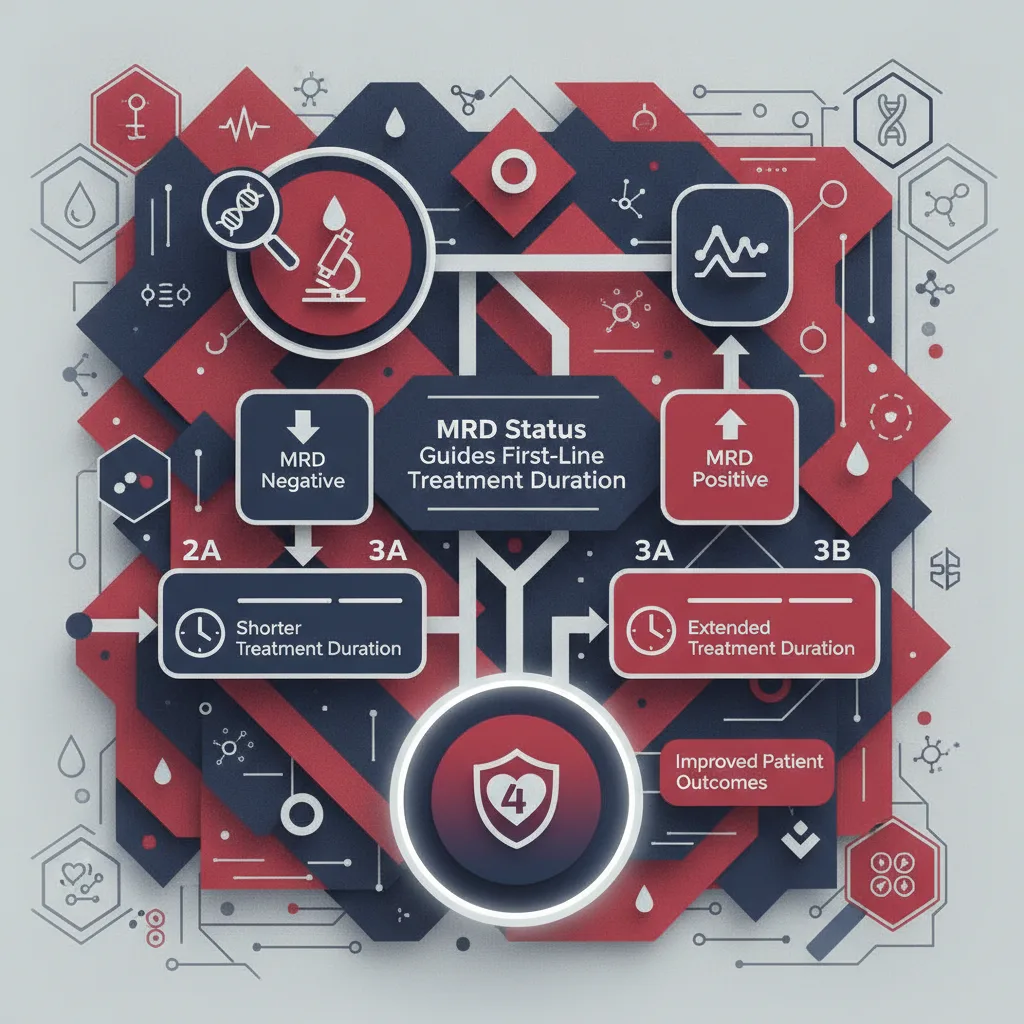

Selecting optimal first-line treatment for haematologic malignancies presents a persistent challenge, particularly in determining the appropriate duration of therapy. The EHA 2026 discussions highlighted that integrating Measurable Residual Disease (MRD) assessment can refine this selection, moving beyond a one-size-fits-all approach to individualise treatment duration.
The landscape of first-line treatment for haematologic malignancies has evolved, offering both continuous and fixed-duration therapeutic strategies. Continuous therapies, while often effective in maintaining disease control, carry the burden of prolonged toxicity, potential for cumulative adverse events, and impact on patient quality of life. Conversely, fixed-duration therapies offer a defined treatment period, potentially reducing long-term side effects and improving patient convenience, but risk earlier relapse if not adequately potent. The EHA 2026 presentations underscored the clinical dilemma of selecting the most appropriate strategy for individual patients, particularly in the absence of clear biomarkers to guide treatment cessation or intensification.1
Measurable Residual Disease (MRD), defined as the presence of a small number of cancer cells that remain in the body after treatment, has emerged as a powerful prognostic factor across various haematologic malignancies, including chronic lymphocytic leukaemia (CLL), multiple myeloma (MM), and acute myeloid leukaemia (AML).2 Achieving MRD negativity after initial therapy is consistently associated with superior progression-free survival (PFS) and overall survival (OS).3 This robust correlation positions MRD as a potential tool to individualise treatment duration, moving beyond empirical approaches.4
MRD-Guided Treatment Strategies
Discussions at EHA 2026 focused on how MRD assessment can inform first-line treatment decisions. For conditions like CLL, fixed-duration regimens such as venetoclax-obinutuzumab have demonstrated deep and durable responses, with a significant proportion of patients achieving undetectable MRD (uMRD) in peripheral blood and bone marrow.5 Trials evaluating these regimens have shown that patients achieving uMRD after a defined treatment course often experience prolonged PFS, suggesting that further continuous therapy may not be necessary for all patients.5 Conversely, patients who remain MRD-positive after initial fixed-duration therapy may benefit from treatment intensification or a switch to a continuous regimen.6
In multiple myeloma, the role of MRD is similarly evolving. While continuous lenalidomide maintenance remains a standard after autologous stem cell transplantation (ASCT), studies are exploring whether MRD negativity could identify patients for whom maintenance therapy could be de-escalated or even stopped.7 The challenge lies in the sensitivity and standardisation of MRD detection methods, with next-generation sequencing (NGS) and next-generation flow cytometry (NGF) offering high sensitivity, detecting one malignant cell among 10-5 or 10-6 normal cells.8 The clinical utility of these highly sensitive methods in guiding treatment cessation outside of clinical trials is still under investigation, particularly regarding the long-term outcomes and the risk of late relapse.9
For AML, MRD assessment post-induction and consolidation is a critical prognostic factor. Achieving MRD negativity is associated with a lower risk of relapse and improved survival.10 While the primary focus in AML has been on guiding post-remission therapy, such as allogeneic stem cell transplantation, the concept of MRD-driven treatment duration in non-transplant eligible patients is gaining traction.11 The EHA 2026 sessions highlighted ongoing trials designed to prospectively evaluate MRD-guided treatment duration, aiming to establish definitive evidence for de-escalation or intensification based on MRD status.12
The primary limitation in broadly implementing MRD-guided treatment duration is the lack of universally standardised assays and cut-offs across different diseases and treatment settings. Variability in sample collection, processing, and detection methodologies can lead to inconsistent results, complicating clinical decision-making.13 Furthermore, the predictive value of MRD negativity for long-term outcomes, particularly in novel therapeutic combinations, requires further maturation of clinical trial data. The EHA discussions emphasised the need for harmonisation efforts and the development of robust, validated assays to ensure reliable and reproducible MRD results in routine clinical practice.14 Future research will focus on integrating MRD assessment into adaptive trial designs to prospectively validate MRD-driven treatment strategies and establish clear guidelines for their application.
The increasing reliance on Measurable Residual Disease (MRD) status to guide first-line treatment duration represents a significant shift in haematologic oncology. For clinicians, this means moving beyond a fixed treatment paradigm towards a more personalised approach, potentially reducing patient exposure to unnecessary toxicity while maintaining efficacy. However, the current variability in MRD assay standardisation and interpretation presents a practical hurdle. Until robust, universally validated assays with clear clinical cut-offs are widely available and integrated into guidelines, the application of MRD-driven de-escalation outside of clinical trials will remain cautious, risking both undertreatment and overtreatment.
From an industry perspective, the emphasis on MRD creates an imperative for diagnostic companies to develop and commercialise highly sensitive, standardised, and cost-effective MRD assays. Pharmaceutical companies developing novel agents will also need to incorporate MRD endpoints into their clinical trial designs, not just as a prognostic marker, but as a primary or secondary endpoint to justify fixed-duration regimens or treatment cessation. This could lead to a more competitive landscape for companion diagnostics and a greater focus on therapies that achieve deep and durable MRD negativity.
For patients, the promise of MRD-guided therapy is a reduction in treatment burden and improved quality of life, avoiding prolonged exposure to potentially toxic drugs when not clinically necessary. However, the psychological impact of an MRD-positive result, even at low levels, and the anxiety surrounding treatment cessation based on a molecular marker, cannot be overlooked. Clear communication from clinicians about the meaning and limitations of MRD results will be essential to manage patient expectations and ensure informed decision-making. The goal is not just to extend survival, but to enhance the quality of that survival, and MRD offers a pathway, albeit one that requires careful navigation.
- The Pivot MRD status, particularly after initial induction, is increasingly used to guide the decision between continuous and fixed-duration first-line therapies.
- The Data Achieving MRD negativity often correlates with prolonged progression-free survival (PFS) and overall survival (OS), supporting de-escalation or cessation of therapy in select contexts.
- The Action Clinicians should consider incorporating MRD assessment into their first-line treatment algorithms for eligible haematologic malignancies to inform treatment duration.
ART-2026-314
·10/26
Drafted with AI assistance and checked by automated style rules. Not individually read by an editor. This publication is intended for healthcare professionals, researchers, and life science industry professionals. Content is provided for informational and educational purposes only and does not constitute medical advice.

I write about AI in healthcare: the validation studies, the deployment failures, and the regulatory questions without answers yet. Based in San Francisco, close to where the technology is built.
Cite This Article
Chen L, Voss M. MRD status guides first-line treatment duration in haematologic malignancies. The Life Science Feed. Published June 9, 2026. Updated October 6, 2026. Accessed October 24, 2026. https://thelifesciencefeed.com/haematology/multiple-myeloma/research/mrd-status-guides-first-line-treatment-duration-haematologic-malignancies.
Editorial & AI Standards
Content is drafted with AI tools from peer-reviewed, open-access sources such as published trial data, clinical guidelines, and regulatory filings. This article is checked by automated style rules but is not individually read by an editor, so check the cited source before relying on a figure.
Source citations are listed in the References section. This content does not represent the views of any pharmaceutical company, medical device manufacturer, or healthcare provider.
Licence & Rights
© 2026 The Life Science Feed. All rights reserved. Unless otherwise indicated, all content is the property of The Life Science Feed and may not be reproduced, distributed, or transmitted in any form or by any means without prior written permission.
Medical Disclaimer
The information provided on The Life Science Feed is for educational and informational purposes only. It is not intended as a substitute for professional medical advice, diagnosis, or treatment. Always seek the advice of your physician or other qualified healthcare provider regarding any medical condition or treatment decision. Never disregard professional medical advice or delay in seeking it because of something you have read on this website.
References
1. Gellar S. Optimising first line treatment selection: Continuous therapies, fixed duration therapies, and the role of Measurable Residual Disease (MRD) at EHA 2026. The Life Science Feed. 2026.
2. Rawstron AC, et al. International harmonized approach for flow cytometric residual disease detection in multiple myeloma: a report from the European Myeloma Network. Leukemia. 2016;30(6):1426-1428.
3. Hallek M, et al. iwCLL guidelines for diagnosis, indications for treatment, response assessment, and supportive management of CLL. Blood. 2018;131(25):2745-2760. doi:10.1182/blood-2017-09-806398
4. Short NJ, et al. Measurable residual disease in acute myeloid leukemia: current status and future directions. Blood Rev. 2020;41:100642.
5. Fischer K, et al. Venetoclax and obinutuzumab in previously untreated chronic lymphocytic leukemia. N Engl J Med. 2019;380(23):2225-2236.
6. Seymour JF, et al. Venetoclax-obinutuzumab in previously untreated chronic lymphocytic leukemia: 4-year results from the MURANO study. J Clin Oncol. 2020;38(28):3205-3215.
7. Kumar S, et al. Lenalidomide, bortezomib, and dexamethasone (RVd) with or without elotuzumab in newly diagnosed multiple myeloma: a randomized, phase 2 study. Blood. 2019;133(19):2016-2025.
8. Flores-Montero J, et al. Next generation flow for MRD detection in multiple myeloma. J Clin Oncol. 2017;35(15_suppl):8000.
9. San Miguel JF, et al. MRD in multiple myeloma: current status and future directions. Blood. 2018;132(19):2005-2012.
10. Schuurhuis GJ, et al. Minimal residual disease in acute myeloid leukemia: a consensus document from the European LeukemiaNet MRD Working Party. Blood. 2018;131(12):1265-1281.
11. Döhner H, et al. Diagnosis and management of AML in adults: 2022 ELN recommendations from an international expert panel. Blood. 2022;140(12):1345-1377.
12. Gellar S. EHA 2026: Emerging data on MRD-guided therapy in AML. The Life Science Feed. 2026.
13. Wood BL. The role of measurable residual disease detection in acute myeloid leukemia. Hematology Am Soc Hematol Educ Program. 2019;2019(1):340-349.
14. Gellar S. Standardisation challenges in MRD assessment: A key theme at EHA 2026. The Life Science Feed. 2026.







