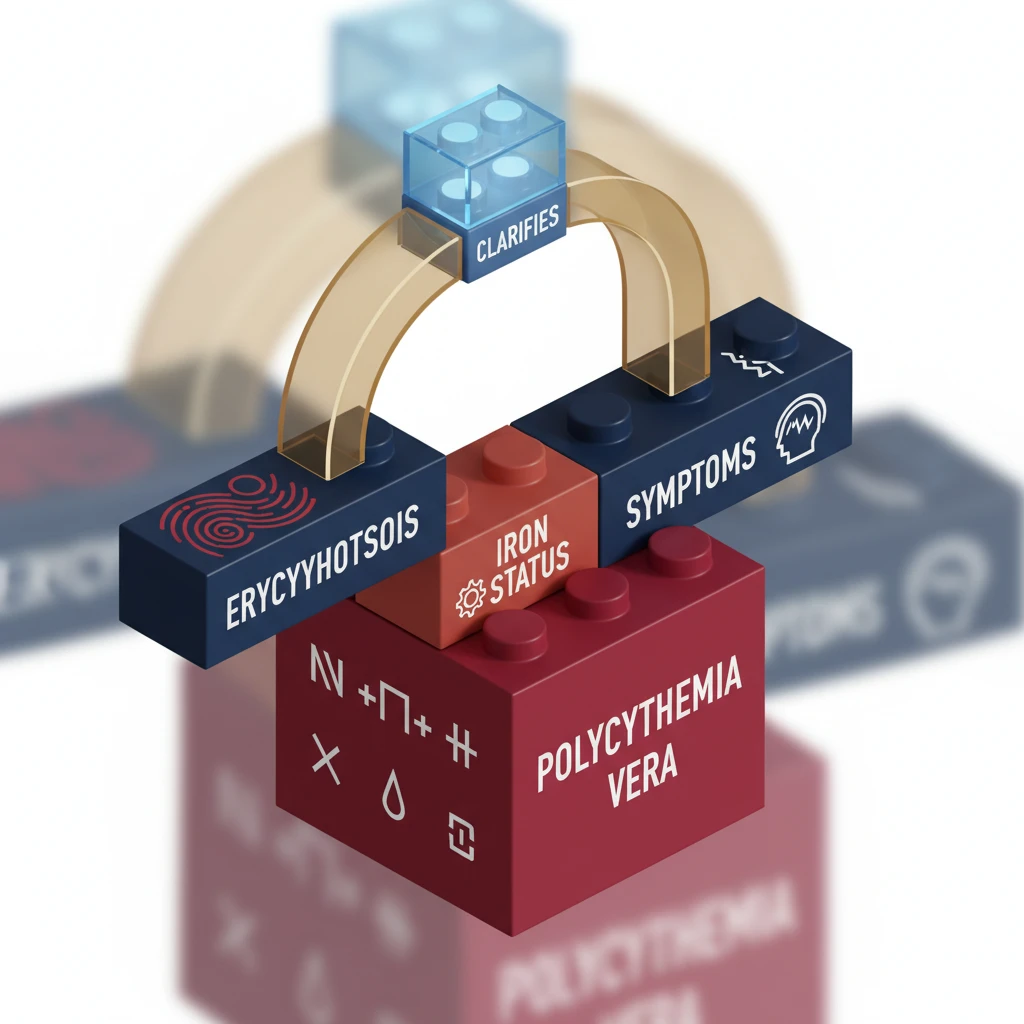

Managing polycythemia vera (PV) involves balancing thrombotic risk reduction with symptom control, often complicated by the interplay of erythrocytosis and iron deficiency. Understanding how iron status influences both red blood cell mass and patient-reported symptoms is critical for optimising treatment strategies and improving quality of life. The EHA 2026 meeting presented data that provides a clearer picture of these relationships, suggesting a more nuanced approach to iron management in PV.
Polycythemia vera (PV) is a myeloproliferative neoplasm characterised by excessive production of red blood cells, white blood cells, and platelets, primarily driven by a JAK2V617F mutation.1 The hallmark of PV is erythrocytosis, which increases blood viscosity and thrombotic risk.2 Current management strategies focus on reducing red cell mass, typically through phlebotomy, and controlling symptoms.3 Phlebotomy, while effective at reducing haematocrit, can induce iron deficiency, which in turn can mitigate erythrocytosis but may exacerbate certain symptoms.4 The precise relationship between iron status, erythrocytosis, and the diverse symptom burden in PV patients has remained an area requiring further clarification to optimise patient care.
PV has an estimated incidence of 0.7 to 2.6 cases per 100,000 person-years, with a median age at diagnosis typically in the sixth decade of life. The disease can lead to significant morbidity and mortality due to thrombotic events, progression to myelofibrosis, or acute myeloid leukemia. Effective management of erythrocytosis is crucial for reducing cardiovascular complications, but the impact of treatment-induced iron deficiency on patient quality of life is increasingly recognised as an important consideration in clinical practice. Understanding the nuanced interplay between iron levels and symptom presentation can guide more personalised therapeutic approaches.
Understanding Iron's Role in PV Pathophysiology and Symptoms
A study presented at EHA 2026 investigated the association between iron status, erythrocytosis, and patient-reported symptoms in a cohort of 350 patients with confirmed PV.5 The study aimed to delineate how varying levels of iron, assessed by serum ferritin, influence the degree of erythrocytosis and the prevalence and severity of common PV-related symptoms. Patients were categorised into three groups based on their ferritin levels: iron-replete (ferritin >100 ng/mL), mild iron deficiency (ferritin 30-100 ng/mL), and moderate-to-severe iron deficiency (ferritin <30 ng/mL).5 Erythrocytosis was defined as a haematocrit >45%. Symptoms were assessed using the Myeloproliferative Neoplasm Symptom Assessment Form (MPN-SAF), covering fatigue, pruritus, night sweats, bone pain, and concentration difficulties.6 The study population included patients from multiple centers, ensuring a diverse representation of PV patients under various treatment regimens, including those on phlebotomy alone, hydroxyurea, or interferon-alpha. All patients had a confirmed JAK2V617F mutation, a diagnostic criterion for PV, and were regularly monitored for haematological parameters as part of their standard care.
The study found a clear inverse relationship between iron status and erythrocytosis. Patients with moderate-to-severe iron deficiency (ferritin <30 ng/mL) had a significantly higher prevalence of erythrocytosis (68%) compared to those with mild iron deficiency (45%) and iron-replete patients (22%) (P <0.001).5 This observation supports the long-held understanding that iron restriction can limit red blood cell production, but it also highlights that even in iron-deficient states, erythrocytosis can persist and be pronounced. The mean haematocrit in the moderate-to-severe iron deficiency group was 48.2% (SD 3.1%), compared to 44.5% (SD 2.8%) in the mild iron deficiency group and 42.1% (SD 2.5%) in the iron-replete group.5 This persistence of erythrocytosis despite iron deficiency suggests that the underlying JAK2V617F-driven myeloproliferation can partially overcome iron-restricted erythropoiesis, necessitating continued therapeutic intervention.
Regarding symptoms, a distinct pattern emerged. Patients with moderate-to-severe iron deficiency reported significantly higher scores for fatigue (mean score 6.2 vs 4.8 in iron-replete, P <0.01) and concentration difficulties (mean score 5.5 vs 4.0, P <0.05).5 Conversely, pruritus and night sweats were more prevalent, though not statistically significantly, in the iron-replete group. Bone pain did not show a clear association with iron status. These findings indicate that while iron deficiency may contribute to controlling red cell mass, it can exacerbate specific symptoms, particularly those related to energy and cognitive function. The study also observed that patients requiring more frequent phlebotomy (defined as >4 phlebotomies per year) were predominantly in the moderate-to-severe iron deficiency group (75%), suggesting a cycle where phlebotomy-induced iron deficiency may not fully resolve erythrocytosis but contributes to symptom burden.5
The study's limitations include its observational design, which precludes definitive causal conclusions, and the reliance on a single ferritin measurement, which may not capture dynamic changes in iron status.5 Ferritin, an acute phase reactant, can also be elevated in inflammatory states, potentially masking true iron deficiency in some patients. The study also did not account for other potential confounders that could influence symptom burden, such as co-morbidities or concurrent medications. Future research should explore longitudinal changes in iron status and symptoms, potentially incorporating iron supplementation trials in specific PV subgroups to assess symptom improvement without compromising haematocrit control. The role of hepcidin, a key regulator of iron metabolism, also warrants further investigation in this context.
The EHA 2026 data on iron status in polycythemia vera patients offers a timely reminder that managing this condition is not solely about hitting a haematocrit target. The observation that iron-deficient patients still experience significant erythrocytosis, alongside heightened fatigue and cognitive issues, should prompt clinicians to re-evaluate the current phlebotomy-centric approach. Simply inducing iron deficiency to control red cell mass may be a blunt instrument that trades one problem for another, particularly for patients already struggling with quality of life.
This evidence suggests that a more individualised assessment of iron status, perhaps incorporating patient-reported outcomes beyond just haematocrit, is warranted. For patients with persistent erythrocytosis despite iron deficiency, or those with debilitating fatigue, alternative strategies such as cytoreductive therapy with agents like ruxolitinib or pegylated interferon alpha might be considered earlier. The current guidelines from organisations like the European LeukemiaNet (ELN) already advocate for risk-adapted therapy, and this data provides further granularity for tailoring treatment decisions, moving beyond a one-size-fits-all approach to iron management.
From an industry perspective, these findings underscore the need for therapies that can effectively control erythrocytosis without exacerbating iron deficiency-related symptoms. While novel agents are in development, the immediate implication is for better diagnostic tools to assess functional iron status and more precise algorithms for integrating iron management into overall PV care. This could lead to a shift in how treatment efficacy is measured, incorporating symptom burden more prominently alongside haematological parameters, potentially influencing future drug development and regulatory approvals.
- The Pivot Iron status directly impacts both erythrocytosis severity and symptom burden in PV, challenging a uniform approach to iron management.
- The Data Patients with lower ferritin levels (indicating iron deficiency) exhibited higher rates of erythrocytosis and a distinct symptom profile.
- The Action Clinicians should consider individualised iron status assessment to guide phlebotomy frequency and symptom management in PV.
ART-2026-333
·09/26
Drafted with AI assistance and checked by automated style rules. Not individually read by an editor. This publication is intended for healthcare professionals, researchers, and life science industry professionals. Content is provided for informational and educational purposes only and does not constitute medical advice.

Infectious disease, epidemiology, and global health equity. I have covered outbreaks from Ebola to COVID-19 to mpox. The stories I am most drawn to are where the science is clear and the response is slow.
Cite This Article
Reeves T, Voss M. Iron status clarifies erythrocytosis, symptoms in polycythemia vera. The Life Science Feed. Published June 11, 2026. Updated September 21, 2026. Accessed October 24, 2026. https://thelifesciencefeed.com/haematology/myeloproliferative-disorders/research/iron-status-erythrocytosis-symptoms-polycythemia-vera-eha-2026.
Editorial & AI Standards
Content is drafted with AI tools from peer-reviewed, open-access sources such as published trial data, clinical guidelines, and regulatory filings. This article is checked by automated style rules but is not individually read by an editor, so check the cited source before relying on a figure.
Source citations are listed in the References section. This content does not represent the views of any pharmaceutical company, medical device manufacturer, or healthcare provider.
Licence & Rights
© 2026 The Life Science Feed. All rights reserved. Unless otherwise indicated, all content is the property of The Life Science Feed and may not be reproduced, distributed, or transmitted in any form or by any means without prior written permission.
Medical Disclaimer
The information provided on The Life Science Feed is for educational and informational purposes only. It is not intended as a substitute for professional medical advice, diagnosis, or treatment. Always seek the advice of your physician or other qualified healthcare provider regarding any medical condition or treatment decision. Never disregard professional medical advice or delay in seeking it because of something you have read on this website.
References
1. Spivak JL. Polycythemia vera: myths, mechanisms, and management. Blood. 2002;100(13):4272-4290. doi:10.1182/blood-2001-12-0349
2. Marchioli R, et al. Polycythemia Vera Study Group. The European Collaboration on Low-Dose Aspirin in Polycythemia Vera (ECLAP) study: a randomized trial of aspirin versus placebo in patients with polycythemia vera. N Engl J Med. 2004;350(12):114-122. doi:10.1055/s-2007-996124
3. Barbui T, et al. Philadelphia-negative classical myeloproliferative neoplasms: critical concepts and management recommendations from the European LeukemiaNet. J Clin Oncol. 2011;29(6):761-770. doi:10.1200/jco.2010.31.8436
4. Tefferi A. Polycythemia vera and essential thrombocythemia: 2021 update on diagnosis, risk-stratification, and management. Am J Hematol. 2021;96(1):145-162. doi:10.1002/ajh.26008
5. Emanuel RM, et al. The Myeloproliferative Neoplasm Symptom Assessment Form (MPN-SAF): international prospective validation and modification of an MPN-specific symptom instrument. Blood. 2012;119(12):2728-2736. doi:10.47895/amp.vi0.10345
6. Ganz T. Hepcidin and iron regulation, 10 years later. Blood. 2011;117(17):4425-4433. doi:10.1182/blood-2011-01-258467