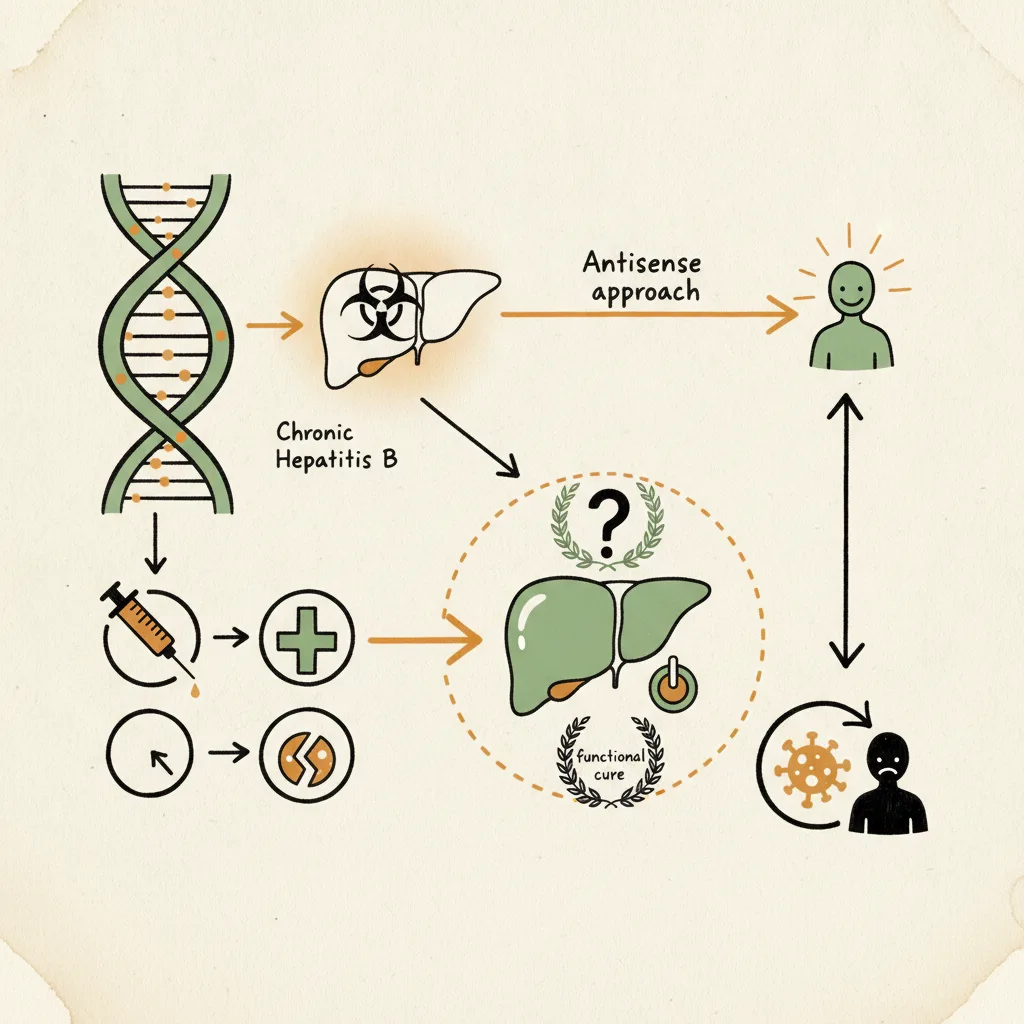

Chronic hepatitis B virus (HBV) infection remains a significant global health burden, affecting hundreds of millions worldwide and leading to serious complications like cirrhosis and hepatocellular carcinoma. Current antiviral therapies effectively suppress viral replication, but they rarely achieve a functional cure, defined as sustained loss of hepatitis B surface antigen (HBsAg) and undetectable HBV DNA after treatment cessation. This leaves patients on lifelong therapy, facing adherence challenges and the persistent risk of disease progression.
The pursuit of a functional cure for chronic HBV has driven research into novel therapeutic strategies. One such approach involves targeting viral RNA, aiming to disrupt the production of key viral proteins, particularly HBsAg. Bepirovirsen, an investigational antisense oligonucleotide, represents a candidate with the potential to achieve HBsAg loss in this evolving market, designed to directly interfere with HBV gene expression.
Chronic hepatitis B infection is a complex disease characterized by persistent viral replication and immune dysfunction. The virus establishes a persistent infection by forming covalently closed circular DNA (cccDNA) in the nuclei of infected hepatocytes. This cccDNA serves as a stable template for the transcription of all viral RNAs, including pregenomic RNA (pgRNA) and subgenomic RNAs, which are essential for viral replication and the production of viral proteins, such as HBsAg, hepatitis B e-antigen (HBeAg), and hepatitis B core antigen (HBcAg).
Current standard-of-care treatments, primarily nucleos(t)ide analogues (NAs) like entecavir and tenofovir, are highly effective at suppressing HBV DNA replication. These agents inhibit the HBV reverse transcriptase, thereby reducing viral load and preventing disease progression in many patients. But, NAs do not directly eliminate cccDNA or significantly reduce HBsAg levels in most patients. HBsAg is a key viral protein that plays a role in immune evasion and is a surrogate marker for cccDNA activity and the overall viral burden. Sustained HBsAg loss is the hallmark of a functional cure, a state associated with improved long-term outcomes and the ability to discontinue antiviral therapy.
The Unmet Need for Functional Cure
The inability of current therapies to achieve widespread functional cure means that most patients with chronic HBV require lifelong treatment. This commitment carries substantial implications for patient adherence, healthcare costs, and the potential for long-term adverse effects. Even with suppressed HBV DNA, patients with detectable HBsAg still face a residual risk of liver disease progression, including cirrhosis and hepatocellular carcinoma. This persistent risk highlights the urgent need for novel agents that can induce HBsAg loss and lead to a functional cure.
The immune system plays a critical role in controlling HBV infection. In chronic infection, the host immune response is often exhausted or tolerant to HBV antigens, particularly HBsAg. High levels of HBsAg can directly contribute to this immune exhaustion, making it difficult for the body to clear the virus. Therefore, strategies that reduce HBsAg levels are hypothesized to restore effective anti-HBV immunity and facilitate viral clearance. This mechanistic understanding forms the rationale for developing therapies that directly target HBsAg production.
Bepirovirsen's Mechanism of Action
Bepirovirsen is an antisense oligonucleotide (ASO) designed to specifically target and degrade all HBV RNAs, including pgRNA and subgenomic RNAs. ASOs are short, synthetic single-stranded DNA or RNA molecules that can bind to complementary mRNA sequences, leading to their degradation or inhibition of translation. In the case of bepirovirsen, its binding to HBV RNA triggers the action of RNase H, an enzyme that cleaves the RNA strand of an RNA-DNA hybrid. This degradation prevents the translation of HBV proteins, including HBsAg, HBeAg, and HBcAg, and also inhibits the production of new viral particles.
By reducing the levels of all HBV RNAs, bepirovirsen aims to achieve a profound and sustained reduction in HBsAg. This direct inhibition of viral protein synthesis represents a fundamentally different approach compared to NAs, which primarily target viral DNA replication. The hope is that by significantly lowering HBsAg, the immune system will be 'unburdened' and better able to mount an effective response against the remaining viral reservoirs, ultimately leading to a functional cure. This mechanism also distinguishes it from other investigational agents that might target specific steps in the viral life cycle, such as entry inhibitors or capsid assembly modulators. For a broader perspective on viral targeting, clinicians might consult resources like Chronic Hepatitis Delta Virus: Why direct viral targeting matters now, which discusses similar principles in a different viral context.
Clinical Development and Key Endpoints
The clinical development program for bepirovirsen has focused on evaluating its safety, tolerability, and efficacy in patients with chronic HBV infection. Early phase studies explored various dosing regimens and durations of treatment, both as monotherapy and in combination with NAs. The primary efficacy endpoint in these trials is typically the reduction or loss of HBsAg, often accompanied by seroconversion (development of anti-HBs antibodies). Other important endpoints include changes in HBV DNA levels, HBeAg status, and markers of liver inflammation like alanine aminotransferase (ALT).
Patients enrolled in these studies often include those who are HBeAg-positive and HBeAg-negative, as well as those who are already on stable NA therapy. The goal is to determine if bepirovirsen can achieve HBsAg loss in a significant proportion of patients, particularly those who have not responded adequately to NAs alone. The duration of treatment and the potential for combination strategies with immunomodulators or other direct-acting antivirals are also critical areas of investigation. The ultimate measure of success for bepirovirsen, or any novel HBV therapy, will be its ability to induce sustained HBsAg loss off-treatment, indicating a durable functional cure.
Challenges and Considerations
While the mechanism of action for bepirovirsen is compelling, several challenges remain in the pursuit of a functional cure for chronic HBV. The persistence of cccDNA in infected hepatocytes is a major hurdle. Even if HBsAg production is completely shut down, cccDNA can reactivate if the immune response wanes or if therapy is discontinued prematurely. Therefore, achieving a functional cure likely requires not only HBsAg reduction but also a robust and sustained host immune response capable of controlling or eliminating cccDNA-containing cells.
Another consideration is the potential for adverse events. As with any novel therapy, the safety profile of bepirovirsen needs careful evaluation. Common side effects reported with ASOs can include injection site reactions, flu-like symptoms, and transient elevations in liver enzymes. The long-term safety of bepirovirsen, particularly in a population that may require extended treatment or retreatment, is an ongoing area of assessment. The optimal duration of therapy and the criteria for treatment discontinuation are also complex questions that clinical trials aim to address. The field of hepatology is constantly evolving, and clinicians often refer to comprehensive guides like Sherlock's Diseases of the Liver and Biliary System for the latest insights into managing complex liver conditions.
The heterogeneity of chronic HBV infection also presents a challenge. Patients vary widely in their disease stage, viral genotype, and immune status. A therapy that is effective in one subgroup of patients may not be equally effective in others. For instance, patients with advanced fibrosis or cirrhosis may respond differently than those with milder disease. Identifying biomarkers that predict treatment response will be important for personalizing therapy and maximizing the chances of achieving a functional cure. The role of host genetics and pre-existing immune responses in determining treatment outcomes also warrants further investigation.
The potential for combination therapies is also a key area of exploration. It is increasingly recognized that a single agent may not be sufficient to achieve a functional cure in most patients. Combining bepirovirsen with NAs, immunomodulators (e.g., pegylated interferon), or other direct-acting antivirals that target different steps of the HBV life cycle could lead to synergistic effects and higher rates of HBsAg loss. These combination strategies, however, add complexity to trial design and increase the potential for drug-drug interactions and cumulative toxicities. The development of such multi-pronged approaches is a common theme in chronic viral infections, as seen in the evolution of hepatitis C treatment.
The open-label design of some early studies is an obvious caveat. While necessary for initial dose-finding and safety assessments, these designs cannot fully account for placebo effects or observer bias. Larger, randomized, placebo-controlled trials are essential to definitively establish the efficacy and safety of bepirovirsen. The trial was not powered to detect differences in rare adverse events, and that gap matters for a therapy intended for a broad patient population. Long-term follow-up is also critical to assess the durability of HBsAg loss and the impact on clinical outcomes such as cirrhosis and hepatocellular carcinoma.
The cost-effectiveness of bepirovirsen will also be a significant factor in its eventual adoption. If it proves effective, its price point relative to existing NAs and the potential for a functional cure will need careful consideration by healthcare systems. The economic burden of lifelong NA therapy is substantial, but the upfront cost of a potentially curative regimen could also be high. Balancing these factors will be important for ensuring equitable access to this novel treatment.
The prospect of a functional cure for chronic hepatitis B, rather than mere viral suppression, represents a significant shift in therapeutic ambition. Bepirovirsen's RNA-targeting mechanism offers a genuine departure from nucleos(t)ide analogues, addressing a core limitation of current care: the persistent production of HBsAg. If this approach can consistently drive HBsAg loss, it could fundamentally alter the long-term prognosis for millions of patients.
Clinicians currently managing chronic HBV patients on lifelong NAs should view bepirovirsen as a potential future option, particularly for those who remain HBsAg-positive despite suppressed viral loads. The ability to discontinue therapy without viral rebound would alleviate significant patient burden and reduce the cumulative risk of long-term complications. But, the real-world effectiveness and safety profile in diverse patient populations will be critical to observe.
The ultimate success of bepirovirsen, or any similar agent, will likely depend on its integration into combination regimens. Monotherapy may not be sufficient to overcome the entrenched nature of cccDNA. The field will need to define optimal treatment durations, identify predictive biomarkers for response, and understand how to best sequence or combine these novel agents with existing antivirals and immunomodulators to maximize the chances of a durable functional cure.
- The Pivot Bepirovirsen targets HBV RNA, offering a distinct mechanism from current nucleos(t)ide analogues to reduce HBsAg.
- The Data Clinical development focuses on achieving HBsAg loss, a critical marker for functional cure, but specific numeric results are still emerging.
- The Action Clinicians should monitor ongoing trials for bepirovirsen and similar agents, as they may offer new pathways for patients who do not achieve functional cure with existing treatments.
ART-2026-1634
·11/26
Drafted with AI assistance and checked by automated style rules. Not individually read by an editor. This publication is intended for healthcare professionals, researchers, and life science industry professionals. Content is provided for informational and educational purposes only and does not constitute medical advice.

Science writer covering the frontier between basic research and clinical practice. I am interested in the moment a mechanism becomes a therapy, and everything that can go wrong in between.
Cite This Article
Aldrich M, Voss M. Bepirovirsen: can a new antisense approach achieve functional cure in chronic hepatitis b?. The Life Science Feed. Published November 3, 2026. Updated November 3, 2026. Accessed November 3, 2026. https://thelifesciencefeed.com/hepatology/hepatitis-b/research/bepirovirsen-chronic-hepatitis-b-functional-cure.
Editorial & AI Standards
Content is drafted with AI tools from peer-reviewed, open-access sources such as published trial data, clinical guidelines, and regulatory filings. This article is checked by automated style rules but is not individually read by an editor, so check the cited source before relying on a figure.
Source citations are listed in the References section. This content does not represent the views of any pharmaceutical company, medical device manufacturer, or healthcare provider.
Licence & Rights
© 2026 The Life Science Feed. All rights reserved. Unless otherwise indicated, all content is the property of The Life Science Feed and may not be reproduced, distributed, or transmitted in any form or by any means without prior written permission.
Medical Disclaimer
The information provided on The Life Science Feed is for educational and informational purposes only. It is not intended as a substitute for professional medical advice, diagnosis, or treatment. Always seek the advice of your physician or other qualified healthcare provider regarding any medical condition or treatment decision. Never disregard professional medical advice or delay in seeking it because of something you have read on this website.
References
1. Lim SG, Paff M. Comment on the expert consensus on treatment approaches for achieving functional cure in chronic hepatitis B: Letter to the editor on "Update on the treatment navigation for functional cure of chronic hepatitis B: Expert consensus 2.0". Clin Mol Hepatol. 2026;32(3):e285-e287. doi:10.3350/cmh.2025.1441