
The relentless rise of antibiotic resistance demands innovative solutions. Lipophosphonoxins, a newly identified class of compounds, are being investigated for their broad-spectrum antibacterial activity. A recent study probes their efficacy against a range of bacterial pathogens, using both in vitro assays and an in vivo murine sepsis model.
However, the leap from promising in vitro results to viable clinical application is fraught with challenges. We must critically assess the reported data to gauge the true potential- and the limitations- of lipophosphonoxins. The question is, do these compounds genuinely offer an advantage over existing treatments, or are we looking at another false dawn?
Guideline Comparison
Current guidelines, such as those from the Infectious Diseases Society of America (IDSA), emphasize antimicrobial stewardship and the judicious use of existing antibiotics to combat resistance. The emergence of lipophosphonoxins, if validated, could represent a paradigm shift, offering a potential first-line treatment option against multi-drug resistant organisms. This is particularly relevant given the increasing failure rates of current therapies recommended in IDSA guidelines for severe sepsis and pneumonia. However, at this stage, there are no explicit recommendations for lipophosphonoxins, as they are still in preclinical development.
Mechanism of Action
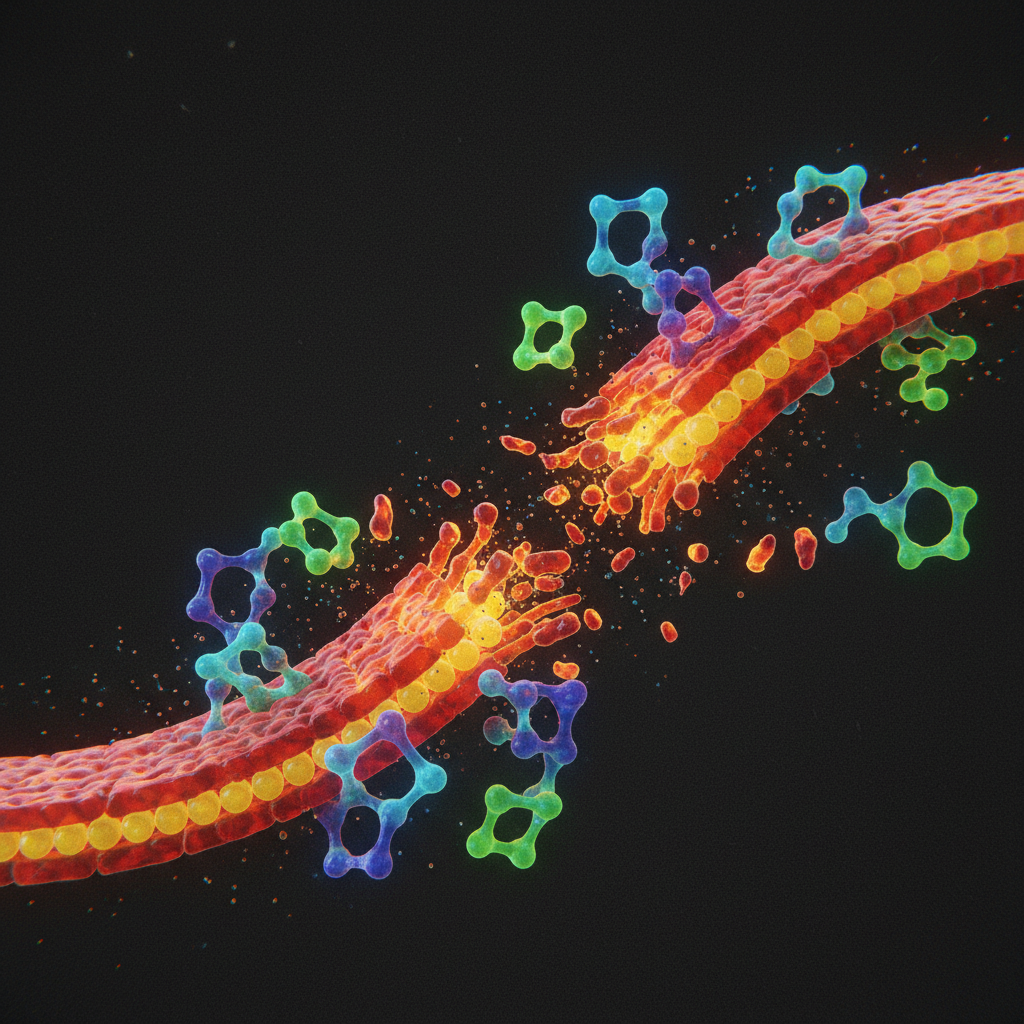
The proposed mechanism of action for lipophosphonoxins involves disruption of bacterial cell membrane integrity.1-6 This is distinct from many conventional antibiotics that target protein synthesis or DNA replication.2,3,6 The ability to disrupt the cell membrane offers a potential advantage in overcoming resistance mechanisms that bacteria have evolved against other drug classes.1-6 Whether this mechanism translates into long-term clinical efficacy remains to be seen.
In Vitro Activity
The study reports minimum inhibitory concentration (MIC) values ranging from 0.5 to 8 μg/mL against a panel of Gram-positive and Gram-negative bacteria.3,4 While these values appear promising, it's crucial to consider the clinical relevance. Are these MICs achievable and sustainable in vivo? Furthermore, the study should have included a wider range of clinically relevant isolates, including those with documented resistance to multiple antibiotics.3,4 A narrow spectrum of tested organisms limits the generalizability of these findings.
In Vivo Efficacy
The in vivo efficacy was assessed using a murine sepsis model. While the lipophosphonoxins demonstrated a survival benefit in treated mice compared to controls, the limitations of animal models must be acknowledged.4,5 Murine models often fail to accurately predict drug efficacy in humans due to differences in physiology, immune response, and drug metabolism. Furthermore, the specific strain of bacteria used to induce sepsis in the mice, and its relevance to human infections, requires careful consideration. The dosing regimen and route of administration used in mice may not be directly translatable to clinical practice.
Cytotoxicity Concerns
The study reports a CC50 (concentration at which 50% of cells are killed) value, indicating the cytotoxicity of lipophosphonoxins to mammalian cells.4 A high CC50 is desirable, suggesting a wider therapeutic window. However, the reported value requires further scrutiny. The type of mammalian cells used in the cytotoxicity assay, and their relevance to potential target organs in humans, should be carefully evaluated. Furthermore, the long-term effects of lipophosphonoxin exposure on mammalian cells, including potential for organ toxicity, warrant investigation.
Study Limitations
The study has several limitations. The reliance on a murine model for in vivo efficacy is a major concern. The relatively small sample sizes in both the in vitro and in vivo experiments limit the statistical power of the findings. The lack of detailed pharmacokinetic and pharmacodynamic data makes it difficult to predict the optimal dosing regimen for humans. The potential for the development of resistance to lipophosphonoxins was not addressed in this study.1,4,5 Finally, the funding source for the study was not clearly disclosed, raising potential concerns about bias.
Future Directions
Future research should focus on addressing the limitations of this study. Larger, more robust in vivo studies, using clinically relevant animal models, are needed to confirm the efficacy of lipophosphonoxins. Detailed pharmacokinetic and pharmacodynamic studies are essential to determine the optimal dosing regimen for humans. Investigating the potential for the development of resistance is crucial.1,4 Furthermore, comprehensive toxicity studies, including long-term assessments of organ function, are needed to ensure the safety of these compounds. Only then can we truly assess the potential of lipophosphonoxins as a novel class of antibacterial agents.
Furthermore, comprehensive toxicity studies, including long-term assessments of organ function, are needed to ensure the safety of these compounds. This includes evaluating potential neurotoxicity, cardiotoxicity, and nephrotoxicity, which are common concerns with novel antimicrobial agents. Only then can we truly assess the potential of lipophosphonoxins as a novel class of antibacterial agents and determine their place in the evolving landscape of antimicrobial resistance, particularly in scenarios where current IDSA-recommended therapies are proving inadequate.
The potential for lipophosphonoxins to address multi-drug resistant organisms is undoubtedly exciting, but clinicians must temper enthusiasm with a healthy dose of scientific scrutiny. The current evidence, primarily from preclinical studies, is too thin to suggest any immediate shift away from established IDSA guidelines. While the mechanism of action targeting bacterial cell membranes offers a novel approach, its translation into safe and effective human treatment is a long road. We need robust clinical trials, not just promising in vitro data or murine model results, before considering these as a viable option for severe sepsis or pneumonia.
For pharmaceutical companies, the early data on lipophosphonoxins presents a clear call to action. Significant investment in comprehensive pharmacokinetic and pharmacodynamic studies is paramount. We need clarity on optimal dosing and potential for resistance development. Furthermore, rigorous toxicity assessments, extending beyond initial CC50 values and encompassing long-term organ effects, are non-negotiable. Without this foundational work, the promise of lipophosphonoxins will remain just that – a promise.
Patients grappling with multi-drug resistant infections face dwindling treatment options. The emergence of innovative therapies like lipophosphonoxins offers a beacon of hope. However, it is crucial that this hope is grounded in transparent, high-quality research. The focus must be on delivering truly effective and safe treatments, not on premature hype. We must ensure that future studies address the limitations of this initial research, providing the comprehensive data needed to inform clinical practice and ultimately improve patient outcomes.
- The Pivot Lipophosphonoxins represent a novel approach to combating multi-drug resistant organisms by disrupting bacterial cell membrane integrity, a mechanism distinct from many conventional antibiotics.
- The Data In vitro, lipophosphonoxins demonstrated minimum inhibitory concentrations (MIC) ranging from 0.5 to 8 μg/mL against tested bacteria.
- The Action As lipophosphonoxins are still in preclinical development with significant limitations in current data, prescribing clinicians should continue to adhere strictly to current IDSA guidelines for antimicrobial stewardship and treatment of resistant infections.
LSF-5163066249
·10/26
Drafted with AI assistance and checked by automated style rules. Not individually read by an editor. This publication is intended for healthcare professionals, researchers, and life science industry professionals. Content is provided for informational and educational purposes only and does not constitute medical advice.

I write about AI in healthcare: the validation studies, the deployment failures, and the regulatory questions without answers yet. Based in San Francisco, close to where the technology is built.
Cite This Article
Chen L, Voss M. Lipophosphonoxins: can they beat resistance where IDSA guidelines fail?. The Life Science Feed. Published October 21, 2026. Updated October 21, 2026. Accessed October 21, 2026. https://thelifesciencefeed.com/infectious-diseases/drug-resistance-microbial/innovation/lipophosphonoxins-can-they-beat-resistance-where-idsa-guidelines-fail.
Editorial & AI Standards
Content is drafted with AI tools from peer-reviewed, open-access sources such as published trial data, clinical guidelines, and regulatory filings. This article is checked by automated style rules but is not individually read by an editor, so check the cited source before relying on a figure.
Source citations are listed in the References section. This content does not represent the views of any pharmaceutical company, medical device manufacturer, or healthcare provider.
Licence & Rights
© 2026 The Life Science Feed. All rights reserved. Unless otherwise indicated, all content is the property of The Life Science Feed and may not be reproduced, distributed, or transmitted in any form or by any means without prior written permission.
Medical Disclaimer
The information provided on The Life Science Feed is for educational and informational purposes only. It is not intended as a substitute for professional medical advice, diagnosis, or treatment. Always seek the advice of your physician or other qualified healthcare provider regarding any medical condition or treatment decision. Never disregard professional medical advice or delay in seeking it because of something you have read on this website.
References
1. Do Pham DD, Mojr V, Helusová M, et al. LEGO-Lipophosphonoxins: A Novel Approach in Designing Membrane Targeting Antimicrobials. J Med Chem. 2022;65(14):10045-10078. doi:10.1021/acs.jmedchem.2c00684
2. Látrová K, Havlová N, Večeřová R, et al. Outer membrane and phospholipid composition of the target membrane affect the antimicrobial potential of first- and second-generation lipophosphonoxins. Sci Rep. 2021;11(1):10446. doi:10.1038/s41598-021-89883-0
3. Brzobohatá H, Dugić M, Mojr V, et al. LEGO-Lipophosphonoxin membrane activity is enhanced by presence of phosphatidylethanolamine but hindered by outer membrane. Sci Rep. 2025;15(1):1206. doi:10.1038/s41598-024-83205-w
4. Seydlová G, Pohl R, Zborníková E, et al. Lipophosphonoxins II: Design, Synthesis, and Properties of Novel Broad Spectrum Antibacterial Agents. J Med Chem. 2017;60(14):6098-6118. doi:10.1021/acs.jmedchem.7b00355
5. Panova N, Zborníková E, Šimák O, et al. Insights into the Mechanism of Action of Bactericidal Lipophosphonoxins. PLoS One. 2015;10(12):e0145918. doi:10.1371/journal.pone.0145918
6. Dolejšová T, Lišková P, Sahatsapan N, et al. Naphthylated LEGO-lipophosphonoxin antibiotics used as a fluorescent tool for the observation of target membrane perturbations preceding its disruption. Methods Appl Fluoresc. 2024;13(1). doi:10.1088/2050-6120/ad8abf