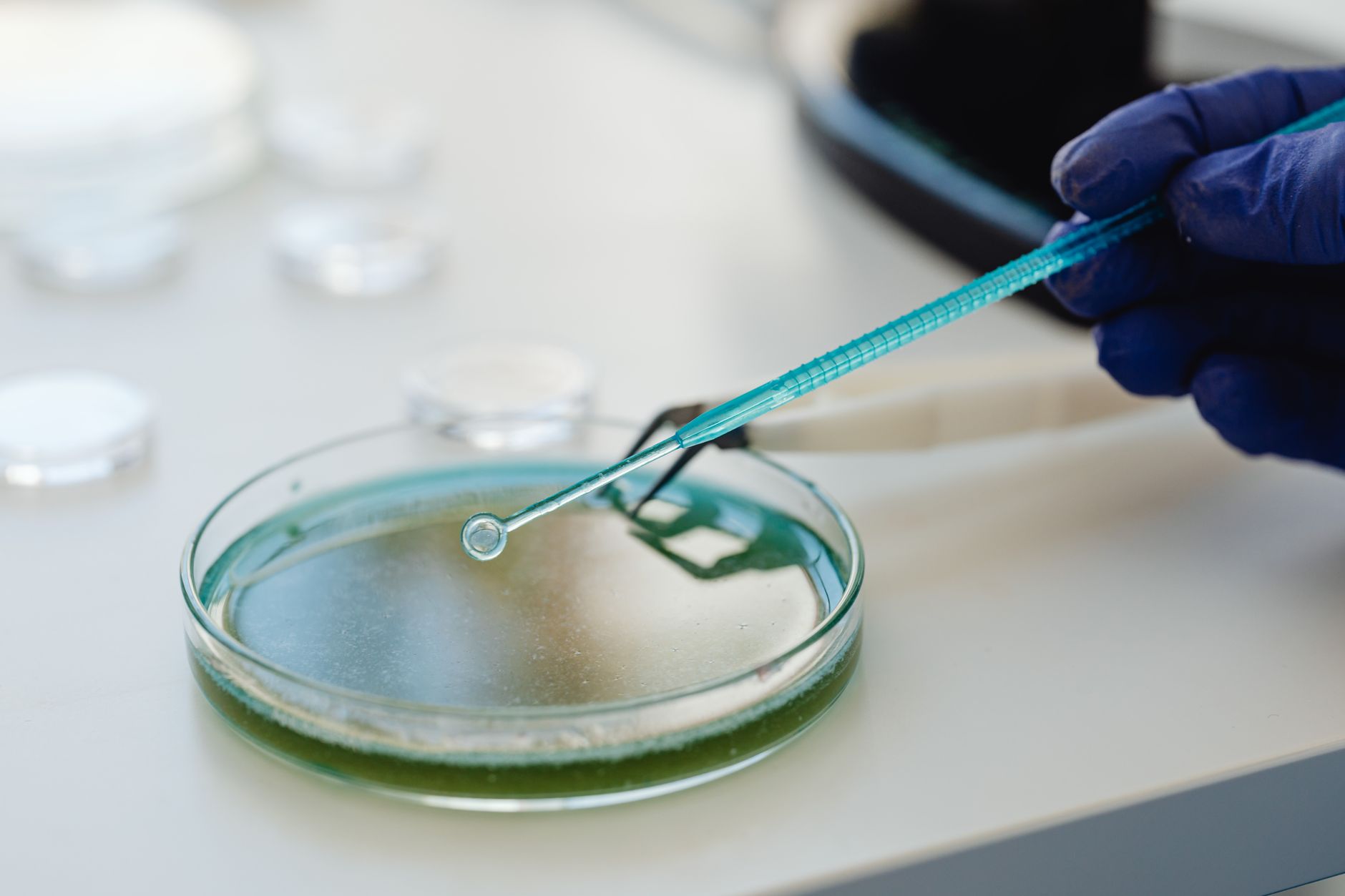

The escalating crisis of antibiotic resistance demands innovative therapeutic strategies. Bacteriophages, viruses that specifically target and lyse bacteria, offer a compelling alternative to conventional antibiotics. But the coevolutionary arms race between phages and bacteria means that phage resistance is an inevitable hurdle, complicating the development of effective phage therapies. A critical bottleneck in bringing these therapies to the clinic remains the laborious and often biased process of discovering virulent phages against resistant pathogens.1,2
A new approach, termed geographical phage mapping (geΦmapping), combined with a portable phage hunting device (ΦHD), offers a more targeted and efficient method for identifying these elusive phage candidates. The strategy, detailed in eLife, focuses on pinpointing ecological 'hotspots' where bacterial hosts and their phage predators naturally co-exist, streamlining the discovery process.1
The challenge of antibiotic resistance has reignited interest in bacteriophages as a viable treatment option. These bacterial viruses offer a highly specific mechanism of action, theoretically bypassing many of the resistance mechanisms that render traditional antibiotics ineffective. But the very nature of host-predator dynamics means bacteria can, and do, develop resistance to phages. This constant evolutionary pressure necessitates a continuous search for new, virulent phages, particularly those effective against the most recalcitrant pathogens.1,2
The conventional methods for isolating phages are often inefficient. They typically involve broad environmental sampling followed by enrichment cultures, a process that is both time-consuming and prone to bias. Researchers often miss the most potent phages because their discovery methods are not sufficiently targeted. This limitation has severely hampered the development of a robust library of therapeutic phages, especially against the notoriously difficult-to-treat ESKAPE pathogens (Enterococcus faecium, Staphylococcus aureus, Klebsiella pneumoniae, Acinetobacter baumannii, Pseudomonas aeruginosa, and Enterobacter species).1,2
A New Strategy for Phage Discovery
Do and colleagues developed a novel strategy, geographical phage mapping (geΦmapping), to overcome the inherent inefficiencies of traditional phage hunting.1,2 This method leverages the ecological principle that bacterial hosts and their phage predators are most likely to co-exist in the same environmental niches. By identifying these 'hotspots,' the researchers could focus their sampling efforts, significantly increasing the probability of isolating virulent phages. The approach integrates small-volume environmental sampling with 16S rRNA gene sequencing, a technique used to identify and quantify bacterial species present in a sample. This molecular profiling allows for precise identification of bacterial communities, thereby guiding the search for their corresponding phages.1,2
The team further refined their approach by developing a portable phage hunting device (ΦHD). This device is designed to generate highly enriched phage concentrates directly from environmental reservoirs. The ΦHD streamlines the initial processing steps, which traditionally require extensive laboratory work, by performing on-site enrichment. This immediate enrichment step helps to preserve phage viability and specificity, reducing the loss of potential candidates that might occur during transport or delayed processing. The integration of geΦmapping with this high-throughput enrichment system represents a significant advancement in the practical application of phage discovery.1,2
Building the RΦ Library
Using their combined geΦmapping and ΦHD strategy, Do and colleagues constructed the RΦ library, a diverse collection of novel phages. The researchers specifically targeted extremely resistant organisms across various ESKAPE pathogens, a group known for their high rates of multidrug resistance and their significant contribution to healthcare-associated infections. The success of this targeted approach was evident in the numbers: the team captured and isolated 36 new phages. This achievement is particularly noteworthy because these phages were identified in scenarios where conventional phage hunting and experimental evolution approaches had previously failed to yield suitable candidates.1,2
The isolation of 36 novel phages against extremely resistant ESKAPE pathogens demonstrates the efficacy of the geΦmapping strategy. These pathogens represent a critical threat in clinical settings, often leaving clinicians with limited or no effective treatment options. The ability to rapidly identify and isolate phages that specifically target these resistant strains could dramatically alter the market of infectious disease management. The RΦ library, therefore, represents a valuable resource for future therapeutic development.1,2
Mechanism and Specificity
The underlying mechanism of phage therapy relies on the lytic cycle of bacteriophages, where the phage infects a bacterial cell, replicates within it, and then lyses (bursts) the cell, releasing new phage particles to infect more bacteria. This process is highly specific, meaning a particular phage typically infects only a narrow range of bacterial strains or species. This specificity is a double-edged sword: it minimises disruption to the host's beneficial microbiota, unlike broad-spectrum antibiotics, but it also necessitates precise identification of the infecting pathogen and a matching phage. The geΦmapping approach directly addresses this need for specificity by linking bacterial presence to phage availability in their natural environment.1,2
The 16S rRNA sequencing component of geΦmapping provides a detailed microbial profile of the environmental samples. By understanding which bacterial species are present in a given 'hotspot,' researchers can predict which phages are most likely to be found there. This predictive power significantly reduces the amount of blind screening required in traditional phage discovery. The ΦHD then concentrates these predicted phages, making their isolation and characterisation more efficient. This integrated workflow ensures that the phages isolated are not only virulent but also ecologically relevant to the target pathogens.1,2
Clinical Relevance and Future Directions
The clinical relevance of this work is substantial. The development of new antimicrobial agents has slowed dramatically, while antibiotic resistance continues to accelerate. Phage therapy offers a potential lifeline, but its widespread adoption depends on a reliable and scalable method for phage discovery. The geΦmapping and ΦHD system provides such a method, potentially accelerating the pipeline from environmental sampling to clinical application. The ability to isolate phages against extremely resistant ESKAPE pathogens is particularly important for patients with severe, otherwise untreatable infections.1,2
The portability of the ΦHD also suggests possibilities for decentralised phage hunting, allowing researchers or even clinicians in resource-limited settings to identify and enrich phages locally. This could be particularly beneficial in outbreaks of resistant infections, where rapid access to effective phages is critical. The RΦ library, with its diverse collection of novel phages, will require further characterisation, including genomic sequencing and in vitro and in vivo efficacy testing, before these phages can be considered for therapeutic use. But the initial success in isolating these phages is a strong indicator of the method's potential. Clinicians interested in the broader context of managing resistant infections may find the Oxford Handbook of Infectious Diseases and Microbiology a useful reference for current antimicrobial strategies and emerging threats.1,2
Limitations and Remaining Questions
While the geΦmapping strategy offers clear advantages, several questions remain. The study primarily focused on the discovery and isolation of phages; it did not examine the detailed characterisation of the 36 novel phages, such as their host range, lytic efficiency, or genomic stability. These are factors with high importance for determining their therapeutic potential. The long-term stability of these phages in various formulations and their immunogenicity in human hosts also require extensive investigation.1,2
The environmental sampling, while targeted, still represents a snapshot of phage populations. Phage-bacteria coevolution is dynamic, meaning the efficacy of a particular phage against a bacterial strain can change over time. Continuous monitoring and updating of phage libraries would be necessary to maintain their therapeutic relevance. The scalability of the ΦHD for large-scale therapeutic production also needs to be assessed. The initial findings show success in isolating 36 novel phages, but the journey from discovery to a widely available therapeutic is long and complex.1,2
The persistent threat of multidrug-resistant bacteria demands a radical rethinking of our antimicrobial arsenal. This geΦmapping strategy, by efficiently identifying virulent phages against resistant ESKAPE pathogens, offers a tangible step forward. It moves beyond the often-ineffective 'needle in a haystack' approach of traditional phage hunting, providing a more systematic and ecologically informed method.
For clinicians grappling with patients infected by pan-resistant organisms, the prospect of a rapidly expanding phage library is significant. The ability to isolate 36 novel phages where conventional methods failed suggests that previously untreatable infections might soon have viable therapeutic options. This is not a panacea, but a critical tool in a fight where we are currently losing ground.
The integration of molecular techniques like 16S rRNA sequencing into phage discovery highlights the increasing role of precision medicine in infectious disease. Identifying the bacterial host and then pinpointing its natural predator in the environment is an elegant solution. This approach could shorten the time from diagnosis of a resistant infection to the identification of a suitable phage, a factor with high importance in improving patient outcomes.
But the work is far from over. These newly isolated phages require rigorous characterisation, including detailed host range analysis and safety profiling, before they can enter clinical trials. The industry will need to invest in scalable production methods and regulatory pathways for these highly specific, often personalised, therapies. The promise is clear, but the practicalities of widespread implementation remain a considerable hurdle.
- The Pivot Conventional phage discovery methods are time-consuming and inefficient; geΦmapping offers a targeted, high-throughput alternative.
- The Data The RΦ library captured and isolated 36 new phages targeting extremely resistant ESKAPE pathogens where traditional methods failed.
- The Action Clinicians should be aware of emerging technologies that could expand the therapeutic arsenal against multidrug-resistant infections, particularly as phage therapy moves closer to wider clinical application.
ART-2026-1095
·09/26
Drafted with AI assistance, reviewed and approved by the editorial team. This publication is intended for healthcare professionals, researchers, and life science industry professionals. Content is provided for informational and educational purposes only and does not constitute medical advice.

I write about AI in healthcare: the validation studies, the deployment failures, and the regulatory questions without answers yet. Based in San Francisco, close to where the technology is built.
Cite This Article
Chen L, Voss M. Phage hunting: why our current methods miss the best targets. The Life Science Feed. Published August 13, 2026. Updated September 16, 2026. Accessed September 27, 2026. https://thelifesciencefeed.com/infectious-diseases/drug-resistance-microbial/innovation/phage-hunting-why-our-current-methods-miss-the-best-targets.
Editorial & AI Standards
All content is researched from peer-reviewed, open-access sources: published trial data, clinical guidelines, and regulatory filings. AI tools are used solely to structure and summarise that evidence; no AI-generated conclusions appear without editor verification against the primary source.
Every article is reviewed by a named editor before publication. Source citations are listed in the References section. This content does not represent the views of any pharmaceutical company, medical device manufacturer, or healthcare provider.
Licence & Rights
© 2026 The Life Science Feed. All rights reserved. Unless otherwise indicated, all content is the property of The Life Science Feed and may not be reproduced, distributed, or transmitted in any form or by any means without prior written permission.
Medical Disclaimer
The information provided on The Life Science Feed is for educational and informational purposes only. It is not intended as a substitute for professional medical advice, diagnosis, or treatment. Always seek the advice of your physician or other qualified healthcare provider regarding any medical condition or treatment decision. Never disregard professional medical advice or delay in seeking it because of something you have read on this website.
References
1. Do C, Salazar KC, Chang JD. Pathogen-phage geomapping to overcome resistance. Elife. 2026;15:e42559814. https://pubmed.ncbi.nlm.nih.gov/42559814/
2. Do C, Salazar KC, Clark JR. Pathogen-Phage Geomapping to Overcome Resistance. bioRxiv. 2025. https://pubmed.ncbi.nlm.nih.gov/41256424/