
Current guidelines for chronic kidney disease (CKD), such as those from KDIGO, rely on estimated glomerular filtration rate (eGFR) and albuminuria, markers with known limitations. Urinary exosomes offer the potential for earlier, more specific diagnostic insights into kidney damage, but their integration into clinical practice faces significant hurdles.
Guideline Context
Current guidelines, such as those from the Kidney Disease Improving Global Outcomes (KDIGO), primarily rely on estimated glomerular filtration rate (eGFR) and albuminuria to define and stage chronic kidney disease (CKD). These markers, while established, have limitations. eGFR can be affected by muscle mass and age, while albuminuria can fluctuate significantly depending on hydration status and blood pressure control. The promise of urinary exosomes lies in their potential to provide earlier and more specific diagnostic information, potentially identifying kidney damage before significant functional decline occurs. However, this approach is still far from being incorporated into existing guidelines.
Specifically, the 2021 KDIGO Clinical Practice Guideline for the Management of Glomerular Diseases makes no mention of exosome-based diagnostics. Any attempt to integrate exosome assays into clinical decision-making at this stage would therefore represent a significant departure from established best practices. The onus is on researchers to demonstrate, through rigorous prospective studies, that exosome-based markers offer a tangible improvement over existing diagnostic tools.
Methodological Challenges
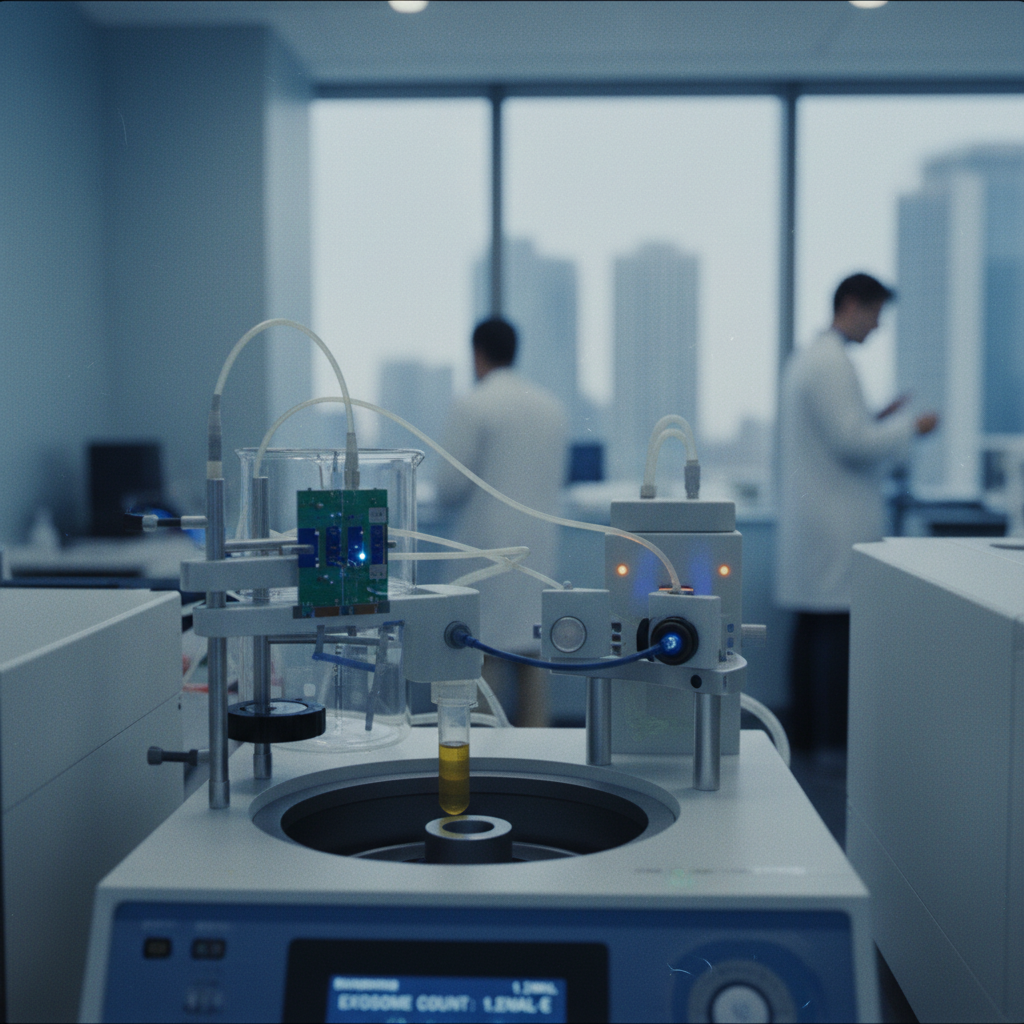
The biggest hurdle facing the field is the lack of standardized protocols. Exosome isolation methods vary widely, ranging from ultracentrifugation to polymer-based precipitation to immunoaffinity capture.4 Each method has its own biases, potentially enriching for different subpopulations of exosomes and affecting the composition of their cargo. Furthermore, the downstream analysis of exosomal contents (proteins, RNA, etc.) is also subject to variability, depending on the techniques used (e.g., mass spectrometry, PCR, ELISA).4 Without standardized protocols, it is difficult, if not impossible, to compare results across different studies and to validate findings in independent cohorts.
Think about it: If every lab uses a different 'recipe' for isolating and analyzing exosomes, how can we be confident that the biomarkers identified in one study are truly reproducible and generalizable? This is not merely a technical issue; it directly impacts the clinical utility of exosome-based diagnostics. Imagine ordering an exosome assay for a patient, only to find that the results are inconsistent with previous findings or with the patient's clinical presentation. This uncertainty undermines the very purpose of the test.
Study Limitations
Many studies investigating urinary exosomes in kidney disease are limited by small sample sizes, cross-sectional designs, and lack of appropriate control groups. Small sample sizes increase the risk of false-positive findings, while cross-sectional designs preclude the assessment of prognostic value. Furthermore, many studies fail to account for potential confounding factors, such as age, sex, race, and comorbidities, which can influence exosome composition and abundance.
Moreover, a significant portion of the literature focuses on biomarker discovery rather than validation. This means that many promising exosomal markers have been identified, but few have been rigorously tested in large, prospective cohorts to determine their sensitivity, specificity, and predictive value. Until such validation studies are completed, the clinical utility of these markers remains uncertain. Consider this a cautionary note regarding the premature enthusiasm for these novel markers; demonstrating a statistically significant association in a small pilot study is a far cry from demonstrating clinical utility in a real-world setting.
Economic Considerations
The cost of exosome isolation and analysis is another important factor to consider. Current methods are often labor-intensive and require specialized equipment, making them relatively expensive compared to traditional diagnostic tests. If exosome-based diagnostics are to be widely adopted, the cost must be reduced significantly. Furthermore, it is unclear whether insurance companies will reimburse for these tests, especially in the absence of robust evidence demonstrating their clinical utility. The challenge lies in balancing the potential benefits of exosome-based diagnostics with the economic realities of healthcare delivery.
Beyond the direct cost of the tests, we also need to consider the potential for downstream costs associated with false-positive results. A false-positive exosome assay could lead to unnecessary and invasive procedures, such as kidney biopsies, which carry their own risks and costs. A thorough cost-effectiveness analysis is therefore essential before exosome-based diagnostics are widely implemented. The focus should be on developing cost-effective assays that provide actionable clinical information and improve patient outcomes.
Clinicians must resist the urge to integrate urinary exosome assays into routine practice. Current guidelines, including the KDIGO 2021 Clinical Practice Guideline for the Management of Glomerular Diseases, do not mention exosome-based diagnostics. Any attempt to use these markers now would be a significant departure from established best practices. The evidence is simply too thin for patient care decisions.
For industry, the path forward is clear: standardization. Without consistent protocols for exosome isolation and analysis, comparing research and validating findings across studies is impossible. This lack of methodological rigor undermines the credibility and clinical utility of any potential exosome-based diagnostic. Investment in robust, large-scale validation studies is crucial.
Patients should be aware that while urinary exosomes hold promise, they are not yet ready for prime time. The excitement around novel biomarkers must be tempered by the reality of scientific rigor. Until these markers demonstrate clear, reproducible superiority over existing tools like eGFR and albuminuria, their clinical value remains unproven. Premature adoption risks misdiagnosis and unnecessary costs.
The economic considerations are also substantial. Current exosome analysis methods are expensive and labor-intensive. For widespread adoption, costs must decrease significantly. Researchers must demonstrate a tangible improvement over current diagnostics to justify these expenses and ensure equitable access, should these tests ever become clinically viable.
- The Pivot Current KDIGO guidelines for chronic kidney disease rely on eGFR and albuminuria, with no mention of exosome-based diagnostics in the 2021 guideline for glomerular diseases.
- The Data The 2021 KDIGO Clinical Practice Guideline for the Management of Glomerular Diseases makes no mention of exosome-based diagnostics.
- The Action Clinicians should continue to rely on established eGFR and albuminuria markers for kidney disease diagnosis and staging, as exosome-based assays lack sufficient validation and standardization for current clinical integration.
LSF-2237579708
·10/26
Drafted with AI assistance, reviewed and approved by the editorial team. This publication is intended for healthcare professionals, researchers, and life science industry professionals. Content is provided for informational and educational purposes only and does not constitute medical advice.

Infectious disease, epidemiology, and global health equity. I have covered outbreaks from Ebola to COVID-19 to mpox. The stories I am most drawn to are where the science is clear and the response is slow.
Cite This Article
Reeves T, Voss M. Urinary exosomes for kidney disease: the promise and the peril. The Life Science Feed. Published October 19, 2026. Updated October 19, 2026. Accessed October 19, 2026. https://thelifesciencefeed.com/nephrology/chronic-kidney-disease/innovation/urinary-exosomes-for-kidney-disease-the-promise-and-the-peril.
Editorial & AI Standards
All content is researched from peer-reviewed, open-access sources: published trial data, clinical guidelines, and regulatory filings. AI tools are used solely to structure and summarise that evidence; no AI-generated conclusions appear without editor verification against the primary source.
Every article is reviewed by a named editor before publication. Source citations are listed in the References section. This content does not represent the views of any pharmaceutical company, medical device manufacturer, or healthcare provider.
Licence & Rights
© 2026 The Life Science Feed. All rights reserved. Unless otherwise indicated, all content is the property of The Life Science Feed and may not be reproduced, distributed, or transmitted in any form or by any means without prior written permission.
Medical Disclaimer
The information provided on The Life Science Feed is for educational and informational purposes only. It is not intended as a substitute for professional medical advice, diagnosis, or treatment. Always seek the advice of your physician or other qualified healthcare provider regarding any medical condition or treatment decision. Never disregard professional medical advice or delay in seeking it because of something you have read on this website.
References
1. Burgos Silva, M., Weber, J. A., Sielheimer, J., Vicencio, J. M., & Sanda, F. (2022). Urinary Exosomes in Nephrology: A New Frontier for Diagnosis and Prognosis of Kidney Diseases. Cells, 11(23), 3785.
2. KDIGO. (2012). KDIGO 2012 Clinical Practice Guideline for the Evaluation and Management of Chronic Kidney Disease. Kidney International Supplements, 3(1), 1-150.
3. doi:10.1038/ki.2013.243 KDIGO. (2021). KDIGO 2021 Clinical Practice Guideline for the Management of Glomerular Diseases. Kidney International, 100(4S), S1-S276.
4. Gaudio C, D'Arpino E, Stefani S, et al. Urinary Exosomes in Nephrology: A New Frontier for Diagnosis and Prognosis of Kidney Diseases. Int J Mol Sci. 2025;26(17). doi:10.3390/ijms26178679