
The ability to precisely manipulate neural circuits and behavior in real-time holds significant implications for understanding conditions ranging from motor learning deficits to recovery after neurological injury. Current experimental paradigms often lack the dynamic, adaptive feedback necessary to truly probe these complex interactions. Researchers have now developed and tested an open-source closed-loop system that allows mice to directly modulate their own cortical activity and specific movements, demonstrating a remarkable capacity for self-regulation. The findings, published in Elife, present a novel platform for hypothesis testing in neurobiology.1
Understanding how the brain learns and adapts requires tools that can interact with neural activity and behavior in a dynamic, responsive manner. Traditional experimental setups often rely on pre-programmed stimuli or post-hoc analysis, which limits the ability to observe and influence real-time neural processing. This new system addresses that gap, providing a platform for direct, instantaneous feedback based on an animal's own brain activity or movement.1
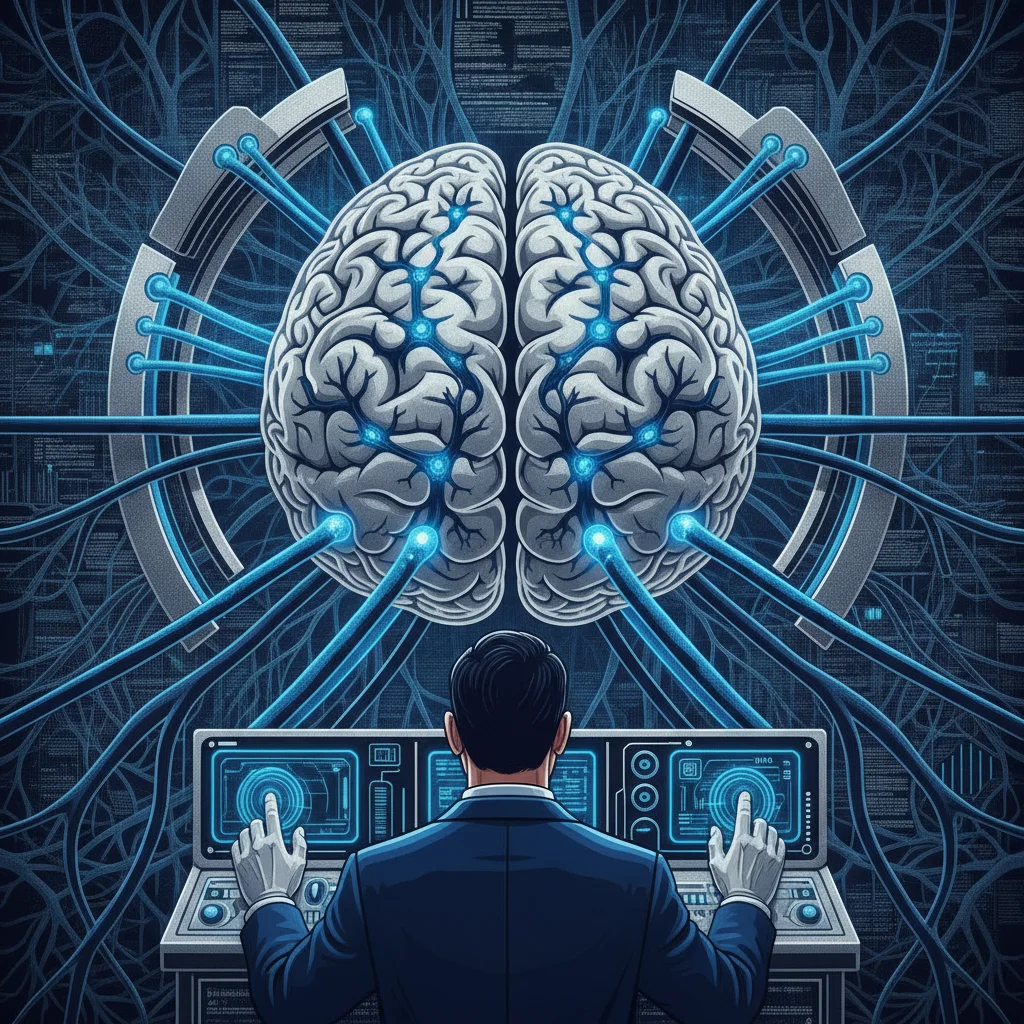
The investigators, P.K. Gupta and T.H. Murphy, developed an open-source closed-loop neurofeedback (CLNF) and closed-loop movement feedback (CLMF) system. They used GCaMP6s to measure millimeter-scale cortical mesoscale activity in male and female mice, providing graded auditory feedback within approximately 63 milliseconds. For movement training, feedback was delivered within about 67 milliseconds, contingent on tracking a specified body movement.1
Designing a Real-Time Feedback Loop for the Brain
The core of the CLNF system involved selecting single or dual regions of interest (ROIs) on the dorsal cortical map as targets for modulation. Mice received graded auditory feedback based on changes in dorsal-cortical activation within these ROIs, following a specified rule. This setup allowed for direct interaction with the animal's neural state, providing immediate consequences for specific patterns of brain activity. The system's rapid feedback latency, around 63 ms, was important for establishing a tight coupling between neural events and external cues, a factor often overlooked in less sophisticated setups.1
Both motor and sensory regions of the cortex supported closed-loop training, indicating a broad applicability across different functional areas. The mice modulated activity in rule-specific target cortical ROIs to obtain increasing rewards over several days. This learning was statistically robust, with a repeated-measures ANOVA yielding a p-value of 2.83e-5. This suggests that the animals were not merely reacting to random stimuli but actively engaging in a learning process to control their own brain activity.1
A key aspect of the system's efficacy was its adaptability. Mice successfully adapted to changes in ROI rules, demonstrating a remarkable flexibility in their ability to learn new neural control strategies. This adaptation was also highly significant (repeated-measures ANOVA, p=8.3e-10), with specific rule changes detailed in Table 4 of the original paper. Such rapid adaptation to altered contingencies highlights the brain's inherent capacity for plasticity, even when confronted with arbitrary feedback rules. This capacity for rapid learning and adaptation is an important feature for any system aiming to interface with dynamic biological processes, and it distinguishes this approach from simpler, fixed-stimulus paradigms.1
The CLMF system extended this principle to motor control, tracking specified body movements and generating rewards when the behavior reached a predefined threshold. This allowed for direct training of motor skills through real-time feedback. The group that received graded auditory feedback for movement training performed significantly better (repeated-measures ANOVA, p=9.6e-7) than a control group that did not receive such feedback (repeated-measures ANOVA, p=0.49). This stark difference shows the power of immediate, contingent feedback in shaping motor behavior.1
The Mechanics of Learning and Adaptation
The movement training also demonstrated impressive flexibility. Mice learned to change task rules, for instance, shifting from left forelimb to right forelimb control, within a single day. While a brief performance drop occurred on day 5 during the rule change, the rapid recovery indicated efficient relearning. This rapid re-acquisition of a new motor skill, even after a disruption, speaks to the robustness of the learning mechanism facilitated by the closed-loop system. It suggests that the underlying neural machinery for motor control is highly amenable to rapid re-calibration based on external feedback.1
Offline analysis of neural data and behavioral tracking provided further insights into the physiological changes accompanying this learning. In CLNF experiments, the overall distribution of Ca2+ fluorescence values changed, reflecting altered cortical activation patterns. This indicates that the mice were not just performing a task but were genuinely modulating their neural activity in the targeted ROIs. The shift in fluorescence distribution provides a quantifiable measure of the neural correlates of the learned control.1
For CLMF experiments, increased performance correlated with a decrease in task latency and a reduction in cortical ΔF/F0 amplitude during the task. This suggests that as the task became more familiar, mice required lower cortical activation to execute the behavior. This phenomenon, often observed in skill acquisition, implies a more efficient, less effortful neural processing as proficiency increases. It is a classic signature of motor learning, where initial high cognitive load gives way to more automatic, streamlined execution. This reduction in cortical activation could be a marker of neural efficiency, where the brain optimizes its resources as a task becomes routine. Clinicians often see similar patterns in patients recovering from stroke, where initial conscious effort gives way to more fluid movement. For a deeper understanding of such neurological recovery, the impact of physical trauma on cognitive decline offers a related perspective on brain plasticity and damage.1
The system's open-source nature is a significant advantage, promoting wider adoption and further development within the research community. By making the hardware and software freely available, Gupta and Murphy aim to accelerate discoveries in neurobiology. This approach contrasts with proprietary systems, which often limit access and innovation. The accessibility of such tools is paramount for fostering collaborative research and ensuring that advancements are not confined to a few well-funded laboratories.1
What the System Does Not Yet Establish
While the findings are compelling, the study was conducted exclusively in mice. Extrapolating these results directly to human neurofeedback or brain-computer interface applications requires caution. The complexity of the human cortex, with its vastly larger scale and intricate connectivity, presents challenges that may not be fully captured by mesoscale mouse models. The neural mechanisms underlying learning in mice, while informative, may differ in significant ways from those in humans.1
The specific auditory feedback used in this study is also a limitation for direct human translation. While effective for mice, human neurofeedback systems often employ visual or more complex auditory cues, or even haptic feedback. The optimal feedback modality for human brain-computer interfaces remains an active area of research. The long-term stability and generalizability of learned cortical control in mice beyond the experimental period were not explicitly detailed. Sustained control over extended durations would be critical for any therapeutic application.1
The study focused on relatively simple cortical regions and movements. Applying this closed-loop paradigm to more complex cognitive functions or fine motor control, particularly in a rehabilitative context, would require further validation. The current system provides a proof-of-concept, but the scalability to higher-order brain functions or to address specific neurological deficits in humans is an open question. For clinicians interested in the broader context of neurological function and disease, an Oxford Handbook of Neurology can provide a comprehensive reference for current understanding and practice.1
The ethical implications of directly manipulating brain activity, even in animal models, warrant consideration. While this research is foundational, the potential for misuse or unintended consequences in future, more advanced systems must be acknowledged. Responsible development and clear ethical guidelines will be important for patient safety and efficacy as this technology progresses. The current work, however, remains firmly within the realm of basic scientific inquiry, aiming to understand fundamental principles of brain function.1
The study did not explore the underlying cellular and molecular mechanisms of plasticity induced by this closed-loop training. While it demonstrated behavioral and mesoscale neural changes, the specific synaptic modifications or gene expression alterations that facilitate this learning remain to be elucidated. Future research could integrate single-cell resolution techniques or molecular analyses to provide a more complete picture of the neural changes. This would deepen our understanding of how the brain physically adapts to these feedback paradigms.1
Implications for Future Neurotechnology
This closed-loop system offers a powerful new platform for investigating brain function and behavior. Its ability to enable real-time modulation of cortical activity and movement provides a direct means to test hypotheses about neural circuits involved in learning, memory, and motor control. This could lead to a more complete understanding of how specific brain regions contribute to complex behaviors. The precision and speed of the feedback loop are particularly valuable for dissecting the temporal dynamics of neural processing.1
The demonstrated adaptability of mice to changing task rules is particularly intriguing. This suggests that the brain can rapidly reconfigure its control strategies, a property that is highly relevant for developing adaptive brain-computer interfaces or neurorehabilitation strategies. If humans possess similar rapid adaptive capabilities, it could significantly shorten training times for prosthetic control or recovery from injury. The ability to switch between different control targets with minimal disruption shows the brain's inherent flexibility.1
For translational research, this system lays groundwork for developing more sophisticated neurofeedback therapies. Conditions like stroke, Parkinson's disease, or even certain psychiatric disorders might benefit from interventions that train patients to modulate their own brain activity or refine motor control. The principle of graded, real-time feedback could be adapted to help patients regain lost function or manage symptoms. The reduction in cortical activation observed with increased task familiarity is also an important insight, suggesting potential for optimizing neural effort in rehabilitation.1
The open-source nature of the system is a significant accelerant for the field. It lowers the barrier to entry for researchers, allowing more laboratories to implement and build upon this technology. This collaborative approach will likely lead to faster innovation and a broader range of applications. It also ensures transparency and reproducibility, which are cornerstones of robust scientific progress. The relationship between gut microbiota and brain signaling, for example, could be explored with similar real-time feedback systems to understand how peripheral signals influence central nervous system function.1
But, the current system is still a research tool. It is not a clinical device, and its direct applicability to human patients is years away. The leap from mouse models to human application is substantial, requiring extensive validation, safety testing, and adaptation to human physiology and cognitive processes. The complexity of human brain disorders demands a level of precision and robustness that current animal models can only approximate.1
This work in mice, while far from clinical application, provides a compelling demonstration of the brain's capacity for self-regulation when given precise, real-time feedback. Clinicians should view this as foundational research that could one day inform novel neurorehabilitation strategies or brain-computer interfaces. The ability of mice to rapidly adapt to changing rules for cortical and motor control suggests a powerful inherent plasticity that could be harnessed in patients recovering from neurological injury. This is not a therapy, but a window into how therapies might be built.
The open-source nature of the system is a significant point. It democratizes access to advanced neurobiological tools, which should accelerate the pace of discovery. This collaborative approach could lead to more rapid development of translational applications than proprietary systems might allow, fostering innovation across multiple research groups. It also means that the underlying methodology will be subject to broader scrutiny and refinement.
Still, the obvious caveat remains: this is mouse data. The leap from a mouse mesoscale cortical signal to the high-dimensional activity of the human brain is substantial. While the principles of closed-loop feedback are likely conserved, the practical challenges of implementing such a system in humans, particularly for complex cognitive or motor deficits, are immense. We are a long way from seeing this in a rehabilitation clinic, but the underlying concept is sound.
- The Pivot Mice successfully learned to modulate specific cortical regions and body movements in real-time using closed-loop auditory feedback.
- The Data Mice significantly modulated activity in target cortical ROIs (repeated-measures ANOVA, p=2.83e-5) and adapted to rule changes (repeated-measures ANOVA, p=8.3e-10).
- The Action This system provides a new, high-precision tool for investigating neural plasticity and motor learning, offering a foundation for future translational research into brain-computer interfaces.
ART-2026-1848
·09/26
Drafted with AI assistance, reviewed and approved by the editorial team. This publication is intended for healthcare professionals, researchers, and life science industry professionals. Content is provided for informational and educational purposes only and does not constitute medical advice.

Science writer covering the frontier between basic research and clinical practice. I am interested in the moment a mechanism becomes a therapy, and everything that can go wrong in between.
Cite This Article
Aldrich M, Lopes W. Can mice learn to control their own brains? a new neurofeedback system. The Life Science Feed. Published September 29, 2026. Updated September 29, 2026. Accessed September 29, 2026. https://thelifesciencefeed.com/neurology/alzheimer-disease/innovation/can-mice-learn-to-control-their-own-brains-a-new-neurofeedback-system.
Editorial & AI Standards
All content is researched from peer-reviewed, open-access sources: published trial data, clinical guidelines, and regulatory filings. AI tools are used solely to structure and summarise that evidence; no AI-generated conclusions appear without editor verification against the primary source.
Every article is reviewed by a named editor before publication. Source citations are listed in the References section. This content does not represent the views of any pharmaceutical company, medical device manufacturer, or healthcare provider.
Licence & Rights
© 2026 The Life Science Feed. All rights reserved. Unless otherwise indicated, all content is the property of The Life Science Feed and may not be reproduced, distributed, or transmitted in any form or by any means without prior written permission.
Medical Disclaimer
The information provided on The Life Science Feed is for educational and informational purposes only. It is not intended as a substitute for professional medical advice, diagnosis, or treatment. Always seek the advice of your physician or other qualified healthcare provider regarding any medical condition or treatment decision. Never disregard professional medical advice or delay in seeking it because of something you have read on this website.
References
1. Gupta PK, Murphy TH. Real-time closed-loop feedback system for mouse mesoscale cortical signal and movement control. Elife. 2026;15:e42781854. doi:10.7554/eLife.42781854