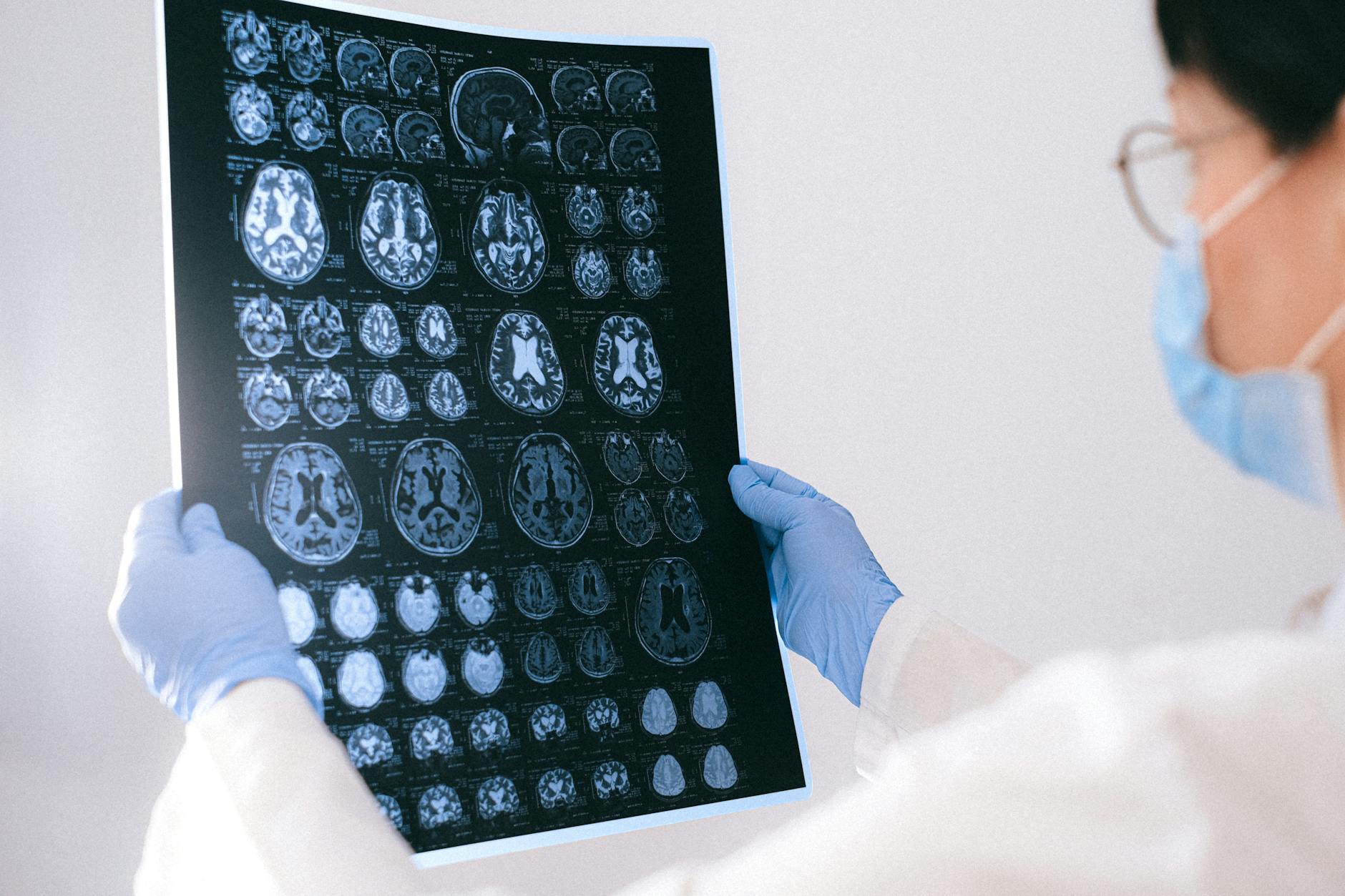

The prospect of a simple blood test for Alzheimer's disease offers significant hope, particularly given the challenges of current diagnostic methods. But this hope has also created fertile ground for misinformation, with unverified claims about new tests proliferating across social media and less reputable health sites.
Clinicians need to understand the current state of Alzheimer's diagnostics and the limitations of emerging blood-based biomarkers to counsel patients effectively and avoid contributing to the spread of misleading information.
Alzheimer's disease diagnosis has historically relied on a combination of clinical assessment, cognitive testing, and exclusion of other conditions. Definitive diagnosis often requires post-mortem neuropathological examination, or in living patients, the use of expensive and invasive methods like cerebrospinal fluid (CSF) analysis for amyloid-beta and tau proteins, or amyloid PET imaging. These methods are not universally accessible, creating a significant unmet need for simpler, more scalable diagnostic tools.
The search for less invasive biomarkers has focused heavily on blood-based assays, particularly those measuring amyloid-beta and phosphorylated tau (p-tau) species. These markers aim to reflect the underlying pathological changes of Alzheimer's disease, offering a potential avenue for earlier detection and monitoring. But the development and validation of these tests are complex, requiring rigorous clinical evaluation across diverse populations and disease stages.
The promise and pitfalls of blood biomarkers
Blood-based biomarkers for Alzheimer's disease hold immense promise for screening and monitoring, but they are not yet a replacement for comprehensive diagnostic workups. The appeal of a simple blood draw is clear: it is less invasive and more cost-effective than CSF analysis or PET scans. This accessibility makes them attractive for large-scale population screening or for use in primary care settings where specialist resources are limited.
But the interpretation of these blood tests is not straightforward. Levels of amyloid-beta and p-tau in the blood can be influenced by various factors, including renal function, age, and other comorbidities. This variability means that a single blood test result, taken out of context, can be highly misleading. The link between AD biomarkers and worse cognition in midlife adults highlights the complexity of these markers even in earlier stages.
Many of the claims circulating online fail to distinguish between research-grade assays and clinically validated diagnostic tools. A test that shows correlation with disease pathology in a research cohort is not the same as a test cleared for routine clinical use. The regulatory pathway for diagnostic tests is stringent, requiring robust evidence of analytical validity, clinical validity, and clinical utility. Without this evidence, any claims of a definitive diagnosis from a blood test are premature.
Clinicians must understand that while some blood tests can indicate an increased likelihood of amyloid pathology, they do not provide a definitive diagnosis of Alzheimer's disease. They are best used as adjuncts to existing diagnostic pathways, helping to select patients for further, more specific testing like PET scans or CSF analysis. The Oxford Handbook of Neurology provides a comprehensive overview of established diagnostic approaches.
What current evidence actually supports
Existing evidence for blood-based Alzheimer's biomarkers supports their role primarily in research settings and as screening tools to enrich clinical trial populations. For example, elevated plasma p-tau181 and p-tau217 levels have shown strong correlations with brain amyloid and tau pathology, as well as with cognitive decline. These markers are valuable for identifying individuals who may be at higher risk for Alzheimer's disease and who might benefit from further diagnostic evaluation.
But these correlations do not equate to a standalone diagnostic. A positive blood test result does not confirm Alzheimer's disease, nor does a negative result definitively rule it out. The sensitivity and specificity of these tests, while improving, are not yet at a level that justifies their use as a sole diagnostic criterion in routine clinical practice. The field continues to grapple with the amyloid hypothesis and its validation, which underpins many of these biomarker developments.
The online claims often omit the specific patient populations in which these tests were studied, the methodologies used, and the limitations of the data. Many studies are conducted in highly selected cohorts, such as those with mild cognitive impairment or early-stage dementia, and the generalizability to broader populations, including asymptomatic individuals, is often unknown. This selective reporting contributes to the misleading narrative.
The clinical utility of these tests in guiding treatment decisions is still under investigation. While new disease-modifying therapies for Alzheimer's are emerging, their use is typically restricted to patients with confirmed amyloid pathology. A blood test alone is generally insufficient to initiate these treatments, which often carry their own risks, such as amyloid-related imaging abnormalities (ARIA). Understanding why new Alzheimer's drugs make brains bleed is critical for clinicians considering these therapies.
Navigating patient inquiries and misinformation
Clinicians are increasingly encountering patients who have seen misleading information about Alzheimer's blood tests online. These patients may arrive with expectations that are not aligned with current medical evidence, seeking a definitive diagnosis or immediate access to unproven treatments based on a simple blood draw. Managing these expectations requires clear, empathetic communication.
It is essential to explain the difference between research tools and clinically validated diagnostics. Emphasize that while blood tests are an exciting area of research, they are currently best used as part of a broader diagnostic workup, guided by established clinical guidelines. Patients should be advised against relying on direct-to-consumer tests or information from unverified sources, which can lead to unnecessary anxiety or false reassurance.
The conversation should pivot to the importance of a comprehensive clinical evaluation, including detailed history, neurological examination, cognitive assessments, and, if indicated, advanced imaging or CSF analysis. For patients concerned about their cognitive health, a thorough assessment remains the cornerstone of appropriate care. The goal is to provide accurate information that empowers patients to make informed decisions, rather than falling prey to misleading online narratives.
The proliferation of misleading claims about Alzheimer's blood tests online is not merely an inconvenience; it is a direct challenge to evidence-based practice. Clinicians face the unenviable task of correcting misinformation that often preys on patient anxiety and hope. We must be prepared to explain, patiently and precisely, why a viral social media post about a 'breakthrough' blood test does not translate into a definitive diagnosis in the clinic.
The industry, too, bears responsibility. While the drive for innovation is commendable, the marketing of early-stage biomarkers as ready-for-prime-time diagnostics is irresponsible. Clearer communication from developers about the intended use and limitations of these tests is paramount to prevent further confusion among both patients and general practitioners.
For now, the standard of care for Alzheimer's diagnosis remains multi-faceted, relying on clinical acumen, cognitive assessment, and established biomarkers like CSF analysis or PET imaging when appropriate. Blood tests are a valuable research tool and an area for future diagnostics that shows strong potential to improve early detection, but they are not yet the simple answer many online claims suggest. We must continue to educate our patients and ourselves, ensuring that hope is tempered by scientific rigor.
- The Pivot Misleading claims about Alzheimer's blood tests are widespread, often exaggerating their diagnostic accuracy and clinical readiness.
- The Data Current blood tests for Alzheimer's are primarily research tools or adjuncts to established diagnostic pathways, not standalone definitive diagnostics.
- The Action Clinicians should rely on established diagnostic criteria and validated biomarkers, educating patients on the limitations of unproven tests.
ART-2026-1820
·09/26
Drafted with AI assistance, reviewed and approved by the editorial team. This publication is intended for healthcare professionals, researchers, and life science industry professionals. Content is provided for informational and educational purposes only and does not constitute medical advice.

I cover NHS policy, NICE guidance, and the gap between what the evidence says and what gets commissioned. I bring a health economics background to reporting on how health systems make decisions under uncertainty.
Cite This Article
Mistry D, Voss M. Alzheimer's blood tests: why are unverified claims spreading so fast?. The Life Science Feed. Published September 23, 2026. Updated September 23, 2026. Accessed September 23, 2026. https://thelifesciencefeed.com/neurology/alzheimer-disease/news/alzheimers-blood-tests-why-are-unverified-claims-spreading-so-fast.
Editorial & AI Standards
All content is researched from peer-reviewed, open-access sources: published trial data, clinical guidelines, and regulatory filings. AI tools are used solely to structure and summarise that evidence; no AI-generated conclusions appear without editor verification against the primary source.
Every article is reviewed by a named editor before publication. Source citations are listed in the References section. This content does not represent the views of any pharmaceutical company, medical device manufacturer, or healthcare provider.
Licence & Rights
© 2026 The Life Science Feed. All rights reserved. Unless otherwise indicated, all content is the property of The Life Science Feed and may not be reproduced, distributed, or transmitted in any form or by any means without prior written permission.
Medical Disclaimer
The information provided on The Life Science Feed is for educational and informational purposes only. It is not intended as a substitute for professional medical advice, diagnosis, or treatment. Always seek the advice of your physician or other qualified healthcare provider regarding any medical condition or treatment decision. Never disregard professional medical advice or delay in seeking it because of something you have read on this website.
References
1. Lane CA, Hardy J, Schott JM. Alzheimer's disease. Eur J Neurol. 2018;25(1):59-70. doi:10.1111/ene.13439
2. Swarbrick S, Wragg N, Ghosh S, Stolzing A. Systematic Review of miRNA as Biomarkers in Alzheimer's Disease. Mol Neurobiol. 2019;56(9):6156-6167. doi:10.1007/s12035-019-1500-y
3. Hardy JA, Higgins GA. Alzheimer's disease: the amyloid cascade hypothesis. Science. 1992;256(5054):184-5. doi:10.1126/science.1566067
4. Palmqvist S, Whitson HE, Allen LA, et al. Alzheimer's Association Clinical Practice Guideline on the use of blood-based biomarkers in the diagnostic workup of suspected Alzheimer's disease within specialized care settings. Alzheimers Dement. 2025;21(7):e70535. doi:10.1002/alz.70535
5. Lyketsos CG, Carrillo MC, Ryan JM, et al. Neuropsychiatric symptoms in Alzheimer's disease. Alzheimers Dement. 2011;7(5):532-9. doi:10.1016/j.jalz.2011.05.2410
6. Cai J, Liu Y, Fan H. Review on pathogenesis and treatment of Alzheimer's disease. Dev Dyn. 2025;254(4):296-309. doi:10.1002/dvdy.762