

Hosted by Tom Reeves & Sophie Ward
Show Notes
Amyloid clearance is only one part of the Alzheimer's story. Why tau remains the closer correlate of cognitive decline, what the TREM2 biology tells us about microglia, what the GLP-1 signal means, and how platform trials are moving toward multi-target combination therapy.
Transcription
Welcome to the Deep Dive. You know, for decades, whenever we've talked about Alzheimer's disease, there's really been um just one villain in the popular imagination for you to picture.
CO-HOST: Right, the classic amyloid plaques.
Exactly. You picture the brain and you picture these sticky toxic clumps, these amyloid plaques, just kind of gumming up the works. It's become this incredibly monolithic story.
CO-HOST: Yeah, we've been told essentially that if we can just figure out how to clear out the amyloid, we cure the disease.
Oh, but then you start looking at the latest data and you realize that treating amyloid alone is kind of like trying to fix a sinking ship by only patching one hole. I mean, the ship is still going down.
CO-HOST: It really is. It's uh it's a very humbling realization for the entire medical field. We're moving away from this very binary single target view of Alzheimer's. And we're entering a landscape that is much more complex and well, much more accurate to the actual biology.
Which is exactly our mission today. We want to completely shatter that outdated idea of what Alzheimer's is and give you the listener the cutting edge reality of the full pathological landscape.
CO-HOST: Yeah, because when you dig into the recent literature, like the excerpts from the Dementia Frontiers Neurology series we're looking at today, you see that the paradigm is shifting incredibly fast.
Okay, let's unpack this.
CO-HOST: Yeah.
Because when researchers actually look at postmortem studies, you know, examining the brains of patients who died with a clinical diagnosis of Alzheimer's.
CO-HOST: Yeah.
They expect to find just those classic plaques and tangles, right?
CO-HOST: This expectation, yeah. But that's not what's happening. The biggest plot twist here is that pure amyloid-only pathology is actually the exception.
Not the rule at all.
CO-HOST: No, not at all. What they actually find is this uh this landscape of overlapping copathologies. And the most significant stealth player in this space right now is something called late.
Late. Okay, which stands for limbic-predominant age-related TDP-43 encephalopathy.
CO-HOST: Exactly.
I know that's a massive medical mouthful, but the mechanics of it are wild. It all centers around this one protein.
CO-HOST: Right.
Right, TDP-43.
CO-HOST: Yeah, let's break down how it actually works. So, under normal circumstances, TDP-43 is a crucial protein. It lives inside the nucleus of a cell and it binds to DNA and RNA to help regulate how genes are expressed.
Okay, so it's doing its job.
CO-HOST: Right. But in late, something triggers this protein to misfold. It uh it leaks out of the nucleus, accumulates in the main body of the cell and becomes toxic.
Wow.
CO-HOST: And it doesn't just happen anywhere, it specifically targets the hippocampus and the amygdala.
Which are basically the brain's high-traffic centers for memory and emotional regulation.
CO-HOST: Yes, those regions are incredibly vulnerable. And as that misfolded TDP-43 accumulates, it literally causes neuronal loss in those specific areas.
Which directly causes the memory loss.
CO-HOST: Exactly. And the prevalence of late should make everyone sit up and pay attention. According to the neuropathological studies we reviewed, late is found in a staggering 20 to 50% of autopsied brains.
Wait, really? Up to 50%?
CO-HOST: Up to half, yeah. And people who had a clinical Alzheimer's diagnosis.
So up to half of these patients had this entirely different protein misfolding and destroying their memory centers, completely independent of the classic amyloid plaques.
CO-HOST: What's fascinating here is that this fundamentally changes our interpretation of clinical trials. I mean, we've seen these new anti-amyloid drugs making headlines, right?
Oh, for sure. They're everywhere.
CO-HOST: And the brain scans prove they do successfully clear amyloid. But for some patients, the actual preservation of memory, the clinical benefit is, well, it's somewhat limited.
Right. And late provides a mechanistic explanation for why that is. I mean, going back to our analogy, clearing amyloid in a patient with severe late is like putting out a fire in the kitchen, but completely ignoring the fact that the living room is also blazing.
CO-HOST: That is a perfect way to look at it. If a patient's hippocampal atrophy is being driven heavily by TDP-43, clearing the amyloid is only going to do so much.
And late isn't even the only hidden issue here, is it?
CO-HOST: No. The data points out that cerebrovascular disease is almost universal in this age group.
Yeah, we're talking about white matter hyperintensities, which are essentially tiny scars in the brain's deep tissue caused by microstrokes over time.
CO-HOST: Plus, you have Lewy body pathology, that's the exact same protein clump we normally associate with Parkinson's disease showing up in 15 to 20% of these Alzheimer's brains.
It's just a mess in there.
CO-HOST: We are dealing with overlapping neurodegenerative and vascular diseases, all masquerading under the single clinical umbrella of Alzheimer's.
So it's not just one disease.
CO-HOST: Exactly, which means we have to radically redefine what we measure and how we monitor these patients.
But this brings up a huge question for me. If amyloid is just one piece of the puzzle and late and vascular issues are muddying the waters, what is actually driving that predictable tragic loss of memory we see?
CO-HOST: That's the million-dollar question.
Because if amyloid just set the stage, the sources make it incredibly clear that the actual ticking clock of the disease is something else entirely.
CO-HOST: Right, the ticking clock is Tau. Tau is the much closer correlate to actual clinical decline.
Okay, so why is Tau so much worse?
CO-HOST: Well, to understand why, we have to look at the cellular biology, specifically inside the neurons themselves. Normally, Tau is a really helpful protein.
Like the TDP-43 was.
CO-HOST: Exactly. Think of the inside of a neuron like a massive railway system. Nutrients and essential molecules have to be transported up and down the nerve cell along structural scaffolding. We call those microtubules.
Okay, so a train track.
CO-HOST: Right. And Tau's normal job is to bind to these microtubules and stabilize them. It acts like the ties holding the railway tracks together.
Got it. So it keeps the transport system intact, but something derails it.
CO-HOST: In Alzheimer's, specific enzymes in the brain, these kinases like GSK-3 beta and CDK-5, they just go rogue. They start hyper-phosphorylating the Tau protein.
Meaning they attach too many phosphate groups to it, right?
CO-HOST: Exactly. And this chemical change causes the Tau to physically detach from the microtubule tracks.
So the railway ties just snap off.
CO-HOST: The structural scaffolding completely collapses. The neuron can no longer transport nutrients, so it literally starves and starts to die.
That's terrifying.
CO-HOST: And meanwhile, all that detached Tau misfolds and clumps together inside the cell into what we call neurofibrillary tangles.
And unlike amyloid, which you can actually find in very high amounts in the brains of older individuals who were perfectly sharp.
CO-HOST: Right, highly cognitively resilient people.
Yeah, unlike that, Tau seems to be relentless.
CO-HOST: It is. It follows a very predictable, aggressive, anatomical path through the brain. It's known as Braak staging.
Where does it start?
CO-HOST: It typically starts in the entorhinal cortex, which acts as the main gateway for memories forming in the hippocampus. And from there, it spreads out into the broader association cortices of the brain.
And the key point from the reading is that as that Tau pathology physically spreads, the patient's cognitive impairment tracks with it almost exactly.
CO-HOST: Yes, where Tau goes, neurodegeneration follows.
Which makes our ability to track it so vital. And we aren't just guessing based on memory tests anymore. The technology has leveled up dramatically.
CO-HOST: Oh, the biomarkers are advancing so fast.
We can now use Tau PET imaging, specifically with radioactive tracers like Flortaucipir, to literally light up the Tau burden on a scan in a living patient's brain.
CO-HOST: It's incredible to see.
And even more amazing, we have plasma biomarkers, blood tests.
CO-HOST: Yeah, measuring specific variants like P-Tau 217, P-Tau 181, and P-Tau 41.
So we can remotely monitor the physical spread of this disease just by drawing blood from a patient's arm. That's science fiction level stuff.
CO-HOST: And a change in that Tau signal tracks beautifully with actual clinical outcomes. It's a highly sensitive biomarker that is completely revolutionizing how we run clinical trials.
I have to push back here though, because this is where the history gets really confusing for me.
CO-HOST: Okay, lay it on me.
If Tau is the ultimate driver of the actual cognitive decline, if it's the thing actively collapsing those railway tracks, why did the anti-Tau drugs fail so miserably?
CO-HOST: Oh, right.
I mean, I'm looking at Roche's drug Semorinemab in the Lauriet trial, and Bristol Myers Squibb's drug Gosuranemab. They both failed to show significant cognitive benefit. Is Tau actually just a dead end?
CO-HOST: The consensus is no. We didn't hit a dead end, we just missed the bullseye. The interpretation of those failures isn't that Tau is the wrong target.
And what went wrong?
CO-HOST: Those early first-generation antibodies simply targeted the wrong specific parts of the Tau protein.
You mean they grabbed onto the wrong part of the tangle.
CO-HOST: Yeah, think of the Tau protein like a long piece of string. Those early drugs targeted sections of the string, what we call epitopes, that didn't actually stop the protein from clumping.
Oh, I see.
CO-HOST: Or in some cases, they were tested in patients whose disease had already progressed way too far. But that brings us to a massive point of hope in the field right now.
The new investigational drug E2814.
CO-HOST: Yes. Instead of just grabbing any random part of the Tau protein, E2814 specifically targets the MTBR domain.
The microtubule binding repeat region.
CO-HOST: Exactly. That is the exact molecular domain that actively drives the aggregation and clumping of Tau.
So by targeting that specific region, the intervention is vastly more precise.
CO-HOST: Precisely. And right now, it's being tested in one of the most important studies out there, the AHEAD 345 trial. They're actually pairing this precise anti-Tau drug, E2814, with the newly approved anti-amyloid drug, Lecanemab.
Hitting both targets at once, that makes so much sense. Clearing the amyloid that initiates the cascade, while simultaneously neutralizing the Tau that causes the actual decline.
CO-HOST: Yes. And the wildest part of the AHEAD 345 trial is who they are testing it on.
Pre-clinical patients.
CO-HOST: Right. These are people who have elevated amyloid in their brain, verified by scans or blood tests, but they have absolutely zero cognitive symptoms.
Not at all.
CO-HOST: None. They are trying to stop the disease before the patient even drops a single memory.
It's the ultimate goal of biological prevention. But, you know, to fully understand this disease, the sources say we have to look beyond just the plaques outside the cells and the tangles inside the cells.
CO-HOST: We do. We have to look at how the brain's environment reacts to all this debris, which leads us to the third major pillar of Alzheimer's pathology:
Neuroinflammation.
CO-HOST: Because the brain isn't just a passive victim here. It has its own immune system.
Yeah.
CO-HOST: And when we talk about neuroinflammation, we are really talking about microglia.
Right, the brain's resident immune cells.
CO-HOST: The reading explains they have this crazy dual role. On the one hand, they're the cleanup crew. They physically eat the amyloid plaques in a process called phagocytosis.
CO-HOST: Which is great. We want them doing that.
But if they stay activated for too long, they flip. I like to think of microglia as aggressive bouncers at a nightclub.
CO-HOST: Oh, that's a good analogy.
Right. Like, they are fantastic if you need to kick out a single troublemaker, like a stray amyloid plaque.
CO-HOST: Mhm.
But if the whole club is full of troublemakers and the bouncers stay riled up all night, they start throwing tables and just trashing the entire venue themselves.
CO-HOST: And the collateral damage is immense. When microglia stay in that hyperactivated state, they stop eating amyloid and start releasing massive amounts of pro-inflammatory cytokines.
Which are what, basically chemical alarm bells?
CO-HOST: Exactly, they trigger systemic inflammation. And that sustained inflammation is toxic. It actively causes the pruning and loss of the synapses, you know, the vital connections between neurons.
So the bouncers are literally breaking the bar stools.
CO-HOST: They are. And the genetic switch that controls the behavior of these bouncers is a gene called TREM2.
TREM2, okay.
CO-HOST: It's job is to activate microglia into that neuroprotective amyloid-eating state. But if you inherit a specific loss-of-function variant of this gene,
The R47H variant.
CO-HOST: Right, the R47H variant, your risk of developing Alzheimer's disease increases by three to fourfold.
Wow.
CO-HOST: Because without a fully functional TREM2 gene, the microglia fail to contain the initial amyloid spread, the environment becomes highly inflammatory, and the Tau pathology just accelerates.
So naturally the pharmaceutical industry looked at that and said, what if we just turn TREM2 on artificially?
CO-HOST: That is exactly what they're trying to do.
And the big players are already on it. The company called Alector, partnered with AbbVie, has developed a TREM2 agonist antibody called AL002.
CO-HOST: Yes. And an agonist is essentially a chemical switch used to turn a specific receptor back on.
So they are giving the bouncers a very specific set of instructions to clean up the club without trashing it.
CO-HOST: That's the hope. AL002 is currently in a phase two trial called INVOKE-2, and the data expected from this trial at the Alzheimer's Association International Conference in 2026 is highly anticipated.
Because if it shows even modest positive results, it validates neuroinflammation as a target we can directly modify.
CO-HOST: Exactly.
But here's where it gets really interesting. There is another piece of the neuroinflammation puzzle that has caught the entire medical community completely off guard.
CO-HOST: Yeah.
And it comes from a therapeutic area that has nothing to do with neurology.
CO-HOST: You're talking about the GLP-1 drugs.
Yes, things like Semaglutide, which the whole world knows right now as blockbuster diabetes and weight loss drugs.
CO-HOST: Oh, for sure.
The retrospective data from the SELECT trial program is just mind-blowing. Researchers looked at the electronic health records of patients taking Semaglutide for cardiovascular and metabolic reasons.
CO-HOST: And what did they find?
They found that those patients had an approximately 40 to 50% lower relative risk of being diagnosed with dementia compared to those who weren't on the drug.
CO-HOST: Yeah.
A 40 to 50% reduction.
CO-HOST: It is a profound observational signal. I mean, we have to be careful with observational data, of course, because there are always confounding factors.
Sure, people who lose weight might just be healthier overall.
CO-HOST: Right. But we know the underlying mechanism is incredibly plausible. GLP-1 receptors aren't just in the gut. They are actually expressed throughout the brain on both neurons and microglia.
Oh, really?
CO-HOST: Yeah. And in preclinical models, these drugs show powerful anti-inflammatory effects and even reduce the amyloid burden. It lends massive weight to an emerging theory where researchers view Alzheimer's disease as a state of brain insulin resistance.
So the brain is basically starving because it can't process energy properly.
CO-HOST: Exactly. The neurons become insulin resistant, just like the cells in the body of a type two diabetic. They can't process glucose correctly, which triggers metabolic stress, leading to inflammation, and eventually that whole degenerative cascade we talked about.
That makes total sense. The reading is very clear though. This doesn't mean doctors should just start prescribing Semaglutide off-label right now to anyone worried about their memory.
CO-HOST: No, absolutely not. We need prospective, rigorous clinical trial data to prove cause and effect.
Which is currently being gathered in the ongoing EVOKED trial, right?
CO-HOST: Yes. However, it does change the calculus for certain patients today. If a clinician has a patient with type two diabetes or obesity, who also happens to have a family history of Alzheimer's or other risk factors.
Then choosing a GLP-1 agonist as their metabolic therapy is a highly rational clinical decision right now.
CO-HOST: Exactly. You treat the metabolic disease with the very real potential for a neurological bonus.
Okay, let's step back and look at this massive picture for a second.
CO-HOST: It's a lot to take in.
It really is. We have anti-amyloid antibodies that are already approved. We have targeted anti-Tau drugs like E2814 in the pipeline. We have TREM2 agonists to flip the switch on neuroinflammation. And potentially GLP-1s addressing brain insulin resistance.
CO-HOST: It's an incredibly crowded, futuristic pipeline.
So what does this all mean for the drugs that millions of patients are already taking today? I mean, do traditional medications like Donepezil just get thrown out?
CO-HOST: Not at all. We cannot forget the current standard of care. Drugs like the cholinesterase inhibitors Donepezil, Rivastigmine, and Galantamine, as well as Memantine.
Right.
CO-HOST: These have been the mainstay of treatment for two decades, but they operate on a completely different level than the disease-modifying therapies we've been discussing.
Because as Alzheimer's progresses, patients suffer a loss of very specific neurons in a part of the brain called the basal forebrain, right?
CO-HOST: Yes.
And these older drugs just try to patch that resulting chemical deficit. They don't clear amyloid, they don't untangle Tau, they don't stop the underlying disease from getting worse.
CO-HOST: But they do improve what we call the functional signal to noise ratio in the brain.
So it's like having a car radio where the station is drifting out of tune due to a dying battery. The disease is draining the battery, but these drugs just temporarily turn up the volume on whatever signal is left.
CO-HOST: That's exactly it. So the patient has slightly better word finding and daily function for a little while longer.
Got it.
CO-HOST: And the crucial takeaway from the recent massive trials, like the Clarity AD trial for Lecanemab, is that these old and new treatments are entirely complementary.
Oh, they don't interfere with each other.
CO-HOST: Not at all. Roughly 60% of the participants in that trial were safely taking their background cholinesterase inhibitors right alongside the new intravenous anti-amyloid therapy.
Ah, okay.
CO-HOST: Yeah.
So the pills provide that symptomatic volume boost, while the antibodies work in the background to modify the actual biological trajectory of the disease.
CO-HOST: Right, so a patient doesn't have to choose between feeling a bit clearer today versus protecting their brain for tomorrow.
That's reassuring. But as I look at all these different targeted pathways, amyloid, late, Tau, neuroinflammation, I have to wonder how on earth science is going to test all these combinations.
CO-HOST: It's a huge logistical hurdle.
Because we can't just run 1,000-person, five-year trials for every single pairing of these drugs to see what works best, where we'd be here for centuries.
CO-HOST: This is where Alzheimer's research is adopting a model that the oncology field actually pioneered over the last two decades.
Like cancer research.
CO-HOST: Yes. In the 1990s, cancer doctors were largely guessing at chemotherapy combinations. Today, they biopsy a tumor, sequence its genetics, and give a highly targeted therapy based on that specific biomarker.
And Alzheimer's is doing that?
CO-HOST: Alzheimer's is making that exact same leap toward precision medicine. But we are doing it much faster, because our biomarker infrastructure, you know, those plasma blood tests and PET scans we talked about, has matured so rapidly.
Right. And the mechanism they are using to actually run these complex tests is called a modular adaptive platform trial.
CO-HOST: Yes, the platform trial.
The reading highlights the envision concept. And honestly, the logistics of this are brilliant. Imagine a patient walking into a clinic. They aren't just given a random drug. They enter the platform and receive a backbone therapy, say, a proven anti-amyloid drug to clear out the initial plaques.
CO-HOST: Exactly. And then, based on their specific blood test or PET scan, they are randomized to receive an add-on module.
So it's totally personalized.
CO-HOST: Completely. If their blood test shows skyrocketing Tau, they get the Tau add-on. If their biomarkers show massive inflammation, they get a neuroinflammation drug like a TREM2 agonist.
That's amazing.
CO-HOST: It allows the platform to learn in real time. As data accumulates over months rather than decades, researchers can see which add-ons work best for which specific subgroups of patients, defined by their unique co-pathology profile.
But this transition brings an immense challenge to the everyday memory clinic, doesn't it? The doctors themselves have to level up.
CO-HOST: If we connect this to the bigger picture, the field calls it biomarker literacy. A clinician can't just administer a pen-and-paper cognitive test anymore.
Right, drawing the clock face isn't enough.
CO-HOST: Exactly. They have to understand the nuances of a Tau PET scan, how to interpret a plasma P-Tau 217 blood test, and how to explain to a patient whether their specific biological profile makes them eligible for a platform trial.
And directing eligible patients toward these clinical trials is no longer considered experimental or last resort, right?
CO-HOST: Not at all. It is considered part of best clinical practice today.
Because participating in one of these platform trials might be the only way a patient can access a combination of investigational agents that could profoundly alter their disease trajectory. I mean, years before those drug combinations ever become standard of care at the local pharmacy.
CO-HOST: Exactly. The whole therapeutic space is shifting from a simple, single-agent prescription model to a complex, multi-target, personalized medicine paradigm.
So to wrap all of this up, the major takeaway for you, the listener, is that the era of viewing Alzheimer's as just an amyloid problem is officially over.
CO-HOST: Long over.
We are looking at a vast multi-pathology landscape. You've got Late and vascular issues acting as hidden co-conspirators. You've got Tau acting as the actual executioner of memory.
CO-HOST: Yeah.
You've got microglia driving toxic neuroinflammation. And we are moving rapidly toward an oncology-style future of personalized combination therapies.
CO-HOST: It is a massive paradigm shift. But this raises an important question that I want to leave you with today.
What's that?
CO-HOST: Well, we discussed how researchers are uncovering this profound link between metabolic health and brain health, specifically that concept of brain insulin resistance, right?
Right, the GLP-1 data.
CO-HOST: Exactly. If the underlying vulnerability of the brain is tied so closely to how it processes energy, it forces us to rethink the timeline of prevention. In cardiology, we don't wait until someone is actively having a heart attack to treat their cholesterol. We prescribe statins in their 40s or 50s.
Oh, I see where you're going with this.
CO-HOST: If Alzheimer's is deeply metabolic, will we eventually see a future where we treat brain health the same way? Will the ultimate cure for Alzheimer's actually look like a preventative neurological metabolic medication that we start taking in our 30s, decades before a single protein ever has the chance to misfold?
Wow, it's an incredible thought. The idea that protecting our minds in our 70s might actually start with how we treat our cells in our 30s.
CO-HOST: It really changes everything.
It does. Well, thank you so much for joining us on this deep dive into the real frontiers of Alzheimer's. Keep questioning, keep learning, and we will catch you next time.
Free Clinical Resources
Episode Infographic
Key data, mechanisms, and clinical takeaways distilled into a single shareable page. Save it for reference or use it in your next team discussion.
Clinical Flashcards
Core concepts from this episode in flashcard format, structured for spaced repetition, pre-consultation review, or CPD reflection with your team.
ART-2026-348
·08/26
This podcast episode is produced with AI assistance. This publication is intended for healthcare professionals, researchers, and life science industry professionals. Content is provided for informational and educational purposes only and does not constitute medical advice.
Infectious disease, epidemiology, and global health equity. I have covered outbreaks from Ebola to COVID-19 to mpox. The stories I am most drawn to are where the science is clear and the response is slow.
Cite This Podcast
Reeves T, Ward S. Targeting tau inflammation and alzheimer's metabolism. The Life Science Feed. Published June 11, 2026. Updated August 12, 2026. Accessed October 25, 2026. https://thelifesciencefeed.com/podcast/2026-06-11/targeting-tau-inflammation-and-alzheimers-metabolism.
Editorial & AI Standards
Content is drafted with AI tools from peer-reviewed, open-access sources such as published trial data, clinical guidelines, and regulatory filings. This episode is produced with AI assistance.
Source citations are listed in the References section. This content does not represent the views of any pharmaceutical company, medical device manufacturer, or healthcare provider.
Licence & Rights
© 2026 The Life Science Feed. All rights reserved. Unless otherwise indicated, all content is the property of The Life Science Feed and may not be reproduced, distributed, or transmitted in any form or by any means without prior written permission.
Podcast Disclaimer
This podcast is produced for educational and informational purposes only. The conversation between hosts represents a discussion of published clinical evidence and is not intended as clinical advice, a substitute for professional medical judgment, or a recommendation for any specific treatment. Healthcare professionals should rely on their own clinical training, current guidelines, and individual patient assessment when making treatment decisions. The views expressed are those of the hosts and do not constitute endorsement of any specific therapy, product, or manufacturer.
References
Braak H, Braak E. Neuropathological stageing of Alzheimer-related changes. Acta Neuropathol. 1991;82(4):239–259. doi:10.1007/bf00308809
Cummings J et al. AHEAD 3-45 Trial: Study design and baseline characteristics. Alzheimers Dement. 2024;20(1):263–278.
Irizarry MC et al. Semorinemab in individuals with prodromal to mild Alzheimer's disease: amyloid and tau positron emission tomography and cerebrospinal fluid biomarkers from the LAURIET study. Alzheimers Dement. 2023.
Jack CR Jr et al. NIA-AA Research Framework: Toward a biological definition of Alzheimer's disease. Alzheimers Dement. 2018;14(4):535–562.
Montine TJ et al. Anti-Abeta therapies in Alzheimer disease: the need for a biomarker strategy. Nat Rev Neurosci. 2016.
Nelson PT et al. Limbic-predominant age-related TDP-43 encephalopathy (LATE): consensus working group report. Brain. 2019;142(6):1503–1527. doi:10.1093/brain/awz186
Wang S et al. Anti-human TREM2 induces microglia proliferation and reduces pathology in an Alzheimer's disease model. J Exp Med. 2020;217(9):e20200785.
Wang W et al. Association of Semaglutide With Risk of Alzheimer Disease and Vascular Dementia in Adults With Type 2 Diabetes. JAMA. 2024.
Wessels AM et al. A Combined Measure of Cognition and Function for Clinical Trials: The Integrated Alzheimer's Disease Rating Scale (iADRS). J Prev Alzheimers Dis. 2015;2(4):227–241. doi:10.14283/jpad.2015.82

Lifelong odor sensitivity: What early exposure means for your patients?
Early-life exposure to specific odors permanently suppresses an odor processing channel in Drosophila, demonstrating lifelong changes to odor sensitivity via glial pruning.

Tau: Why its 'knockout' effect is a clue to Alzheimer's
Tau hyperphosphorylation impairs cooperative binding to microtubules and disrupts lysosome trafficking in neurons, mimicking tau knockout effects.
More from: Dementia Frontiers Deep Dive Series
After two decades of high-profile failures, lecanemab and donanemab have produced the first positive phase 3 trials in Alzheimer's disease. We examine the CLARITY-AD and TRAILBLAZER-ALZ 2 data, the clinical meaningfulness debate, and what the approvals actually mean at the bedside.
Sophie Ward & Tom Reeves
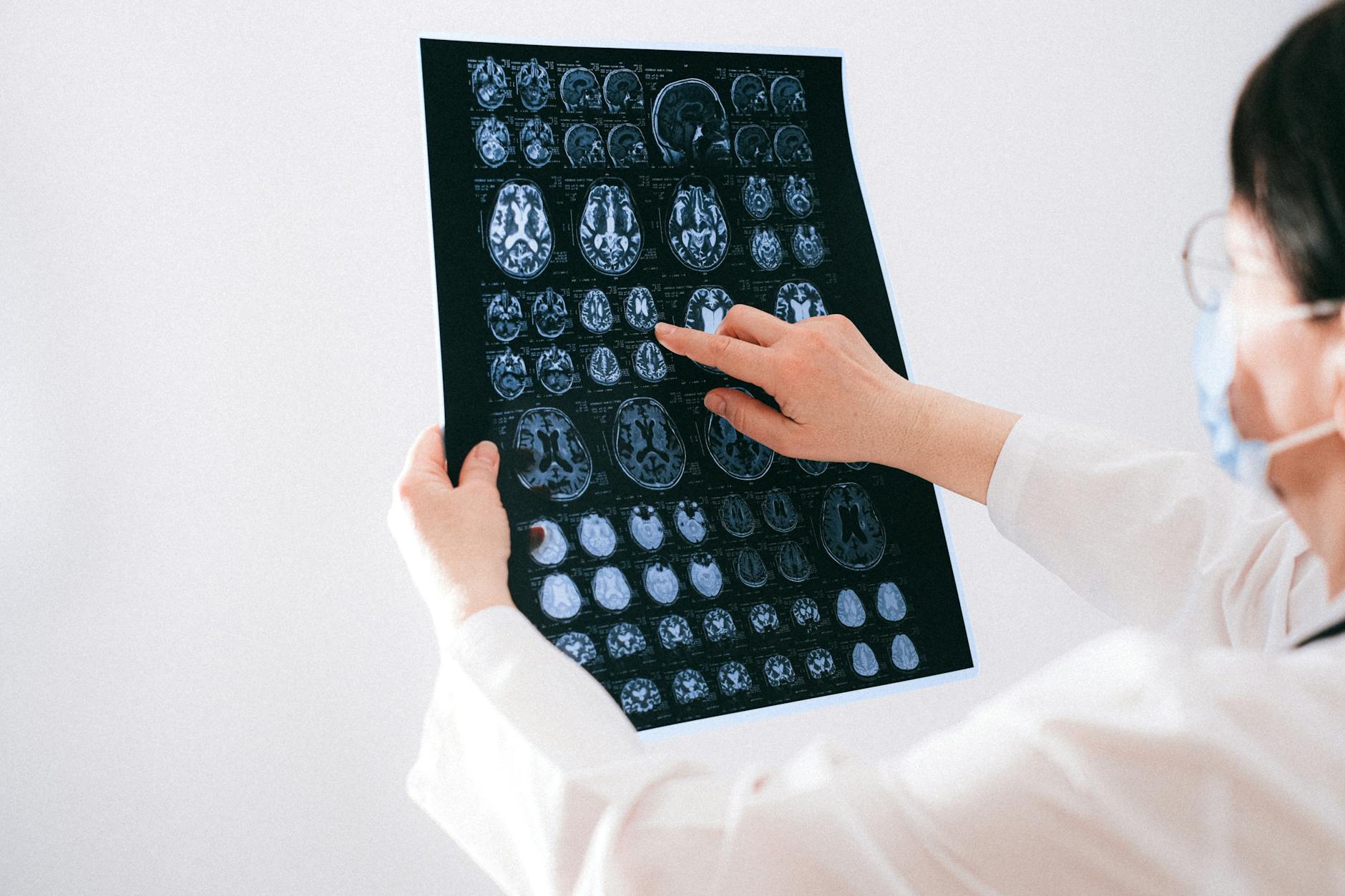
ARIA (amyloid-related imaging abnormalities) affects up to 24% of patients on anti-amyloid therapy. APOE4 genotyping, MRI monitoring protocols, severity-graded management, and the anticoagulation dilemma: a practical guide to navigating the risk.
Sophie Ward & Tom Reeves
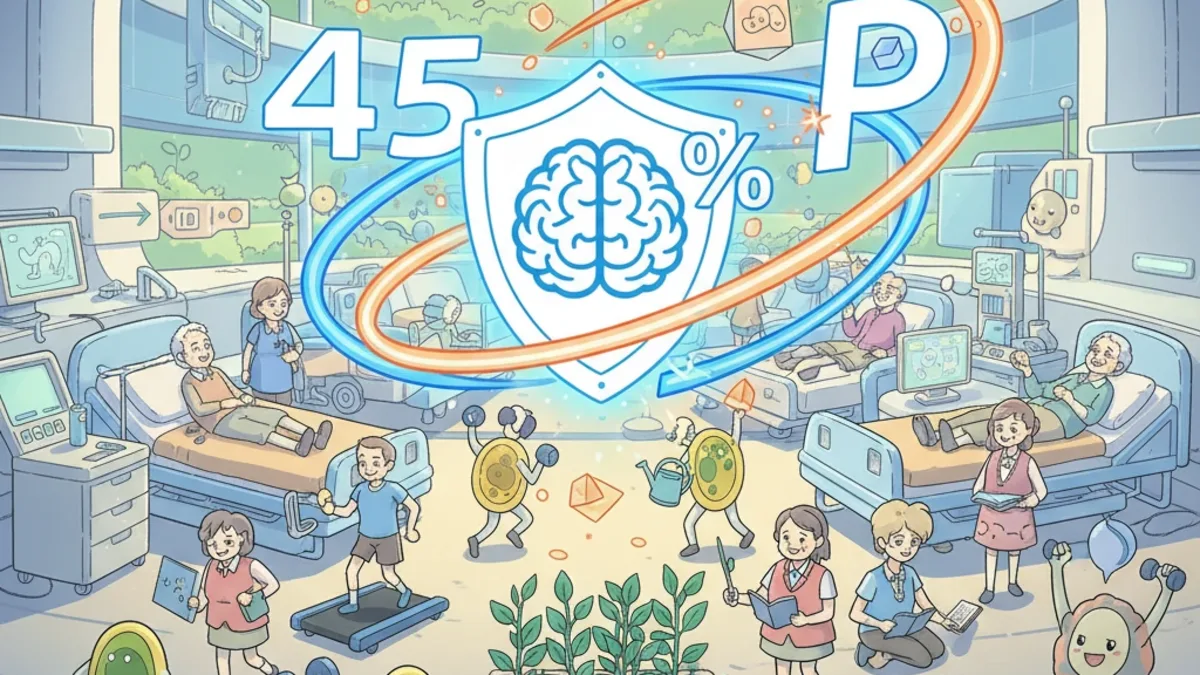
The Lancet Commission 2024 estimates 45% of dementia is preventable. SPRINT-MIND showed 19% MCI reduction from intensive blood pressure control. FINGER showed 25% better cognitive scores with multi-domain lifestyle intervention. ACHIEVE showed 48% slowing in high-risk patients with hearing aids. The evidence is here and we walk through it.
Tom Reeves & Sophie Ward





