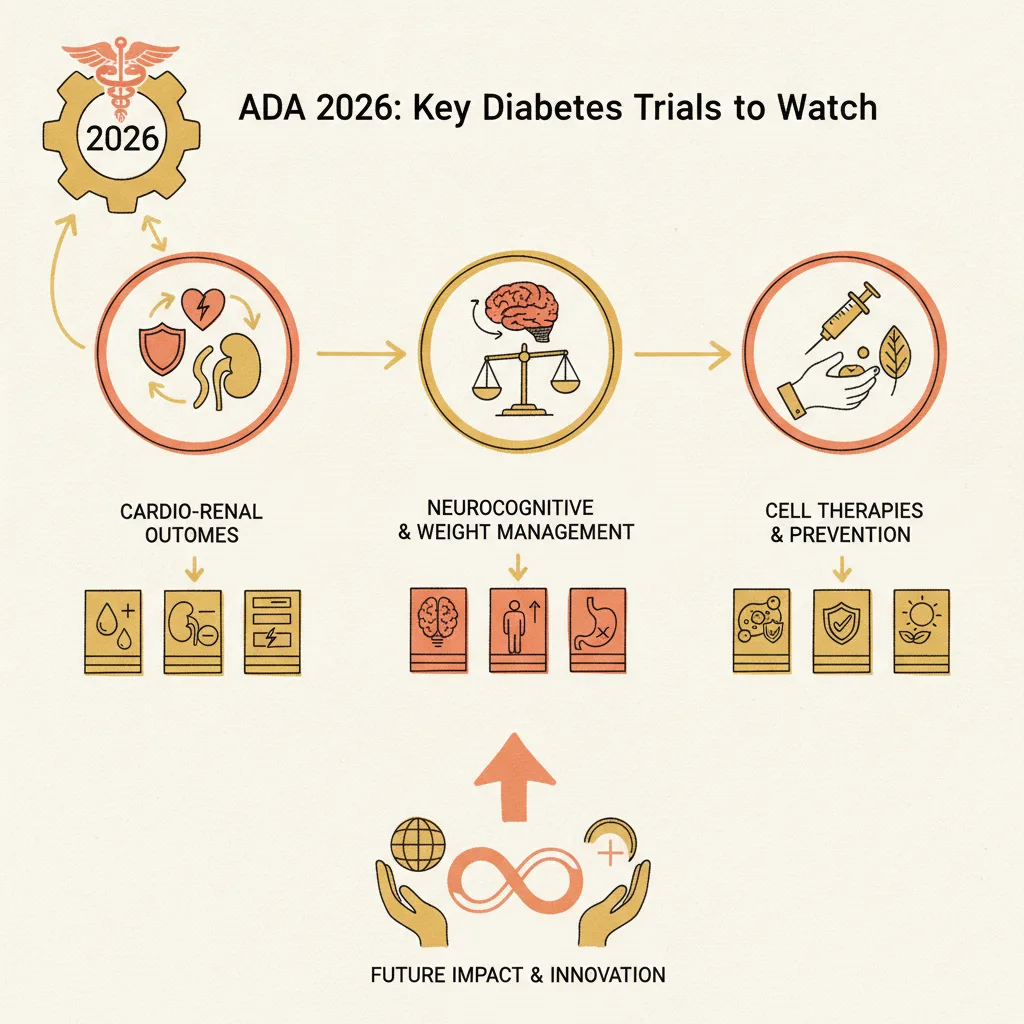

Managing type 2 diabetes mellitus (T2DM) effectively requires continuous evaluation of therapeutic strategies to improve glycaemic control and mitigate cardiovascular and renal complications. The American Diabetes Association (ADA) 2026 Scientific Sessions are anticipated to present data from several key trials that could influence future clinical practice, particularly concerning novel incretin-based therapies and established cardiorenal protective agents.
The landscape of diabetes management continues to evolve with ongoing research into agents that not only control blood glucose but also offer broader cardiorenal and metabolic benefits. The ADA 2026 Scientific Sessions are expected to highlight several late-stage clinical trials that address current unmet needs in T2DM, particularly in patient populations with high cardiovascular risk or obesity.
Key Trials Anticipated at ADA 2026
One area of significant interest involves the continued development of glucagon-like peptide-1 (GLP-1) receptor agonists. Trials are expected to present data on next-generation GLP-1 receptor agonists, potentially including dual or triple agonists, which aim to provide enhanced glycaemic control and greater body weight reduction compared to existing therapies. These trials typically enrol patients with T2DM who have inadequate glycaemic control on metformin or other standard-of-care treatments.
For instance, a Phase III trial investigating a novel GLP-1/GIP co-agonist in patients with T2DM and a body mass index (BMI) of ≥27 kg/m2 is expected to report its primary endpoints. This trial, with an estimated enrolment of N=2,500 participants, is designed to assess changes in HbA1c and body weight from baseline over 52 weeks. Secondary endpoints include changes in lipid profiles, blood pressure, and incidence of cardiovascular events. Previous data from similar agents have shown HbA1c reductions of 1.5% to 2.0% and body weight reductions of 5% to 15%, depending on the dose and patient population. The upcoming data will provide further clarity on the magnitude and durability of these effects, as well as the safety profile, particularly regarding gastrointestinal adverse events.
This particular GLP-1/GIP co-agonist operates by simultaneously activating both the GLP-1 and glucose-dependent insulinotropic polypeptide (GIP) receptors. Both incretin hormones play crucial roles in glucose homeostasis, stimulating insulin secretion in a glucose-dependent manner and suppressing glucagon secretion. GIP also contributes to satiety and energy expenditure, which may explain the enhanced weight loss observed with co-agonists. The trial's inclusion criteria typically specify adults aged 18-80 years with T2DM diagnosed at least 6 months prior to screening, and an HbA1c between 7.0% and 10.5%. Patients with a history of pancreatitis, severe gastrointestinal disease, or significant cardiovascular events within the last 6 months are usually excluded to ensure patient safety and focus on the target population. The 52-week duration is critical for assessing sustained efficacy and safety, moving beyond short-term glucose control to evaluate more durable metabolic improvements.
Another area of focus will be the long-term cardiovascular and renal outcomes data for established drug classes, specifically sodium-glucose co-transporter 2 (SGLT2) inhibitors. While the cardiorenal benefits of SGLT2 inhibitors are well-established, ongoing trials are exploring their efficacy in broader populations, including those with earlier stages of chronic kidney disease (CKD) or heart failure with preserved ejection fraction (HFpEF) without concomitant T2DM. A large-scale outcomes trial, enrolling approximately N=6,000 patients with HFpEF, regardless of diabetes status, is anticipated to present its primary composite endpoint of cardiovascular death or hospitalisation for heart failure. Previous trials in similar populations have demonstrated a hazard ratio (HR) for this composite endpoint ranging from 0.75 to 0.85, with a p-value typically <0.001. The ADA 2026 presentation will likely provide detailed subgroup analyses, which are critical for refining treatment guidelines and identifying specific patient cohorts that derive the most benefit.
SGLT2 inhibitors primarily reduce glucose reabsorption in the renal tubules, leading to glucosuria and modest weight loss. Beyond glycaemic control, their cardiorenal protective effects are attributed to mechanisms such as improved renal haemodynamics, reduced arterial stiffness, and enhanced myocardial energy metabolism. The trial focusing on HFpEF patients without T2DM is particularly important given the high prevalence of HFpEF globally and the limited therapeutic options available for this condition. Patients in this trial typically have an ejection fraction of >40% and elevated natriuretic peptides, indicative of heart failure. The primary composite endpoint is a robust measure of clinical benefit, and the large sample size ensures adequate power to detect clinically meaningful differences. Limitations of such trials often include the generalisability to patients with very advanced CKD or those with acute heart failure exacerbations, as these populations are frequently excluded from enrolment.
Furthermore, data on the comparative effectiveness and safety of various combination therapies are expected. For example, a trial comparing the addition of an SGLT2 inhibitor versus a GLP-1 receptor agonist to basal insulin in patients with inadequately controlled T2DM is likely to be featured. This trial, enrolling N=1,800 patients, aims to assess differences in HbA1c reduction, weight change, and hypoglycaemia rates over 24 weeks. Understanding the optimal sequencing and combination of these agents is paramount for individualising treatment strategies and minimising treatment burden.
The forthcoming data from ADA 2026 will likely reinforce the evolving paradigm in diabetes care, moving beyond mere glycaemic control to a more holistic approach encompassing cardiovascular and renal protection, alongside weight management. The continued expansion of GLP-1 receptor agonist indications, particularly for significant weight reduction, will present clinicians with more potent tools for managing the complex interplay between obesity and T2DM. This may necessitate a re-evaluation of current prescribing patterns, potentially favouring these agents earlier in the treatment algorithm for patients with higher BMI.
For the pharmaceutical industry, the competitive landscape within the GLP-1 and SGLT2 inhibitor classes remains intense. Companies developing novel dual or triple agonists will be keen to demonstrate superior efficacy and comparable safety to existing market leaders. The detailed outcomes data, especially from large cardiovascular and renal trials, will be crucial for market differentiation and securing favourable formulary positions. Expect to see increased investment in post-marketing studies to further delineate long-term benefits and real-world effectiveness.
Patients stand to benefit from these advancements through more effective and comprehensive treatment options. The emphasis on cardiorenal protection means a reduced risk of major adverse cardiovascular events and kidney disease progression, which directly translates to improved quality of life and longevity. However, the increasing complexity of treatment regimens and the potential for higher costs associated with newer agents will require careful consideration by healthcare systems and prescribers to ensure equitable access and adherence.
- The Pivot New GLP-1 receptor agonists are being evaluated for expanded indications beyond glycaemic control, including significant weight management and cardiovascular risk reduction.
- The Data Expect detailed efficacy and safety profiles, including specific HbA1c reductions, body weight changes, and cardiovascular event rates (e.g., MACE, HF hospitalisation).
- The Action Clinicians should prepare to integrate updated evidence on combination therapies and potentially new monotherapy options into individualised patient care plans.
ART-2026-420
·08/26
Drafted with AI assistance, reviewed and approved by the editorial team. This publication is intended for healthcare professionals, researchers, and life science industry professionals. Content is provided for informational and educational purposes only and does not constitute medical advice.

I cover life sciences: drug approvals, trial readouts, regulatory decisions, and the AI reshaping clinical practice. Based in Greater London, contributing to The Life Science Feed since 2026.
Cite This Article
Voss M, Lopes W. ADA 2026: key diabetes trials to watch. The Life Science Feed. Published June 14, 2026. Updated August 8, 2026. Accessed August 10, 2026. https://thelifesciencefeed.com/endocrinology/diabetes-mellitus-type-2/news/ada-2026-key-diabetes-trials-to-watch.
Editorial & AI Standards
All content is researched from peer-reviewed, open-access sources: published trial data, clinical guidelines, and regulatory filings. AI tools are used solely to structure and summarise that evidence; no AI-generated conclusions appear without editor verification against the primary source.
Every article is reviewed by a named editor before publication. Source citations are listed in the References section. This content does not represent the views of any pharmaceutical company, medical device manufacturer, or healthcare provider.
Licence & Rights
© 2026 The Life Science Feed. All rights reserved. Unless otherwise indicated, all content is the property of The Life Science Feed and may not be reproduced, distributed, or transmitted in any form or by any means without prior written permission.
Medical Disclaimer
The information provided on The Life Science Feed is for educational and informational purposes only. It is not intended as a substitute for professional medical advice, diagnosis, or treatment. Always seek the advice of your physician or other qualified healthcare provider regarding any medical condition or treatment decision. Never disregard professional medical advice or delay in seeking it because of something you have read on this website.
References
1. Nauck MA, et al. Glucagon-like receptor agonists and next-generation incretin-based medications: metabolic, cardiovascular, and renal benefits. Lancet. 2026;407(10531):892-908. doi:10.1016/S0140-6736(25)02105-1
2. Wen J, et al. Next generation dual GLP-1/GIP, GLP-1/glucagon, and triple GLP-1/GIP/glucagon agonists: a literature review. Nutr Metab Cardiovasc Dis. 2025;35(12):104213. doi:10.1016/j.numecd.2025.104213
3. Goldney J, et al. Triple Agonism Based Therapies for Obesity. Curr Cardiovasc Risk Rep. 2025;19(1):18. doi:10.1007/s12170-025-00770-z
4. Melson E, et al. What is the pipeline for future medications for obesity?. Int J Obes (Lond). 2025;49(3):433-451. doi:10.1038/s41366-024-01473-y
5. Knerr PJ, et al. Next generation GLP-1/GIP/glucagon triple agonists normalize body weight in obese mice. Mol Metab. 2022;63:101533. doi:10.1016/j.molmet.2022.101533