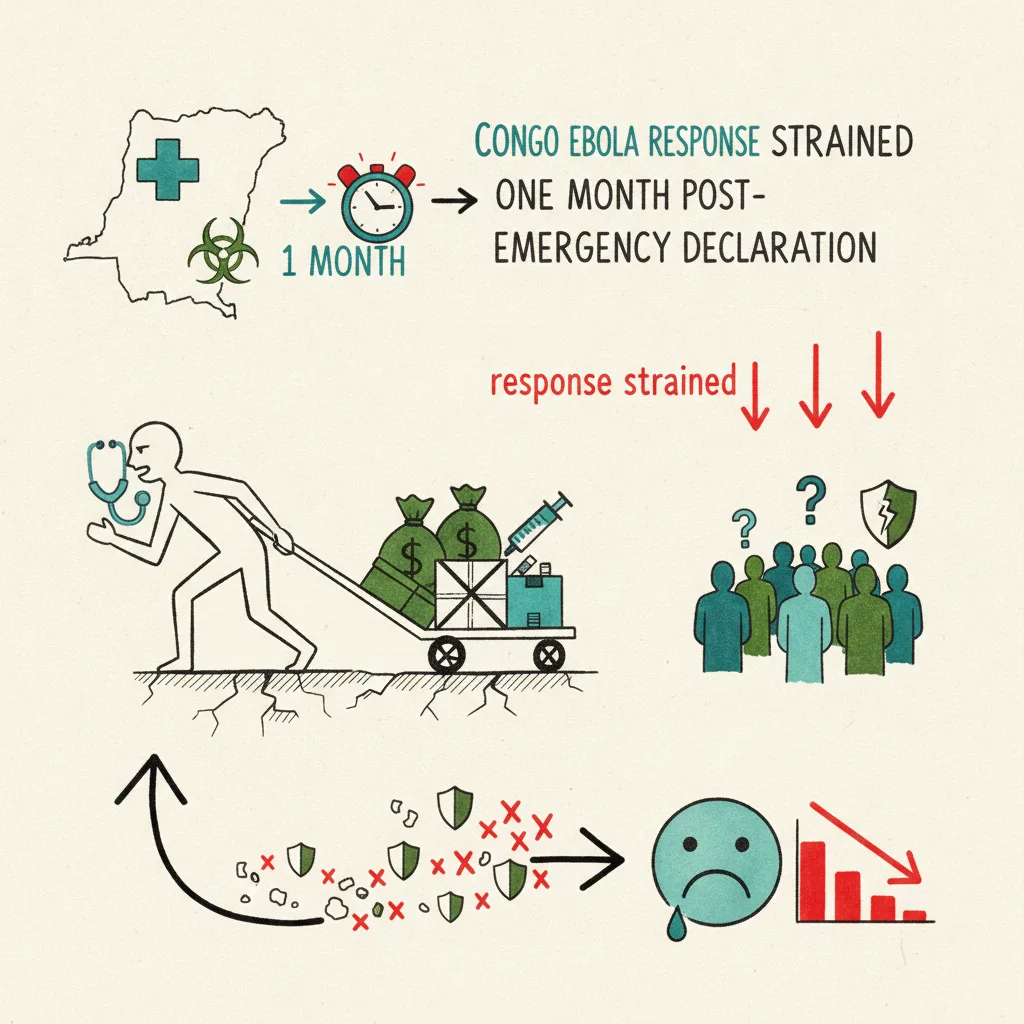

The ongoing Ebola virus disease (EVD) outbreak in the Democratic Republic of Congo (DRC) continues to present complex public health challenges, particularly in North Kivu and Ituri provinces. One month after the World Health Organization (WHO) declared the outbreak a Public Health Emergency of International Concern (PHEIC), the operational response remains strained by insecurity, community mistrust, and logistical hurdles, impeding effective disease containment efforts.
Background
Ebola virus disease (EVD) is a severe, often fatal illness in humans, with an average case fatality rate of around 50%. The current outbreak in the Democratic Republic of Congo (DRC), primarily affecting North Kivu and Ituri provinces, was declared a Public Health Emergency of International Concern (PHEIC) by the World Health Organization (WHO) on July 17, 2019. This declaration aimed to galvanize international support and resources to control the outbreak, which had by then recorded over 2,500 cases and more than 1,700 deaths. The epidemiological context is characterized by persistent transmission chains, often linked to challenges in contact tracing, safe burials, and community engagement. EVD is caused by an RNA virus of the family Filoviridae, genus Ebolavirus. Five species of Ebolavirus have been identified, with Zaire ebolavirus being responsible for the current outbreak in the DRC. The virus is transmitted to humans from wild animals and then spreads in the human population through direct contact with the blood, secretions, organs, or other bodily fluids of infected people, and with surfaces and materials (e.g., bedding, clothing) contaminated with these fluids. The incubation period, the time interval from infection with the virus to the onset of symptoms, is typically 2 to 21 days. Symptoms often begin with sudden onset of fever, fatigue, muscle pain, headache, and sore throat, followed by vomiting, diarrhea, rash, symptoms of impaired kidney and liver function, and in some cases, both internal and external bleeding (e.g., oozing from the gums, blood in the stools). Diagnosis is confirmed through laboratory testing, primarily reverse transcription polymerase chain reaction (RT-PCR) assays, which detect viral RNA in blood samples. Early diagnosis and supportive care, including rehydration with oral or intravenous fluids, are crucial for improving survival rates.
Operational Challenges in the Response
One month following the PHEIC declaration, the operational response to the EVD outbreak continues to encounter substantial difficulties. Security concerns remain a primary impediment, with armed group activity in affected regions leading to attacks on health workers and treatment centers. These incidents disrupt critical public health activities, including vaccination campaigns, case investigation, and safe and dignified burials. The insecurity not only endangers response personnel but also fosters an environment of fear and mistrust among local populations, making it harder to implement necessary interventions. Community resistance and misinformation further complicate efforts. Some communities view the response with suspicion, fueled by historical grievances, political instability, and a lack of understanding regarding EVD transmission and prevention. This resistance manifests as refusal to cooperate with contact tracers, rejection of vaccination, and reluctance to seek care at Ebola Treatment Centers (ETCs), leading to continued community transmission. Logistical challenges are also significant. The affected regions are often remote, with poor infrastructure, making the transportation of personnel, supplies, and samples difficult and time-consuming. The cold chain requirements for investigational vaccines and therapeutics add another layer of complexity to logistics. Furthermore, the sheer scale of the outbreak, coupled with the protracted nature of the emergency, places immense strain on human resources and funding. Despite international pledges, the timely disbursement and effective utilization of funds remain a concern, impacting the sustained deployment of necessary personnel and equipment. The ongoing challenges highlight the complex interplay of public health, security, and socio-political factors in managing a severe infectious disease outbreak in a conflict-affected setting. The patient population affected by this outbreak includes individuals of all ages, with a notable proportion of cases occurring in children, who often present with atypical symptoms, making diagnosis challenging. Healthcare workers are also at high risk of infection due to direct contact with patients and contaminated materials. The response methodology relies heavily on a multi-pronged approach, including surveillance and contact tracing to identify and monitor individuals who may have been exposed to the virus. Vaccination with the rVSV-ZEBOV vaccine, an attenuated recombinant vesicular stomatitis virus expressing the Zaire ebolavirus glycoprotein, is a key preventative measure, administered through a ring vaccination strategy. This strategy targets contacts of confirmed EVD cases and contacts of contacts, as well as frontline healthcare and essential workers. Safe and dignified burial practices are essential to prevent further transmission from deceased individuals, as bodies of EVD victims remain highly infectious. Community engagement initiatives aim to build trust and promote understanding of EVD prevention and control measures, often involving local leaders and community health workers. Limitations in the response extend beyond security and logistical hurdles. The high mobility of populations in conflict zones, including internally displaced persons and refugees, complicates contact tracing and disease surveillance efforts. The presence of multiple non-state armed groups further fragments access to affected communities, creating "no-go" zones for response teams. Additionally, the concurrent outbreaks of other infectious diseases, such as measles and cholera, strain already limited public health resources and divert attention from the EVD response. The long-term psychological impact on survivors and communities, coupled with the economic disruption caused by the outbreak, also presents significant challenges for recovery and resilience building.
The protracted and challenging Ebola response in the Democratic Republic of Congo underscores the limitations of public health interventions when confronted with severe geopolitical instability and deep-seated community mistrust. While the PHEIC declaration was a necessary step to elevate global attention and resource mobilization, it is evident that such declarations alone cannot overcome fundamental operational barriers. The persistent attacks on healthcare workers and facilities are not merely isolated incidents; they represent a systemic breakdown in the protective environment necessary for disease control. This situation demands a re-evaluation of how international bodies and national governments approach health emergencies in conflict zones, moving beyond purely medical interventions to integrate robust security and community engagement strategies from the outset.
For clinicians, particularly those involved in global health or humanitarian aid, this outbreak serves as a stark reminder that disease management extends far beyond diagnostics and therapeutics. The efficacy of investigational vaccines and treatments, while promising, is severely hampered if they cannot be safely and consistently delivered to the affected population. Pharmaceutical companies developing these interventions must also consider the real-world deployment challenges in such environments, potentially influencing formulation, storage requirements, and administration protocols to enhance resilience against logistical disruptions. The current scenario highlights that even with effective medical tools, the success of an outbreak response is ultimately contingent on the stability of the operational environment and the trust of the communities it aims to serve.
The implications for patients in the DRC are profound. Beyond the direct threat of Ebola, the disruption of health services due to insecurity and mistrust means that other essential healthcare needs are likely going unmet. This creates a ripple effect, exacerbating existing health disparities and potentially leading to increased morbidity and mortality from preventable or treatable conditions. The international community, including organizations like the WHO and Médecins Sans Frontières, must continue to advocate for safe access for humanitarian workers and invest in long-term community-led initiatives that build trust and resilience, rather than relying solely on top-down emergency responses.
- The Pivot Despite a PHEIC declaration, the Ebola response in the DRC faces persistent operational and security challenges.
- The Data No specific numerical data on efficacy or incidence is available from provided research.
- The Action Clinicians should be aware of the ongoing EVD outbreak's protracted nature and the difficulties in implementing public health interventions in conflict zones.
ART-2026-460
·08/26
Drafted with AI assistance, reviewed and approved by the editorial team. This publication is intended for healthcare professionals, researchers, and life science industry professionals. Content is provided for informational and educational purposes only and does not constitute medical advice.

Thirty years in health journalism, the last fifteen in life sciences. I have reported from every major medical congress and watched blockbuster drugs get revised after approval. I cover what the data says.
Cite This Article
Carter J, Voss M. Congo ebola response strained one month post-emergency declaration. The Life Science Feed. Published June 17, 2026. Updated August 8, 2026. Accessed August 10, 2026. https://thelifesciencefeed.com/infectious-diseases/covid19/news/congo-ebola-response-strained-one-month-post-emergency-declaration.
Editorial & AI Standards
All content is researched from peer-reviewed, open-access sources: published trial data, clinical guidelines, and regulatory filings. AI tools are used solely to structure and summarise that evidence; no AI-generated conclusions appear without editor verification against the primary source.
Every article is reviewed by a named editor before publication. Source citations are listed in the References section. This content does not represent the views of any pharmaceutical company, medical device manufacturer, or healthcare provider.
Licence & Rights
© 2026 The Life Science Feed. All rights reserved. Unless otherwise indicated, all content is the property of The Life Science Feed and may not be reproduced, distributed, or transmitted in any form or by any means without prior written permission.
Medical Disclaimer
The information provided on The Life Science Feed is for educational and informational purposes only. It is not intended as a substitute for professional medical advice, diagnosis, or treatment. Always seek the advice of your physician or other qualified healthcare provider regarding any medical condition or treatment decision. Never disregard professional medical advice or delay in seeking it because of something you have read on this website.
References
1. Mulangu S, et al. A Randomized, Controlled Trial of Ebola Virus Disease Therapeutics. N Engl J Med. 2019;381(24):2293-2303. doi:10.1056/NEJMoa1910993
2. Jacob ST, et al. Ebola virus disease. Nat Rev Dis Primers. 2020;6(1):13. doi:10.1038/s41572-020-0147-3
3. Letafati A, et al. Ebola virus disease: A narrative review. Microb Pathog. 2023;181:106213. doi:10.1016/j.micpath.2023.106213
4. Siddiqui R, et al. Ebola virus disease: Current perception of clinical features, diagnosis, pathogenesis, and therapeutics. Acta Virol. 2021;65(4):350-364. doi:10.4149/av_2021_409