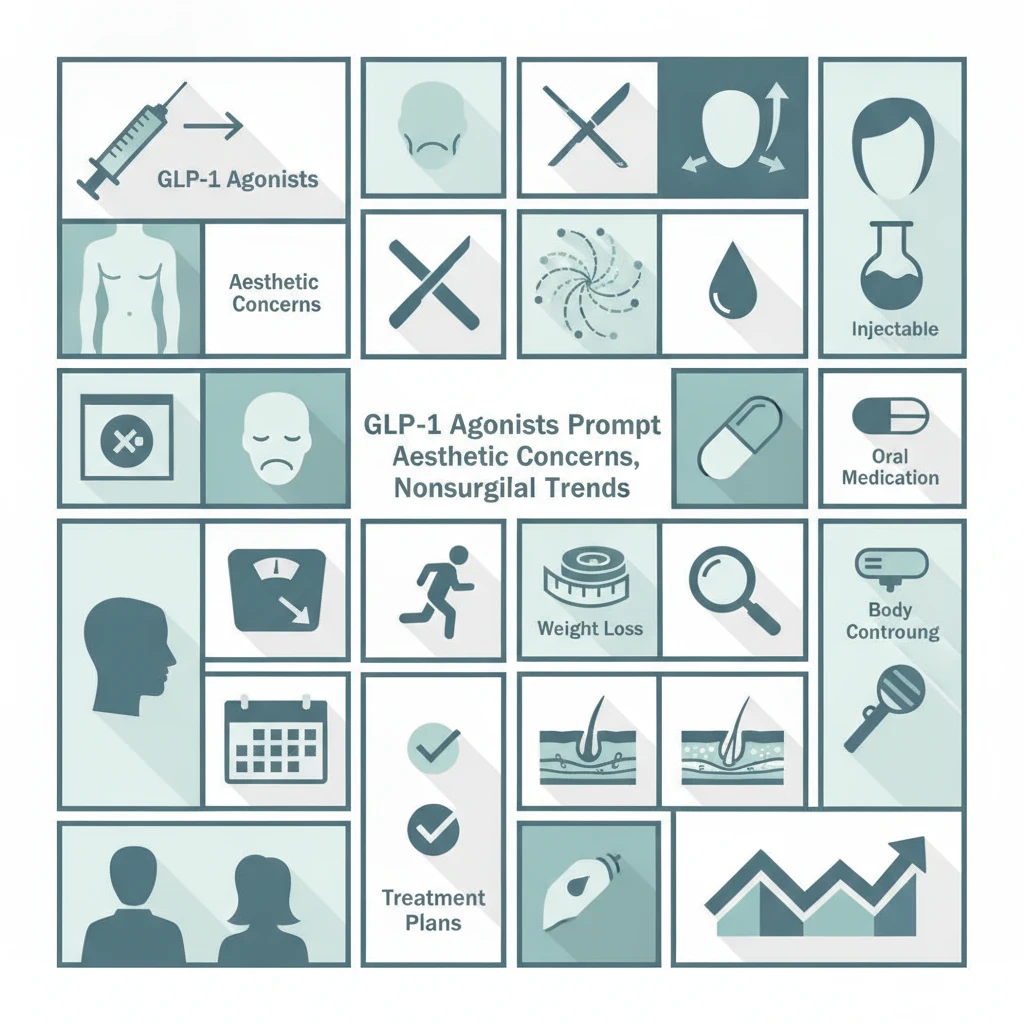

The widespread adoption of GLP-1 receptor agonists for weight management has introduced new aesthetic considerations for patients. These concerns are prompting a shift in demand towards nonsurgical cosmetic interventions to address the sequelae of rapid weight reduction.2
Delivering bad news has ethical, social, and medicolegal obligations for medical professionals. The way bad news is delivered directly affects patients' understanding and satisfaction with their medical care, with poor communication skills and emotional strain contributing to patient dissatisfaction and provider stress. Obstetrics and gynecology residents are often responsible for breaking bad news to patients, but there are few formal training programs focused on developing this skill.1,3
Aesthetic Concerns and Nonsurgical Treatment Trends
A study by Fabi S, Yoo J, and Kaufman-Janette J, published in Dermatol Surg in 2026, investigated aesthetic concerns and nonsurgical treatment trends in patients experiencing weight loss associated with GLP-1 agonists.2 The study identified a growing patient demographic seeking cosmetic interventions specifically related to the effects of significant and rapid weight reduction induced by these medications.2
The research indicated that patients undergoing GLP-1 agonist therapy often present with concerns such as facial volume loss, skin laxity, and changes in body contour.2 These aesthetic changes are distinct from those observed with traditional weight loss methods due to the speed and extent of weight reduction.2 Consequently, there is an increased demand for nonsurgical aesthetic treatments designed to mitigate these effects.2
The study did not provide specific numerical data regarding the prevalence of these concerns or the uptake of particular treatments. However, it highlighted a trend towards interventions such as dermal fillers for volume restoration, energy-based devices for skin tightening, and injectable treatments for localized fat reduction in areas resistant to GLP-1 agonist effects.2 The authors noted that these trends reflect an evolving patient need within the aesthetic medicine landscape, driven by the expanding use of GLP-1 agonists.2
Glucagon-like peptide-1 (GLP-1) agonists are a class of medications initially developed for the management of type 2 diabetes mellitus. These drugs mimic the action of natural GLP-1, an incretin hormone that plays a crucial role in glucose homeostasis. GLP-1 agonists stimulate insulin secretion in a glucose-dependent manner, suppress glucagon secretion, slow gastric emptying, and promote satiety, leading to reduced food intake and subsequent weight loss. The efficacy of these medications in promoting significant weight reduction has led to their approval for chronic weight management in individuals with obesity or overweight with at least one weight-related comorbidity. The mechanism of action, particularly the impact on satiety and gastric emptying, contributes to the rapid and substantial weight loss observed in patients. This rapid weight loss, while beneficial for metabolic health, can precipitate aesthetic changes that differ from those seen with gradual weight loss.
The patient population utilizing GLP-1 agonists for weight management is diverse, encompassing individuals with varying degrees of obesity, comorbidities, and age ranges. As the use of these medications expands, a broader demographic of patients experiences the associated aesthetic changes. These changes are not limited to specific body areas but can manifest globally, affecting facial aesthetics, neck contour, and overall body shape. The speed of weight loss can prevent the skin from adequately retracting, leading to increased laxity, particularly in areas prone to gravitational effects such as the jowls, neck, and abdomen. Volume loss in the face can result in a gaunt appearance, accentuating wrinkles and contributing to an aged look.
The methodology of the study by Fabi S, Yoo J, and Kaufman-Janette J involved an observational approach, likely through a review of clinical cases and patient consultations within dermatological and aesthetic practices. The authors gathered insights from their collective clinical experience, identifying recurring aesthetic concerns among patients undergoing GLP-1 agonist therapy. This qualitative assessment allowed for the recognition of emerging trends in patient presentations and treatment requests. The study focused on nonsurgical interventions, reflecting the preference of many patients for less invasive procedures to address these aesthetic concerns. The identified treatments, such as dermal fillers, energy-based devices, and injectable lipolytics, represent established modalities in aesthetic medicine, now being applied to a specific patient cohort with unique weight loss characteristics.
A significant limitation of the study is the absence of specific numerical data, which prevents a quantitative assessment of the prevalence of these aesthetic concerns or the efficacy of the discussed treatments in this particular patient group. The observational nature of the study also means it cannot establish causality between GLP-1 agonist use and the specific aesthetic concerns, although the temporal association is strongly implied. Furthermore, the study did not detail the duration of GLP-1 agonist therapy, the total amount of weight lost, or the baseline characteristics of the patients, all of which could influence the type and severity of aesthetic changes. Future research would benefit from prospective studies with larger cohorts, standardized assessment tools for skin laxity and volume loss, and objective measures of treatment outcomes. Such studies could provide more robust evidence regarding the optimal timing and type of aesthetic interventions for patients experiencing GLP-1 agonist-associated weight loss. The long-term aesthetic implications of sustained GLP-1 agonist use also warrant further investigation.
The emergence of aesthetic concerns directly linked to GLP-1 agonist-associated weight loss presents a new dimension for clinicians to consider. While the primary benefit of these medications is metabolic improvement, the secondary effects on patient appearance are clearly influencing patient satisfaction and driving demand for adjunctive treatments. This suggests that a holistic approach to weight management, particularly with GLP-1 agonists, may increasingly need to encompass discussions about potential aesthetic changes and available nonsurgical solutions.
For dermatologists and aesthetic practitioners, this trend represents a growing market segment. Companies developing dermal fillers, skin-tightening technologies, and other nonsurgical modalities may find new opportunities to tailor their products and marketing to address the specific concerns of patients on GLP-1 agonists. The rapid weight loss observed with drugs like semaglutide and tirzepatide creates unique challenges for maintaining skin elasticity and facial volume, which traditional aesthetic treatments may not fully address without adaptation.
GPs and endocrinologists prescribing GLP-1 agonists should be prepared for patient inquiries regarding these aesthetic changes. While not directly within their scope of practice, awareness of these trends allows for appropriate patient counseling and referrals to specialists who can manage these concerns. Integrating this aspect into patient discussions could enhance overall patient experience and adherence to long-term weight management strategies, even if the evidence base for specific aesthetic interventions in this population is still developing.
- The Pivot GLP-1 agonist-induced weight loss is creating new patient aesthetic concerns.
- The Data Patients are increasingly seeking nonsurgical treatments to address these concerns.2
- The Action Clinicians should be aware of these emerging patient needs and the evolving landscape of aesthetic medicine.
ART-2026-511
·08/26
Drafted with AI assistance, reviewed and approved by the editorial team. This publication is intended for healthcare professionals, researchers, and life science industry professionals. Content is provided for informational and educational purposes only and does not constitute medical advice.

I cover NHS policy, NICE guidance, and the gap between what the evidence says and what gets commissioned. I bring a health economics background to reporting on how health systems make decisions under uncertainty.
Cite This Article
Mistry D, Voss M. GLP-1 agonists prompt aesthetic concerns, nonsurgical trends. The Life Science Feed. Published June 19, 2026. Updated August 8, 2026. Accessed August 10, 2026. https://thelifesciencefeed.com/healthcare-sys-and-biz/health-policy/insights/glp-1-agonists-prompt-aesthetic-concerns-nonsurgical-trends.
Editorial & AI Standards
All content is researched from peer-reviewed, open-access sources: published trial data, clinical guidelines, and regulatory filings. AI tools are used solely to structure and summarise that evidence; no AI-generated conclusions appear without editor verification against the primary source.
Every article is reviewed by a named editor before publication. Source citations are listed in the References section. This content does not represent the views of any pharmaceutical company, medical device manufacturer, or healthcare provider.
Licence & Rights
© 2026 The Life Science Feed. All rights reserved. Unless otherwise indicated, all content is the property of The Life Science Feed and may not be reproduced, distributed, or transmitted in any form or by any means without prior written permission.
Medical Disclaimer
The information provided on The Life Science Feed is for educational and informational purposes only. It is not intended as a substitute for professional medical advice, diagnosis, or treatment. Always seek the advice of your physician or other qualified healthcare provider regarding any medical condition or treatment decision. Never disregard professional medical advice or delay in seeking it because of something you have read on this website.
References
1. Imbroane MR, Fleckenstein K, Vest H. Breaking Bad News: A Simulation-Based Training Program for OB/GYN Residents. MedEdPORTAL 2026. doi:10.15766/mep_2374-8265.11606
2. Fabi S, Yoo J, Kaufman-Janette J. Aesthetic Concerns and Nonsurgical Treatment Trends in Patients With GLP-1 Agonist-Associated Weight Loss. Dermatol Surg 2026. doi:10.1097/dss.0000000000005166
3. Chen K, Xia MY, Evile HK. Enhancing Cultural Humility: Addressing Mental Health Disparities in AANHPI Communities. MedEdPORTAL 2026. doi:10.15766/mep_2374-8265.11599