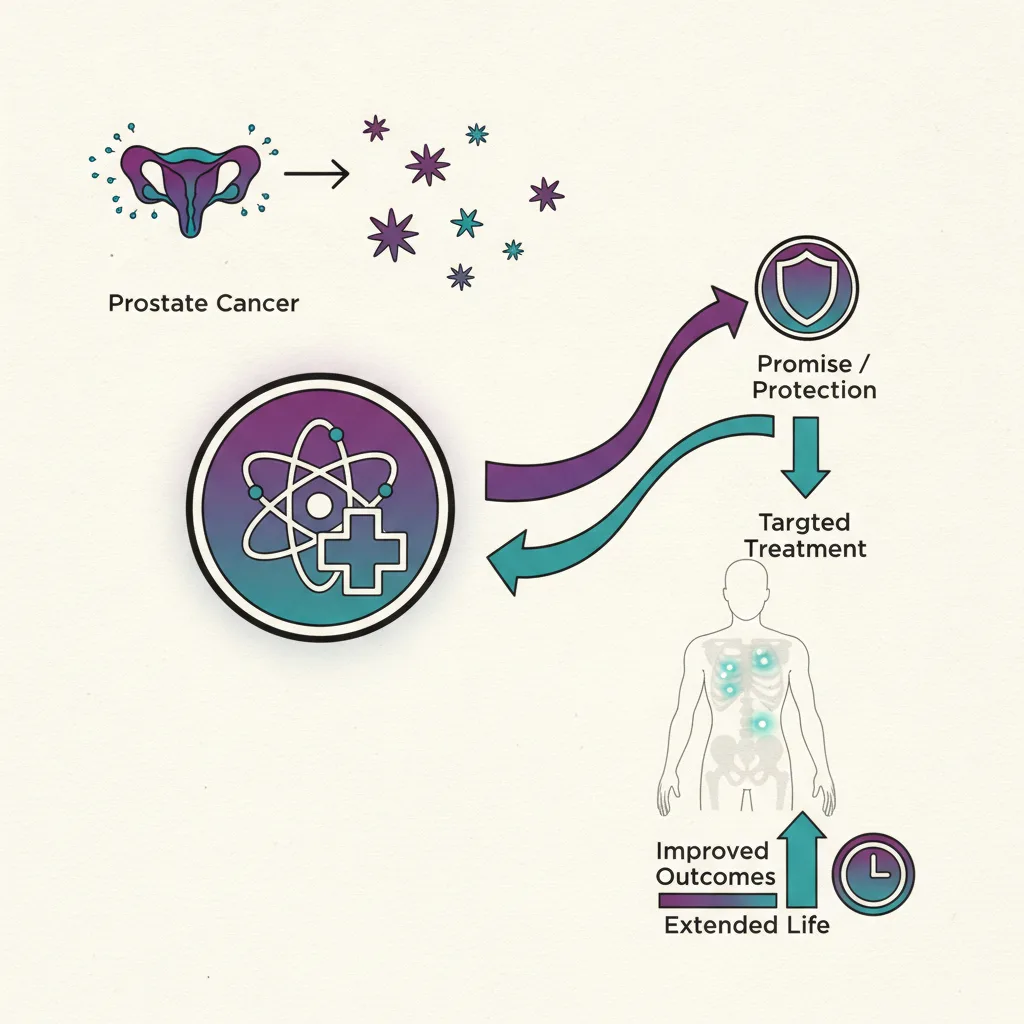

Metastatic prostate cancer, particularly castration-resistant forms, presents ongoing therapeutic challenges. Recent clinical data indicate that radiopharmaceutical approaches warrant further study, offering potential avenues for improved management in this patient population.1
The management of metastatic prostate cancer, particularly in its castration-resistant forms, remains an area of active research. Current therapeutic strategies aim to extend survival and improve quality of life, but resistance mechanisms and disease progression necessitate the exploration of novel agents. Radiopharmaceuticals, which deliver targeted radiation to cancer cells, represent one such area of development.
Prostate cancer is a significant global health concern, with metastatic disease presenting considerable challenges. Approximately 10-20% of men with prostate cancer develop mCRPC within five years of diagnosis, and the median survival for these patients has historically been poor. The development of resistance to androgen deprivation therapy (ADT) is a hallmark of mCRPC, leading to continued tumor growth and spread despite suppressed testosterone levels. Bone metastases are particularly common in advanced prostate cancer, occurring in up to 90% of mCRPC patients, and are associated with significant morbidity, including pain, pathological fractures, and spinal cord compression. These clinical realities underscore the urgent need for more effective and targeted treatment options.
Investigational Radiopharmaceutical Approaches
One area of investigation involves the use of somatostatin receptor (SSTR) targeted imaging and radioligand therapy for neuroendocrine prostate cancer (NEPC). A systematic review examined clinical evidence on the feasibility of treating NEPC with anti-SSTR radioligands. The review focused on existing imaging and treatment studies to assess the potential of this approach.1 NEPC is a rare and aggressive variant of prostate cancer, often arising after prolonged ADT, and is characterized by a poor prognosis and limited treatment options. The rationale for targeting SSTRs in NEPC stems from the observation that some neuroendocrine tumors express these receptors, making them amenable to radioligand therapy using somatostatin analogs labeled with therapeutic radionuclides. The systematic review synthesized data from various studies, evaluating the diagnostic utility of SSTR-PET imaging and the therapeutic efficacy and safety of SSTR-targeted radioligands in this specific patient population.
Another radiopharmaceutical, 177Lu-PSMA-617, has been evaluated for its efficacy and safety in elderly patients with metastatic castration-resistant prostate cancer (mCRPC). A study assessed the outcomes of this therapy in this specific demographic.3 177Lu-PSMA-617 is a beta-emitting radiopharmaceutical that targets prostate-specific membrane antigen (PSMA), a transmembrane glycoprotein highly expressed on the surface of most prostate cancer cells, particularly in mCRPC. The mechanism of action involves the binding of 177Lu-PSMA-617 to PSMA-expressing cells, followed by internalization and subsequent delivery of beta radiation directly to the tumor cells and their immediate microenvironment, leading to DNA damage and cell death. The study specifically focused on elderly patients, a population often excluded or underrepresented in pivotal clinical trials due to comorbidities and concerns about treatment tolerability. This focus provides crucial insights into the applicability and safety profile of 177Lu-PSMA-617 in a vulnerable patient group.
Combination therapies are also under investigation. The COMRADE trial, a multicenter, randomized, Phase II study, evaluated olaparib plus radium-223 versus radium-223 alone in men with castration-resistant prostate cancer with bone metastases. This trial aimed to assess whether the addition of olaparib, a PARP inhibitor, could enhance the efficacy of radium-223, an alpha-emitting radiopharmaceutical targeting bone metastases.2 Radium-223 dichloride (Xofigo) is an alpha-particle-emitting radiopharmaceutical that mimics calcium and selectively targets bone metastases by forming complexes with hydroxyapatite in areas of increased bone turnover. Its alpha emissions have a short range, leading to highly localized radiation delivery with minimal damage to surrounding healthy tissues. Olaparib, a poly(ADP-ribose) polymerase (PARP) inhibitor, works by preventing DNA repair in cancer cells, particularly those with homologous recombination repair deficiencies, which are found in a subset of mCRPC patients. The COMRADE trial hypothesized that combining these agents could exploit synergistic mechanisms, with radium-223 inducing DNA damage and olaparib inhibiting its repair, thereby enhancing therapeutic efficacy in patients with bone-predominant mCRPC. The randomized design allowed for a direct comparison of the combination therapy against monotherapy, providing a robust assessment of the added benefit of olaparib.
These studies collectively contribute to the understanding of radiopharmaceuticals in advanced prostate cancer. The systematic review on anti-SSTR radioligands for NEPC provides a synthesis of current evidence, highlighting the potential for targeted therapy in a challenging prostate cancer subtype.1 The evaluation of 177Lu-PSMA-617 in elderly mCRPC patients addresses a demographic often underrepresented in clinical trials, providing specific safety and efficacy data for this population.3 The COMRADE trial's investigation into combination therapy with olaparib and radium-223 explores strategies to improve outcomes in patients with bone-metastatic mCRPC.2
While these data support further study, the specific efficacy and safety profiles of these agents, particularly in diverse patient populations and in combination regimens, require additional investigation. Limitations in current research often include relatively small sample sizes for specific subgroups, the need for longer follow-up periods to fully assess long-term survival and adverse events, and the challenge of identifying optimal biomarkers for patient selection. The ongoing research aims to refine patient selection, optimize dosing, and identify potential biomarkers for response to these radiopharmaceutical treatments. Further large-scale, randomized controlled trials are essential to confirm these preliminary findings and establish the definitive role of these radiopharmaceuticals, both as monotherapies and in combination strategies, within the evolving treatment landscape of metastatic prostate cancer.
The increasing focus on radiopharmaceuticals for metastatic prostate cancer, particularly in castration-resistant settings, signals a shift towards more targeted therapeutic strategies. For clinicians, this means a growing complexity in treatment algorithms, requiring careful consideration of disease subtype, patient comorbidities, and prior therapies. The systematic review on anti-SSTR radioligands for neuroendocrine prostate cancer, for instance, highlights a niche where conventional treatments often fall short. Understanding the nuances of SSTR expression and the potential for targeted imaging and therapy will become increasingly important for specialists managing these aggressive variants.
The evaluation of 177Lu-PSMA-617 in elderly patients with metastatic castration-resistant prostate cancer is particularly relevant. This demographic often presents with multiple comorbidities and may be less tolerant of aggressive systemic therapies. Data on safety and efficacy in this specific group are essential for informed decision-making, potentially expanding treatment options for patients who might otherwise have limited choices. The ongoing COMRADE trial, combining olaparib with radium-223, exemplifies the industry's push towards synergistic approaches. If successful, such combinations could redefine the standard of care for patients with bone metastases, a common and debilitating feature of advanced prostate cancer.
While these developments are promising, they underscore the need for robust, well-designed clinical trials to establish clear benefits and risks. The integration of these novel agents into routine practice will depend on compelling evidence of improved survival, quality of life, and manageable toxicity profiles. Furthermore, the infrastructure for delivering radiopharmaceutical therapies, including specialized nuclear medicine facilities and trained personnel, will need to expand to meet potential demand. The future of metastatic prostate cancer management appears to be increasingly individualized, with radiopharmaceuticals playing a more prominent role.
- The Pivot Radiopharmaceuticals are emerging as a focus for advanced prostate cancer treatment.
- The Data Studies are evaluating anti-SSTR radioligands for neuroendocrine prostate cancer and 177Lu-PSMA-617 for metastatic castration-resistant prostate cancer.
- The Action Clinicians should monitor ongoing trials and consider these agents as investigational options in appropriate contexts.
ART-2026-445
·08/26
Drafted with AI assistance, reviewed and approved by the editorial team. This publication is intended for healthcare professionals, researchers, and life science industry professionals. Content is provided for informational and educational purposes only and does not constitute medical advice.

I cover life sciences: drug approvals, trial readouts, regulatory decisions, and the AI reshaping clinical practice. Based in Greater London, contributing to The Life Science Feed since 2026.
Cite This Article
Voss M, Lopes W. Radiopharmaceuticals show promise in metastatic prostate cancer. The Life Science Feed. Published June 17, 2026. Updated August 8, 2026. Accessed August 10, 2026. https://thelifesciencefeed.com/oncology/prostatic-neoplasms/research/radiopharmaceuticals-show-promise-in-metastatic-prostate-cancer.
Editorial & AI Standards
All content is researched from peer-reviewed, open-access sources: published trial data, clinical guidelines, and regulatory filings. AI tools are used solely to structure and summarise that evidence; no AI-generated conclusions appear without editor verification against the primary source.
Every article is reviewed by a named editor before publication. Source citations are listed in the References section. This content does not represent the views of any pharmaceutical company, medical device manufacturer, or healthcare provider.
Licence & Rights
© 2026 The Life Science Feed. All rights reserved. Unless otherwise indicated, all content is the property of The Life Science Feed and may not be reproduced, distributed, or transmitted in any form or by any means without prior written permission.
Medical Disclaimer
The information provided on The Life Science Feed is for educational and informational purposes only. It is not intended as a substitute for professional medical advice, diagnosis, or treatment. Always seek the advice of your physician or other qualified healthcare provider regarding any medical condition or treatment decision. Never disregard professional medical advice or delay in seeking it because of something you have read on this website.
References
1. Valizadeh P, Jannatdoust P, Shahgholianghahfarokhi M. Feasibility of treating neuroendocrine prostate cancer with anti-SSTR radioligands: A systematic review of imaging and treatment studies. Semin Nucl Med 2026. doi:10.1053/j.semnuclmed.2026.05.004
2. McKay RR, Xie W, Ajmera A. Multicenter, Randomized, Phase II Trial of Olaparib Plus Radium-223 Versus Radium-223 in Men With Castration-Resistant Prostate Cancer With Bone Metastases (COMRADE). J Clin Oncol 2026. doi:10.1016/j.eururo.2026.06.001
3. Sentana-Lledo D, Rami A, Zhong C. Efficacy and Safety of 177Lu-PSMA-617 in Elderly Patients With Metastatic Castration-Resistant Prostate Cancer. JCO Oncol Pract 2026. doi:10.1200/op-25-01161







