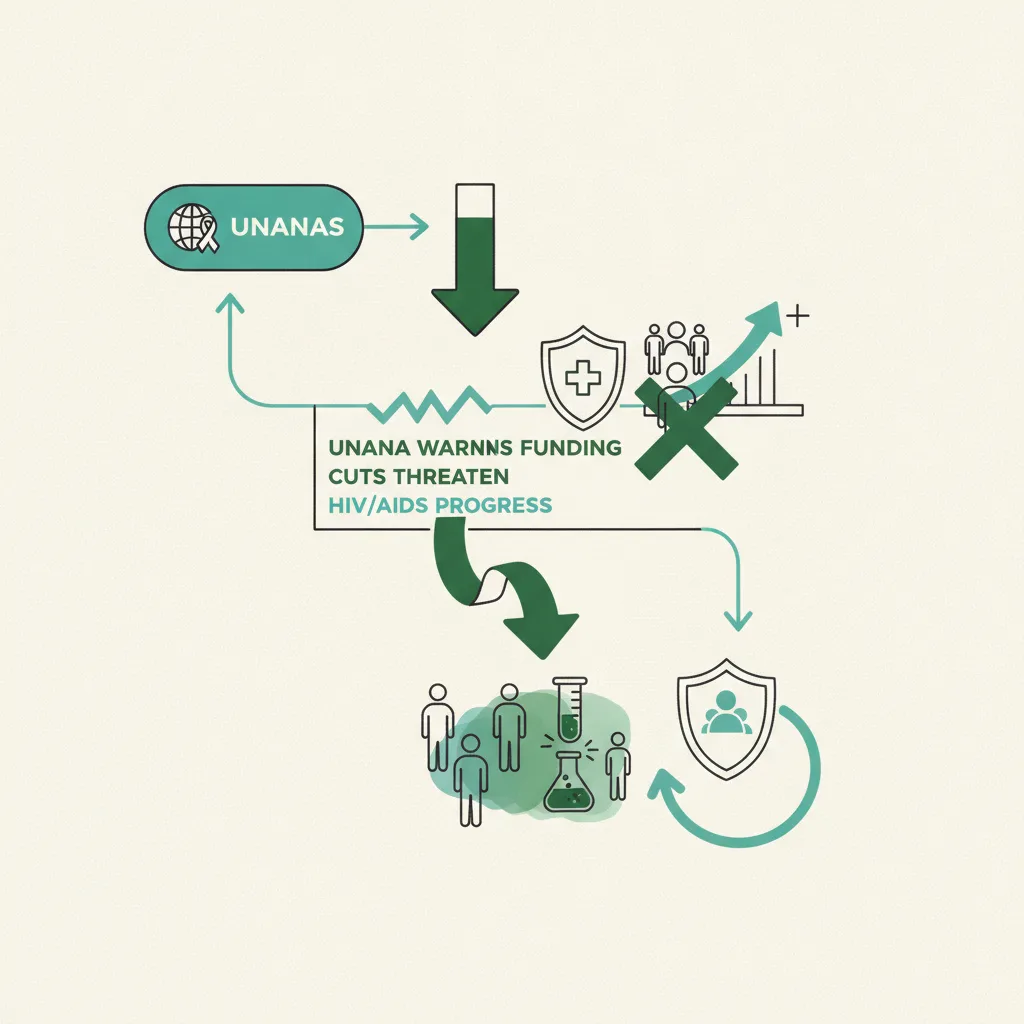

The global response to HIV/AIDS faces a critical juncture, with UNAIDS reporting that recent funding reductions threaten to undermine decades of progress.1 The immediate takeaway for clinicians is the potential for increased incidence of new HIV infections and a rise in AIDS-related mortality, particularly in vulnerable populations, necessitating heightened vigilance and advocacy for sustained programme support.
The global effort to control the HIV/AIDS epidemic has achieved substantial reductions in new infections and AIDS-related deaths over the past two decades. This progress has been largely attributed to expanded access to antiretroviral therapy (ART), comprehensive prevention programmes, and robust funding mechanisms. However, UNAIDS has highlighted a concerning trend of declining financial investment in HIV/AIDS initiatives, which poses a direct threat to the sustainability of these gains. The agency's reports indicate that international assistance for HIV programmes in low- and middle-income countries has seen a reduction, creating a significant funding gap. This reduction in resources directly impacts the capacity of national programmes to deliver essential services, including HIV testing, prevention interventions such as pre-exposure prophylaxis (PrEP), and consistent ART provision. The clinical context for these interventions is critical: ART, a combination of antiretroviral drugs, works by inhibiting various stages of the HIV life cycle, thereby reducing viral load to undetectable levels. This not only improves the health and extends the lifespan of people living with HIV but also effectively prevents sexual transmission of the virus, a concept known as "Undetectable = Untransmittable" (U=U). PrEP involves HIV-negative individuals taking antiretroviral medication to prevent HIV acquisition, demonstrating high efficacy when adherence is maintained. These biomedical interventions, alongside behavioral and structural prevention strategies, form the cornerstone of the global response.
Impact of Funding Reductions
The implications of reduced funding are multifaceted and extend across the entire spectrum of HIV care and prevention. Specifically, UNAIDS reports indicate that a lack of sustained investment can lead to disruptions in the supply chain for antiretroviral drugs, potentially resulting in treatment interruptions for patients. Such interruptions are known to increase the risk of viral rebound, drug resistance, and onward transmission. Furthermore, prevention programmes, which include condom distribution, harm reduction services for people who inject drugs, and mother-to-child transmission prevention, are often among the first to experience cuts. These services are critical for preventing new infections and maintaining the public health progress achieved. The agency also points to the potential for weakened surveillance systems, which are essential for monitoring epidemic trends and allocating resources effectively. Without adequate funding, the ability to track new infections, identify emerging hotspots, and assess programme effectiveness is compromised, hindering a data-driven response to the epidemic. The cumulative effect of these reductions is a heightened risk of reversing the downward trend in new HIV infections and AIDS-related deaths, potentially leading to a resurgence of the epidemic in regions where it was previously under control. This disproportionately affects key populations and vulnerable communities, including men who have sex with men, transgender people, sex workers, people who inject drugs, and young women and adolescent girls in sub-Saharan Africa, who often face significant barriers to accessing healthcare and are at higher risk of HIV acquisition.
Methodology and Limitations of UNAIDS Reporting
UNAIDS compiles its reports through a comprehensive methodology that integrates data from national HIV programmes, epidemiological surveillance, and behavioral surveys. This includes country-reported data on HIV prevalence, incidence, ART coverage, and prevention service uptake, often collected through established reporting frameworks. The agency utilizes mathematical modeling to estimate key epidemiological indicators and project future trends, accounting for various intervention scenarios and funding levels. These models incorporate demographic data, risk behaviors, and the efficacy of different prevention and treatment strategies. However, the accuracy of these reports is inherently dependent on the quality and completeness of the data provided by member states. Limitations include potential underreporting of cases or service delivery in countries with weaker health information systems, challenges in accurately estimating populations at higher risk, and variations in data collection methodologies across different regions. The projections regarding funding gaps and their impact are based on assumptions about the cost-effectiveness of interventions and the anticipated scale-up needed to meet global targets. While these models provide valuable insights for strategic planning, they are subject to uncertainties related to future political will, economic fluctuations, and unforeseen public health challenges. The reports primarily focus on financial investment and its direct impact on service delivery, but they acknowledge that other factors, such as socio-cultural barriers, stigma, discrimination, and human rights issues, also significantly influence the effectiveness of HIV responses. Addressing these multifaceted challenges requires sustained, multi-sectoral efforts beyond financial inputs alone.
The UNAIDS warning regarding funding cuts is not merely an abstract policy concern; it has direct, tangible consequences for clinical practice. General practitioners and specialists alike must recognise that a weakened global HIV response translates to increased pressure on local healthcare systems. We may see a rise in late diagnoses, more advanced presentations of HIV disease, and a greater prevalence of opportunistic infections, all of which demand more intensive and costly management. The gains made in reducing mother-to-child transmission, for instance, could erode if antenatal screening and ART access falter, placing more infants at risk.
For the pharmaceutical industry, this situation presents a complex challenge. While the immediate impact might not be on drug development, the long-term viability of markets for antiretrovirals depends on sustained global health infrastructure. A resurgence of the epidemic due to funding shortfalls would necessitate a renewed, and potentially more expensive, response. Companies developing new prevention tools or long-acting injectables for HIV will find their innovations less impactful if the systems for delivery and patient adherence are compromised by financial constraints. It underscores the interdependence of medical innovation and public health investment.
Ultimately, the patients bear the brunt of these decisions. Reduced funding means fewer testing opportunities, less access to PrEP for those at high risk, and potentially interrupted ART for those already living with HIV. This is not just about numbers; it is about individual lives, increased suffering, and the erosion of trust in healthcare systems. Clinicians must be prepared to advocate for their patients, understand the broader context of these funding challenges, and remain vigilant in screening, prevention counselling, and ensuring continuity of care, even as external support wavers. The dry statistics from UNAIDS translate directly into the human cost of a faltering commitment.
- The Pivot Global funding for HIV/AIDS programmes has decreased, jeopardising the trajectory towards ending the epidemic.
- The Data UNAIDS indicates a significant funding gap, with international assistance for HIV programmes in low- and middle-income countries declining.
- The Action Clinicians should be aware of the potential for increased HIV transmission and disease progression due to weakened prevention and treatment infrastructure.
ART-2026-433
·08/26
Drafted with AI assistance, reviewed and approved by the editorial team. This publication is intended for healthcare professionals, researchers, and life science industry professionals. Content is provided for informational and educational purposes only and does not constitute medical advice.

Infectious disease, epidemiology, and global health equity. I have covered outbreaks from Ebola to COVID-19 to mpox. The stories I am most drawn to are where the science is clear and the response is slow.
Cite This Article
Reeves T, Voss M. UNAIDS warns funding cuts threaten HIV/AIDS progress. The Life Science Feed. Published June 17, 2026. Updated August 8, 2026. Accessed August 10, 2026. https://thelifesciencefeed.com/infectious-diseases/hiv-infections/news/unaids-warns-funding-cuts-threaten-hivaids-progress.
Editorial & AI Standards
All content is researched from peer-reviewed, open-access sources: published trial data, clinical guidelines, and regulatory filings. AI tools are used solely to structure and summarise that evidence; no AI-generated conclusions appear without editor verification against the primary source.
Every article is reviewed by a named editor before publication. Source citations are listed in the References section. This content does not represent the views of any pharmaceutical company, medical device manufacturer, or healthcare provider.
Licence & Rights
© 2026 The Life Science Feed. All rights reserved. Unless otherwise indicated, all content is the property of The Life Science Feed and may not be reproduced, distributed, or transmitted in any form or by any means without prior written permission.
Medical Disclaimer
The information provided on The Life Science Feed is for educational and informational purposes only. It is not intended as a substitute for professional medical advice, diagnosis, or treatment. Always seek the advice of your physician or other qualified healthcare provider regarding any medical condition or treatment decision. Never disregard professional medical advice or delay in seeking it because of something you have read on this website.
References
1. van Schalkwyk C, et al. Updated Data and Methods for the 2023 UNAIDS HIV Estimates. J Acquir Immune Defic Syndr. 2024;95(1S):e1-e4. doi:10.1097/QAI.0000000000003344
2. Esra R, et al. Improved Indicators for Subnational Unmet Antiretroviral Therapy Need in the Health System: Updates to the Naomi Model in 2023. J Acquir Immune Defic Syndr. 2024;95(1S):e24-e33. doi:10.1097/QAI.0000000000003324
3. Bozzani FM, et al. Costs and Cost-Effectiveness of Biomedical, Non-Surgical HIV Prevention Interventions: A Systematic Literature Review. Pharmacoeconomics. 2023;41(5):467-480. doi:10.1007/s40273-022-01223-w