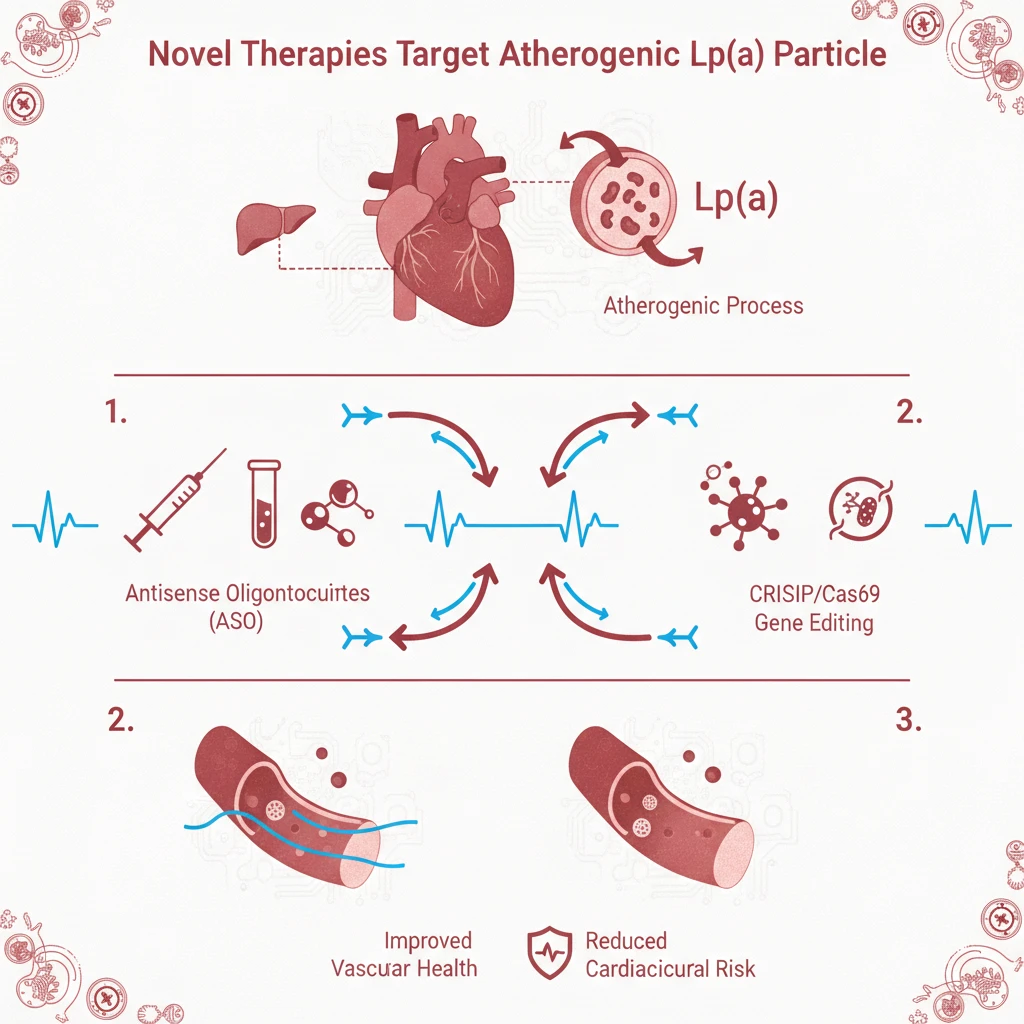

Atherosclerotic cardiovascular disease (ASCVD) remains a leading cause of morbidity and mortality, with traditional risk assessment often centered on LDL cholesterol. However, recent evidence highlights apoB as a more precise determinant of ASCVD risk, prompting a re-evaluation of therapeutic targets. Novel therapies are now emerging that specifically address atherogenic lipoprotein(a) (Lp(a)) particles, offering new avenues for risk reduction beyond conventional lipid-lowering strategies.1
Apolipoprotein B (apoB) serves as the structural protein for all atherogenic lipoproteins, encompassing very-low-density lipoproteins (VLDLs), intermediate-density lipoproteins (IDLs), low-density lipoproteins (LDLs), chylomicron remnants, and lipoprotein(a) (Lp(a)). The presence of a single apoB molecule within each of these lipoprotein particles means that plasma apoB concentration directly correlates with the total number of circulating atherogenic particles. This mechanistic understanding is supported by genetic, epidemiological, and randomized clinical trial evidence, which consistently demonstrates that apoB is a more accurate causal determinant of atherosclerotic cardiovascular disease (ASCVD) risk on a per-particle basis compared to LDL cholesterol alone. Beyond its role in atherosclerosis, apoB48-containing chylomicrons are central to severe hypertriglyceridemia and contribute significantly to the risk of triglyceride-mediated acute pancreatitis.1-3
Established therapies that reduce major cardiovascular events, such as statins, ezetimibe, proprotein convertase subtilisin/kexin type 9 (PCSK9) inhibitors, and bempedoic acid, primarily function by enhancing LDL receptor-mediated clearance of apoB-containing particles. These agents effectively lower LDL cholesterol and, consequently, the number of circulating atherogenic particles. However, other available therapies reduce LDL cholesterol and apoB through LDL receptor-independent mechanisms. For instance, lomitapide, an inhibitor of microsomal triglyceride transfer protein (MTP), and evinacumab, a monoclonal antibody targeting angiopoietin-like protein 3 (ANGPTL3), reduce LDL cholesterol in homozygous familial hypercholesterolemia by decreasing triglyceride-rich apoB-containing lipoproteins upstream of LDL particle formation. This diverse array of mechanisms underscores the complexity of lipoprotein metabolism and the varied approaches to its modulation.1-3
Emerging Therapeutic Strategies for Lp(a) and ApoB Modulation
The therapeutic landscape for modulating apoB-containing lipoproteins is expanding significantly with the advent of novel strategies. These emerging approaches target various pathways, including the angiopoietin-like protein axis, apo CIII, Lp(a), cholesteryl ester transfer protein (CETP), hepatic lipid flux, and incretin signaling. These targets represent distinct points of intervention within the complex cascade of lipoprotein synthesis, assembly, and clearance.1-3
Specifically, the focus on Lp(a) is gaining prominence due to its independent causal role in ASCVD, which is not adequately addressed by many conventional lipid-lowering therapies. Lp(a) is a unique lipoprotein particle structurally similar to LDL but with an additional glycoprotein, apolipoprotein(a) (apo(a)), covalently linked to apoB-100. Elevated Lp(a) levels are largely genetically determined and are associated with an increased risk of myocardial infarction, stroke, and aortic valve stenosis. Current therapeutic options have limited impact on Lp(a) levels, making novel targeted therapies particularly relevant.1-3
One area of intense research involves gene-targeted approaches. These include gene editing, epigenome editing, small interfering RNA (siRNA), and antisense oligonucleotides (ASOs). These advanced molecular techniques offer the potential for durable and highly specific modulation of apoB-containing lipoproteins, including Lp(a). For example, ASOs and siRNAs can specifically reduce the hepatic production of apo(a), thereby lowering circulating Lp(a) levels. These approaches are designed to interfere with the synthesis of key proteins involved in lipoprotein metabolism at the genetic or post-transcriptional level, offering a high degree of specificity and potentially long-lasting effects. The development of such therapies represents a significant advancement over traditional pharmacological interventions, which often require daily administration.1-3
In addition to gene-targeted therapies, novel oral and injectable agents are under development, alongside combination therapies. These agents aim to provide additional options for patients who do not achieve adequate lipid control with existing treatments or who have specific lipoprotein abnormalities, such as elevated Lp(a). The combination of different therapeutic modalities, each acting on a distinct mechanism, holds promise for achieving more comprehensive and sustained reductions in atherogenic particle numbers. For instance, a combination of an LDL receptor-enhancing agent with an Lp(a)-lowering therapy could provide synergistic benefits for patients with both elevated LDL cholesterol and Lp(a).1-3
The shift from an LDL cholesterol-centric to an apoB-centric framework represents a biologically integrated strategy. This framework aims to reduce both atherosclerotic cardiovascular disease and triglyceride-mediated pancreatitis risk by focusing on the total number of atherogenic particles rather than just the cholesterol content within LDL particles. This broader perspective acknowledges that all apoB-containing lipoproteins contribute to ASCVD risk, and a comprehensive approach to their modulation is necessary for optimal patient outcomes. The recognition of apoB as a more accurate causal determinant of ASCVD risk provides a strong rationale for developing and implementing therapies that directly target the production or clearance of these particles.1-3
One specific example of an emerging therapeutic strategy is the targeting of cholesteryl ester transfer protein (CETP). Obicetrapib, a novel CETP inhibitor, is currently under investigation. CETP inhibitors work by increasing HDL cholesterol and decreasing LDL cholesterol, though their impact on Lp(a) can vary. While the primary effect of CETP inhibition is on HDL and LDL, some CETP inhibitors have shown modest reductions in Lp(a) levels. The precise role of obicetrapib in the broader context of apoB modulation and Lp(a) reduction is being evaluated in ongoing clinical trials.3
The development pipeline for Lp(a)-lowering therapies includes agents like pelacarsen, an antisense oligonucleotide that targets apo(a) mRNA, leading to reduced hepatic production of apo(a) and consequently lower Lp(a) levels. Another example is olpasiran, a small interfering RNA (siRNA) that also targets apo(a) mRNA. These agents have demonstrated substantial reductions in Lp(a) levels in clinical trials, offering a direct and potent approach to addressing this specific risk factor. The long-term cardiovascular outcome trials for these agents are highly anticipated, as they will provide definitive evidence of their clinical benefit in reducing ASCVD events.1,2
The comprehensive approach to apoB modulation also considers the role of hepatic lipid flux and incretin signaling. Modulating hepatic lipid flux can impact the synthesis and secretion of VLDLs, which are precursors to other atherogenic lipoproteins. Incretin signaling, particularly through glucagon-like peptide-1 (GLP-1) receptor agonists, has shown benefits in cardiovascular outcomes, partly through effects on lipid metabolism and inflammation, although their direct impact on Lp(a) is less pronounced compared to gene-targeted therapies. These diverse mechanisms highlight the multifaceted nature of lipoprotein metabolism and the potential for combination therapies to achieve optimal lipid profiles and reduce cardiovascular risk.1-3
The transition to an apoB-centric framework is not merely a theoretical shift but has practical implications for clinical practice. Measuring plasma apoB concentration provides a direct count of atherogenic particles, offering a more comprehensive assessment of risk than LDL cholesterol alone, especially in individuals with discordant LDL-C and apoB levels, or those with elevated Lp(a). This framework encourages clinicians to consider the total burden of atherogenic particles when evaluating a patient's cardiovascular risk and selecting appropriate therapeutic interventions. The availability of novel therapies specifically targeting Lp(a) will further empower clinicians to address this often-overlooked risk factor, particularly in patients with persistently high Lp(a) levels despite optimal management of other lipid parameters.1-3
The ongoing research and development in this field are expected to broaden opportunities for durable apoB modulation. This includes the potential for gene editing technologies to offer permanent solutions for genetic dyslipidemias, including those leading to elevated Lp(a). While these technologies are still in early stages of clinical translation for lipid disorders, their long-term promise for sustained therapeutic effects is considerable. The continued exploration of novel oral and injectable agents, along with optimized combination strategies, will ensure that a wide range of therapeutic options are available to address the diverse needs of patients with dyslipidemia and high ASCVD risk.1-3
To further explore foundational cardiology, including dyslipidemia and ASCVD risk management, we recommend the comprehensive Oxford Handbook of Cardiology.
The emerging focus on apoB as a superior marker for atherosclerotic cardiovascular disease risk, moving beyond LDL cholesterol, presents a significant recalibration for clinical practice. GPs and specialists must now consider plasma apoB concentration as a more accurate reflection of circulating atherogenic particles, including Lp(a). This shift necessitates a re-evaluation of current risk assessment protocols, particularly for patients with discordant LDL-C and apoB levels, or those with a family history of premature ASCVD where Lp(a) may play an unaddressed role. The availability of therapies specifically targeting Lp(a), such as pelacarsen and olpasiran, will require clinicians to actively screen for elevated Lp(a) levels, a practice not yet universally adopted, to identify patients who could benefit from these novel interventions.
For the pharmaceutical industry, the emphasis on apoB and Lp(a) opens new market segments and therapeutic development pathways. Companies investing in gene-targeted approaches, such as antisense oligonucleotides and small interfering RNAs, are positioning themselves at the forefront of precision medicine in cardiology. The long-term durability and specificity of these therapies could offer a competitive advantage over existing treatments, potentially leading to a shift in prescribing patterns. However, the cost-effectiveness and accessibility of these advanced therapies will be critical considerations for widespread adoption, particularly in healthcare systems facing budget constraints.
Patients with elevated Lp(a) currently have limited therapeutic options, often relying on aggressive management of other risk factors. The prospect of targeted Lp(a)-lowering therapies offers a tangible hope for reducing their cardiovascular risk, which is often genetically predetermined and resistant to conventional lipid-lowering drugs. This development underscores the importance of patient education regarding Lp(a) as an independent risk factor and the potential benefits of novel treatments. As these therapies progress through clinical trials and become available, patients and their clinicians will need to engage in informed discussions about the benefits, risks, and long-term implications of these innovative approaches to cardiovascular disease prevention.
- The Pivot The focus in ASCVD risk assessment and management is transitioning from an LDL cholesterol-centric framework to an apoB-centric framework, recognizing apoB as a more accurate causal determinant of risk.
- The Data Plasma apoB concentration reflects the number of circulating atherogenic particles, including Lp(a), with each particle containing a single apoB molecule.
- The Action Clinicians should consider the broader landscape of apoB-containing lipoproteins, including Lp(a), when assessing ASCVD risk and evaluating emerging therapeutic options.
ART-2026-36
·09/26
Drafted with AI assistance, reviewed and approved by the editorial team. This publication is intended for healthcare professionals, researchers, and life science industry professionals. Content is provided for informational and educational purposes only and does not constitute medical advice.

Thirty years in health journalism, the last fifteen in life sciences. I have reported from every major medical congress and watched blockbuster drugs get revised after approval. I cover what the data says.
Cite This Article
Carter J, Lopes W. Novel therapies target atherogenic lp(a) particle. The Life Science Feed. Published June 28, 2026. Updated September 17, 2026. Accessed September 27, 2026. https://thelifesciencefeed.com/cardiology/coronary-artery-disease/research/novel-therapies-target-atherogenic-lpa-particle.
Editorial & AI Standards
All content is researched from peer-reviewed, open-access sources: published trial data, clinical guidelines, and regulatory filings. AI tools are used solely to structure and summarise that evidence; no AI-generated conclusions appear without editor verification against the primary source.
Every article is reviewed by a named editor before publication. Source citations are listed in the References section. This content does not represent the views of any pharmaceutical company, medical device manufacturer, or healthcare provider.
Licence & Rights
© 2026 The Life Science Feed. All rights reserved. Unless otherwise indicated, all content is the property of The Life Science Feed and may not be reproduced, distributed, or transmitted in any form or by any means without prior written permission.
Medical Disclaimer
The information provided on The Life Science Feed is for educational and informational purposes only. It is not intended as a substitute for professional medical advice, diagnosis, or treatment. Always seek the advice of your physician or other qualified healthcare provider regarding any medical condition or treatment decision. Never disregard professional medical advice or delay in seeking it because of something you have read on this website.
References
1. Gaudet D, Larouche M, Raal FJ. New and Emerging Therapeutic Targets for ApoB-Containing Particles Lowering. Circ Res 2026;42241517. doi:10.1161/circresaha.126.327270
2. Fancher A, Lopez-Candales A, Sawalha K. Statins, LDL-C and Beyond: A Contemporary Review of Atherosclerotic Cardiovascular Risk Assessment and Management. J Lipid Atheroscler 2026;42211141. doi:10.12997/jla.2026.15.2.216
3. Maalizadeh K, Parikh MA, Hunt CR. Obicetrapib: A Novel Cholesterol Ester Transfer Protein Inhibitor. Cardiol Rev 2025;41430545. doi:10.1097/crd.0000000000001136







