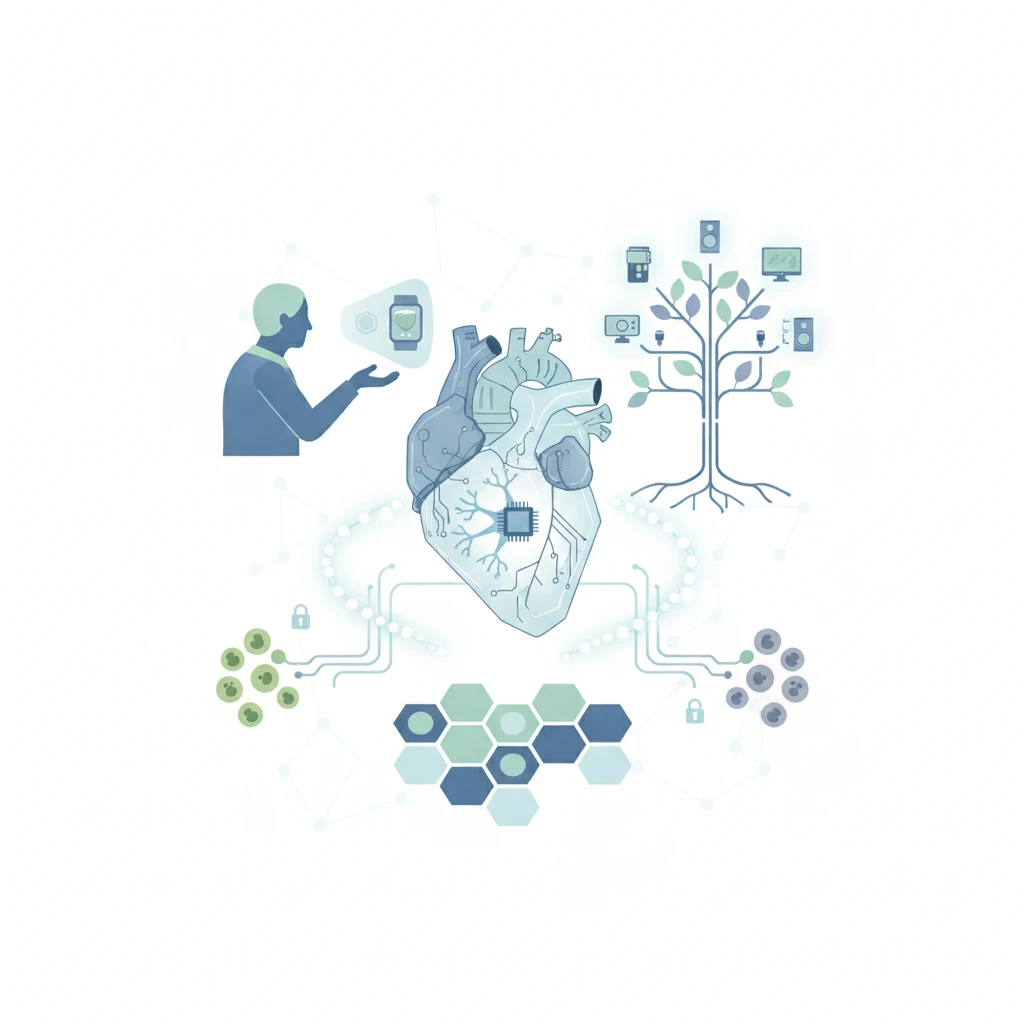

The integration of emotion-recognition-enabled smart care devices into home-based rehabilitation and elderly care settings presents a clinical dilemma regarding user acceptance and ethical considerations. A recent cross-sectional survey indicates that while acceptance is favorable, it is also conditional, highlighting specific design principles for successful adoption.1
Emotion-recognition-enabled smart care devices are increasingly proposed for home-based rehabilitation and elderly care. However, evidence on prospective user and family caregiver acceptance remains limited.1-3 A cross-sectional online survey investigated public attitudes, concerns, interaction preferences, and design expectations regarding such devices.1 The study included 506 adults in China, with respondents answering from either a prospective individual-user perspective (n=339) or a family caregiver perspective (n=167).1
Study Design and Findings
The survey employed descriptive statistics, Top-2 Box summaries, and visual comparisons to analyze acceptance, scenario priorities, sensing preferences, data-sharing attitudes, and perceived device roles.1 Overall, respondents showed favorable but conditional acceptance of these devices.1 Privacy transparency, reliability, and recognition accuracy emerged as key adoption conditions.1 Concerns about emotional data misuse and machine accuracy remained salient among participants.1
Participants prioritized home-based rehabilitation and health management scenarios.1 They preferred wearable physiological sensing over camera-based monitoring and favored human-in-the-loop interaction over fully automated responses.1 Family caregivers showed descriptively stronger endorsement than prospective individual users on several selected items, although the overall pattern was broadly consistent across groups.1 This consistency should not be interpreted as evidence of statistically significant subgroup differences.1
The findings suggest that emotion-recognition-enabled smart care devices may be more acceptable when designed around four principles: safety first, human-in-the-loop control, low-intrusion sensing, and bounded empathy.1
Limitations
The sample consisted mainly of online adult respondents rather than actual older adult users.1 Therefore, the findings should be interpreted as exploratory evidence on prospective acceptance rather than as direct evidence of real-world adoption.1
The study's reliance on self-reported data from an online survey also introduces potential biases, such as social desirability bias, where respondents may report socially acceptable attitudes rather than their true feelings. Furthermore, the cross-sectional design limits the ability to infer causality or track changes in acceptance over time. Longitudinal studies would be beneficial to understand how attitudes evolve with increased exposure to and experience with smart care devices.
Clinical Implications and Future Directions
The conditional acceptance observed in this study provides crucial insights for the development and implementation of emotion-recognition-enabled smart care devices in clinical and home care settings. The emphasis on "safety first" underscores the need for robust cybersecurity measures and clear ethical guidelines to prevent emotional data misuse. Healthcare providers and device manufacturers must prioritize transparent communication regarding data collection, storage, and sharing protocols to build trust among users and caregivers.
The preference for "human-in-the-loop control" highlights the importance of designing devices that augment, rather than replace, human interaction and decision-making. Clinicians should be trained to integrate these devices into existing care pathways, leveraging their capabilities to provide timely alerts or support, while maintaining their professional oversight. This approach ensures that the technology serves as a tool to enhance care quality and efficiency, rather than creating a sense of detachment or over-reliance on automated systems.
The finding that "low-intrusion sensing" is preferred, particularly wearable physiological sensing over camera-based monitoring, has significant implications for device design. Future iterations should explore and prioritize less intrusive methods of data collection that respect user privacy and comfort. This could include advancements in passive sensing technologies or multimodal approaches that combine various low-intrusion sensors to achieve accurate emotion recognition without compromising personal space.
Finally, the concept of "bounded empathy" suggests that while these devices can offer emotional support, their role should be clearly defined and not over-promised. Clinicians should educate patients and caregivers about the capabilities and limitations of these devices, managing expectations to prevent disillusionment. The technology should complement human empathy and care, providing objective data and timely interventions, rather than attempting to replicate the complex nuances of human emotional connection.
Future research should expand beyond prospective acceptance to include pilot studies with actual older adult users and their caregivers in real-world settings. This would provide valuable ecological validity and identify practical challenges and facilitators to adoption. Furthermore, comparative studies across different cultural contexts would be beneficial, given the potential variations in attitudes towards technology, privacy, and elderly care. Investigating the impact of different levels of technological literacy and prior experience with smart devices on acceptance would also offer a more nuanced understanding of user perspectives. Ultimately, the successful integration of emotion-recognition-enabled smart care devices hinges on a user-centric design approach that prioritizes ethical considerations, transparency, and the enhancement of human-centered care.
The conditional acceptance of emotion-recognition-enabled smart care devices underscores a critical point for clinicians and developers: technology alone is insufficient. The emphasis on privacy transparency, reliability, and accuracy by prospective users and caregivers indicates that trust is paramount. For general practitioners, understanding these patient and caregiver priorities is essential when discussing the potential role of such devices in home care. Recommending devices that integrate human oversight and low-intrusion sensing will likely foster greater patient engagement and adherence, aligning with the principles of person-centered communication about medication adherence and overall care.
The industry must recognize that a 'safety first' approach, coupled with 'human-in-the-loop control,' is not merely a design preference but a prerequisite for market penetration and ethical deployment. Devices that prioritize camera-based monitoring or fully automated responses without human intervention are unlikely to gain widespread acceptance. This suggests a need for developers to pivot towards solutions that augment, rather than replace, human care, focusing on wearable physiological sensing and clear data-sharing protocols. Failure to address these foundational concerns could lead to significant barriers to adoption, despite the potential benefits these technologies offer.
Ultimately, the evidence points to a future where compassion in care, even when mediated by technology, emerges from the conditions we work in. For patients and their families, this means devices that respect their autonomy, protect their data, and provide reliable support without feeling intrusive. Clinicians should advocate for and recommend technologies that embody these principles, ensuring that innovation truly serves the patient's best interest rather than merely offering technological novelty.
- The Pivot Public attitudes towards emotion-recognition-enabled smart care devices are conditionally favorable, not universally accepted.
- The Data Key adoption conditions include privacy transparency, reliability, and recognition accuracy.1
- The Action Device design should prioritize safety, human-in-the-loop control, low-intrusion sensing, and bounded empathy to enhance acceptance.1
ART-2026-15
·09/26
Drafted with AI assistance, reviewed and approved by the editorial team. This publication is intended for healthcare professionals, researchers, and life science industry professionals. Content is provided for informational and educational purposes only and does not constitute medical advice.

Thirty years in health journalism, the last fifteen in life sciences. I have reported from every major medical congress and watched blockbuster drugs get revised after approval. I cover what the data says.
Cite This Article
Carter J, Voss M. Conditional acceptance of smart care devices for elderly care. The Life Science Feed. Published June 21, 2026. Updated September 16, 2026. Accessed September 25, 2026. https://thelifesciencefeed.com/healthcare-sys-and-biz/health-policy/insights/conditional-acceptance-of-smart-care-devices-for-elderly-care.
Editorial & AI Standards
All content is researched from peer-reviewed, open-access sources: published trial data, clinical guidelines, and regulatory filings. AI tools are used solely to structure and summarise that evidence; no AI-generated conclusions appear without editor verification against the primary source.
Every article is reviewed by a named editor before publication. Source citations are listed in the References section. This content does not represent the views of any pharmaceutical company, medical device manufacturer, or healthcare provider.
Licence & Rights
© 2026 The Life Science Feed. All rights reserved. Unless otherwise indicated, all content is the property of The Life Science Feed and may not be reproduced, distributed, or transmitted in any form or by any means without prior written permission.
Medical Disclaimer
The information provided on The Life Science Feed is for educational and informational purposes only. It is not intended as a substitute for professional medical advice, diagnosis, or treatment. Always seek the advice of your physician or other qualified healthcare provider regarding any medical condition or treatment decision. Never disregard professional medical advice or delay in seeking it because of something you have read on this website.
References
1. Yi X, Song X, Jin J. Conditional acceptance of emotion-recognition-enabled smart care devices for home-based rehabilitation and elderly care: a dual-perspective survey of prospective users and family caregivers. Front Public Health. 2026;14:42317971. doi:10.3389/fpubh.2026.1849389
2. Turner C. Compassion emerges from the conditions we work in. BMJ. 2026;372:42276561.
3. Kudusova T, Devold HM, Lilleheim NE. Patient Engagement in Person-Centered Communication About Medication Adherence: Perspectives From Patients, Next of Kin, and Healthcare Professionals. Patient Prefer Adherence. 2026;20:42266227. doi:10.2147/ppa.s602451