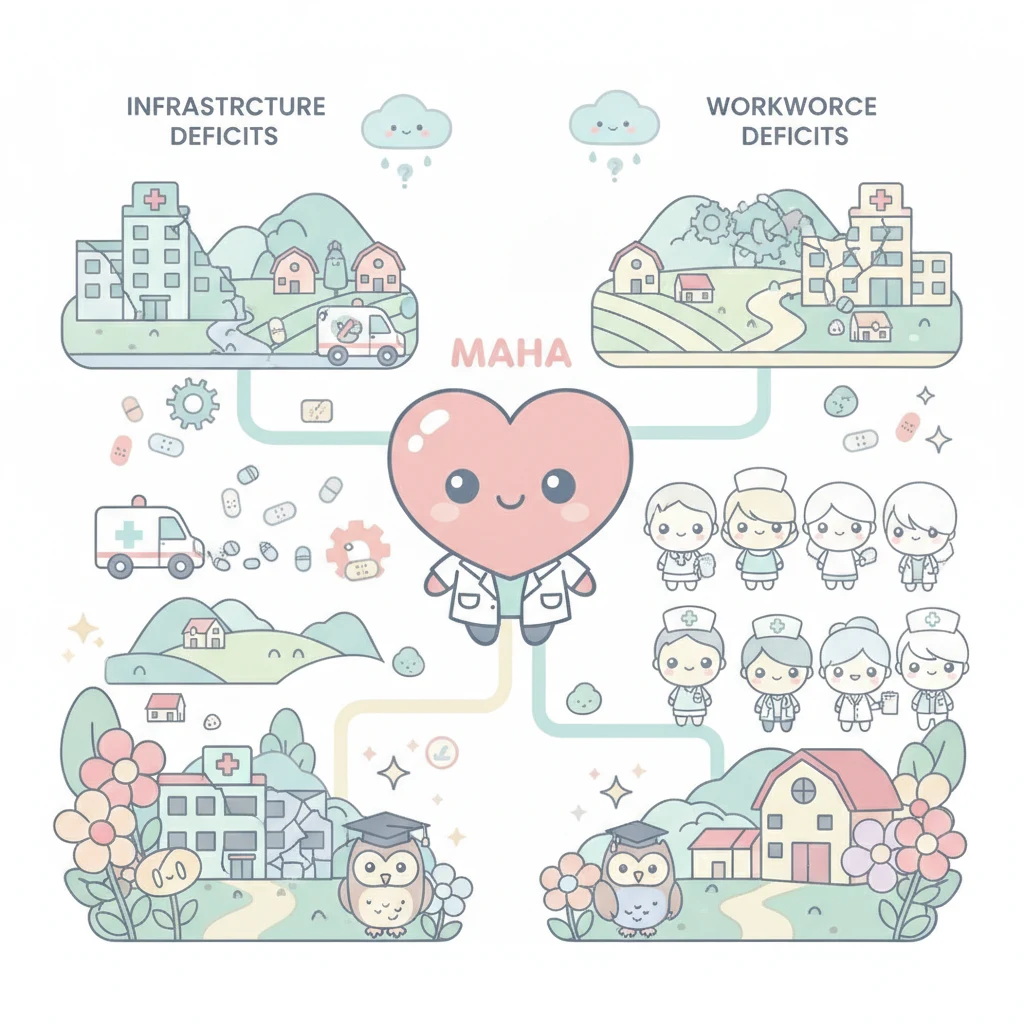

The diagnosis and management of microangiopathic hemolytic anemia (MAHA) in rural American healthcare settings face significant systemic challenges. These include limitations in diagnostic infrastructure, specialist availability, and patient transfer logistics. The immediate takeaway is that current rural health systems are largely unprepared for the complex, time-sensitive demands of MAHA, necessitating substantial investment in both human capital and technological resources.
Microangiopathic hemolytic anemia (MAHA) is a syndrome characterized by non-immune hemolytic anemia, thrombocytopenia, and schistocytes on peripheral blood smear. It is a manifestation of various underlying conditions, including thrombotic thrombocytopenic purpura (TTP), hemolytic uremic syndrome (HUS), disseminated intravascular coagulation (DIC), severe hypertension, preeclampsia/eclampsia, and certain drug toxicities or malignancies. The rapid progression and potential for multi-organ failure in conditions like TTP necessitate prompt diagnosis and initiation of specific therapies, such as plasma exchange (PLEX). Delays in diagnosis or treatment can lead to irreversible organ damage and increased mortality. The ability of rural healthcare systems to manage such time-sensitive and complex conditions is a critical concern, given the established disparities in healthcare access and resources between urban and rural areas. These disparities encompass a range of factors, including the availability of specialized medical personnel, diagnostic capabilities, and the infrastructure for advanced therapeutic interventions.
Rural populations in the United States often experience poorer health outcomes compared to their urban counterparts, attributed to factors such as lower socioeconomic status, higher rates of chronic diseases, and reduced access to healthcare facilities. The geographic isolation of many rural communities exacerbates these issues, creating barriers to accessing specialized medical care. For a condition like MAHA, which requires a multidisciplinary approach involving hematologists, nephrologists, and critical care specialists, the absence of such expertise in rural hospitals poses a substantial challenge. Furthermore, the diagnostic pathway for MAHA often involves a series of laboratory tests, some of which are not routinely available in smaller, rural hospital laboratories. These include ADAMTS13 activity levels for suspected TTP, complement pathway assays for atypical HUS, and advanced coagulation studies for DIC. The reliance on send-out labs can introduce significant delays, which are particularly detrimental in conditions where every hour counts.
Challenges in Rural MAHA Management
The primary challenges for managing MAHA in rural America can be categorized into diagnostic limitations, workforce deficits, and logistical hurdles. From a diagnostic perspective, the initial recognition of MAHA relies on a peripheral blood smear to identify schistocytes. While this is a fundamental laboratory skill, the consistent availability of experienced laboratory technicians and pathologists capable of accurately interpreting blood smears may vary in rural settings. Beyond the initial smear, differentiating the underlying cause of MAHA is crucial for guiding therapy. For example, distinguishing TTP from severe sepsis or other forms of MAHA is paramount, as PLEX is indicated for TTP but may be harmful or ineffective in other conditions. The definitive diagnosis of TTP requires the measurement of ADAMTS13 activity. A severe deficiency (typically <10% of normal) is highly suggestive of TTP. However, ADAMTS13 testing is a specialized assay, often performed only in reference laboratories, leading to turnaround times that can range from several days to over a week. In the interim, clinicians must often initiate empiric PLEX based on clinical suspicion, a decision that carries its own risks and resource implications.
Workforce deficits represent another major impediment. Rural areas face chronic shortages of physicians, particularly specialists. The National Rural Health Association reports that only 10% of physicians practice in rural areas, despite 20% of the US population residing there. This disparity is even more pronounced for subspecialties like hematology. A rural hospital may have no on-site hematologist, requiring consultations to be conducted remotely or necessitating patient transfer. Telemedicine offers a partial solution, allowing remote specialist consultation, but it does not address the need for hands-on procedures or immediate interpretation of complex diagnostic data. The absence of critical care specialists and trained nursing staff in smaller rural hospitals can also compromise the management of MAHA patients, who often require intensive monitoring and support for organ dysfunction.
Logistical hurdles further complicate MAHA management. Patient transfer to a tertiary care center with the necessary resources (e.g., PLEX capabilities, hematology consultation, intensive care unit beds) is frequently required. This process involves securing an accepting facility, arranging medical transport (which can be costly and time-consuming, especially for air ambulance services), and ensuring continuity of care during transit. Delays in transfer can directly impact patient outcomes, particularly for conditions like TTP where PLEX should ideally be initiated within 24 hours of diagnosis. The availability of PLEX equipment and trained personnel is another significant barrier. PLEX is a complex procedure requiring specialized apheresis machines and trained operators, typically found only in larger academic or regional medical centers. Rural hospitals rarely possess these capabilities, making transfer an almost universal necessity for TTP patients.
The economic impact of MAHA on rural health systems is also considerable. The costs associated with prolonged hospitalization, intensive care, PLEX treatments, and potential long-term complications can be substantial. For hospitals operating on thin margins, as many rural hospitals do, managing such high-acuity, resource-intensive cases can strain financial resources. Furthermore, the lack of local expertise may lead to inappropriate or delayed treatments, increasing the overall cost of care and potentially leading to poorer patient outcomes. The reliance on empiric treatment without definitive diagnostic confirmation also carries the risk of unnecessary interventions and their associated complications.
Addressing these challenges requires a multifaceted approach. Investment in rural laboratory infrastructure, including point-of-care testing for basic MAHA markers and expedited pathways for sending out specialized tests, could reduce diagnostic delays. Expanding telemedicine networks to include hematology and critical care specialists could provide crucial consultative support. However, telemedicine cannot fully substitute for on-site expertise, especially for procedures like PLEX. Therefore, developing regional transfer protocols and ensuring efficient, rapid transport mechanisms are essential. Policy initiatives that incentivize specialists to practice in rural areas, such as loan repayment programs or enhanced reimbursement rates, could help mitigate workforce shortages. Training rural general practitioners and emergency department physicians in the early recognition and initial stabilization of MAHA is also critical, as they are often the first point of contact for these patients. Educational programs focusing on the differential diagnosis of MAHA and the importance of early intervention could improve initial management. Finally, establishing formal partnerships between rural hospitals and tertiary care centers could streamline patient transfers and facilitate shared learning and resource utilization, creating a more robust system for managing complex conditions like MAHA across the rural-urban divide.
The current state of rural healthcare infrastructure presents a stark reality for managing microangiopathic hemolytic anemia. Clinicians in these settings are often placed in an unenviable position, tasked with identifying a rare, rapidly progressive, and life-threatening condition with limited diagnostic tools and specialist support. The imperative is clear: maintain a high index of suspicion for MAHA in any patient presenting with unexplained thrombocytopenia and hemolytic anemia, and initiate immediate discussions for transfer to a tertiary center. Waiting for definitive ADAMTS13 results before transfer for suspected TTP is a dangerous gamble that can cost lives; empiric PLEX initiation should be considered based on clinical suspicion and local protocols.
For the broader healthcare system, this situation highlights the persistent and widening gap in equitable access to advanced medical care. Pharmaceutical companies developing new therapies for MAHA-related conditions, such as complement inhibitors for atypical HUS or novel TTP treatments, must consider the logistical challenges of their deployment in rural areas. A highly effective therapy is only as good as a patient's ability to access it. This necessitates not only drug availability but also the infrastructure for diagnosis, administration, and monitoring. Guideline bodies like the American Society of Hematology should continue to emphasize rapid diagnostic algorithms and transfer protocols, providing clear, actionable guidance for resource-limited environments.
Patients in rural communities bear the brunt of these systemic deficiencies. A diagnosis of MAHA, particularly TTP, requires immediate, specialized intervention. The delay introduced by geographic distance, lack of local expertise, and transfer logistics can significantly worsen prognosis. This underscores the need for policy makers to prioritize investment in rural healthcare, not merely as a social good, but as a critical component of national health security. Without targeted funding for infrastructure, workforce development, and telemedicine expansion, rural America will continue to be a postcode lottery for time-sensitive, complex medical emergencies like MAHA.
- The Pivot Rural healthcare infrastructure and workforce models are currently inadequate for the timely diagnosis and comprehensive management of MAHA.
- The Data Access to critical diagnostic tools, such as advanced laboratory testing and imaging, is significantly reduced in rural areas, impacting MAHA detection.
- The Action Clinicians in rural settings must maintain a high index of suspicion for MAHA and establish clear protocols for rapid transfer to tertiary care centers.
ART-2026-35
·09/26
Drafted with AI assistance, reviewed and approved by the editorial team. This publication is intended for healthcare professionals, researchers, and life science industry professionals. Content is provided for informational and educational purposes only and does not constitute medical advice.

I write about AI in healthcare: the validation studies, the deployment failures, and the regulatory questions without answers yet. Based in San Francisco, close to where the technology is built.
Cite This Article
Chen L, Lopes W. MAHA faces rural health gaps: infrastructure and workforce deficits. The Life Science Feed. Published June 28, 2026. Updated September 15, 2026. Accessed September 27, 2026. https://thelifesciencefeed.com/healthcare-sys-and-biz/health-policy/policy/maha-faces-rural-health-gaps-infrastructure-and-workforce-deficits.
Editorial & AI Standards
All content is researched from peer-reviewed, open-access sources: published trial data, clinical guidelines, and regulatory filings. AI tools are used solely to structure and summarise that evidence; no AI-generated conclusions appear without editor verification against the primary source.
Every article is reviewed by a named editor before publication. Source citations are listed in the References section. This content does not represent the views of any pharmaceutical company, medical device manufacturer, or healthcare provider.
Licence & Rights
© 2026 The Life Science Feed. All rights reserved. Unless otherwise indicated, all content is the property of The Life Science Feed and may not be reproduced, distributed, or transmitted in any form or by any means without prior written permission.
Medical Disclaimer
The information provided on The Life Science Feed is for educational and informational purposes only. It is not intended as a substitute for professional medical advice, diagnosis, or treatment. Always seek the advice of your physician or other qualified healthcare provider regarding any medical condition or treatment decision. Never disregard professional medical advice or delay in seeking it because of something you have read on this website.
References
1. Merrill SA, Yu S, Webber SE, Gotses J, Platt EL, Arays R, Shmookler AD. The TMA team and TTP pathway improved outcomes in a cohort with thrombotic thrombocytopenic purpura. PLoS One. 2025;20(6):e0325417. doi:10.1371/journal.pone.0325417
2. Ng JY, Fernando S, Phipps L, Wong C, Fogo K, Crameri D, Lenton DS. Therapeutic apheresis in rural and regional settings: a single-centre 5-year experience. Blood. 2023;142(Supplement 1):3693. doi:10.1182/blood-2023-177897
3. Chiasakul T, Cuker A. Clinical and laboratory diagnosis of TTP: an integrated approach. Hematology Am Soc Hematol Educ Program. 2018;2018(1):530-538. doi:10.1182/asheducation-2018.1.530
4. Zheng XL, Vesely SK, Cataland SR, et al. ISTH guidelines for the diagnosis of thrombotic thrombocytopenic purpura. J Thromb Haemost. 2020;18(10):2486-2495. doi:10.1111/jth.15010
5. American Society of Hematology. Crossing the Doctor Desert. ASH Clinical News. 2022. Available at: https://ashpublications.org/ashclinicalnews/news/1479/Crossing-the-Doctor-Desert