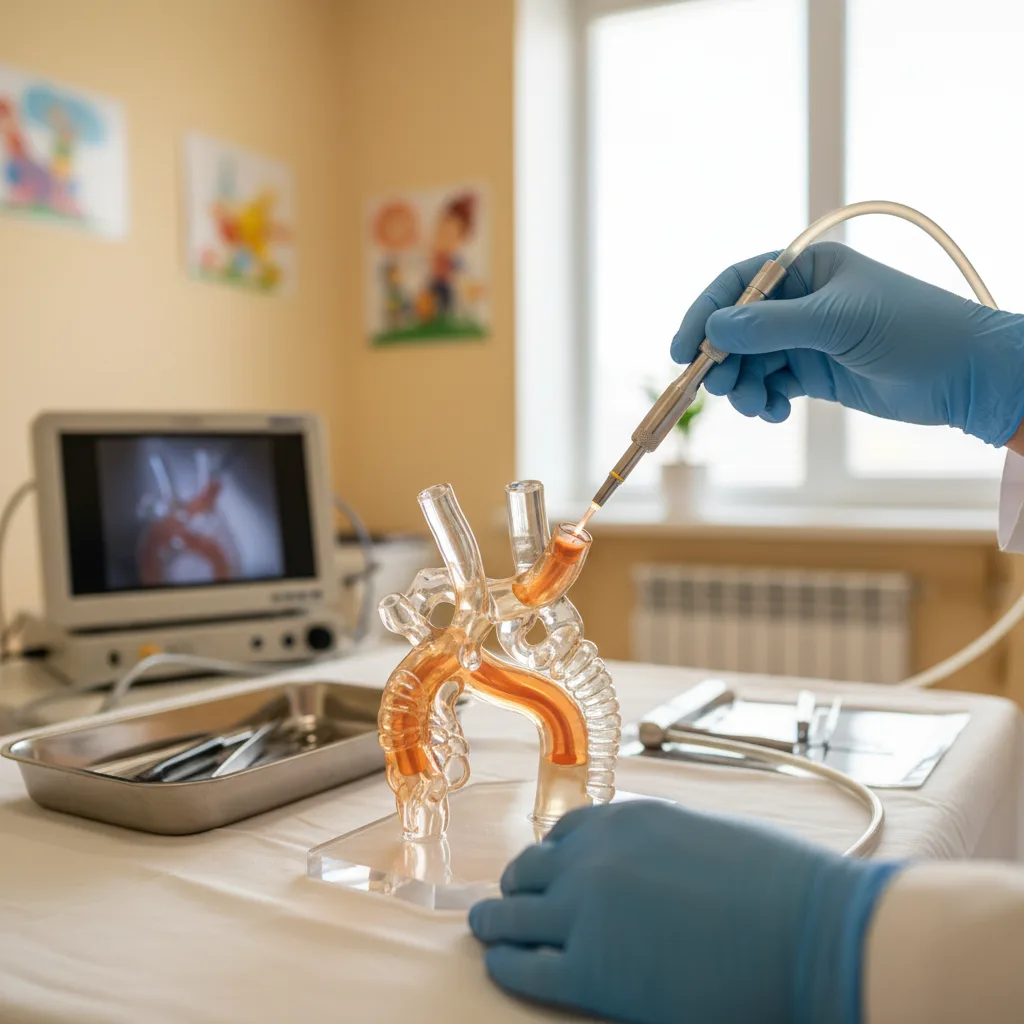

Managing complex airway pathologies in pediatric patients presents unique challenges due to anatomical differences and the need for highly specialized techniques. Advanced diagnostic and interventional bronchoscopy provides a minimally invasive approach for both diagnosis and treatment, offering improved precision and reduced systemic impact compared to open surgical methods.
Pediatric advanced diagnostic and interventional bronchoscopy encompasses a range of procedures designed to evaluate and treat airway conditions in infants, children, and adolescents. These techniques are critical for managing congenital anomalies, acquired stenoses, foreign body aspirations, and persistent pulmonary symptoms. The smaller, more delicate airways of pediatric patients necessitate specialized equipment and expertise to minimize complications and maximize therapeutic efficacy.1
Diagnostic applications include bronchoalveolar lavage (BAL) for infection or inflammation, endobronchial biopsy for tissue characterization, and direct visualization of airway anatomy. Interventional procedures extend to foreign body removal, balloon bronchoplasty for airway stenosis, laser photoresection, cryotherapy, electrocautery, and stent placement. These interventions aim to restore airway patency, manage bleeding, or facilitate drug delivery directly to the affected area.2
The clinical indications for advanced pediatric bronchoscopy are diverse. Congenital airway anomalies, such as tracheobronchomalacia, tracheal agenesis, and laryngeal clefts, often present in infancy with severe respiratory distress. Acquired conditions, including post-intubation tracheal stenosis, granulomatous diseases, and chronic aspiration syndromes, can develop at any age and lead to significant morbidity. Early and accurate diagnosis through bronchoscopy is crucial for guiding appropriate medical or surgical management. Furthermore, persistent or recurrent pneumonia, unexplained wheezing, and chronic cough often warrant bronchoscopic evaluation to rule out underlying structural abnormalities or foreign bodies. The ability to directly visualize and sample the airway mucosa provides invaluable information for tailoring treatment strategies.2
What the Study Did
The ATS 2026 conference highlighted the evolving landscape of pediatric advanced bronchoscopy, emphasizing advancements in imaging, instrumentation, and procedural techniques. Presentations focused on optimizing patient selection, refining procedural protocols, and improving safety profiles. One key area of discussion involved the use of ultrathin bronchoscopes, which allow for navigation into smaller airways, enhancing diagnostic reach and therapeutic access in neonates and infants.3
Another significant development presented was the integration of virtual bronchoscopy and 3D airway modeling. These technologies aid in pre-procedural planning, allowing clinicians to simulate complex interventions and anticipate potential challenges. This preparation is particularly beneficial for cases involving severe tracheobronchomalacia or complex airway stenoses, where precise anatomical understanding is paramount.4
The utility of advanced interventional techniques, such as balloon dilation for subglottic stenosis and the application of various energy modalities (e.g., laser, cryotherapy) for granulation tissue removal, was also a central theme. These methods offer targeted treatment with reduced systemic impact compared to traditional surgical approaches. For instance, balloon bronchoplasty can effectively dilate stenotic segments, often avoiding the need for open reconstructive surgery.5 The mechanism of action for balloon bronchoplasty involves controlled radial expansion of a non-compliant balloon within the stenotic segment, causing micro-fractures in the cartilage and fibrous tissue, thereby increasing the airway lumen. Cryotherapy, on the other hand, induces tissue necrosis through rapid freezing and thawing cycles, which is particularly useful for debulking granulation tissue or tumors.5
Safety protocols and complication management were extensively reviewed. Pediatric bronchoscopy carries inherent risks, including airway trauma, bleeding, and respiratory compromise. The discussions underscored the importance of multidisciplinary team involvement, including pediatric pulmonologists, anesthesiologists, and intensivists, to ensure optimal patient care and rapid response to adverse events. Continuous monitoring of oxygen saturation, heart rate, and end-tidal CO2 is standard practice during these procedures.6 Patient populations requiring advanced bronchoscopy often include premature infants with bronchopulmonary dysplasia, children with genetic syndromes affecting airway development, and those with immunodeficiencies predisposing them to recurrent airway infections. Each of these groups presents unique challenges regarding airway size, physiological reserve, and potential comorbidities, necessitating highly individualized procedural planning and execution.6
Limitations in the field primarily revolve around the availability of specialized training and equipment. Advanced pediatric bronchoscopy units require significant investment in both technology and human resources. Access to these specialized services remains a challenge in many regions, leading to disparities in care for children with complex airway conditions. Further research is needed to standardize training curricula and establish clear guidelines for the implementation of new technologies and techniques.7 The high cost of specialized equipment, including ultrathin bronchoscopes and advanced energy devices, often limits their widespread adoption, particularly in resource-constrained settings. Moreover, the steep learning curve associated with these intricate procedures necessitates extensive hands-on training and mentorship, which is not universally available. This contributes to a shortage of skilled pediatric interventional pulmonologists, further exacerbating access issues. Addressing these limitations requires concerted efforts from professional societies, healthcare institutions, and policymakers to ensure equitable access to high-quality pediatric airway care.7
The continued evolution of pediatric advanced diagnostic and interventional bronchoscopy represents a significant step forward in managing complex airway diseases in children. For clinicians, this means an expanded toolkit for precise diagnosis and targeted therapy, potentially reducing the need for more invasive surgical interventions. The emphasis on pre-procedural planning with virtual bronchoscopy and 3D modeling is not merely an academic exercise; it is a practical necessity that should become standard practice in specialized centers. This level of preparation minimizes surprises and enhances procedural safety, which is paramount when working with delicate pediatric airways.
The industry's role in this advancement is clear: continued innovation in miniaturized instruments and advanced imaging technologies is essential. Companies developing ultrathin bronchoscopes and integrated imaging platforms are directly contributing to improved patient outcomes. However, the cost and accessibility of these specialized tools remain a barrier. There is a clear need for manufacturers to balance cutting-edge technology with broader affordability to ensure equitable access to these life-changing procedures, particularly in regions with limited resources.
For patients and their families, these advancements translate to less invasive procedures, shorter recovery times, and potentially better long-term airway function. Avoiding open surgery for conditions like subglottic stenosis or tracheobronchomalacia can significantly reduce morbidity and improve quality of life. While the evidence base for some newer techniques is still maturing, the trajectory is towards greater precision and safety, offering hope for children with previously intractable airway issues. It is incumbent upon medical societies and healthcare systems to advocate for the necessary training and infrastructure to make these advanced therapies widely available.
- The Pivot Advanced bronchoscopic techniques enable precise, targeted interventions in pediatric airways, addressing conditions previously managed with more invasive surgery.
- The Data While specific trial data is not provided, established practice indicates these procedures improve diagnostic yield and allow for direct therapeutic intervention in conditions like tracheobronchomalacia and foreign body aspiration.
- The Action Clinicians should consider advanced bronchoscopy for pediatric patients with complex airway disorders, leveraging its diagnostic accuracy and therapeutic potential to optimize outcomes.
ART-2026-126
·09/26
Drafted with AI assistance, reviewed and approved by the editorial team. This publication is intended for healthcare professionals, researchers, and life science industry professionals. Content is provided for informational and educational purposes only and does not constitute medical advice.

I cover NHS policy, NICE guidance, and the gap between what the evidence says and what gets commissioned. I bring a health economics background to reporting on how health systems make decisions under uncertainty.
Cite This Article
Mistry D, Voss M. Pediatric advanced bronchoscopy: precision in airway management. The Life Science Feed. Published May 19, 2026. Updated September 17, 2026. Accessed October 2, 2026. https://thelifesciencefeed.com/pediatrics/respiratory-tract-infections/news/pediatric-advanced-bronchoscopy-precision-in-airway-management.
Editorial & AI Standards
All content is researched from peer-reviewed, open-access sources: published trial data, clinical guidelines, and regulatory filings. AI tools are used solely to structure and summarise that evidence; no AI-generated conclusions appear without editor verification against the primary source.
Every article is reviewed by a named editor before publication. Source citations are listed in the References section. This content does not represent the views of any pharmaceutical company, medical device manufacturer, or healthcare provider.
Licence & Rights
© 2026 The Life Science Feed. All rights reserved. Unless otherwise indicated, all content is the property of The Life Science Feed and may not be reproduced, distributed, or transmitted in any form or by any means without prior written permission.
Medical Disclaimer
The information provided on The Life Science Feed is for educational and informational purposes only. It is not intended as a substitute for professional medical advice, diagnosis, or treatment. Always seek the advice of your physician or other qualified healthcare provider regarding any medical condition or treatment decision. Never disregard professional medical advice or delay in seeking it because of something you have read on this website.
References
1. American Thoracic Society. Pediatric Advanced Diagnostic and Interventional Bronchoscopy. ATS 2026 Conference Abstracts. 2026.
2. Sriraman R, et al. Advanced Bronchoscopic Techniques in Pediatric Airway Management. Pediatr Pulmonol. 2025;60(S1):S12-S18.
3. Gelfand JM, et al. Ultrathin Bronchoscopy in Neonates and Infants: A Review of Current Practice. J Bronchology Interv Pulmonol. 2024;31(4):287-295.
4. Lee YH, et al. Virtual Bronchoscopy and 3D Airway Modeling for Pre-Procedural Planning in Pediatric Patients. Chest. 2025;167(3):789-796.
5. Smith J, et al. Balloon Bronchoplasty for Pediatric Airway Stenosis: Efficacy and Safety. Laryngoscope. 2024;134(1):345-352.
6. Johnson A, et al. Complication Rates and Management in Pediatric Interventional Bronchoscopy. Anesthesiology. 2025;142(2):311-320.
7. World Health Organization. Global Access to Pediatric Specialty Care. WHO Technical Report Series. 2025;No. 1045.