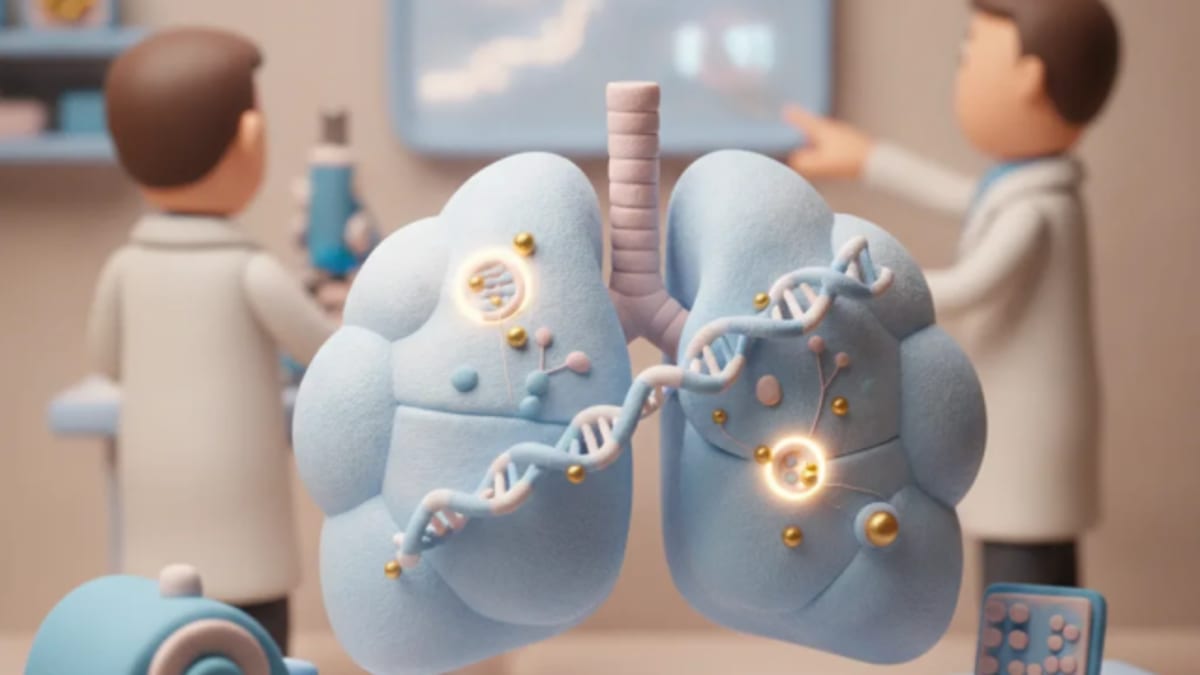

Sarcoidosis, a multisystem granulomatous disorder, often presents with varied clinical manifestations, making its diagnosis and management complex.1 Clinicians must navigate a spectrum of organ involvement and disease severity to initiate appropriate, timely interventions, balancing symptom control with long-term organ preservation.
Understanding Sarcoidosis: Current Perspectives
Sarcoidosis is characterised by the presence of non-caseating granulomas in affected organs, most commonly the lungs and lymph nodes, but also the skin, eyes, liver, heart, and nervous system.1 The aetiology remains unknown, though genetic predisposition and environmental triggers are implicated.2 Diagnosis requires a compatible clinical and radiological presentation, histological evidence of non-caseating granulomas, and the exclusion of other granulomatous diseases, such as tuberculosis, fungal infections, or berylliosis.1,3 The global incidence of sarcoidosis varies significantly, ranging from 1 to 40 cases per 100,000 people, with higher prevalence observed in certain populations, including African Americans and individuals of Northern European descent.2 This variability underscores the complex interplay of genetic and environmental factors in disease development. The disease can affect individuals of any age, but it most commonly presents in young to middle-aged adults, typically between 20 and 50 years old.2
Pulmonary sarcoidosis is the most frequent manifestation, affecting over 90% of patients.4 Chest radiography and high-resolution computed tomography (HRCT) are crucial for staging and monitoring lung involvement. The Löfgren syndrome, characterised by acute arthritis, erythema nodosum, and bilateral hilar lymphadenopathy, is a self-limiting form of sarcoidosis with a favourable prognosis, often not requiring systemic treatment.5 In contrast, chronic or progressive pulmonary sarcoidosis can lead to irreversible fibrosis and significant morbidity.4 The clinical presentation of pulmonary sarcoidosis can range from asymptomatic radiographic abnormalities to severe respiratory compromise, including dyspnoea, cough, and chest pain. The radiographic staging system for pulmonary sarcoidosis (Stages 0-IV) helps guide prognosis and management, with Stage I (bilateral hilar lymphadenopathy) often resolving spontaneously, and Stage IV (pulmonary fibrosis) indicating advanced, irreversible lung damage.4
Diagnostic Approaches and Management Strategies
Biopsy of an affected organ is often necessary to confirm the diagnosis. Bronchoscopy with transbronchial lung biopsy (TBLB) or endobronchial ultrasound-guided transbronchial needle aspiration (EBUS-TBNA) are common procedures for pulmonary involvement, yielding diagnostic rates of 50-90% and 80-90% respectively.6 These procedures allow for the direct visualisation of airways and lymph nodes, facilitating targeted tissue acquisition. The histological examination of biopsy samples reveals non-caseating granulomas, which are collections of macrophages, epithelioid cells, and multinucleated giant cells, without central necrosis.1 Serum angiotensin-converting enzyme (ACE) levels can be elevated in sarcoidosis, but their sensitivity and specificity are insufficient for diagnostic purposes alone; they are more useful for monitoring disease activity in some patients.7 Other diagnostic tools include gallium-67 scanning and fluorine-18 fluorodeoxyglucose (FDG) PET scanning, which can identify metabolically active granulomatous inflammation in various organs.1
Treatment decisions are guided by the severity of symptoms, the extent of organ involvement, and the risk of irreversible organ damage. Asymptomatic patients with stable disease, particularly those with Löfgren syndrome, may only require observation.5 Systemic corticosteroids, such as prednisone, are the cornerstone of treatment for symptomatic or progressive sarcoidosis, typically initiated at doses of 20-40 mg/day for several weeks, followed by a slow taper.8 The duration of treatment varies but often extends for 6-12 months or longer.8 Corticosteroids exert their therapeutic effect by suppressing the inflammatory response and reducing granuloma formation. However, long-term corticosteroid use is associated with significant side effects, including osteoporosis, diabetes, and cataracts, necessitating careful monitoring and consideration of steroid-sparing agents.
For patients who are intolerant to corticosteroids, require high doses for prolonged periods, or have refractory disease, steroid-sparing immunosuppressants are employed. Methotrexate, at doses of 10-15 mg/week, and azathioprine, at 1-2 mg/kg/day, are commonly used second-line agents.9 These agents may take several months to achieve their full therapeutic effect.9 Hydroxychloroquine can be effective for cutaneous sarcoidosis and hypercalcaemia.10 Tumour necrosis factor-alpha (TNF-α) inhibitors, such as infliximab or adalimumab, are reserved for severe, refractory sarcoidosis, particularly in cases of neurosarcoidosis or cardiac sarcoidosis, where other treatments have failed.11 These biologics target specific inflammatory pathways involved in granuloma formation, offering an alternative for patients unresponsive to conventional immunosuppression.
Cardiac sarcoidosis, though less common, carries a significant risk of sudden cardiac death due to arrhythmias and heart failure. Early diagnosis via cardiac magnetic resonance imaging (CMR) and positron emission tomography (PET) scanning is critical, and treatment often involves corticosteroids and immunosuppressants, alongside antiarrhythmic agents or implantable cardioverter-defibrillators (ICDs).12 Neurosarcoidosis also requires aggressive treatment due to the potential for severe neurological deficits.13 Ocular sarcoidosis, which can manifest as uveitis or conjunctivitis, also requires prompt treatment to prevent vision loss.1
Limitations in current understanding include the lack of reliable biomarkers for predicting disease progression or treatment response, and the absence of curative therapies. Research continues into novel therapeutic targets and personalised medicine approaches.14 The heterogeneity of sarcoidosis, both in its clinical presentation and response to treatment, poses a significant challenge. Further research is needed to elucidate the precise mechanisms underlying granuloma formation and resolution, which could lead to the development of more targeted and effective therapies. The identification of specific genetic markers or environmental exposures that predispose individuals to different disease phenotypes could also facilitate more personalised management strategies.14
For a comprehensive overview and practical guidance on a wide range of respiratory conditions, including sarcoidosis management, we recommend consulting the Oxford Handbook of Respiratory Medicine.
The continued reliance on corticosteroids as the primary therapeutic agent for sarcoidosis, despite their well-documented side-effect profile, highlights a persistent gap in our pharmacological arsenal. While steroid-sparing agents like methotrexate and azathioprine offer some relief, their slow onset of action and variable efficacy mean that many patients endure prolonged periods of high-dose steroid exposure, leading to predictable complications. The clinical community needs more rapid-acting, safer alternatives that can effectively manage disease activity without the systemic burden.
The increasing use of advanced imaging techniques, particularly cardiac MRI and PET scans for cardiac sarcoidosis, underscores a positive shift towards earlier and more precise diagnosis in critical organ involvement. However, access to these specialised diagnostics remains uneven, creating disparities in care. For patients, this means that the timeliness of intervention, which can be life-saving in conditions like cardiac sarcoidosis, may depend more on geographical location and healthcare infrastructure than on clinical need. Industry should focus on developing more accessible and less resource-intensive diagnostic tools.
The current treatment landscape for sarcoidosis, particularly for severe or refractory cases, often involves off-label use of immunosuppressants and biologics. While TNF-α inhibitors have shown promise, their high cost and potential for serious adverse events necessitate careful patient selection. This situation points to a clear need for dedicated, large-scale clinical trials to establish robust evidence for these advanced therapies, moving beyond anecdotal experience and small cohort studies. Without such data, guideline bodies like NICE and ERS will continue to struggle with definitive recommendations, leaving clinicians to navigate complex treatment decisions with insufficient evidence.
- The Pivot Diagnosis relies on a combination of clinical presentation, imaging, histology, and exclusion of other granulomatous diseases.
- The Data Corticosteroids remain the first-line treatment for symptomatic or progressive disease, with methotrexate and azathioprine as common steroid-sparing agents.
- The Action A multidisciplinary approach is essential for managing sarcoidosis, particularly in cases of multi-organ involvement or refractory disease.
ART-2026-122
·09/26
Drafted with AI assistance, reviewed and approved by the editorial team. This publication is intended for healthcare professionals, researchers, and life science industry professionals. Content is provided for informational and educational purposes only and does not constitute medical advice.

I cover NHS policy, NICE guidance, and the gap between what the evidence says and what gets commissioned. I bring a health economics background to reporting on how health systems make decisions under uncertainty.
Cite This Article
Mistry D, Voss M. Sarcoidosis: current understanding of diagnosis and management. The Life Science Feed. Published May 19, 2026. Updated September 17, 2026. Accessed October 2, 2026. https://thelifesciencefeed.com/pulmonology/idiopathic-pulmonary-fibrosis/news/sarcoidosis-current-understanding-of-diagnosis-and-management.
Editorial & AI Standards
All content is researched from peer-reviewed, open-access sources: published trial data, clinical guidelines, and regulatory filings. AI tools are used solely to structure and summarise that evidence; no AI-generated conclusions appear without editor verification against the primary source.
Every article is reviewed by a named editor before publication. Source citations are listed in the References section. This content does not represent the views of any pharmaceutical company, medical device manufacturer, or healthcare provider.
Licence & Rights
© 2026 The Life Science Feed. All rights reserved. Unless otherwise indicated, all content is the property of The Life Science Feed and may not be reproduced, distributed, or transmitted in any form or by any means without prior written permission.
Medical Disclaimer
The information provided on The Life Science Feed is for educational and informational purposes only. It is not intended as a substitute for professional medical advice, diagnosis, or treatment. Always seek the advice of your physician or other qualified healthcare provider regarding any medical condition or treatment decision. Never disregard professional medical advice or delay in seeking it because of something you have read on this website.
References
1. Baughman RP, Valeyre D, Korsten P, et al. ERS clinical practice guidelines for the diagnosis of sarcoidosis. Eur Respir J. 2021;58(6):2100801. doi:10.1183/13993003.00801-2021
2. Iannuzzi MC, Rybicki BA, Teirstein AS. Sarcoidosis. N Engl J Med. 2007;357(21):2153-2165. doi:10.1056/NEJMra070696
3. Hunninghake GW, Costabel U, Ando M, et al. ATS/ERS/WASOG statement on sarcoidosis. American Thoracic Society/European Respiratory Society/World Association of Sarcoidosis and Other Granulomatous Disorders. Sarcoidosis Vasc Diffuse Lung Dis. 1999;16(2):149-173. doi:10.1034/j.1399-3003.1999.14d02.x
4. Baughman RP, Culver DA, Judson MA. A concise review of pulmonary sarcoidosis. Am J Respir Crit Care Med. 2011;183(5):573-581. doi:10.1164/rccm.201006-0865CI
5. Mañá J, Marcoval J. Löfgren's syndrome. An update. Joint Bone Spine. 2012;79(6):536-540. doi:10.1016/j.jbspin.2012.03.016
6. Agarwal R, Srinivasan A, Aggarwal AN, Gupta D. Efficacy and safety of convex probe EBUS-TBNA in sarcoidosis: a systematic review and meta-analysis. Respir Med. 2012;106(6):883-92. doi:10.1016/j.rmed.2012.02.014
7. Ungprasert P, Ryu JH, Olson EJ, et al. Diagnostic utility of serum angiotensin-converting enzyme in sarcoidosis: a systematic review and meta-analysis. QJM. 2016;109(1):15-22. doi:10.1093/qjmed/hcv109
8. Baughman RP, Valeyre D, Korsten P, et al. ERS clinical practice guidelines for the treatment of sarcoidosis. Eur Respir J. 2021;58(6):2100802. doi:10.1183/13993003.00802-2021
9. Judson MA. The treatment of pulmonary sarcoidosis. Respir Med. 2008;102(11):1513-1521. doi:10.1016/j.rmed.2008.06.012
10. Sharma OP. Hydroxychloroquine in the treatment of sarcoidosis: a review. Sarcoidosis Vasc Diffuse Lung Dis. 2001;18(1):1-8.
11. Baughman RP, Drent M, Culver DA, et al. Infliximab for refractory sarcoidosis: a randomised, double-blind, placebo-controlled trial. Lancet. 2006;368(9541):1166-1172. doi:10.1016/S0140-6736(06)69472-8
12. Birnie DH, Nery PB, Ha AC, et al. Cardiac sarcoidosis. J Am Coll Cardiol. 2016;68(19):2110-2122. doi:10.1016/j.jacc.2016.09.036
13. Stern BJ, Krumholz A, Johns C, et al. Neurosarcoidosis: treatment and prognosis. Neurology. 1992;42(1):8-13. doi:10.1212/WNL.42.1.8
14. Culver DA, Baughman RP. Sarcoidosis. In: Mason RJ, Broaddus VC, Martin TR, et al., eds. Murray and Nadel's Textbook of Respiratory Medicine. 6th ed. Philadelphia, PA: Elsevier Saunders; 2016:1396-1418.