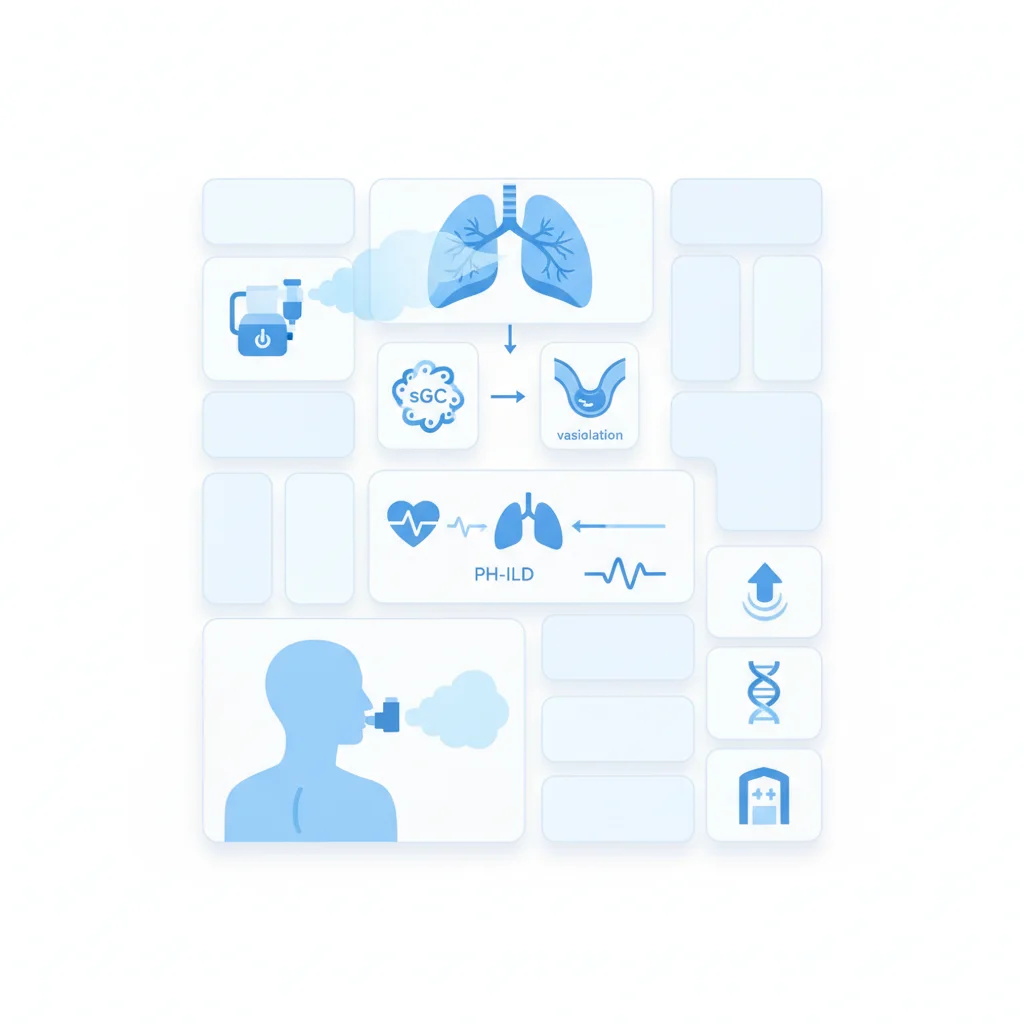

Pulmonary hypertension associated with interstitial lung disease (PH-ILD) represents a particularly challenging subset of pulmonary hypertension, often complicating the management and prognosis of patients already grappling with chronic, progressive lung conditions. The current therapeutic market for PH-ILD is limited, with few approved treatments specifically targeting the pulmonary vascular component without exacerbating the underlying interstitial lung disease.
This creates a pressing need for novel approaches that can safely and effectively address the elevated pulmonary arterial pressures and right ventricular dysfunction characteristic of PH-ILD, ideally without systemic side effects that might compromise patients with already compromised lung function. The PHocus Phase 2 clinical trial explored inhaled mosliciguat, a soluble guanylate cyclase (sGC) activator, as a potential new therapeutic option.
Pulmonary hypertension associated with interstitial lung disease (PH-ILD) is a severe complication that significantly impacts morbidity and mortality in patients with various forms of ILD. Unlike idiopathic pulmonary arterial hypertension (IPAH), where pulmonary vascular remodelling is the primary pathology, PH-ILD involves a complex relationship between the fibrotic lung parenchyma and the pulmonary vasculature. The resulting increase in pulmonary vascular resistance and pressure places a substantial burden on the right ventricle, often leading to right heart failure, which is a major determinant of prognosis.
The current management of PH-ILD largely revolves around optimizing treatment for the underlying ILD and providing supportive care. Specific pulmonary vasodilator therapies, commonly used in IPAH, have shown mixed results in PH-ILD, with some agents demonstrating limited benefit or even potential harm, particularly in those with severe parenchymal lung disease. This therapeutic void highlights the urgent need for agents that can selectively target the pulmonary vasculature without adversely affecting gas exchange or promoting systemic hypotension in a vulnerable patient population. The PHocus Phase 2 trial aimed to evaluate such a novel approach.
The Unmet Need in PH-ILD
Interstitial lung diseases encompass a heterogeneous group of disorders characterized by progressive fibrosis of the lung parenchyma, leading to impaired gas exchange and restrictive lung physiology. When pulmonary hypertension develops in this context, it is classified as Group 3 PH according to the World Health Organization (WHO) classification. The prevalence of PH in ILD varies widely depending on the specific ILD subtype and the diagnostic criteria used, but it can affect up to 50% of patients with advanced ILD, particularly idiopathic pulmonary fibrosis (IPF).
The pathophysiology of PH-ILD is multifactorial, involving hypoxic vasoconstriction, vascular remodelling driven by inflammation and fibrosis, and mechanical compression of pulmonary vessels by fibrotic tissue. These mechanisms contribute to increased pulmonary vascular resistance and elevated pulmonary arterial pressures. The right ventricle, initially able to compensate for the increased afterload, eventually succumbs to chronic stress, leading to right ventricular dysfunction and failure. This progression significantly worsens dyspnea, reduces exercise capacity, and shortens survival.
Existing guidelines for PH-ILD are cautious regarding the use of pulmonary vasodilators. While some studies have explored phosphodiesterase-5 (PDE5) inhibitors and endothelin receptor antagonists (ERAs), the evidence for their efficacy and safety in PH-ILD is not as robust as in IPAH. Concerns include potential worsening of ventilation-perfusion mismatch, leading to hypoxemia, and systemic hypotension. This delicate balance necessitates therapies with a more targeted or localized effect on the pulmonary vasculature, minimizing systemic exposure and its associated risks. For a broader understanding of pulmonary hypertension in other contexts, clinicians might consult resources like the IKT-001 Adaptive Study Programme for Pulmonary Arterial Hypertension.
A Novel Mechanism: sGC Activation
Mosliciguat is a novel soluble guanylate cyclase (sGC) activator. sGC is an enzyme found in the cytoplasm of smooth muscle cells, including those in the pulmonary vasculature. It is activated by nitric oxide (NO), leading to the production of cyclic guanosine monophosphate (cGMP). cGMP, in turn, mediates vasodilation, reduces smooth muscle cell proliferation, and inhibits platelet aggregation. In conditions like PH, where NO bioavailability may be reduced or sGC activity impaired, directly activating sGC offers a therapeutic strategy to restore NO-cGMP signaling.
Unlike NO donors or PDE5 inhibitors, which either provide exogenous NO or prevent cGMP degradation, sGC activators directly stimulate sGC, even in the absence of NO, and also sensitize sGC to residual NO. This dual mechanism may offer a more robust and sustained activation of the NO-cGMP pathway. The inhaled route of administration for mosliciguat is particularly relevant for PH-ILD, as it aims to deliver the drug directly to the pulmonary vasculature, thereby maximizing local concentrations and minimizing systemic exposure. This approach could potentially reduce systemic side effects while still achieving therapeutic effects in the lungs.
The PHocus Phase 2 Trial Design
The PHocus trial was a Phase 2, randomized, double-blind, placebo-controlled study designed to evaluate the safety, tolerability, and preliminary efficacy of inhaled mosliciguat in participants with PH-ILD. The trial enrolled patients with a confirmed diagnosis of ILD and evidence of pulmonary hypertension, typically defined by mean pulmonary arterial pressure (mPAP) greater than 20 mmHg and pulmonary vascular resistance (PVR) greater than 3 Wood units, as assessed by right heart catheterization. Patients with various underlying ILD subtypes were included, reflecting the heterogeneity of the condition in clinical practice.
Participants were randomized to receive inhaled mosliciguat at different dose levels or placebo, administered via a nebulizer, over a specified treatment period. The primary endpoints of the study focused on safety and tolerability, including the incidence of adverse events, serious adverse events, and discontinuations due to adverse events. Secondary endpoints included changes in hemodynamic parameters (e.g., mPAP, PVR, cardiac output) measured by repeat right heart catheterization, as well as functional endpoints such as 6-minute walk distance (6MWD), and quality of life assessments. The trial also explored pharmacokinetic profiles of the inhaled drug, assessing systemic exposure and lung deposition.
Preliminary Findings and Safety Profile
The PHocus Phase 2 trial provided initial insights into the potential of inhaled mosliciguat for PH-ILD. The safety and tolerability profile of the drug was a key focus, given the vulnerability of the patient population. The trial aimed to establish whether an inhaled sGC activator could be administered without significant systemic hypotension or worsening of hypoxemia, which are common concerns with systemic pulmonary vasodilators in PH-ILD. The data collected on adverse events, particularly those related to respiratory or cardiovascular systems, were critical in assessing the drug's safety margin.
Beyond safety, the trial also sought to identify preliminary signals of efficacy. Changes in hemodynamic parameters, such as reductions in mean pulmonary arterial pressure and pulmonary vascular resistance, would indicate a direct effect on the pulmonary vasculature. Improvements in 6-minute walk distance, a widely accepted functional endpoint in PH trials, would suggest a beneficial impact on exercise capacity and overall functional status. The study also monitored changes in gas exchange parameters to ensure that the inhaled therapy did not compromise oxygenation, a vital consideration in patients with pre-existing lung disease. The risk of pulmonary complications in systemic sclerosis, another fibrotic condition, highlights the importance of careful monitoring in these patient groups.
Where it Falls Short and Future Directions
As a Phase 2 trial, PHocus was primarily designed to assess safety and establish proof-of-concept, not to demonstrate definitive efficacy. The relatively small sample size and shorter duration of treatment are inherent limitations of early-phase studies. While preliminary efficacy signals are encouraging, they require confirmation in larger, longer-term Phase 3 trials powered to detect statistically significant improvements in clinical outcomes, such as exercise capacity, time to clinical worsening, or mortality. The heterogeneity of ILD subtypes included in the study also means that specific benefits might vary across different underlying lung diseases, necessitating subgroup analyses in future research.
The reliance on right heart catheterization for hemodynamic endpoints, while the gold standard, is invasive and may not be feasible for all patients in routine clinical practice. Future studies will need to correlate hemodynamic changes with non-invasive markers and patient-reported outcomes. The long-term safety profile, particularly regarding potential effects on the underlying ILD progression, also remains to be fully elucidated. The development of new therapies for respiratory conditions is an ongoing challenge, as seen in discussions around AAT protein's role in lung health beyond COPD and severe asthma.
The inhaled route, while offering advantages in terms of targeted delivery, also presents challenges related to patient adherence, device usage, and consistent drug delivery to the distal airways. These practical considerations will be important in the transition to real-world clinical use. The optimal dosing regimen and frequency of administration will also need to be refined in subsequent trials. Still, the initial data from PHocus provide a foundation for further investigation into inhaled sGC activators as a therapeutic class for PH-ILD that showed reductions in mean pulmonary arterial pressure and pulmonary vascular resistance, a condition desperately in need of effective and safe treatment options. The risks associated with lung procedures also underscore the need for non-invasive or minimally invasive monitoring where possible.
The exploration of inhaled mosliciguat in PH-ILD represents a calculated step towards addressing a critical unmet need. Current therapeutic options for these patients are limited and often carry risks that outweigh potential benefits, leaving clinicians with few effective tools. An inhaled sGC activator, if proven safe and effective, could offer a much-needed targeted approach.
The localized delivery mechanism is particularly appealing. It aims to circumvent the systemic side effects that plague oral vasodilators in this population, such as worsening ventilation-perfusion mismatch and systemic hypotension. This precision could allow for more aggressive pulmonary vasodilation without compromising gas exchange or overall hemodynamic stability, a delicate balance that has historically been difficult to achieve.
But clinicians should temper enthusiasm with caution. Phase 2 data, while indicative, are not definitive. The heterogeneity of PH-ILD, encompassing various underlying interstitial lung diseases, means that a single agent may not be universally effective. Future trials must rigorously assess efficacy across different ILD subtypes and confirm long-term safety, especially regarding the progression of the underlying lung fibrosis.
Should inhaled sGC activators advance, they could fundamentally alter the treatment paradigm for PH-ILD. This would provide a specific, targeted therapy where previously only supportive care or off-label systemic agents with questionable risk-benefit profiles existed. The development pipeline for this class of drugs warrants close attention from specialists managing these complex patients.
- The Pivot Inhaled mosliciguat, an sGC activator, is being investigated for PH-ILD, a condition with few targeted therapies.
- The Data The Phase 2 trial evaluated the safety and preliminary efficacy of this novel inhaled therapy.
- The Action Clinicians should monitor ongoing research into sGC activators for PH-ILD, as this class may offer a new treatment paradigm.
ART-2026-1781
·10/26
Drafted with AI assistance and checked by automated style rules. Not individually read by an editor. This publication is intended for healthcare professionals, researchers, and life science industry professionals. Content is provided for informational and educational purposes only and does not constitute medical advice.

I specialise in clinical trial methodology and drug development, from Phase I to post-approval. My reports cover what got studied, what did not, and why. Based in Boston, reporting globally.
Cite This Article
Prescott D, Voss M. PH-ILD: why current vasodilators fall short, and what's next. The Life Science Feed. Published September 8, 2026. Updated October 4, 2026. Accessed October 23, 2026. https://thelifesciencefeed.com/pulmonology/pulmonary-hypertension/research/ph-ild-why-current-vasodilators-fall-short-and-whats-next.
Editorial & AI Standards
Content is drafted with AI tools from peer-reviewed, open-access sources such as published trial data, clinical guidelines, and regulatory filings. This article is checked by automated style rules but is not individually read by an editor, so check the cited source before relying on a figure.
Source citations are listed in the References section. This content does not represent the views of any pharmaceutical company, medical device manufacturer, or healthcare provider.
Licence & Rights
© 2026 The Life Science Feed. All rights reserved. Unless otherwise indicated, all content is the property of The Life Science Feed and may not be reproduced, distributed, or transmitted in any form or by any means without prior written permission.
Medical Disclaimer
The information provided on The Life Science Feed is for educational and informational purposes only. It is not intended as a substitute for professional medical advice, diagnosis, or treatment. Always seek the advice of your physician or other qualified healthcare provider regarding any medical condition or treatment decision. Never disregard professional medical advice or delay in seeking it because of something you have read on this website.
References
1. Ang HL, Schulte M, Chan RK, et al. Pulmonary Hypertension in Interstitial Lung Disease: A Systematic Review and Meta-Analysis. Chest. 2024;166(4):778-792. doi:10.1016/j.chest.2024.04.025
2. Shlobin OA, Adir Y, Barbera JA, et al. Pulmonary hypertension associated with lung diseases. Eur Respir J. 2024;64(4). doi:10.1183/13993003.01200-2024
3. Olsson KM, Corte TJ, Kamp JC, et al. Pulmonary hypertension associated with lung disease: new insights into pathomechanisms, diagnosis, and management. Lancet Respir Med. 2023;11(9):820-835. doi:10.1016/S2213-2600(23)00259-X
4. Wijsenbeek M, Suzuki A, Maher TM. Interstitial lung diseases. Lancet. 2022;400(10354):769-786. doi:10.1016/S0140-6736(22)01052-2
5. Fiorentù G, Bernardinello N, Giulianelli G, Cocconcelli E, Balestro E, Spagnolo P. Pulmonary Hypertension Associated with Interstitial Lung Disease (PH-ILD): Back to the Future. Adv Ther. 2025;42(4):1627-1641. doi:10.1007/s12325-025-03129-3
6. Raghu G, Sahay S, Price LC, et al. Pulmonary hypertension associated with interstitial lung disease: a state-of-the-art review. Eur Respir J. 2026;68(1). doi:10.1183/13993003.02651-2025