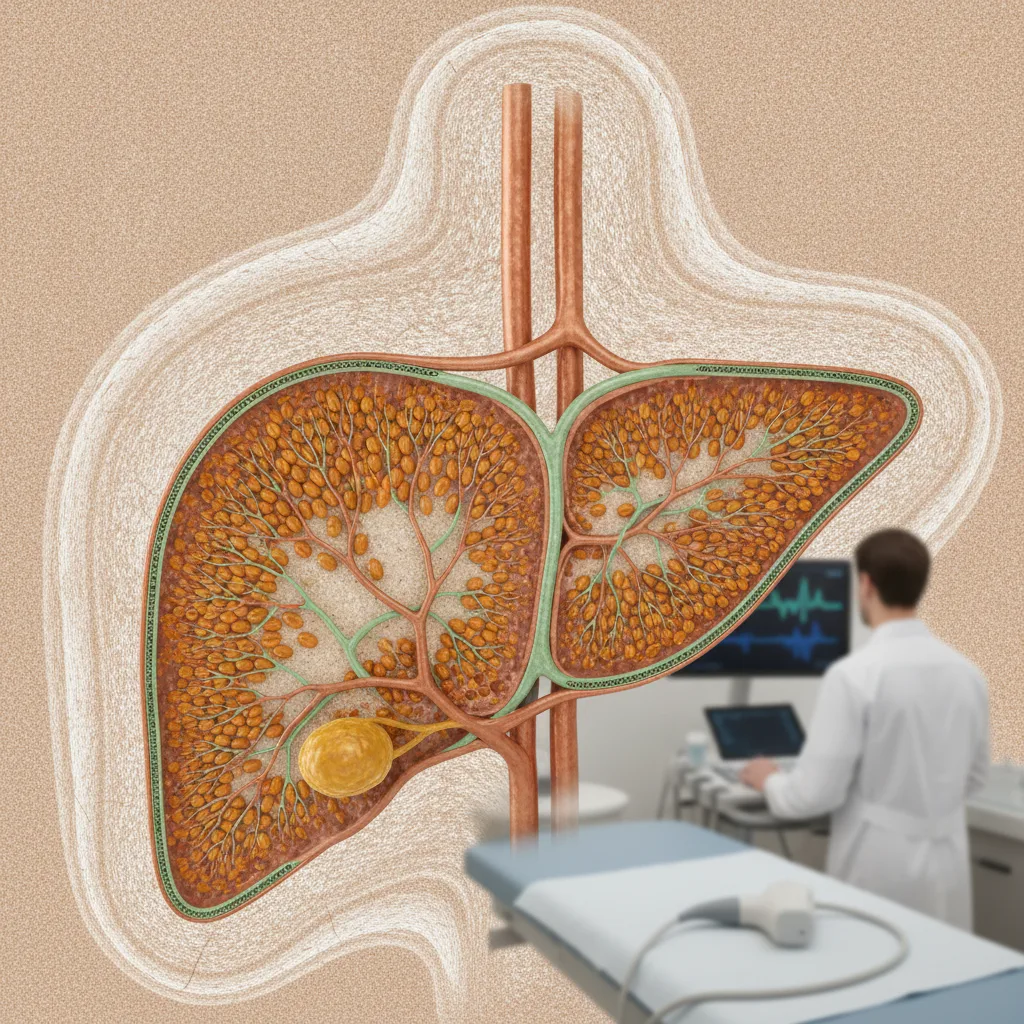

Chronic liver disease remains a significant public health burden across Europe, with rising incidence of non-alcoholic fatty liver disease (NAFLD) and its progression to cirrhosis and hepatocellular carcinoma. Clinicians often advise on lifestyle modifications, but the role of common dietary habits, such as coffee consumption, in mitigating liver risk has been less clear. New evidence from the UK Biobank offers a clearer picture, integrating imaging and proteomic data to support coffee's protective effects.1
Liver disease, encompassing conditions from fatty liver to cirrhosis and liver cancer, accounts for substantial morbidity and mortality globally. Identifying accessible, low-cost interventions to reduce this burden is a priority. Coffee, a widely consumed beverage, has long been an area of interest for its potential hepatoprotective properties, but the evidence base, particularly from large-scale prospective studies integrating diverse biomarkers, has been limited.1,2
A recent analysis, published in Clin Gastroenterol Hepatol, leveraged data from the UK Biobank, a prospective cohort study of over 500,000 participants, to investigate the association between coffee consumption and liver outcomes.1 The study included 494,585 participants, with a median follow-up of 10.7 years. Researchers collected detailed information on coffee intake, including type (ground, instant, decaffeinated) and frequency, alongside comprehensive health data, imaging biomarkers (liver fat, stiffness), and proteomic profiles.1
What the trial actually measured
The primary endpoint was the incidence of chronic liver disease (CLD), defined by hospital admission or death due to CLD, cirrhosis, or hepatocellular carcinoma. Secondary endpoints included liver-related mortality and the impact of coffee type and additives. The study also explored the mechanistic pathways through proteomic analysis, examining how coffee consumption might alter protein expression related to liver health.1,2
Participants completed a baseline questionnaire on their coffee habits. Researchers then linked this data to hospital admission records, death registries, and a subset of participants who underwent liver imaging (MRI-derived proton density fat fraction for liver fat and magnetic resonance elastography for liver stiffness). A further subset had plasma proteomic profiling to identify potential biomarkers influenced by coffee intake.1
The numbers
Regular coffee consumption correlated with a significantly reduced risk of chronic liver disease. Participants who reported drinking any amount of coffee had a 21% lower risk of developing CLD (HR 0.79; 95% CI, 0.75-0.84; P<.001) compared to non-coffee drinkers. This protective effect extended to liver-related mortality, which was reduced by 49% (HR 0.51; 95% CI, 0.45-0.58; P<.001) in coffee drinkers.1
The benefits were not limited to a specific type of coffee. Ground, instant, and decaffeinated coffee all showed similar associations with reduced CLD risk. For instance, ground coffee drinkers had a 20% lower CLD risk (HR 0.80; 95% CI, 0.74-0.86; P<.001), while instant coffee drinkers saw a 22% reduction (HR 0.78; 95% CI, 0.73-0.83; P<.001). Decaffeinated coffee also reduced CLD risk by 16% (HR 0.84; 95% CI, 0.77-0.92; P<.001). This suggests that compounds beyond caffeine contribute to the hepatoprotective effects.1
The optimal intake appeared to be around 3-4 cups per day, where the risk reduction was most pronounced. But even lower consumption levels offered some benefit. The study also found that coffee consumption was associated with lower liver fat content and reduced liver stiffness on imaging, providing objective evidence of improved liver health. Proteomic analysis revealed alterations in several protein pathways related to inflammation, fibrosis, and metabolic regulation, supporting a mechanistic link between coffee and liver protection.1,2
The open-label design is the obvious caveat, as participants self-reported coffee intake, which introduces potential recall bias. But the large sample size and prospective nature of the UK Biobank data mitigate some of these concerns. Confounding factors, such as diet, alcohol consumption, and physical activity, were adjusted for, but residual confounding cannot be entirely ruled out. Still, the consistency of the findings across different coffee types and the integration of imaging and proteomic biomarkers strengthen the evidence.1
The study was not powered to detect differences in specific liver disease etiologies, such as viral hepatitis or autoimmune liver disease, and primarily focused on the general population. Whether the benefits extend equally to patients with established liver conditions or specific genetic predispositions remains an area for further investigation. For clinicians managing patients with liver disease, having a comprehensive reference like Sherlock's Diseases of the Liver and Biliary System can be invaluable for understanding the broader context of hepatobiliary health.1
The exact mechanisms by which coffee exerts its protective effects are still under investigation. Vargas-Pozada and colleagues explored several mechanistic approaches, highlighting coffee's antioxidant, anti-inflammatory, and anti-fibrotic properties. These include modulation of hepatic stellate cell activation, reduction of oxidative stress, and improvement of insulin sensitivity. The diverse array of bioactive compounds in coffee, including chlorogenic acids, cafestol, kahweol, and caffeine, likely contribute synergistically to these effects.2
The study did not specifically address the impact of additives like sugar or milk on the hepatoprotective effects of coffee. While the primary analysis adjusted for some dietary factors, the specific interaction of coffee with various additives warrants further research. This is particularly relevant given the increasing prevalence of sweetened coffee beverages.1
The data from the UK Biobank provides a clear, actionable message for clinicians: advising patients to drink coffee for liver health is now evidence-based. This is not a marginal benefit; a 21% reduction in chronic liver disease risk and a nearly 50% reduction in liver-related mortality are substantial. This finding offers a simple, accessible, and often enjoyable lifestyle recommendation that can be integrated into routine patient discussions, particularly for those at risk of NAFLD or metabolic syndrome.
The fact that ground, instant, and decaffeinated coffee all confer similar benefits is clinically important. It means patients are not restricted to a specific preparation method or required to consume caffeine if they are sensitive to its effects. This broad applicability increases the likelihood of patient adherence to such a recommendation. It also suggests that the protective compounds are diverse and not solely dependent on caffeine.
But clinicians should temper enthusiasm with pragmatism. While coffee is beneficial, it is not a standalone treatment for advanced liver disease. It complements, rather than replaces, established interventions like weight loss, alcohol cessation, and management of metabolic comorbidities. Integrating this advice into a holistic approach to liver health is key, rather than presenting it as a panacea.
The next step for research should focus on interventional trials to confirm these observational findings and to delineate optimal dosages and specific patient populations that might benefit most. Understanding the precise molecular mechanisms, especially through further proteomic and metabolomic studies, could also lead to the development of novel therapeutic targets for liver disease. For now, a daily cup of coffee appears to be a reasonable, low-risk prescription for liver health.
- The Pivot Large-scale prospective data now links coffee intake to lower liver disease risk, including mortality, with imaging and proteomic validation.
- The Data Regular coffee drinkers had a 21% lower risk of chronic liver disease (HR 0.79; 95% CI, 0.75-0.84; P<.001).
- The Action Clinicians can confidently advise patients that regular coffee consumption, including instant and decaffeinated, appears beneficial for liver health.
ART-2026-1059
·09/26
Drafted with AI assistance, reviewed and approved by the editorial team. This publication is intended for healthcare professionals, researchers, and life science industry professionals. Content is provided for informational and educational purposes only and does not constitute medical advice.

Science writer covering the frontier between basic research and clinical practice. I am interested in the moment a mechanism becomes a therapy, and everything that can go wrong in between.
Cite This Article
Aldrich M, Voss M. Coffee may cut liver disease risk, related mortality. The Life Science Feed. Published August 10, 2026. Updated September 16, 2026. Accessed September 24, 2026. https://thelifesciencefeed.com/hepatology/liver-cirrhosis/news/coffee-may-cut-liver-disease-risk-related-mortality.
Editorial & AI Standards
All content is researched from peer-reviewed, open-access sources: published trial data, clinical guidelines, and regulatory filings. AI tools are used solely to structure and summarise that evidence; no AI-generated conclusions appear without editor verification against the primary source.
Every article is reviewed by a named editor before publication. Source citations are listed in the References section. This content does not represent the views of any pharmaceutical company, medical device manufacturer, or healthcare provider.
Licence & Rights
© 2026 The Life Science Feed. All rights reserved. Unless otherwise indicated, all content is the property of The Life Science Feed and may not be reproduced, distributed, or transmitted in any form or by any means without prior written permission.
Medical Disclaimer
The information provided on The Life Science Feed is for educational and informational purposes only. It is not intended as a substitute for professional medical advice, diagnosis, or treatment. Always seek the advice of your physician or other qualified healthcare provider regarding any medical condition or treatment decision. Never disregard professional medical advice or delay in seeking it because of something you have read on this website.
References
1. Kim HS, Rezaee-Zavareh MS, Wang Y. Coffee Consumption and Improved Liver Outcomes: Clinical, Imaging, and Proteomic Evidence From the UK Biobank. Clin Gastroenterol Hepatol 2026.
2. Vargas-Pozada EE, Ramos-Tovar E, Márquez-Quiroga LV. Coffee for the liver: a mechanistic approach. Biochem Pharmacol 2025.