
Oral conditions, particularly periodontitis, represent a substantial global health burden, affecting nearly 3.5 billion people worldwide between 2019 and 2023. Despite this widespread prevalence, progress towards the World Health Organization’s 2030 target for reducing oral disease has been insufficient, highlighting the persistent challenge of meeting public health goals. This ongoing issue brings into sharp focus the long-suspected link between periodontitis and systemic conditions, particularly cardiovascular disease, prompting a deeper look into the underlying mechanisms.
Oral conditions, particularly periodontitis, represent a substantial global health burden. The Global Burden of Disease (GBD) Study 2023, a systematic analysis published in Lancet Public Health, reported that oral conditions collectively affected nearly 3.5 billion people worldwide between 2019 and 2023.1 This widespread prevalence highlights the ongoing challenge in meeting targets set by the World Health Organization's (WHO) Global Oral Health Action Plan (GOHAP), which aimed for a 10% relative reduction in the combined prevalence of main oral conditions by 2030.1 The initial evaluation in 2023 showed that progress towards this target has been insufficient, highlighting the persistent public health issue of oral disease.1
Periodontitis, a chronic inflammatory disease affecting the supporting structures of the teeth, has long been suspected of contributing to systemic conditions beyond the oral cavity. Myung-Yoon Kim and Eun-Kyung Pang, in their 2025 narrative review in Ewha Medical Journal, explored the relationship between periodontitis and various systemic health conditions.2 Their review, like others, acknowledged the epidemiological association but emphasized the need for clearer mechanistic understanding and interventional evidence.2
Exploring the Biological Bridge: Inflammation and Atherosclerosis
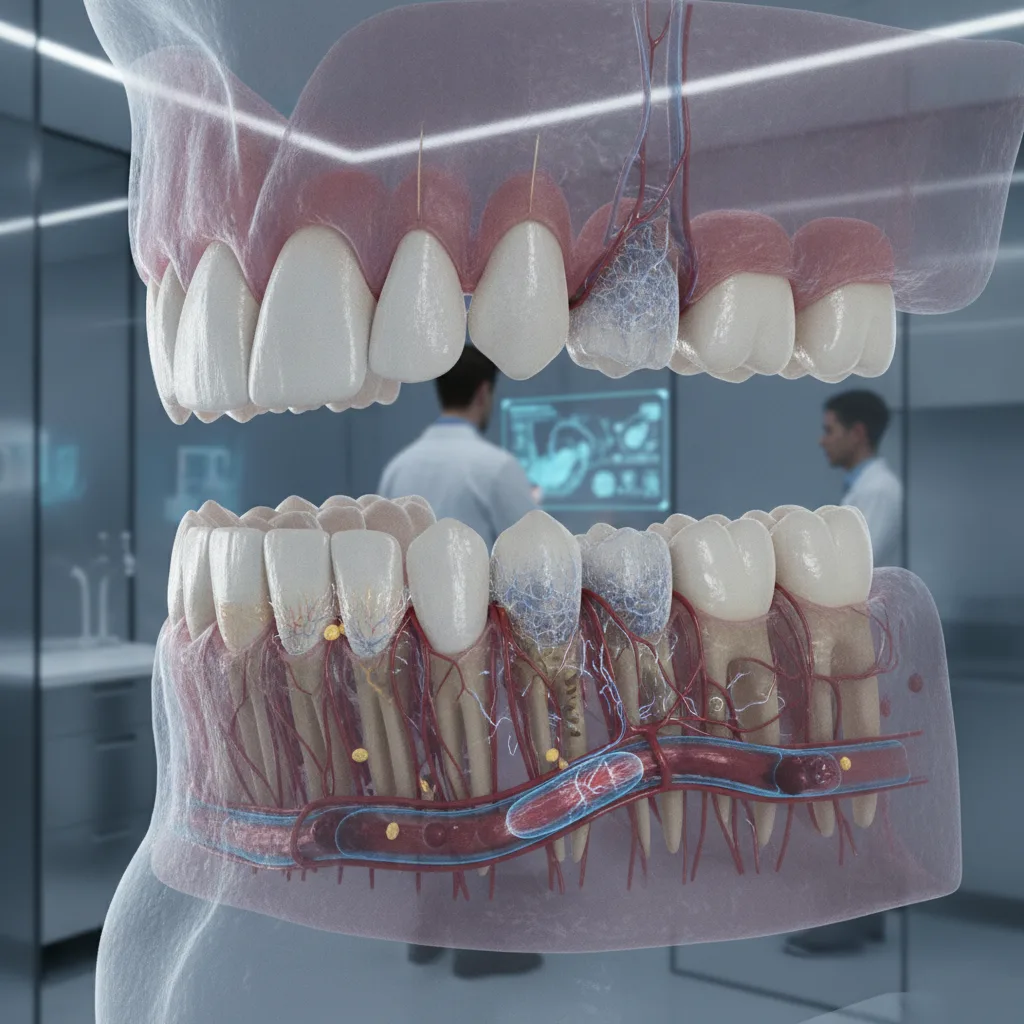
The hypothesis linking periodontitis to cardiovascular disease (CVD) centers on chronic inflammation and systemic bacterial dissemination.1 Periodontitis involves a persistent inflammatory response to bacterial biofilms in the oral cavity, leading to the destruction of periodontal tissues.3 This local inflammation can spill over into the systemic circulation, contributing to a low-grade systemic inflammatory state.3 Inflammatory mediators, such as C-reactive protein (CRP), interleukin-6 (IL-6), and tumor necrosis factor-alpha (TNF-α), are elevated in patients with periodontitis and are also recognized risk factors for atherosclerosis.3
Rakesh Kumar and colleagues, in a 2025 narrative review published in Molecular Biology Reports, specifically examined the cellular and molecular mechanisms by which periodontitis might drive atherosclerosis.3 They detailed how periodontal pathogens and their products, such as lipopolysaccharides (LPS), can enter the bloodstream.1,3 Once in circulation, these bacterial components and inflammatory cytokines can directly affect endothelial cells, promoting endothelial dysfunction, a critical early step in atherosclerosis.1,3 This process involves increased expression of adhesion molecules, facilitating the recruitment of monocytes to the arterial wall.3
Monocytes, once recruited, differentiate into macrophages and internalize oxidized low-density lipoproteins (ox-LDLs), transforming into foam cells.3 These foam cells accumulate in the arterial intima, forming fatty streaks that progress to atherosclerotic plaques.1,3 The chronic inflammatory environment sustained by periodontitis can accelerate plaque formation and increase plaque instability, potentially leading to rupture and thrombotic events.1,3 The review highlighted specific pathways, including the activation of Toll-like receptors (TLRs) by bacterial components, leading to downstream signaling cascades that promote pro-inflammatory gene expression in vascular cells.3
What the Evidence Supports: Association, Not Causation
Despite the compelling biological plausibility, the evidence primarily supports an association between periodontitis and CVD, rather than a direct causal link where treating periodontitis definitively improves cardiovascular outcomes. The GBD 2023 study, while detailing the global burden of oral conditions, did not establish a direct causal pathway or quantify the impact of oral health interventions on non-oral systemic diseases.1 It focused on the prevalence and trends of oral conditions themselves, noting the lack of progress in reducing their burden.1
Kim and Pang's review acknowledged numerous epidemiological studies demonstrating a correlation.2 Patients with periodontitis often exhibit a higher prevalence and incidence of coronary artery disease, stroke, and peripheral artery disease.2 This association persists even after adjusting for traditional cardiovascular risk factors like smoking, diabetes, and dyslipidemia.2 But correlation does not equate to causation, and confounding factors remain a significant challenge in observational studies.2 For instance, individuals with poor oral hygiene often share lifestyle factors, such as diet and socioeconomic status, that also predispose them to CVD.2
The molecular mechanisms described by Kumar and colleagues provide a strong theoretical framework for how periodontitis could contribute to atherosclerosis.1,3 But translating these molecular insights into clinical evidence of improved cardiovascular outcomes through periodontal treatment has proven difficult.3 Interventional studies, particularly large-scale randomized controlled trials (RCTs) designed to assess whether periodontal therapy reduces cardiovascular events, are scarce and have yielded inconsistent results.2,3 Many existing interventional studies are limited by small sample sizes, short follow-up periods, or surrogate cardiovascular endpoints, rather than hard clinical events like myocardial infarction or stroke.2
The Clinical Gap: Intervention and Outcomes
The critical gap in the evidence lies in demonstrating that treating periodontitis leads to a reduction in cardiovascular events. While periodontal therapy, including scaling and root planing, can effectively reduce oral inflammation and bacterial load, its systemic impact on atherosclerosis progression or clinical CVD events remains largely unproven.2 Some studies have shown transient reductions in systemic inflammatory markers (e.g., CRP) following intensive periodontal treatment, but these changes have not consistently translated into improved cardiovascular outcomes.2,3
The lack of definitive interventional data means that current guidelines for cardiovascular disease prevention and management do not typically include periodontal treatment as a primary intervention.2 This contrasts with other modifiable risk factors, where interventions have clear evidence of benefit. For example, the impact of lifestyle modifications on cardiovascular health is well-established, as is the role of specific pharmacotherapies. Clinicians often find themselves navigating complex comorbidities, and understanding the relationship between conditions like periodontitis and cardiovascular disease is essential. For a broader perspective on managing complex patients, the Oxford Handbook of Clinical Medicine (11th ed) offers a concise bedside reference.
The challenge in designing such trials is considerable. They would require large patient cohorts, long follow-up periods, and careful control of numerous confounding variables. The cost and logistical complexity are substantial. Defining and standardizing 'effective' periodontal treatment across diverse populations and clinical settings presents its own difficulties. The GBD 2023 study highlighted the global disparities in access to oral healthcare, which would further complicate large-scale interventional trials.1
Unanswered Questions and Future Directions
The current body of evidence, while robust in establishing an association, does not yet support the routine recommendation of periodontal treatment solely for the purpose of preventing or treating cardiovascular disease. The mechanisms described by Kumar and colleagues are biologically plausible, but the clinical translation remains elusive.3 Future research needs to focus on well-designed, adequately powered randomized controlled trials with hard cardiovascular endpoints. These trials must also consider the specific patient populations, the severity of periodontitis, and the intensity of periodontal intervention.2,3
One area of ongoing investigation involves identifying specific subgroups of patients who might benefit most from periodontal intervention. For example, patients with severe periodontitis and high systemic inflammatory burden, or those with specific genetic predispositions, might show a more pronounced cardiovascular benefit.3 Researchers are also exploring novel biomarkers that could better predict cardiovascular risk in patients with periodontitis and serve as more sensitive endpoints in clinical trials.3 The relationship between cardiovascular disease and cancer also presents a complex reciprocal relationship, underscoring the interconnectedness of systemic health.
The open-label nature of most periodontal interventions is an obvious caveat. Blinding patients and clinicians to periodontal treatment status is practically impossible, which introduces potential bias in outcome assessment. This inherent limitation makes it difficult to conduct truly unbiased interventional studies. Still, the epidemiological association is strong enough to warrant continued investigation. The global prevalence of oral conditions, as detailed by the GBD 2023 study, means that even a modest effect of periodontal treatment on cardiovascular health could have significant public health implications.1
The ongoing research into the molecular links between oral pathogens and systemic inflammation, as detailed by Kumar and colleagues, continues to refine our understanding.1,3 This work may eventually identify specific therapeutic targets that could interrupt the periodontitis-driven atherosclerotic process.1 Until then, the clinical recommendation remains focused on managing established cardiovascular risk factors and promoting good oral hygiene as part of overall health maintenance, rather than as a direct cardiovascular intervention. The broader context of systemic inflammation and its impact on various organ systems, including the cardiovascular system, is a persistent theme in medical research, as seen in discussions around circadian rhythms and cardiovascular pathology.
GPs and specialists should continue to advise patients on good oral hygiene as a component of general health, but the current evidence does not support prescribing periodontal treatment solely to mitigate cardiovascular risk. The GBD 2023 data confirms the widespread prevalence of oral conditions, but this does not translate into a direct, proven cardiovascular benefit from periodontal intervention. We are still in the realm of association, not causation, when it comes to hard cardiovascular endpoints.
The mechanistic links are compelling, with chronic inflammation and bacterial translocation offering plausible pathways for periodontitis to contribute to atherosclerosis. But biological plausibility does not equate to clinical efficacy. Until large-scale, well-controlled trials demonstrate that periodontal therapy reduces myocardial infarctions or strokes, clinicians should prioritize established cardiovascular risk factor management.
For patients, this means maintaining excellent oral hygiene for its intrinsic benefits, such as preventing tooth loss and improving quality of life, rather than viewing it as a primary cardiovascular prophylactic. The industry faces a significant challenge in designing and funding the definitive trials needed to bridge this gap. Without such data, periodontal treatment will remain a secondary consideration in cardiovascular risk stratification and management.
The focus must remain on interventions with proven cardiovascular benefit. While the link is intriguing, it is not yet actionable in the same way as blood pressure control or statin therapy. The Oxford Handbook of Cardiology provides a concise guide to modern cardiological practice, reflecting current evidence-based approaches.
- The Pivot Global burden data confirms high prevalence of oral conditions, including periodontitis, but direct causal links to cardiovascular disease and the efficacy of periodontal treatment for cardiovascular outcomes are not yet established.
- The Data The Global Burden of Disease Study 2023 reported that oral conditions, including periodontitis, affect nearly 3.5 billion people globally, with prevalence targets for reduction not yet met.1
- The Action Clinicians should continue to advocate for good oral hygiene as part of general health, but should not currently recommend periodontal treatment solely for the prevention or management of cardiovascular disease.
ART-2026-1636
·10/26
Drafted with AI assistance, reviewed and approved by the editorial team. This publication is intended for healthcare professionals, researchers, and life science industry professionals. Content is provided for informational and educational purposes only and does not constitute medical advice.

Infectious disease, epidemiology, and global health equity. I have covered outbreaks from Ebola to COVID-19 to mpox. The stories I am most drawn to are where the science is clear and the response is slow.
Cite This Article
Reeves T, Voss M. Periodontitis and heart disease: what's really driving the link?. The Life Science Feed. Published October 20, 2026. Updated October 20, 2026. Accessed October 20, 2026. https://thelifesciencefeed.com/dentistry/periodontal-diseases/insights/periodontitis-and-heart-disease-whats-really-driving-the-link.
Editorial & AI Standards
All content is researched from peer-reviewed, open-access sources: published trial data, clinical guidelines, and regulatory filings. AI tools are used solely to structure and summarise that evidence; no AI-generated conclusions appear without editor verification against the primary source.
Every article is reviewed by a named editor before publication. Source citations are listed in the References section. This content does not represent the views of any pharmaceutical company, medical device manufacturer, or healthcare provider.
Licence & Rights
© 2026 The Life Science Feed. All rights reserved. Unless otherwise indicated, all content is the property of The Life Science Feed and may not be reproduced, distributed, or transmitted in any form or by any means without prior written permission.
Medical Disclaimer
The information provided on The Life Science Feed is for educational and informational purposes only. It is not intended as a substitute for professional medical advice, diagnosis, or treatment. Always seek the advice of your physician or other qualified healthcare provider regarding any medical condition or treatment decision. Never disregard professional medical advice or delay in seeking it because of something you have read on this website.
References
1. Zhou LJ, Lin WZ, Meng XQ, et al. Periodontitis exacerbates atherosclerosis through Fusobacterium nucleatum-promoted hepatic glycolysis and lipogenesis. Cardiovasc Res. 2023;119(8):1706-1717. doi:10.1093/cvr/cvad045