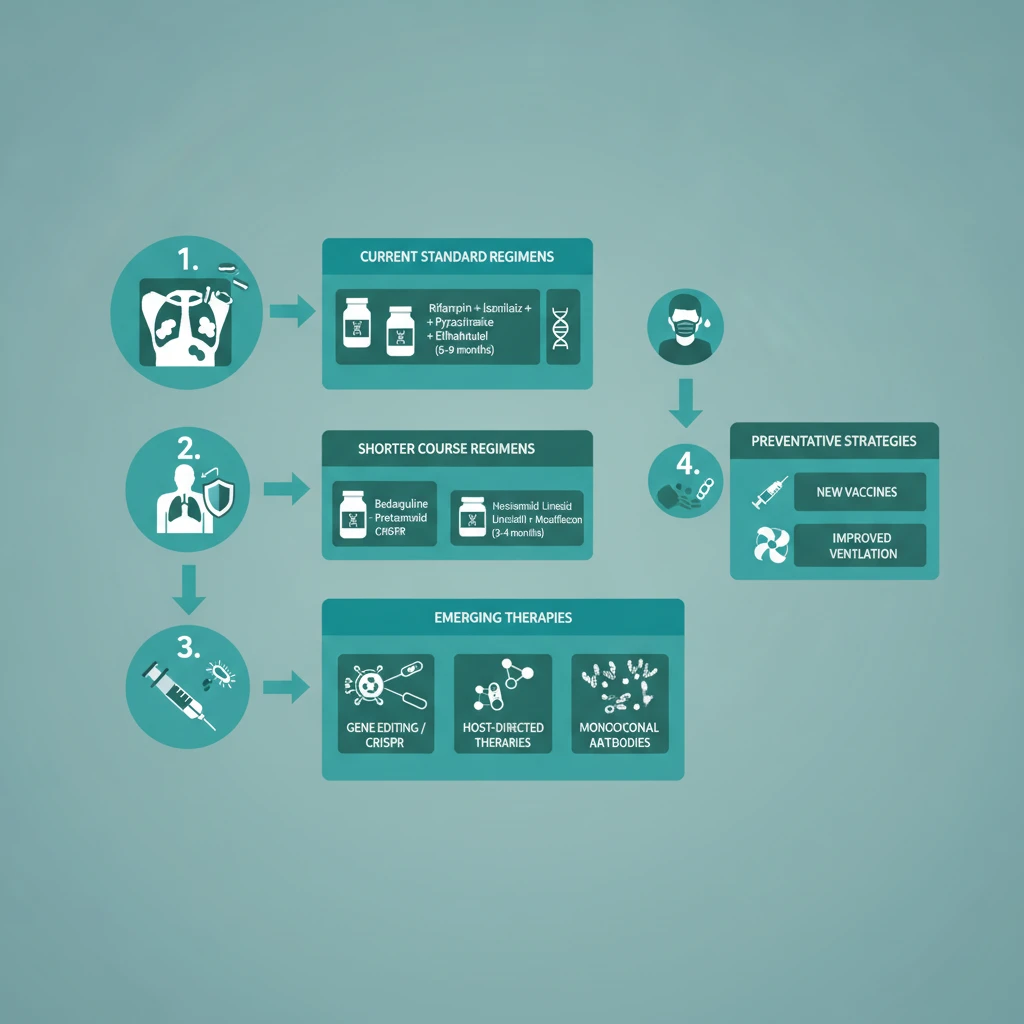

Pulmonary tuberculosis (PTB) remains a significant global health concern, necessitating effective and updated treatment strategies. A recent review published in BMJ Medicine provides an overview of current and emerging therapeutic options for adults with PTB, highlighting the ongoing evolution in managing this infectious disease.3
Enteric infectious diseases contribute to over 1 million annual deaths and rank among the top ten causes of death in children younger than 5 years.1-3 Despite substantial global investment in prevention and control, the shifting global health landscape challenges sustained progress.1-3 The Global Burden of Diseases, Injuries, and Risk Factors Study (GBD) 2023 provides updated epidemiological estimates for enteric infectious diseases, assessing progress toward the Global Action Plan for the Prevention and Control of Pneumonia and Diarrhoea (GAPPD) mortality target of fewer than 20 deaths per 100,000 children younger than 5 years by 2025.1-3
Current and Emerging Therapies
A systematic analysis for the GBD 2023 study examined the global burden of enteric infectious diseases, diarrhoeal diseases, and their corresponding aetiologies from 1990 to 2023.1 Another review focused on primary ciliary dyskinesia in pediatric persons, describing it as a microscopic movement malady.2
Mahmood, Ashfaq, and Drain conducted a review specifically on current and emerging therapies for pulmonary tuberculosis in adults.3 This review addresses the therapeutic landscape for PTB, which is critical given the disease's global prevalence and the challenges associated with treatment, including drug resistance and treatment duration. The authors' abstract indicates an evaluation of the current status and a guide for future interventions in the context of infectious diseases.3 While the abstract does not detail specific drug names, trial designs, or efficacy statistics for PTB therapies, it signals an ongoing effort to understand and improve treatment outcomes for this condition. The broader context of infectious disease burden, as highlighted by the GBD 2023, underscores the importance of such therapeutic advancements.1-3
The challenges in PTB treatment are multifaceted, encompassing the lengthy duration of current regimens, which often leads to poor adherence and subsequent treatment failure, and the escalating threat of drug-resistant tuberculosis (DR-TB). The standard short-course regimen for drug-susceptible PTB typically involves a 6-month course of isoniazid, rifampicin, pyrazinamide, and ethambutol. While effective for susceptible strains, this regimen is demanding for patients and healthcare systems alike. For DR-TB, particularly multidrug-resistant tuberculosis (MDR-TB) and extensively drug-resistant tuberculosis (XDR-TB), treatment regimens are considerably longer, more toxic, and less effective, necessitating the development of novel therapeutic strategies.
Emerging Therapeutic Strategies and Future Directions
Emerging therapies for PTB are primarily focused on three key areas: shortening treatment duration, improving efficacy against drug-resistant strains, and enhancing tolerability. One promising avenue involves the repurposing of existing drugs and the development of new chemical entities with novel mechanisms of action. For instance, bedaquiline and delamanid represent newer antituberculosis drugs specifically approved for DR-TB, demonstrating improved outcomes in patients previously facing limited options. Their integration into revised treatment guidelines has marked a significant step forward, though challenges related to access and monitoring remain.
Beyond novel drug development, research is also exploring host-directed therapies (HDTs) and immunomodulatory approaches. HDTs aim to boost the host's immune response against Mycobacterium tuberculosis, potentially shortening treatment and preventing relapse. Examples include vitamin D supplementation, non-steroidal anti-inflammatory drugs (NSAIDs), and metformin, which are being investigated for their adjunctive roles in PTB treatment. While these approaches are still largely in the investigational phase, they offer a paradigm shift from solely targeting the pathogen to modulating the host's response, potentially leading to more durable cures and reduced drug toxicity.
Furthermore, the development of more accurate and rapid diagnostic tools is intrinsically linked to therapeutic advancements. Early and precise identification of drug susceptibility patterns is crucial for guiding appropriate treatment and preventing the amplification of resistance. Innovations in molecular diagnostics, such as rapid PCR-based tests and next-generation sequencing, are increasingly being deployed to inform clinical decisions, thereby optimizing therapeutic outcomes. The ongoing global effort to combat infectious diseases, as underscored by the GBD 2023, necessitates a continuous pipeline of research and development in both diagnostics and therapeutics to meet the evolving challenges posed by pathogens like M. tuberculosis. Future interventions will likely involve combination therapies that leverage new drugs, HDTs, and personalized treatment regimens guided by advanced diagnostics to achieve the ambitious goal of tuberculosis elimination.
For a deeper dive into the broader context of infectious diseases, including the microbial aspects relevant to tuberculosis, consider referring to the Oxford Handbook of Infectious Diseases and Microbiology.
The persistent global burden of infectious diseases, particularly those affecting vulnerable populations like children under five, means that advancements in therapy for conditions such as pulmonary tuberculosis are not merely academic exercises. The GBD 2023 data, while focused on enteric diseases, provides a stark reminder of the ongoing need for effective interventions across all infectious disease categories. Clinicians managing PTB must therefore remain vigilant for updates in treatment guidelines, as the review by Mahmood et al. suggests an evolving therapeutic landscape. The absence of specific drug data in the abstract means that while the topic is pertinent, immediate changes to prescribing practices cannot be inferred from this particular publication alone.
The continuous evaluation of epidemiological estimates and progress towards mortality targets, as seen with the GAPPD, highlights a systemic approach to public health. For the pharmaceutical industry, this signals a sustained demand for research and development into novel antimicrobial agents and improved regimens for established diseases like PTB. The challenge lies in developing therapies that are not only effective but also accessible and scalable, especially in regions disproportionately affected by these diseases. Without detailed efficacy and safety data, however, the practical impact on patient care remains to be fully elucidated.
- The Pivot The landscape of pulmonary tuberculosis treatment is evolving with new and investigational therapies.
- The Data Specific efficacy data for emerging therapies were not detailed in the provided abstract.
- The Action Clinicians should remain informed about advancements in PTB treatment protocols to optimise patient outcomes.
ART-2026-550
·09/26
Drafted with AI assistance, reviewed and approved by the editorial team. This publication is intended for healthcare professionals, researchers, and life science industry professionals. Content is provided for informational and educational purposes only and does not constitute medical advice.

Thirty years in health journalism, the last fifteen in life sciences. I have reported from every major medical congress and watched blockbuster drugs get revised after approval. I cover what the data says.
Cite This Article
Carter J, Voss M. Current and emerging therapies for pulmonary tuberculosis. The Life Science Feed. Published June 21, 2026. Updated September 14, 2026. Accessed September 22, 2026. https://thelifesciencefeed.com/infectious-diseases/tuberculosis/research/current-and-emerging-therapies-for-pulmonary-tuberculosis.
Editorial & AI Standards
All content is researched from peer-reviewed, open-access sources: published trial data, clinical guidelines, and regulatory filings. AI tools are used solely to structure and summarise that evidence; no AI-generated conclusions appear without editor verification against the primary source.
Every article is reviewed by a named editor before publication. Source citations are listed in the References section. This content does not represent the views of any pharmaceutical company, medical device manufacturer, or healthcare provider.
Licence & Rights
© 2026 The Life Science Feed. All rights reserved. Unless otherwise indicated, all content is the property of The Life Science Feed and may not be reproduced, distributed, or transmitted in any form or by any means without prior written permission.
Medical Disclaimer
The information provided on The Life Science Feed is for educational and informational purposes only. It is not intended as a substitute for professional medical advice, diagnosis, or treatment. Always seek the advice of your physician or other qualified healthcare provider regarding any medical condition or treatment decision. Never disregard professional medical advice or delay in seeking it because of something you have read on this website.
References
1. GBD 2023 Diarrhoeal Disease and Enteric Infectious Diseases Collaborators. Global burden of enteric infectious diseases, diarrhoeal diseases, and corresponding aetiologies, 1990-2023: a systematic analysis for the Global Burden of Disease Study 2023. Lancet Infect Dis 2026.
2. Greydanus DE, Bhave SY, Ashok N. Primary ciliary dyskinesia in pediatric persons: A microscopic movement malady. Dis Mon 2026. doi:10.1016/j.disamonth.2026.102144
3. Mahmood A, Ashfaq MB, Drain C. Current and emerging therapies for pulmonary tuberculosis in adults. BMJ Med 2026.






