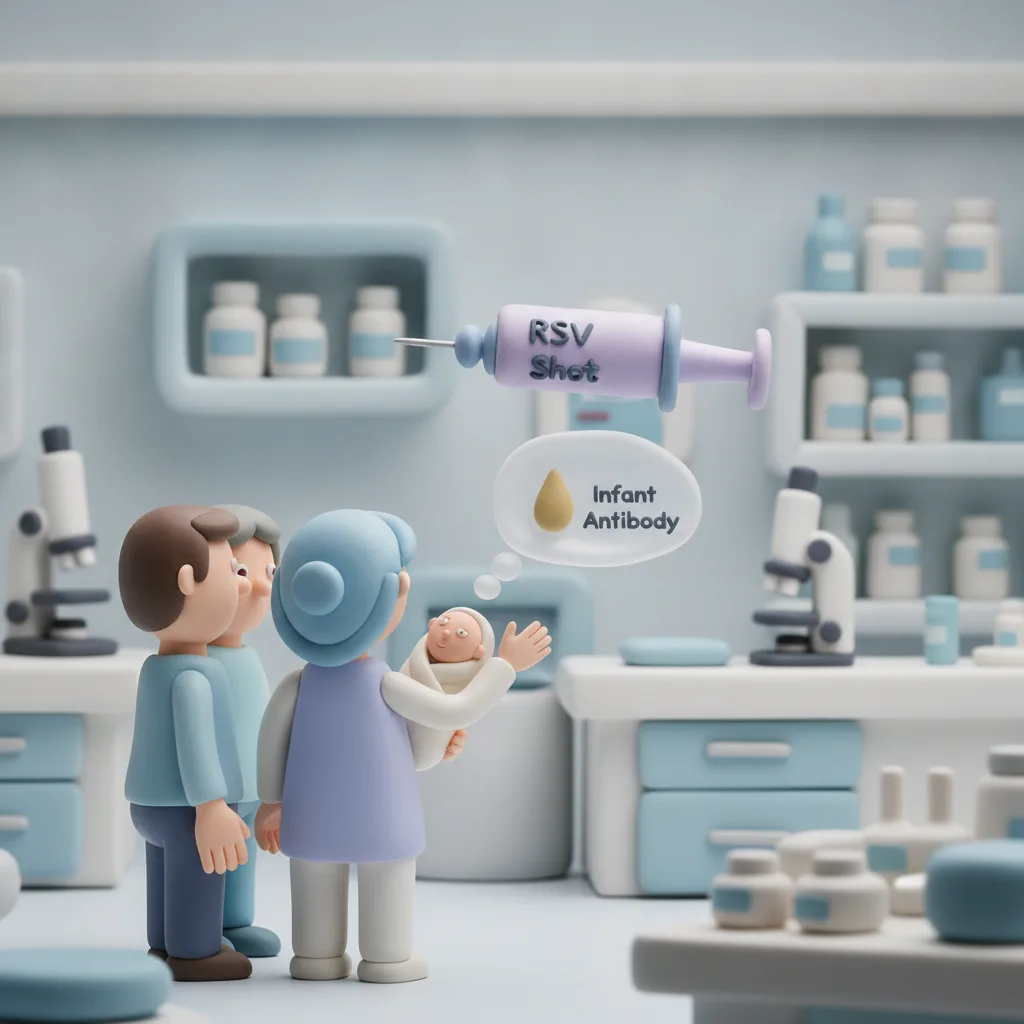

Respiratory syncytial virus (RSV) remains a significant cause of hospitalisation and severe illness in infants, particularly those born prematurely or with underlying health conditions. Preventing RSV infection in this vulnerable population is a public health priority, with two distinct strategies now available to clinicians.
One approach involves vaccinating pregnant individuals to confer passive immunity to the foetus, while the other administers a monoclonal antibody directly to the infant post-birth. Understanding parental preferences for these interventions is important for uptake and effective implementation.
RSV infection can lead to bronchiolitis and pneumonia in young children, often necessitating hospitalisation and supportive care. The burden on paediatric intensive care units during RSV season is substantial, underscoring the need for effective preventative measures. For decades, management has focused on supportive care, but the advent of prophylactic options has shifted the clinical calculus.
Preventative strategies aim to reduce the incidence and severity of RSV disease in infants. Maternal vaccination works by stimulating the pregnant individual's immune system to produce antibodies, which then cross the placenta to protect the newborn. The infant monoclonal antibody, conversely, provides immediate, albeit temporary, passive immunity directly to the infant.
Understanding Parental Preferences
When presented with both options, pregnant women and parents of young children generally express a preference for maternal vaccination. This preference stems from several factors, including the desire for a single intervention during pregnancy that protects the infant from birth, and a perceived lower invasiveness compared to an injection given directly to the newborn. The concept of protecting the infant before birth resonates strongly with many parents.
Parents also consider the timing of administration. A maternal vaccine is given during the third trimester, integrating into existing antenatal care schedules. The infant antibody, however, requires a separate visit or administration shortly after birth, which can add to the logistical challenges for new parents. The perceived convenience of the maternal approach is a significant driver of preference.
But some parents express concerns about receiving a vaccine during pregnancy, even for the benefit of their child. These concerns often relate to general vaccine hesitancy or a desire to minimise interventions during gestation. Clinicians must address these anxieties with clear, evidence-based information regarding the safety and efficacy of maternal vaccines.
The duration of protection is another factor influencing choice. Both methods aim to provide protection through the peak RSV season, typically the first few months of an infant's life. Maternal vaccination provides protection from birth, whereas the infant antibody is administered post-natally, offering immediate but time-limited immunity. Parents often appreciate the continuous protection from birth that maternal vaccination offers.
Cost and accessibility also play a role, though these vary significantly by healthcare system and national policy. In systems where both options are available and covered, parental preference becomes a more dominant factor. Where access is limited, the available option dictates uptake, regardless of preference. For clinicians, having a comprehensive reference like the Oxford Handbook of Paediatrics can be invaluable for navigating these discussions and ensuring appropriate care.
The open-label nature of discussions around these preventative strategies is an obvious caveat. Parents are making decisions based on presented information, which can be influenced by how the options are framed. Ensuring balanced, unbiased information is paramount for informed consent.
The Clinical Discussion
Clinicians face the task of educating parents on both preventative strategies, highlighting their respective benefits and considerations. This involves explaining the mechanism of action for each, the timing of administration, and the expected duration of protection. A clear, concise explanation helps parents make an informed decision that aligns with their values and circumstances.
The discussion should also cover potential side effects for both the pregnant individual and the infant, though both interventions are generally well-tolerated. Transparency about the safety profile builds trust and addresses potential anxieties. The goal is to reduce RSV-related morbidity and mortality in infants, and both strategies contribute to that objective.
The choice between maternal vaccination and infant antibody administration is not always straightforward, and individual patient circumstances will dictate the most appropriate path. Understanding the prevailing parental preference for the maternal vaccine provides a valuable starting point for these important conversations.
The clear parental preference for maternal RSV vaccination over direct infant antibody administration presents a distinct challenge and opportunity for primary care. Clinicians must be adept at discussing both options, but they should anticipate that many parents will lean towards the antenatal approach. This requires an understanding of vaccine hesitancy, even when the benefit is for the child.
For healthcare systems, this preference signals a need to prioritise access and education around maternal RSV vaccines. If the goal is maximal uptake and protection, aligning with patient preferences will be key. This means ensuring adequate supply, clear communication campaigns, and robust integration into existing antenatal care pathways.
Pharmaceutical companies developing these interventions should also note this trend. The market dynamics may favor products that can be administered during pregnancy, potentially influencing future research and development. The convenience factor, even if perceived, holds significant sway in real-world uptake.
The choice empowers parents, but it also places a greater burden on clinicians to provide balanced, accessible information. The dry facts of efficacy and safety must be presented alongside an understanding of the emotional and logistical considerations that drive parental decision-making.
- The Pivot New preventative options for RSV in infants require understanding parental attitudes towards maternal vaccination versus direct infant antibody administration.
- The Data Parents generally favor maternal vaccination as a preventative strategy for RSV in their infants.
- The Action Clinicians should be prepared to discuss both maternal vaccination and infant antibody options, acknowledging the expressed parental preference for the maternal approach.
ART-2026-1115
·08/26
Drafted with AI assistance, reviewed and approved by the editorial team. This publication is intended for healthcare professionals, researchers, and life science industry professionals. Content is provided for informational and educational purposes only and does not constitute medical advice.

Digital health and patient experience are my beat: the apps, the wearables, the real-world evidence claims, and whether any of it changes outcomes. Sceptical by training and optimistic by instinct.
Cite This Article
Ward S, Voss M. Maternal RSV shot vs. infant antibody: what parents really want. The Life Science Feed. Published August 19, 2026. Updated August 19, 2026. Accessed August 19, 2026. https://thelifesciencefeed.com/obstetrics-and-gyn/syncytial-virus-infections/news/maternal-rsv-shot-vs-infant-antibody-what-parents-really-want.
Editorial & AI Standards
All content is researched from peer-reviewed, open-access sources: published trial data, clinical guidelines, and regulatory filings. AI tools are used solely to structure and summarise that evidence; no AI-generated conclusions appear without editor verification against the primary source.
Every article is reviewed by a named editor before publication. Source citations are listed in the References section. This content does not represent the views of any pharmaceutical company, medical device manufacturer, or healthcare provider.
Licence & Rights
© 2026 The Life Science Feed. All rights reserved. Unless otherwise indicated, all content is the property of The Life Science Feed and may not be reproduced, distributed, or transmitted in any form or by any means without prior written permission.
Medical Disclaimer
The information provided on The Life Science Feed is for educational and informational purposes only. It is not intended as a substitute for professional medical advice, diagnosis, or treatment. Always seek the advice of your physician or other qualified healthcare provider regarding any medical condition or treatment decision. Never disregard professional medical advice or delay in seeking it because of something you have read on this website.
References
1. Porter RM, Campos I, Shoaib M, et al. Respiratory Syncytial Virus Immunization Intention During Pregnancy and Infancy. JAMA Netw Open. 2026;9(7):e2625117. doi:10.1001/jamanetworkopen.2026.25117