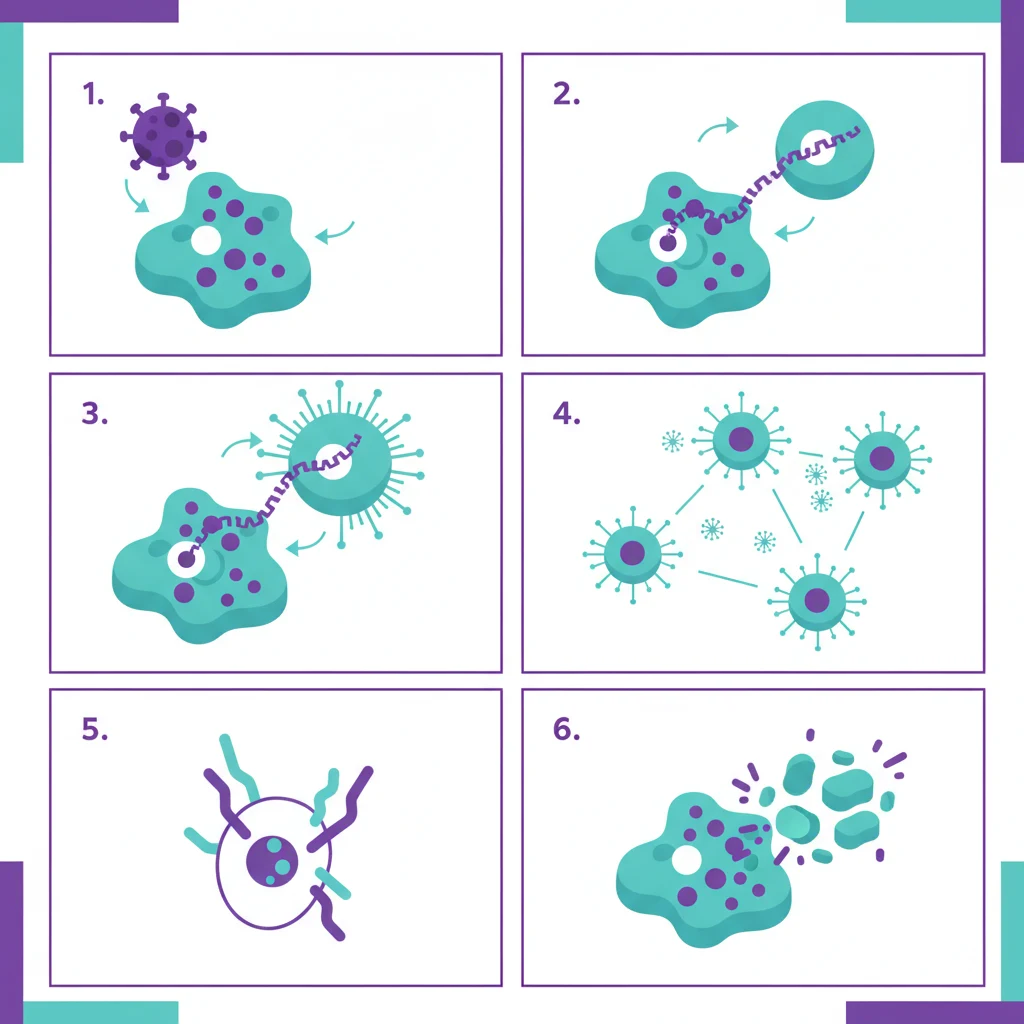

Glioblastoma (GBM) remains a formidable challenge in neuro-oncology, characterized by its aggressive nature and a profoundly immunosuppressive tumor microenvironment. Current treatments offer limited survival benefits, particularly for patients with unmethylated MGMT promoter status. A new phase 1 trial, published in Nature Medicine, evaluated Temferon, a novel gene therapy designed to re-engineer the tumor microenvironment by delivering interferon-α2 locally.1
Glioblastoma, the most common and aggressive primary brain tumor, carries a dismal prognosis, with median survival rarely exceeding 15 months even with aggressive multimodal therapy. The tumor microenvironment (TME) of GBM is notoriously 'cold,' meaning it lacks sufficient immune cell infiltration and is dominated by myeloid-derived suppressor cells that actively dampen antitumor responses. This immunosuppression renders many conventional immunotherapies ineffective. The field has long sought strategies to convert this cold TME into an immunologically active one, capable of mounting a sustained attack against the tumor.1
Temferon, an investigational gene therapy, aims to address this fundamental problem. It involves genetically engineered autologous CD34+ hematopoietic stem cells, which, upon transplantation, differentiate into myeloid progeny. These modified myeloid cells are designed to home to the GBM TME and locally secrete interferon-α2 (IFN-α2), a potent cytokine known for its immunomodulatory and direct antitumor effects. The rationale is to activate local antitumor immunity without the systemic toxicities associated with intravenous IFN-α administration.1
Designing a Targeted Immune Attack
The phase 1/2a dose-escalation study enrolled 24 newly diagnosed patients with glioblastoma who had an unmethylated MGMT promoter. This specific patient population is particularly challenging, as unmethylated MGMT status predicts resistance to temozolomide, a cornerstone of GBM chemotherapy. Patients underwent surgical resection and radiotherapy before receiving Temferon. The trial tested eight cohorts, escalating Temferon doses from 0.5 × 10⁶ to 4.0 × 10⁶ CD34+ cells kg-1.1
Investigators also evaluated different conditioning regimens prior to stem cell infusion: either BCNU or busulfan, with or without thiotepa. The primary endpoint focused on safety and tolerability within 90 days post-infusion. Secondary endpoints included long-term safety, optimal dose and conditioning regimen selection, Temferon engraftment, clinical response, quality of life, and overall survival. This comprehensive approach aimed to establish not only the safety profile but also preliminary efficacy signals and the biological feasibility of the approach.1
Safety and Survival Numbers
The trial found no dose-limiting toxicities (DLTs) across all tested dose levels, up to the highest dose of 4.0 × 10⁶ CD34+ cells kg-1. This is a significant finding for a first-in-human gene therapy, indicating a favorable safety profile in this vulnerable patient group. Adverse events were consistent with those expected from autologous stem cell transplant procedures, primarily including laboratory abnormalities, cytopenias, and infections. These events are generally manageable with supportive care, and their occurrence did not preclude dose escalation.1
Busulfan conditioning emerged as the preferred regimen for further development. This selection was based on its safety profile and potentially superior engraftment characteristics compared to BCNU. The genetically engineered cells were detected long-term in both bone marrow and peripheral blood, confirming successful engraftment and persistence. Minimal amounts of interferon-α were measured in the blood, supporting the concept of localized delivery to the TME rather than systemic exposure.1
Patients receiving Temferon achieved a median overall survival (OS) of 16.7 months from diagnosis. The median progression-free survival (PFS) was 8.1 months. These figures compare favorably to historical data for newly diagnosed GBM patients with unmethylated MGMT promoter, where median OS often hovers around 12-14 months. Most patients maintained a good performance status and quality of life throughout the study period, which is particularly important in a disease known for its debilitating neurological symptoms.1
The Mechanism Behind the Modest Gain
The mechanism of action for Temferon hinges on the targeted delivery of IFN-α2. Interferon-alpha is a pleiotropic cytokine with direct antiproliferative effects on tumor cells, but its primary role in this context is likely immunomodulatory. It can enhance antigen presentation by upregulating MHC class I molecules, activate natural killer (NK) cells, and promote the differentiation of T helper 1 (Th1) cells, thereby shifting the TME from immunosuppressive to immunostimulatory. By delivering IFN-α2 directly to the tumor site via myeloid cells, Temferon aims to overcome the systemic toxicity limitations that have plagued previous attempts to use IFN-α in cancer therapy.1
The detection of genetically engineered cells in the bone marrow and blood long-term confirms the durability of the gene therapy. This sustained presence of IFN-α2-producing cells is essential for maintaining a prolonged immune response against the tumor, which is the primary goal of the therapy. The minimal systemic IFN-α levels suggest that the engineered cells are indeed acting locally, mitigating the systemic side effects that often limit the utility of cytokine-based therapies. This localized approach could be a significant advantage in treating brain tumors, where systemic inflammation can have severe neurological consequences.1
This trial's findings contribute to a growing body of evidence supporting cell and gene therapies in oncology, a field that has seen accelerated approvals in recent years. The ability to engineer a patient's own cells to deliver therapeutic agents directly to the tumor represents a sophisticated form of precision medicine. For clinicians managing glioblastoma, the prospect of a well-tolerated therapy that can extend survival, even modestly, is a welcome development. The Oxford Handbook of Oncology provides a comprehensive overview of current and emerging treatments in this complex area.1
Where it Falls Short and What Comes Next
This was a phase 1 trial, meaning its primary objective was safety and dose-finding, not definitive efficacy. The patient cohort was small (N=24), and the study lacked a control arm, making direct comparisons to standard of care challenging. While the survival numbers are encouraging, they must be interpreted with caution. The unmethylated MGMT promoter status of the enrolled patients is a critical detail, as this subgroup typically has a worse prognosis, potentially making the observed survival gains more impactful. Still, without a randomized comparator, attributing these gains solely to Temferon remains an inference.1
The trial did not provide detailed immunological correlates beyond the detection of IFN-α in the blood and engraftment of engineered cells. A deeper understanding of how Temferon alters the GBM TME, including changes in immune cell infiltration, cytokine profiles, and tumor antigen presentation, would strengthen the biological rationale and guide future development. Future studies will need to incorporate comprehensive biomarker analyses to elucidate the precise immunological impact of this therapy. The question of how Temferon interacts with other standard therapies, such as additional chemotherapy or novel targeted agents, also remains open.1
The long-term safety profile beyond 90 days was a secondary endpoint, but the full implications of long-term engraftment of genetically modified cells are still being explored in gene therapy. While no specific long-term toxicities were highlighted, ongoing surveillance for potential delayed adverse events is essential for patient safety. The manufacturing process for autologous stem cell transplants is complex and resource-intensive, which could pose challenges for broader clinical adoption and scalability. This is a common hurdle for many advanced cell therapies, and optimizing manufacturing will be key for future phases.1
The next steps involve a phase 2 trial to further evaluate efficacy and refine the optimal dosing and conditioning regimen. This will likely include a larger patient cohort and potentially a randomized design to provide more robust efficacy data. The integration of Temferon into existing treatment paradigms for glioblastoma, perhaps in combination with checkpoint inhibitors or other immunotherapies, warrants investigation. Understanding how this localized IFN-α delivery can synergize with systemic immune modulators could unlock greater therapeutic potential.1
The glioblastoma field desperately needs new therapeutic avenues, especially for patients with unmethylated MGMT promoters who derive less benefit from temozolomide. Temferon's phase 1 safety and preliminary efficacy signals offer a glimmer of hope, suggesting that re-engineering the tumor microenvironment with targeted cytokine delivery is a viable strategy. Clinicians should view these results as a foundational step, not a definitive answer, but one that warrants close attention as further trials unfold.
The localized delivery of interferon-α2 via engineered myeloid cells is a clever approach to circumvent the systemic toxicities that have historically limited IFN-α's utility in oncology. If subsequent trials confirm these early survival benefits in a larger, controlled setting, Temferon could carve out a niche in the complex treatment algorithm for GBM. It represents a sophisticated application of gene therapy, moving beyond simple gene replacement to active immune modulation.
For patients, the prospect of a well-tolerated therapy that might extend survival, even by a few months, is significant in a disease with such a poor prognosis. Maintaining quality of life, as reported in this study, is also paramount. The challenge will be scaling the complex autologous cell therapy manufacturing process to meet potential demand, a hurdle common to many advanced cell therapies.
The trial's focus on newly diagnosed patients with unmethylated MGMT promoter status is clinically astute, targeting a population with high unmet need. The next phase must rigorously assess whether these survival gains are truly attributable to Temferon and if they translate into meaningful improvements in patient outcomes compared to current best practices. The field will be watching for those results.
- The Pivot Temferon, an autologous stem cell transplant engineered to deliver interferon-α2, represents a new approach to activating antitumor immunity in glioblastoma.
- The Data Median overall survival was 16.7 months and progression-free survival was 8.1 months from diagnosis in newly diagnosed GBM patients.
- The Action Temferon demonstrated safety and tolerability in this phase 1 trial, supporting its further investigation in glioblastoma.
ART-2026-1178
·08/26
Drafted with AI assistance, reviewed and approved by the editorial team. This publication is intended for healthcare professionals, researchers, and life science industry professionals. Content is provided for informational and educational purposes only and does not constitute medical advice.

I specialise in clinical trial methodology and drug development, from Phase I to post-approval. My reports cover what got studied, what did not, and why. Based in Boston, reporting globally.
Cite This Article
Prescott D, Voss M. Temferon: a new gene therapy strategy for glioblastoma. The Life Science Feed. Published August 21, 2026. Updated August 21, 2026. Accessed August 21, 2026. https://thelifesciencefeed.com/oncology/brain-neoplasms/research/temferon-a-new-gene-therapy-strategy-for-glioblastoma.
Editorial & AI Standards
All content is researched from peer-reviewed, open-access sources: published trial data, clinical guidelines, and regulatory filings. AI tools are used solely to structure and summarise that evidence; no AI-generated conclusions appear without editor verification against the primary source.
Every article is reviewed by a named editor before publication. Source citations are listed in the References section. This content does not represent the views of any pharmaceutical company, medical device manufacturer, or healthcare provider.
Licence & Rights
© 2026 The Life Science Feed. All rights reserved. Unless otherwise indicated, all content is the property of The Life Science Feed and may not be reproduced, distributed, or transmitted in any form or by any means without prior written permission.
Medical Disclaimer
The information provided on The Life Science Feed is for educational and informational purposes only. It is not intended as a substitute for professional medical advice, diagnosis, or treatment. Always seek the advice of your physician or other qualified healthcare provider regarding any medical condition or treatment decision. Never disregard professional medical advice or delay in seeking it because of something you have read on this website.
References
1. Gentner B, Eoli M, Farina F. Tumor-targeted interferon-α gene therapy for glioblastoma: a phase 1 trial. Nat Med. 2026.