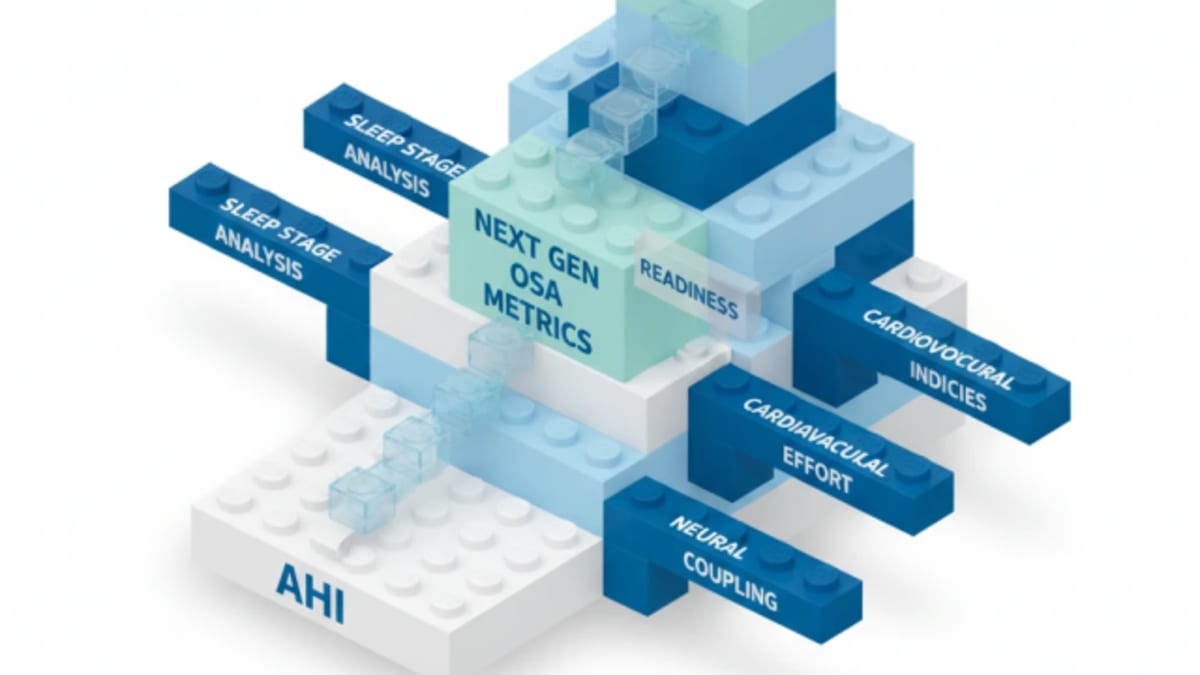

For decades, the Apnea-Hypopnea Index (AHI) has served as the cornerstone for diagnosing and managing obstructive sleep apnea (OSA). But relying solely on AHI can be misleading, failing to capture the true physiological stress and long-term consequences of intermittent hypoxia. Clinicians need to move beyond this single metric to understand the full scope of the disease and tailor interventions more effectively.
A deeper dive into hypoxic burden and patient phenotyping offers a more granular understanding of OSA's impact, linking specific physiological responses to device behavior and ultimately, patient outcomes. This shift in perspective is important for optimizing treatment strategies and improving cardiovascular and metabolic health.
Obstructive sleep apnea, characterized by recurrent episodes of upper airway collapse during sleep, leads to intermittent hypoxia and sleep fragmentation. The Apnea-Hypopnea Index, which quantifies the number of apneas and hypopneas per hour of sleep, has been the standard for classifying OSA severity. But AHI, while useful for initial diagnosis, often falls short in predicting the heterogeneous clinical outcomes observed in patients, particularly regarding cardiovascular events and metabolic dysfunction.
The limitations of AHI stem from its inability to differentiate between various types of respiratory events or to quantify the depth and duration of oxygen desaturation. Two patients with the same AHI can have vastly different physiological burdens, depending on how low their oxygen levels drop and for how long. This variability highlights the need for more sophisticated metrics that capture the true hypoxic stress on the body.
Quantifying the Hypoxic Burden
Hypoxic burden refers to the cumulative impact of oxygen desaturation events over time. It considers not just the frequency of events, but also their severity and duration. Metrics such as the oxygen desaturation index (ODI), time spent below 90% oxygen saturation (T90), and the desaturation-reoxygenation area (DRA) provide a more comprehensive picture of a patient's physiological stress. These parameters directly reflect the degree of oxidative stress, systemic inflammation, and sympathetic nervous system activation that drive many of OSA's comorbidities.
The clinical relevance of hypoxic burden extends beyond simply identifying severe desaturation. It helps explain why some patients with moderate AHI develop significant cardiovascular disease, while others with higher AHI remain relatively healthy. The quality of sleep, beyond just the number of events, also plays a role, and clinicians can find valuable insights into this by consulting resources like the AI, Wearables Transform Sleep Diagnostics: ATS 2026 Preview article, which explores advanced diagnostic tools.
Phenotyping Beyond AHI
OSA is not a monolithic disorder; it encompasses several distinct pathophysiological phenotypes. These phenotypes include anatomical factors (e.g., collapsible airway), non-anatomical traits (e.g., high loop gain, low arousal threshold, poor upper airway dilator muscle function), and ventilatory control instability. Understanding these underlying mechanisms allows for more targeted therapeutic approaches than simply applying a blanket CPAP prescription.
For instance, a patient with a highly collapsible airway might benefit most from oral appliance therapy or surgery, while someone with high loop gain might respond better to pharmacological interventions that stabilize ventilatory control. Identifying these phenotypes requires more than just a standard polysomnography. Advanced techniques, including pharyngeal critical pressure (Pcrit) measurements, ventilatory response curves, and arousal threshold assessments, are necessary to fully characterize a patient's specific OSA traits.
Linking Phenotypes to Device Behavior
The effectiveness of positive airway pressure (PAP) therapy, the cornerstone of OSA treatment, is also influenced by these underlying phenotypes. A patient with a low arousal threshold, for example, might struggle with PAP adherence due to frequent awakenings, even if the device is technically preventing apneas. Conversely, a patient with significant ventilatory instability might require more sophisticated PAP modes, such as adaptive servo-ventilation, to effectively manage their breathing patterns.
Device behavior, therefore, needs to be interpreted in the context of the patient's specific phenotype and hypoxic burden. Simply looking at the residual AHI on a CPAP machine's data readout does not tell the whole story. Clinicians must consider how well the device is mitigating oxygen desaturation, improving sleep architecture, and addressing the patient's individual physiological traits. This requires a more holistic approach to device titration and ongoing management, moving beyond a simple AHI target.
The Impact on Outcomes
The ultimate goal of OSA treatment is to improve long-term health outcomes, particularly reducing cardiovascular morbidity and mortality. While AHI reduction has been a primary endpoint in many studies, the correlation with hard cardiovascular outcomes has been inconsistent. This discrepancy highlights the limitations of AHI as a surrogate marker for disease severity and treatment efficacy.
But, metrics of hypoxic burden, such as the cumulative time spent desaturated, have shown a stronger association with adverse cardiovascular events, including hypertension, atrial fibrillation, and stroke. This suggests that effectively reducing hypoxic burden, rather than just AHI, should be a primary therapeutic target. The focus should shift to ensuring sustained oxygenation and minimizing the physiological stress induced by intermittent hypoxia. For a broader perspective on how various physiological factors contribute to systemic risk, one might also consider the insights from Adipose Tissue: Beyond Quantity, A Driver of Cardiometabolic Risk?, which discusses how different tissue characteristics impact overall health.
Beyond the Numbers: Clinical Assessment
Beyond objective metrics, a thorough clinical assessment remains paramount. Patient-reported outcomes, such as daytime sleepiness, fatigue, and quality of life, provide important insights into the subjective impact of OSA. These symptoms often correlate poorly with AHI but may align more closely with the patient's overall hypoxic burden and sleep fragmentation. A comprehensive approach integrates objective physiological data with subjective patient experience to guide treatment decisions.
The role of a detailed history and physical examination cannot be overstated. Identifying risk factors for OSA, such as obesity, craniofacial abnormalities, and comorbidities like heart failure or chronic kidney disease, helps contextualize the polysomnography findings. For general practitioners, a reliable clinical reference like the Oxford Handbook of General Practice can be invaluable for integrating these complex considerations into daily practice.
Where the Field Falls Short
The primary challenge remains the widespread adoption of these more advanced metrics and phenotyping techniques in routine clinical practice. Standard polysomnography reports often prioritize AHI, making it difficult for clinicians to easily access or interpret detailed hypoxic burden parameters. The tools for comprehensive phenotyping are often confined to specialized sleep centers, limiting their accessibility.
Another limitation is the lack of standardized definitions and thresholds for hypoxic burden metrics. While AHI has clear severity classifications, the optimal cut-offs for T90 or DRA in predicting specific outcomes are still evolving. This variability can make it challenging to compare studies and apply findings consistently across different clinical settings. Still, the field is moving towards a more detailed understanding, as evidenced by discussions around Single Question May Flag Poor Quality Sleep in Patients, which seeks simpler ways to identify those at risk.
The future of OSA management will likely involve integrating advanced physiological monitoring, artificial intelligence-driven phenotyping, and personalized treatment algorithms. This shift promises to move beyond the simplistic AHI-centric view, offering a more precise and effective approach to a complex and pervasive disorder. The next generation of clinical trials will need to focus on these more granular endpoints to truly demonstrate the long-term benefits of OSA interventions.
The continued reliance on AHI as the sole arbiter of OSA severity and treatment success is a disservice to patients. It is an easily quantifiable metric, but its clinical utility in predicting long-term cardiovascular and metabolic outcomes is demonstrably limited. Clinicians should push for more comprehensive sleep study reports that include detailed hypoxic burden metrics.
Understanding a patient's specific OSA phenotype is not an academic exercise; it is a practical necessity for optimizing therapy. A one-size-fits-all approach to PAP therapy, based purely on AHI, will inevitably lead to suboptimal outcomes and patient frustration. Tailoring interventions, whether device-based, surgical, or pharmacological, to the underlying mechanisms of airway collapse and ventilatory instability is the logical next step.
The industry needs to develop more accessible and user-friendly tools for phenotyping and for monitoring hypoxic burden outside of specialized sleep labs. Device manufacturers should also prioritize reporting metrics beyond residual AHI, providing clinicians with the data needed to assess true physiological improvement. This will empower GPs and specialists to make more informed decisions, moving beyond the blunt instrument of AHI.
- The Pivot Moving beyond AHI to incorporate hypoxic burden and detailed phenotyping provides a more accurate assessment of OSA severity and its systemic consequences.
- The Data While no specific trial data is provided, the clinical consensus points to the limitations of AHI alone in predicting cardiovascular morbidity and mortality.
- The Action Clinicians should consider a broader array of physiological markers, including oxygen desaturation metrics and sleep architecture, when evaluating OSA patients and device effectiveness.
ART-2026-1776
·10/26
Drafted with AI assistance and checked by automated style rules. Not individually read by an editor. This publication is intended for healthcare professionals, researchers, and life science industry professionals. Content is provided for informational and educational purposes only and does not constitute medical advice.

Infectious disease, epidemiology, and global health equity. I have covered outbreaks from Ebola to COVID-19 to mpox. The stories I am most drawn to are where the science is clear and the response is slow.
Cite This Article
Reeves T, Lopes W. Sleep apnea: why AHI misses what matters most. The Life Science Feed. Published September 7, 2026. Updated October 5, 2026. Accessed October 22, 2026. https://thelifesciencefeed.com/pulmonology/obstructive-sleep-apnea/research/sleep-apnea-why-ahi-misses-what-matters-most.
Editorial & AI Standards
Content is drafted with AI tools from peer-reviewed, open-access sources such as published trial data, clinical guidelines, and regulatory filings. This article is checked by automated style rules but is not individually read by an editor, so check the cited source before relying on a figure.
Source citations are listed in the References section. This content does not represent the views of any pharmaceutical company, medical device manufacturer, or healthcare provider.
Licence & Rights
© 2026 The Life Science Feed. All rights reserved. Unless otherwise indicated, all content is the property of The Life Science Feed and may not be reproduced, distributed, or transmitted in any form or by any means without prior written permission.
Medical Disclaimer
The information provided on The Life Science Feed is for educational and informational purposes only. It is not intended as a substitute for professional medical advice, diagnosis, or treatment. Always seek the advice of your physician or other qualified healthcare provider regarding any medical condition or treatment decision. Never disregard professional medical advice or delay in seeking it because of something you have read on this website.
References
1. Bouloukaki I, Fabozzi A, Schwarz EI, Schiza SE. Advances in the Diagnosis and Treatment of Obstructive Sleep Apnea in Women. Pulm Ther. 2026;12(1):181-199. doi:10.1007/s41030-026-00350-5
2. Ameli Mazandarani Z, Behnaz M, AmiriFard H, et al. Three-class obstructive sleep apnea severity assessment: a parallel AHI and ODI explainable artificial intelligence framework using craniofacial-enriched clinical data. Sleep Breath. 2026;30(4). doi:10.1007/s11325-026-03774-0